LearnWorlds vs Kajabi: The Definitive 2026 Comparison

Last updated: August 14, 2026
Quick Answer
LearnWorlds and Kajabi solve different problems: LearnWorlds is built for creators who want deep, interactive course design (in-video quizzes, SCORM, clickable hotspots), while Kajabi is built for creators who want an all-in-one commerce and marketing hub. LearnWorlds starts at $29/month (Starter, plus a $5 flat fee per enrollment) or $99/month (Pro Trainer, 0% fees). Kajabi starts at $179/month (Basic) up to $499/month (Pro), with no platform transaction fees on any tier. FreshLearn is a third option worth comparing if you want both course-building depth and built-in marketing without Kajabi's price or LearnWorlds' add-on stack, with plans from $49/month and 0% transaction fees on every tier.
Key Takeaways
- LearnWorlds' Starter plan costs $29/month ($24/month billed annually) and charges a flat $5 fee per course enrollment, not a percentage; Pro Trainer at $99/month ($79/month annually) removes that fee entirely.
- Kajabi restructured its pricing in January 2026: Basic now costs $179/month ($143/month annually) for 5 products and 2,500 contacts; Growth costs $249/month ($199/month annually) for 50 products and 25,000 contacts; Pro costs $499/month ($399/month annually) for unlimited products. Kajabi charges 0% platform fee on Kajabi Payments, but adds a surcharge (0.5% to 2%) if you use your own Stripe account instead.
- LearnWorlds holds a 4.8/5 rating on Trustpilot; Kajabi holds approximately 3.5/5 based on over 2,300 reviews, with billing and cancellation complaints as a recurring theme.
- FreshLearn's Pro plan costs $49/month, $41/month billed annually ($499/year), or $35/month billed every two years ($849 total), and charges 0% transaction fees on every plan.
- Building a comparable marketing stack around LearnWorlds (Pro Trainer plus an email tool and a landing page tool) costs roughly as much per month as Kajabi's Growth plan, once all three tools are counted.
- FreshLearn's honest limitation: it doesn't match LearnWorlds' in-video interactivity (clickable hotspots, embedded quizzes inside the video player itself) or Kajabi's depth of built-in visual automation logic; it's a narrower, lower-cost middle ground between the two, not a strict superset of either.
Yesterday, I built the same three-module mini-course twice: first inside LearnWorlds, then again in Kajabi.
LearnWorlds felt fresh and relaxed: its AI-powered video editor allowed me to drop quizzes and clickable chapters straight onto the timeline without leaving the page, and it suggested improvements extremely quickly.
Kajabi, on the other hand, ran more like a commerce hub and a solid platform. The moment I clicked “publish,” a brand‑new payments dashboard lit up with pre-wired email sequences.
If you’re a course creator wondering which option is better for you, we’ve got you covered.
Instead of rattling off every feature checkbox, we’ll zoom in on what each platform lets creators be: a learning‑experience architect with granular control (LearnWorlds) or a full‑stack digital merchant with marketing stitched in (Kajabi).
Pick the hat you want to wear; the rest of this comparison will help you justify it with numbers and workflow tests.
And why should you trust us?
We're the creators of FreshLearn, the modern platform that thousands of creators rely on to launch and scale their courses. We've gone beyond building a tool and immersed ourselves in the creator journey over the years. So we know the challenges, frustrations, and scaling needs of creators just like you. This is that hard-won, inside-scoop perspective. And we'll say plainly where FreshLearn isn't the right fit further down.
Quick Verdict: Who Should Use LearnWorlds vs Kajabi?
At-a-Glance Comparison: LearnWorlds vs Kajabi vs FreshLearn
Wondering why we've inserted FreshLearn in a LearnWorlds vs Kajabi comparison? Because without four-figure monthly bills, FreshLearn gives you a no-code LMS, email engine, funnel builder, and affiliate suite under one subscription, starting well below Kajabi's entry tier and without transaction fees. That combo makes it worth a look when budgets matter, though it isn't a feature-for-feature replacement for either platform; more on that below.
Annual Cost Comparison with Popular Platforms
Another way of looking at this is to compare the annual cost of the course platform for creators.
When used for key features such as an AI assistant, video captions, course builder, email marketing for the courses and digital products, white-labeled site, mobile app for learners, customizable certificates, assessments, community, and the like, the average cost of using most popular platforms ranges from $1,700 to $3,600 a year.
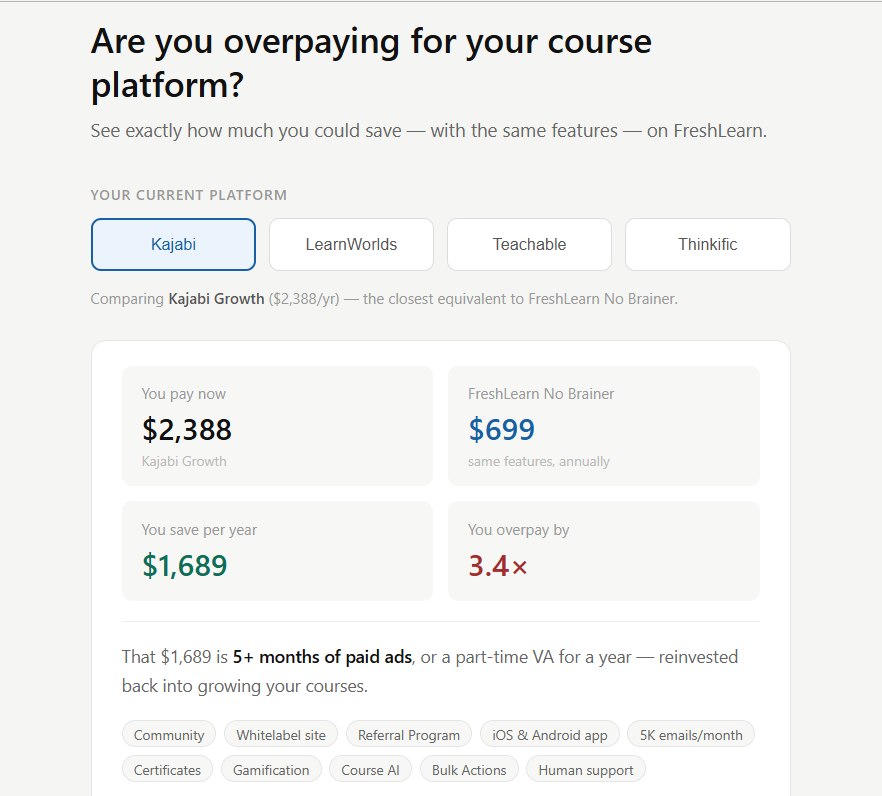
The Main Difference between LearnWorlds and Kajabi: Engaging Learner Experiences vs an All-in-One Online Commerce Platform
Here's the part most reviews gloss over when comparing these platforms:
Yes, they're both great for creating courses, but they're designed with entirely different creators in mind. And that's important, because knowing what makes each special can save you both time and unnecessary spending.
Learnworlds turns your online courses into genuinely engaging experiences. It’s designed for the creator who geeks out over interactive content, such as clickable videos, engaging quizzes, and multimedia-rich eBooks. If your main focus is keeping your students glued to your content (in a good way), LearnWorlds brings the depth.
But be warned: if you're looking to run marketing campaigns or sales funnels, you'll likely need to add other software.
Kajabi takes a different approach and packs every online commerce tool imaginable into one box. This platform is built for the "give me one login and call it a day" creators. Courses, emails, websites, and communities; Kajabi covers it all.
However, simplicity doesn't come cheap, and if you're not maximizing every feature, your wallet might start feeling the pinch.
Let’s explore each platform a bit more closely.
Brief Overview of LearnWorlds
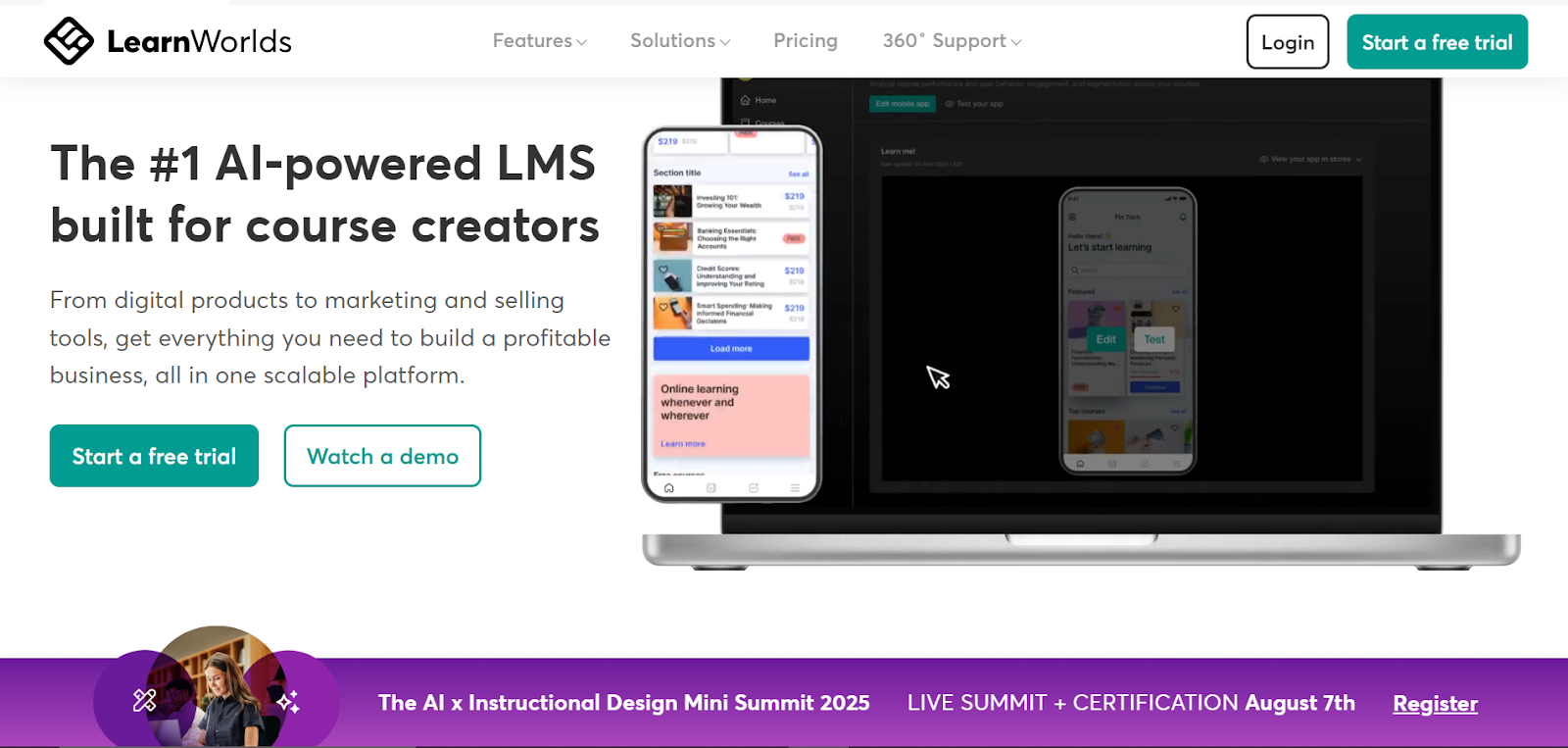
LearnWorlds is an online course platform built for educators who care about learner engagement. It lets you create dynamic lessons packed with interactive video, quizzes, and digital workbooks that keep learners engaged throughout their journey.
LearnWorlds brings social learning to the forefront. You get built-in community spaces and discussion tools that can turn passive viewers into active participants in your lessons.
You can easily brand your entire academy, host live sessions, and track learner progress through powerful analytics.
If your question is: "How do I create courses students actually love completing?", LearnWorlds has you covered.
You’ll still need your own marketing and email tools, but for delivering standout interactive experiences, LearnWorlds is one of the best.
Brief Overview of Kajabi
Kajabi is an all-in-one platform designed for entrepreneurs who prefer simplicity over the hassle of multiple tools. It brings course creation, memberships, coaching, and marketing under a single platform to simplify your path from idea to income.
It includes built-in email marketing, CRM, automated sales pipelines, and professionally designed templates, so it’s easy to sell and scale quickly.
If you want to run and organize your entire knowledge business without sacrificing quality, Kajabi is a strong choice, provided the price fits your stage of business.
You might still need external communities or niche integrations, but when it comes to running your entire education business from one place, Kajabi is a serious contender.
Feature Face-off: LearnWorlds vs Kajabi
Alright, enough niceties. Now we get to the meat of the comparison.
Our first face-off is when it comes to course building. Let’s be honest, that’s the main reason you’d pick up either of these two anyway.
1. Course creation and student experience
When creators decide between LearnWorlds and Kajabi, there’s often the biggest piece they're overlooking: the experience their students have inside the course.
Here, we're talking about just that: the realities of designing your lessons, structuring content, and ensuring your students stay engaged, satisfied, and eager to learn more.
What’s it like on LearnWorlds?
LearnWorlds treats course-building like a creative studio. How? First, you click Create Course to launch the step‑by‑step Course Creation Wizard.
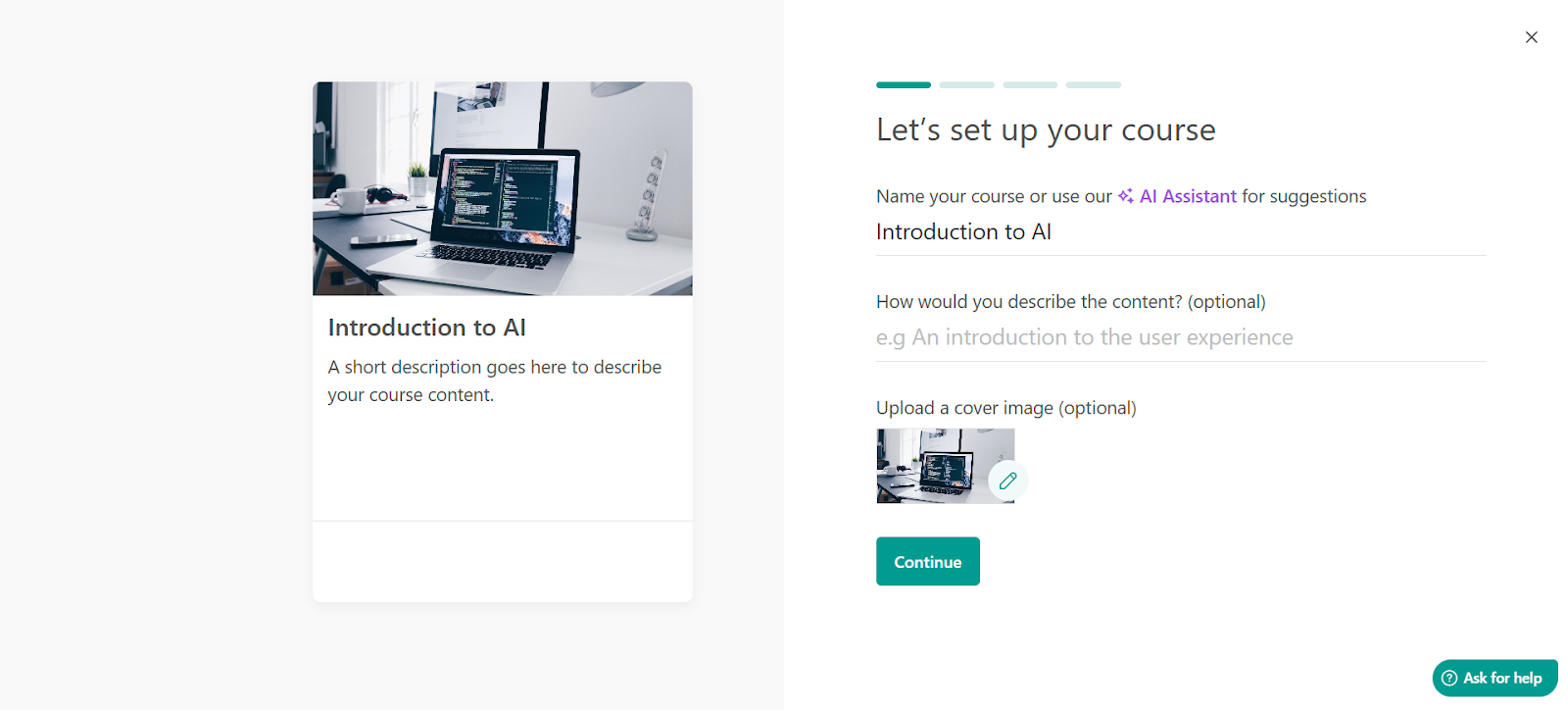
Here, you fill in the title, description, and cover image, and can even use an AI Assistant to auto-generate polished titles and descriptions based on course goals and tone.
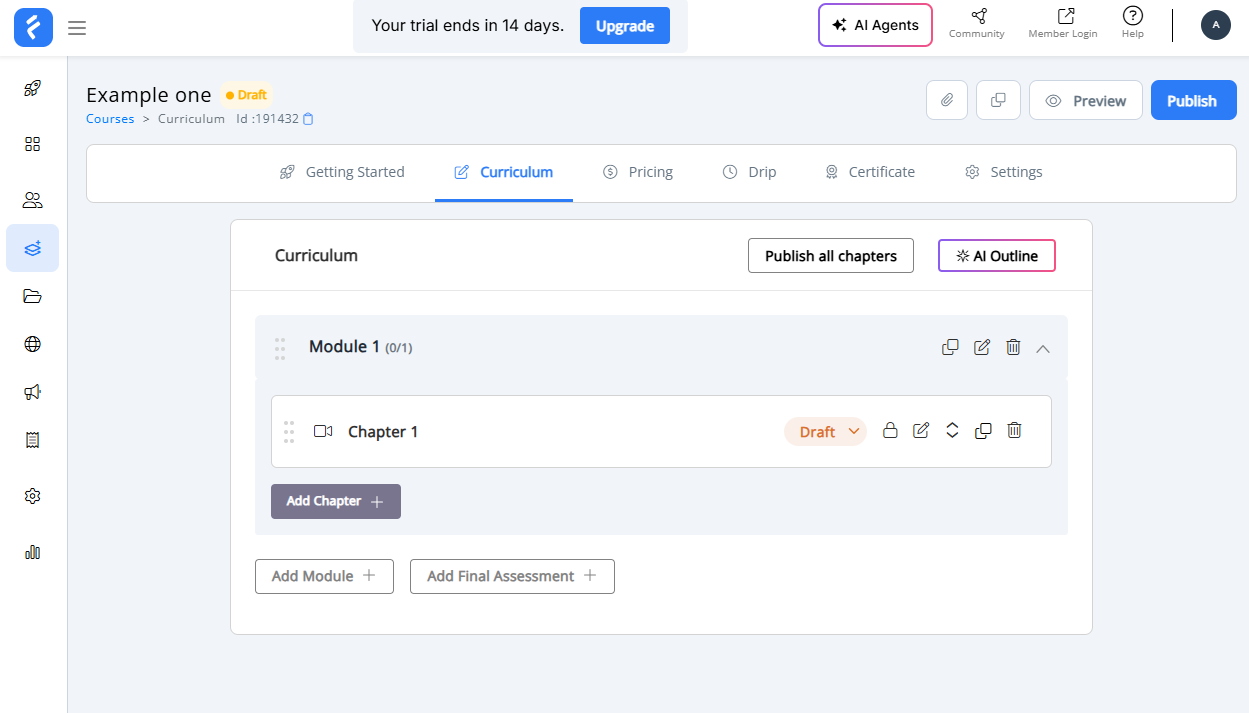
You can select from six access types: Draft, Free, Paid, Private, Coming Soon, and Enrollment Closed. These let you plan launches, run teasers, or restrict access precisely.
LearnWorlds also follows a modular course structure with rich media options.
You can build courses in Sections. Each Section supports diverse Learning Activities: video (with interactive overlays, quizzes, subtitles), SCORM modules, e‑books, PDFs, audio, live sessions (Zoom, Teams, Webex), and even assignment uploads.
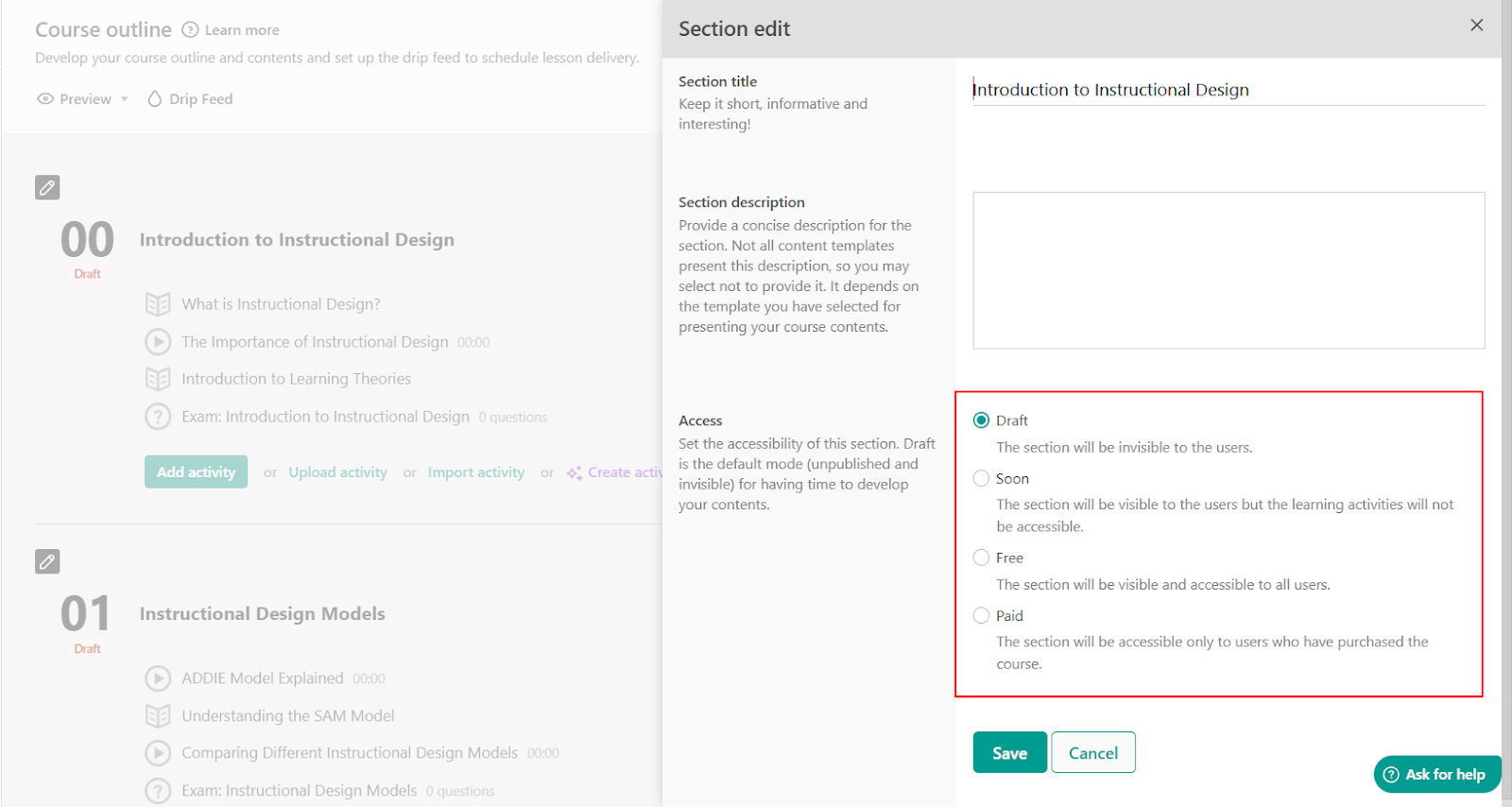
Where LearnWorlds really gets its limelight is with interactive video and e-book options. You get to choose from in‑video quizzes, clickable info labels, and in‑player e‑books, all of which are ideal for active, immersive learning.
Moreover, you can create custom or templated certificates with merge tags for learner data, or use Credly and Accredible integrations.
Gamification features include points, badges, and a leaderboard.
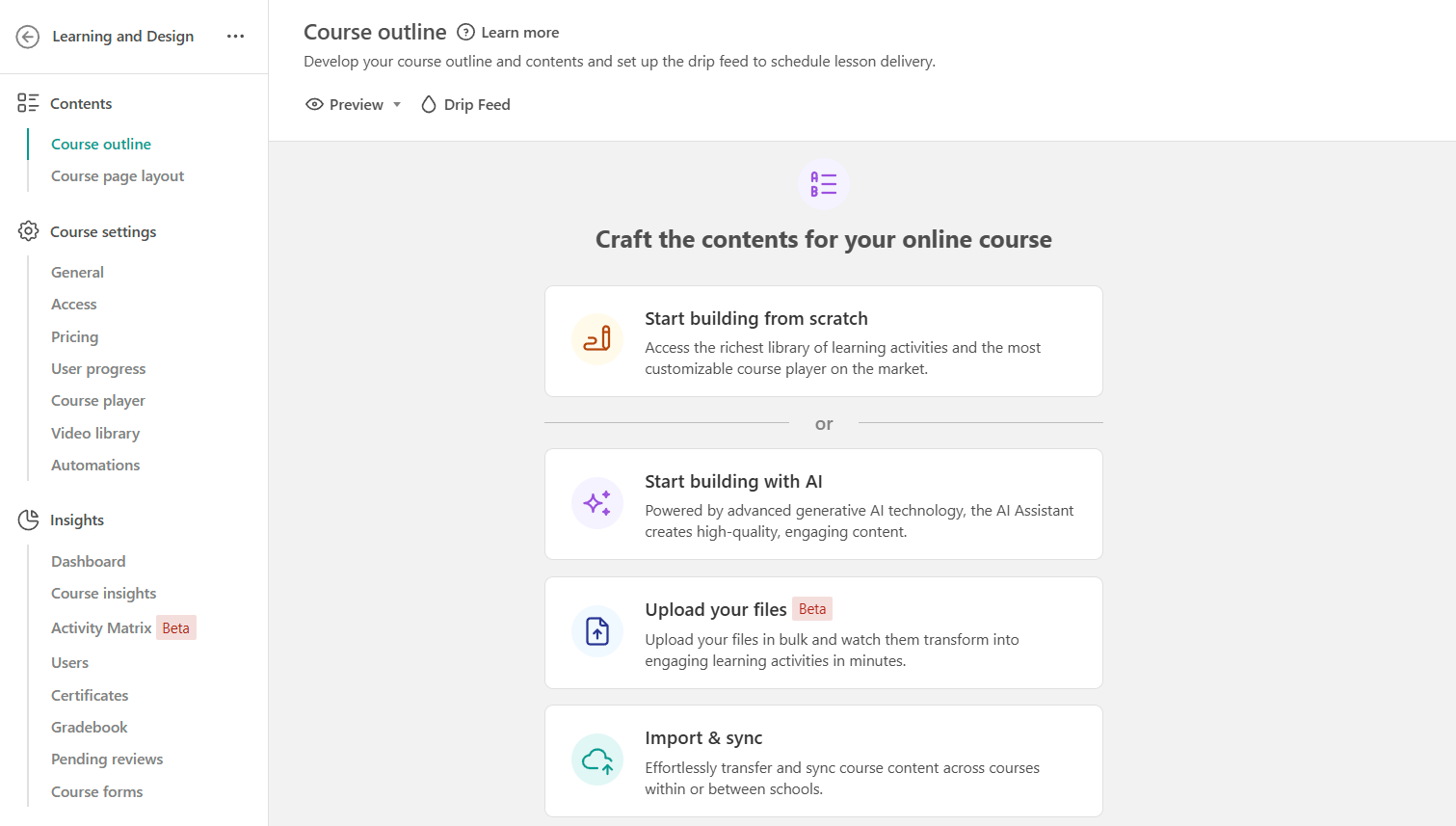
And since LearnWorlds relies quite a lot on AI, you can use AI to generate entire course outlines or bulk‑upload content, then convert it into structured activities.
We’ll touch more on branding and marketing later, but know that you get deep branding options through the site builder, theme explorer, widgets, and you can even build a fully branded mobile app with in‑app purchases and push notifications.
Now you know what I mean. LearnWorlds offers near-studio-level control, with AI-assisted setup, deep interactivity, multidimensional media, and much more.
It’s clearly for creators prioritizing learner engagement.
What’s it like on Kajabi?
If you prioritize efficiency, you’ll like Kajabi more.
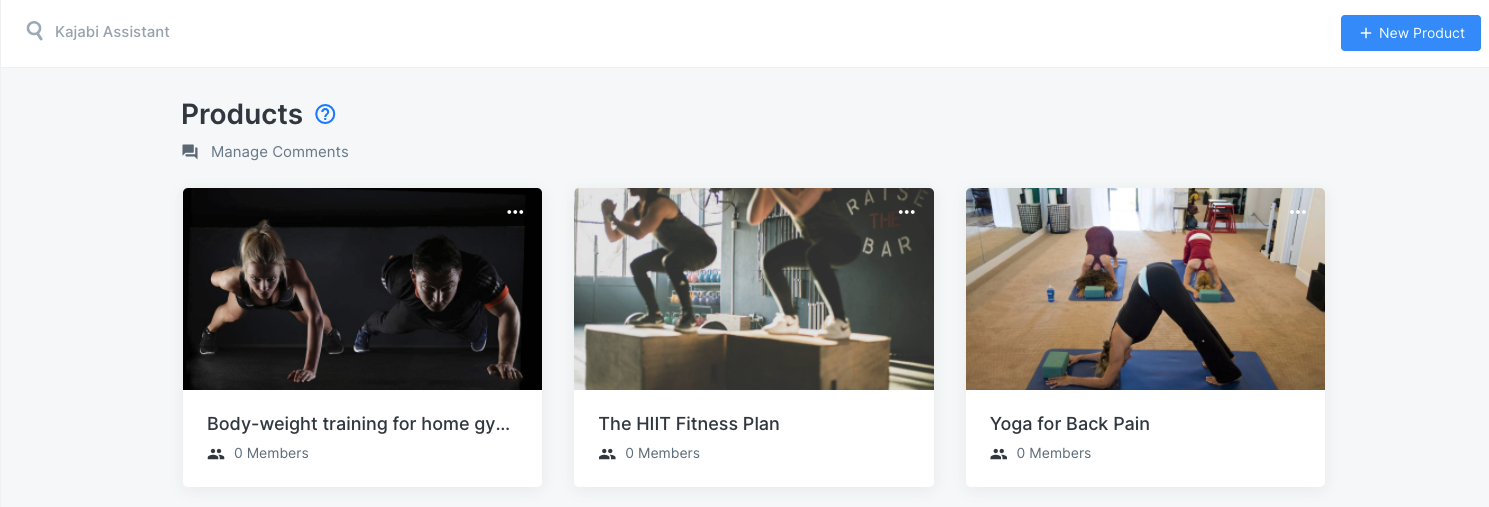
To create a course, you’ll first see a quick wizard. Quick, because you just name it, upload a thumbnail, add a description, and optionally generate an outline via AI.
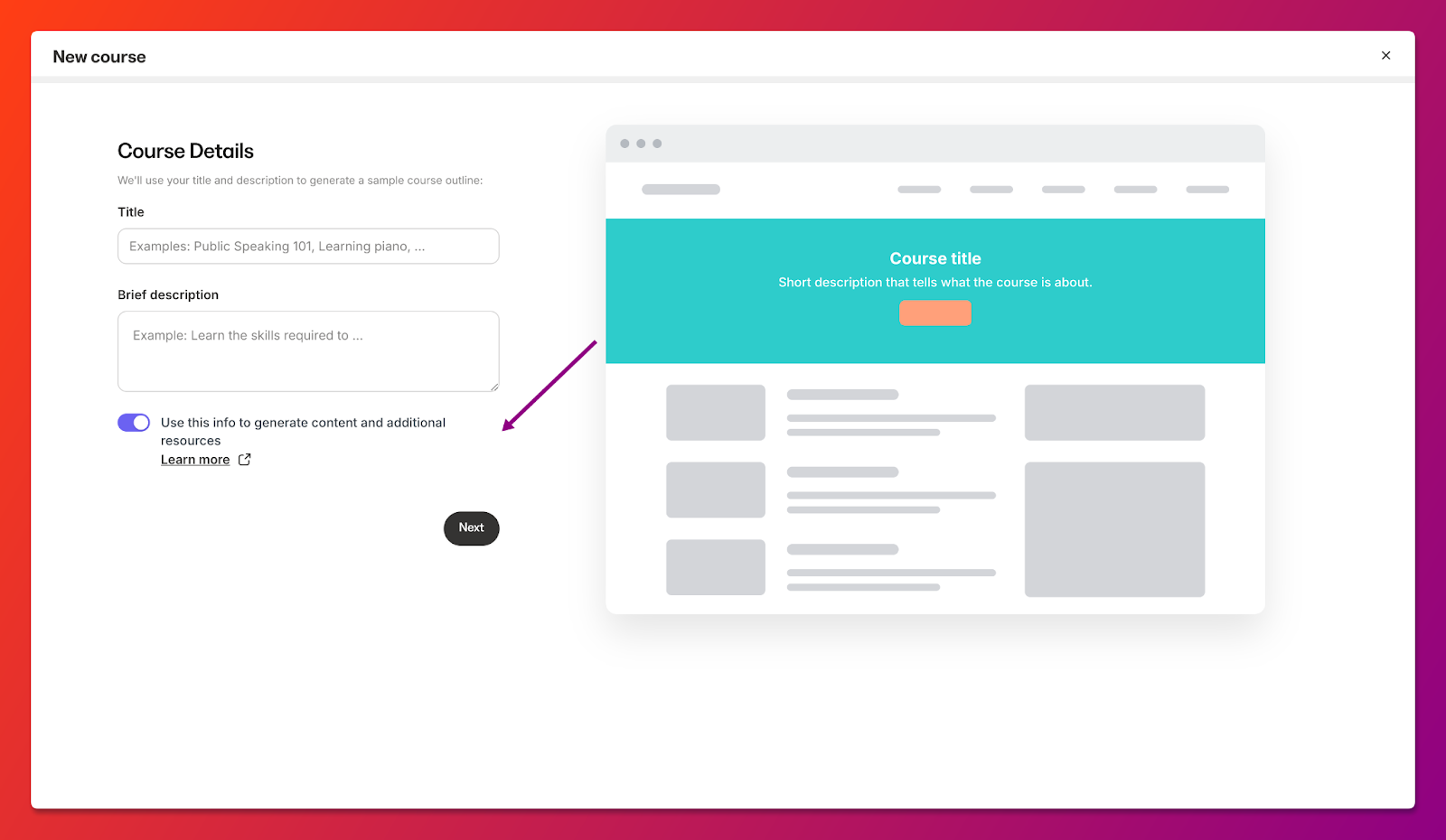
Modules take the place of chapters. You create them with a title, description, and thumbnail, then rearrange them via drag-and-drop.
Within modules, you can add lessons one by one; upload videos, audio, text, files, quizzes, downloadable assets, or embed code, and optionally drip them based on a schedule.
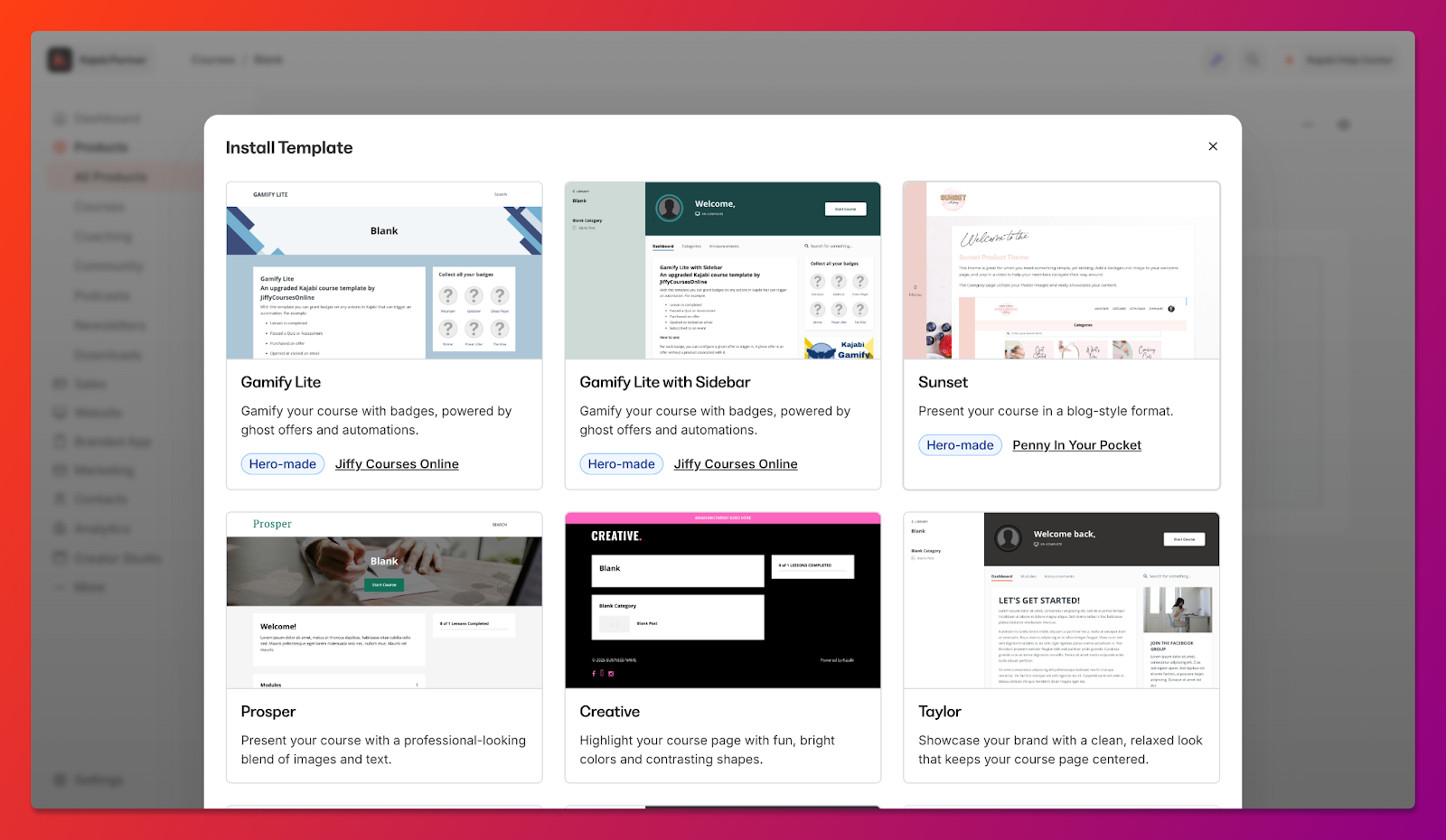
Oh, and the templates are a solid 10.
You get to choose from a selection of professional templates like Momentum, Creative, and Prosper.
They give your courses a branded, polished look, and if something’s not to your liking, you can always customize the layout, colors, fonts, and more in the template editor.
What else? Oh, there are cohort and drip courses; ideal for challenges or guided programs. You drip content weekly, set a start date for launches, and combine with community or live webinar features.
Not to mention that you can add quizzes and certifications in lessons easily, and participant completion is also built in.
In summary, Kajabi gives you a smooth, linear, professionally templated workflow. It’s great if you want structure and presentation polish without too much complexity.
Winner: LearnWorlds
Both are solid platforms, but we'll give a slight edge to LearnWorlds here. If you’re an author or educator and need total control over course creation and teaching, LearnWorlds will give you greater depth and engagement.
The immersive learning environments you can build there make it the winner in course creation and student experience.
Kajabi wins on speed, polish, and simplicity: ideal for no-fuss courses and cohort-based drip programs.
Where FreshLearn fits in
Both LearnWorlds and Kajabi are built by companies with a single product to sell you. FreshLearn is worth pulling into this specific comparison because it borrows from both playbooks: it doesn't chase LearnWorlds' in-video interactivity, but it also doesn't ask you to sacrifice course-building depth just to get Kajabi's marketing tools bundled in. Here's what that looks like in practice:
AI-powered course creation
FreshLearn takes AI beyond outlines and helps you generate complete course structures, targeted quizzes, lesson descriptions, and landing pages, which speeds up the path from idea to launch.
Flexible and diverse course formats
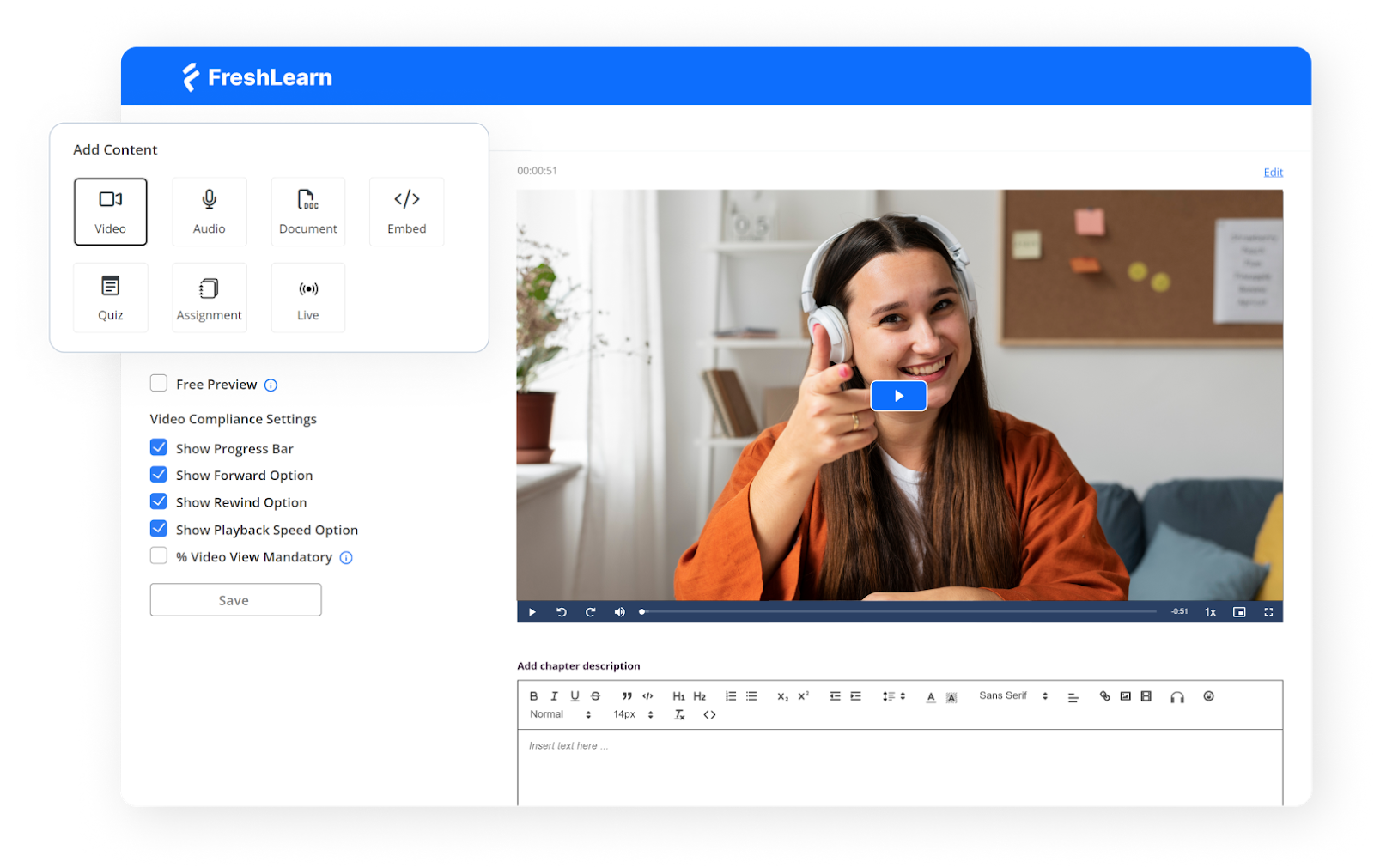
Whether you're running self-paced courses, structured lessons, or hybrid learning paths, FreshLearn adapts. It includes drip scheduling, integrated live sessions, assignment workflows, customizable certificates, and gamification tools like badges, points, and leaderboards.
Built-in student engagement tools
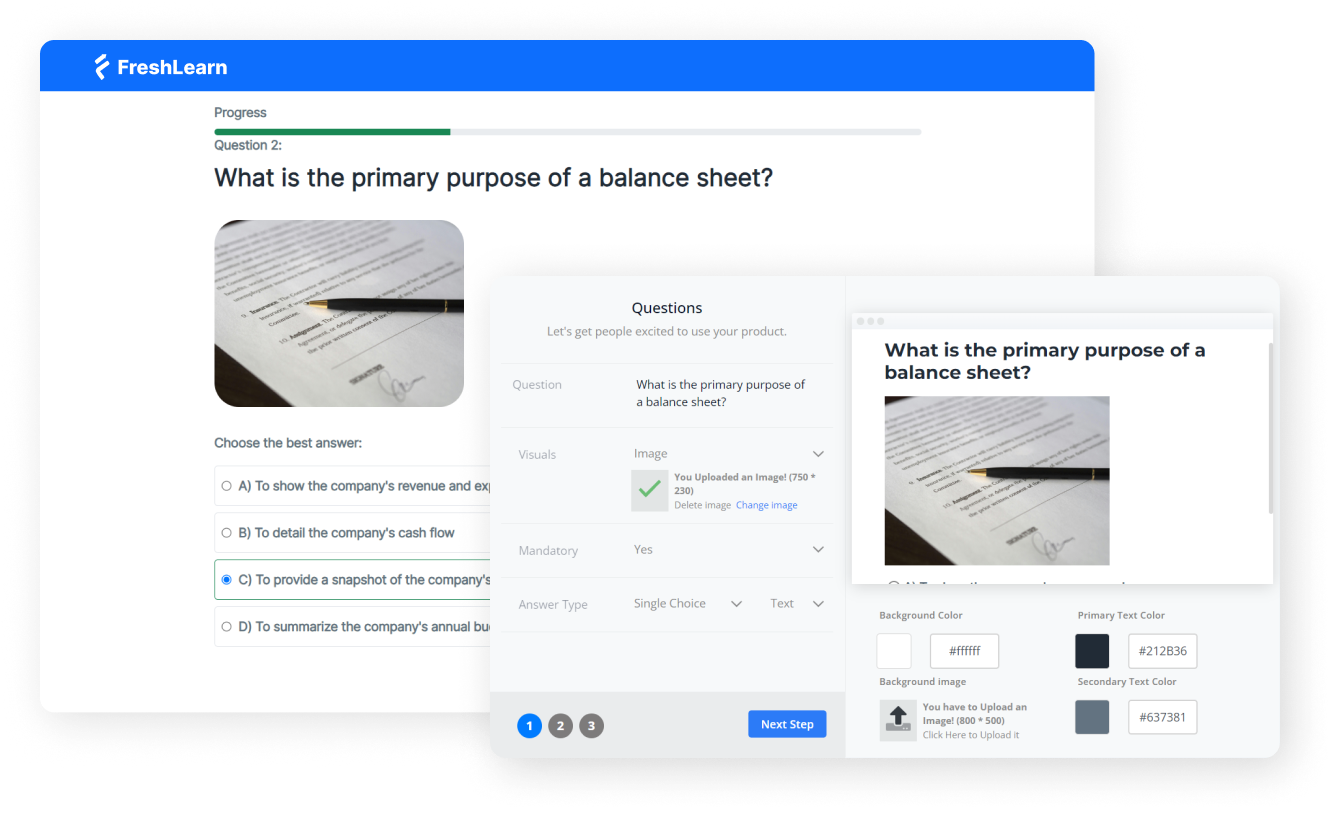
FreshLearn supports learner participation with interactive feedback prompts, automated emails triggered by lesson progress, and real-time notifications. It's worth being direct here: this is engagement at the course-progress and messaging level, not the in-video-frame interactivity (clickable hotspots, embedded quizzes inside the video player) that LearnWorlds is specifically known for. If in-video interactivity is your top priority, LearnWorlds remains the stronger pick for that specific need.
Zero-fee transactions, mobile app, and open API
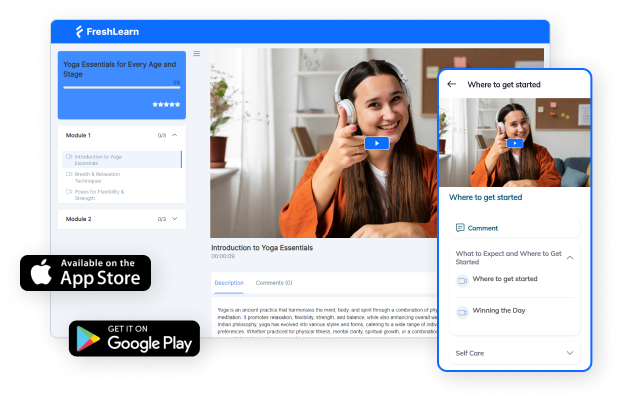
You get transactions without platform fees, white-label branding control, a mobile app experience with push notifications, and API access for flexibility.
FreshLearn combines speed, interactivity, flexibility, and cost-efficiency in a single solution, though not the specific in-video depth LearnWorlds offers.
2. Marketing and revenue generation
You’re here to power your course business. So the business part is equally important.
Both LearnWorlds and Kajabi are quite packed in this area, but there can be only one winner. Let’s see who wins.
How does LearnWorlds perform?
LearnWorlds includes native checkout pages, supports multiple payment gateways, handles taxes, and allows one-time, subscription, and installment payments (installments and payment plans require the Pro Trainer tier or above).
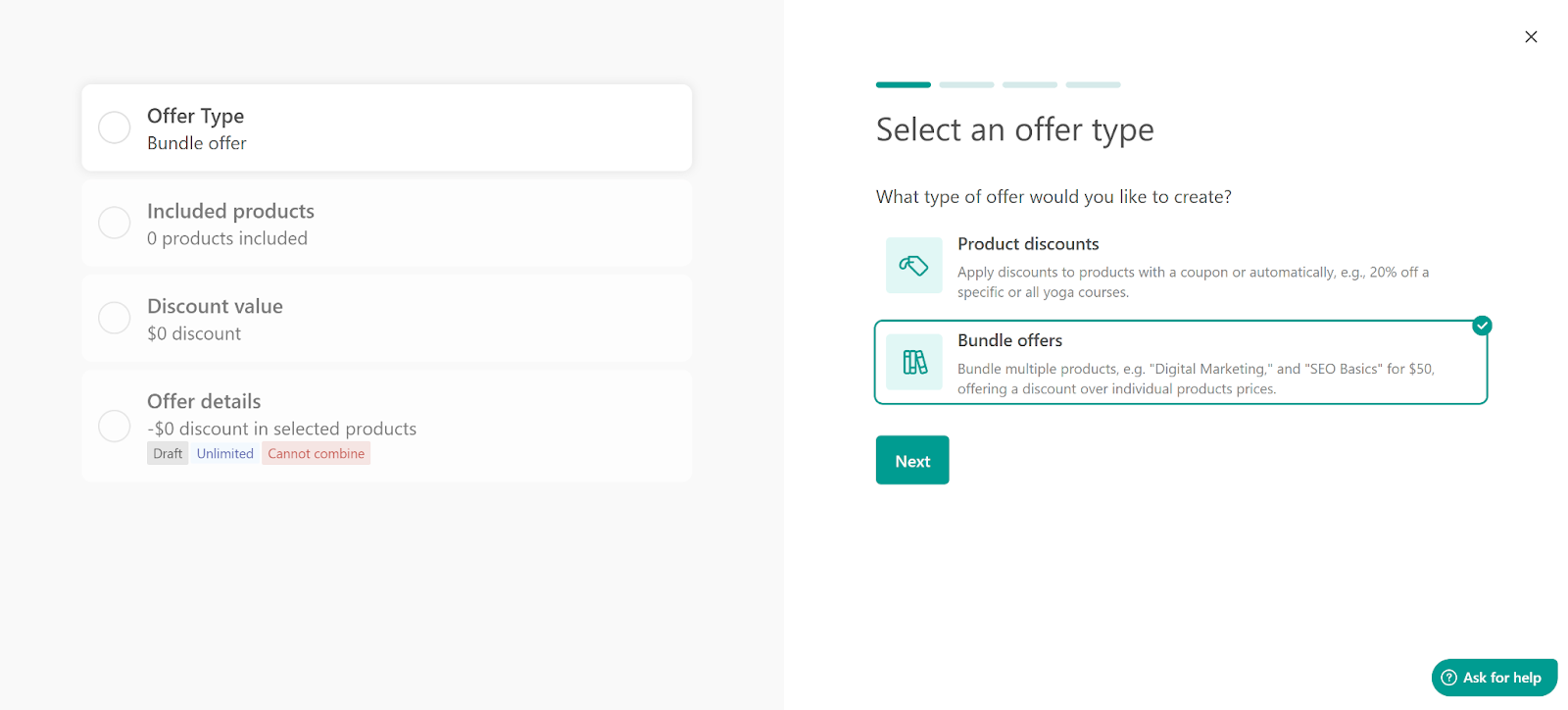
You can also create bundled offerings (like a course and an e‑book) and subscription models to encourage recurring revenue.
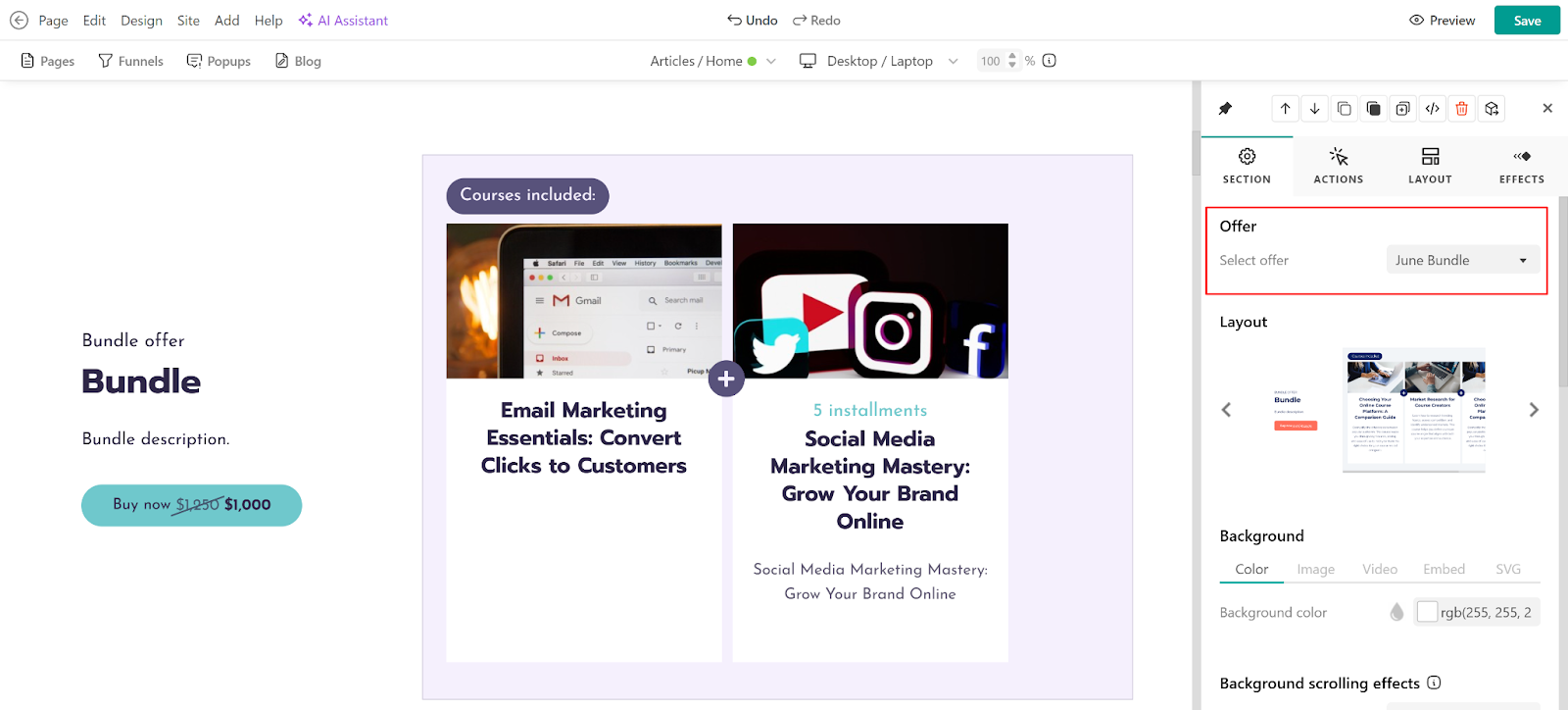
Beyond that, there’s space to generate limited-time offers and smart upsell banners to incentivize immediate purchases.
And to top it off, a built-in affiliate engine helps you launch referral campaigns and track conversions via real-time reporting.
The biggest marketing features, in brief:
- Integrated pop‑ups and survey forms to capture leads,
- Bundled pricing and coupon codes to segment offers and encourage conversions,
- Native integration with email and CRM tools like GetResponse, AWeber, and Moosend
- Zapier, Make, Pabbly, and Integrately for custom workflows
- Integrated funnel builder within the site builder
- Deep behavioral analytics, including clicks, heatmaps, and scroll tracking, to optimize funnel design
In revenue tracking, LearnWorlds leaves out nothing. You already get extensive reporting on sales, coupon effectiveness, course enrollments, and affiliate performance.
The platform's standout feature is detailed content-level analytics, which gives you insights into learner engagement, completion rates, and behavior metrics.
How does Kajabi perform?
Marketing is Kajabi’s forte, so Kajabi scores very high on this aspect.
Kajabi will handle most of your marketing needs without external tools, unlike LearnWorlds.
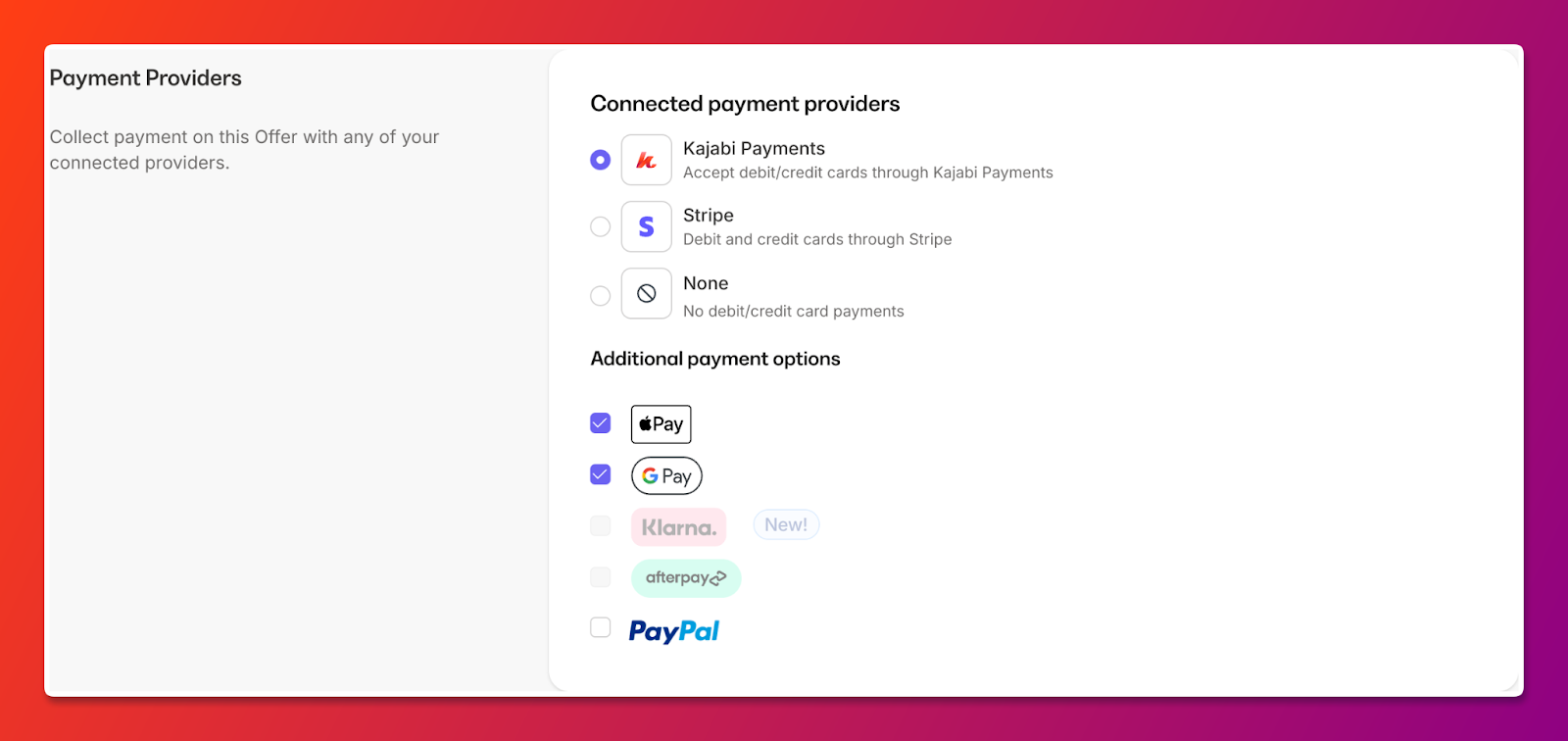
First, sales and checkout. Here, you'll be greeted by Kajabi Payments, the built-in processor. It accepts credit cards, subscriptions, and payment options like Apple Pay, Google Pay, Afterpay, and Klarna. Kajabi charges a 0% platform fee when you use Kajabi Payments; if you connect your own Stripe account instead, Kajabi adds a surcharge of 0.5% to 2% depending on plan, on top of Stripe's own processing fee.
Depending on your plan level, you can create an infinite number of offers, landing pages, and sales funnels. There's also an integrated affiliate system to recruit and manage promoters, available from the Growth plan ($249/month) upward.
Now, the notable marketing features, in brief:
- Email campaigns with embedded videos, countdown timers, drip sequences, and A/B subject testing
- Visual funnel builder to build fully automated workflows (opt-in to sale)
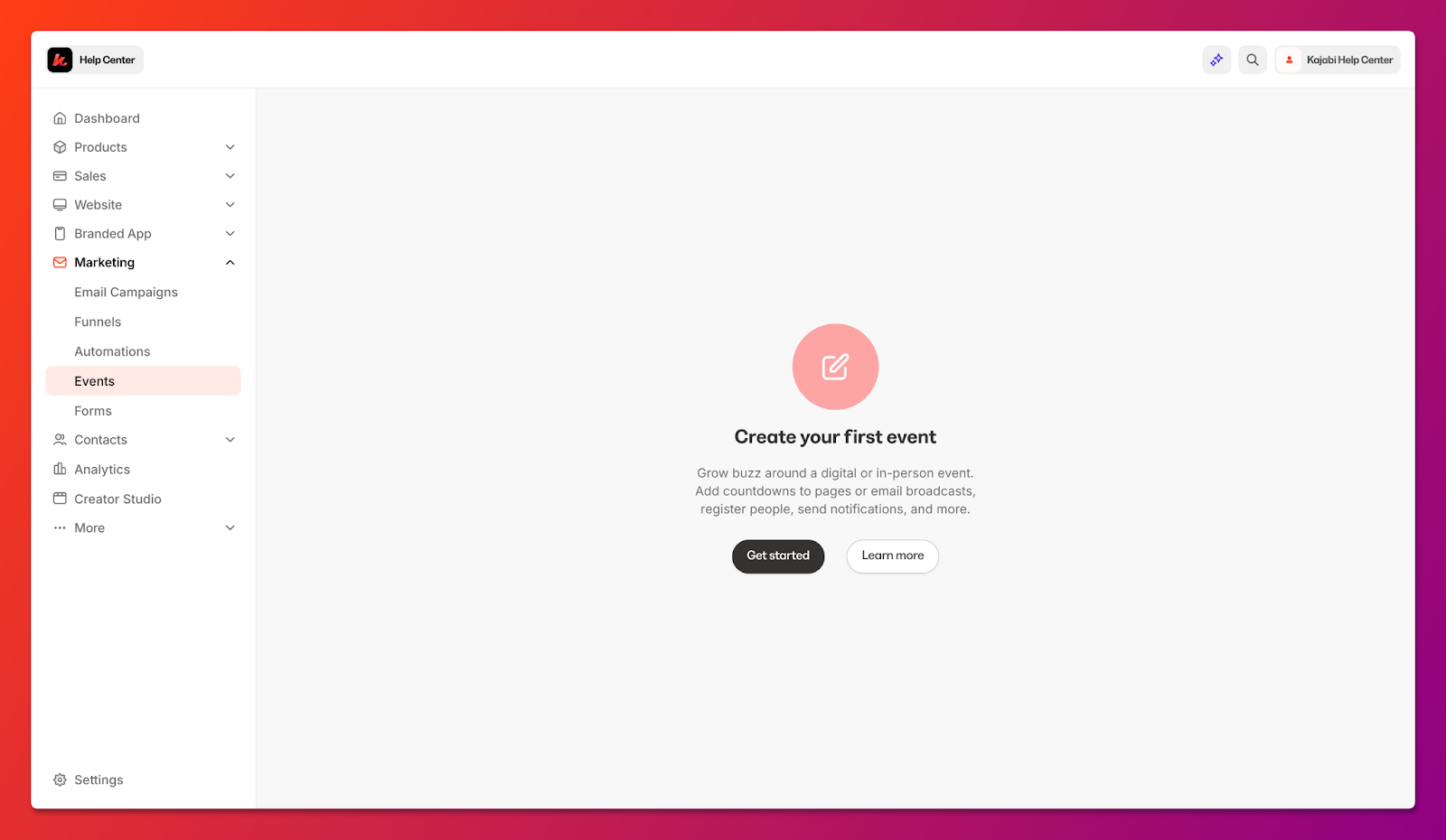
- Unlimited landing pages, opt-in forms, and events (live webinars) included
- Tagging, custom contact fields, advanced “if-then” automations
- Create marketing copy, social posts, and email templates quickly using AI tools
- Visual dashboards for daily/weekly revenues, top-performing offers, and average order value
- Deliver the entire business via a white-label mobile app (Pro plan)
It’s worth mentioning that Kajabi also takes a broader, integrated approach to analytics. You get dashboards that clearly display daily, weekly, and monthly revenue, funnel conversion rates, and customer value metrics.
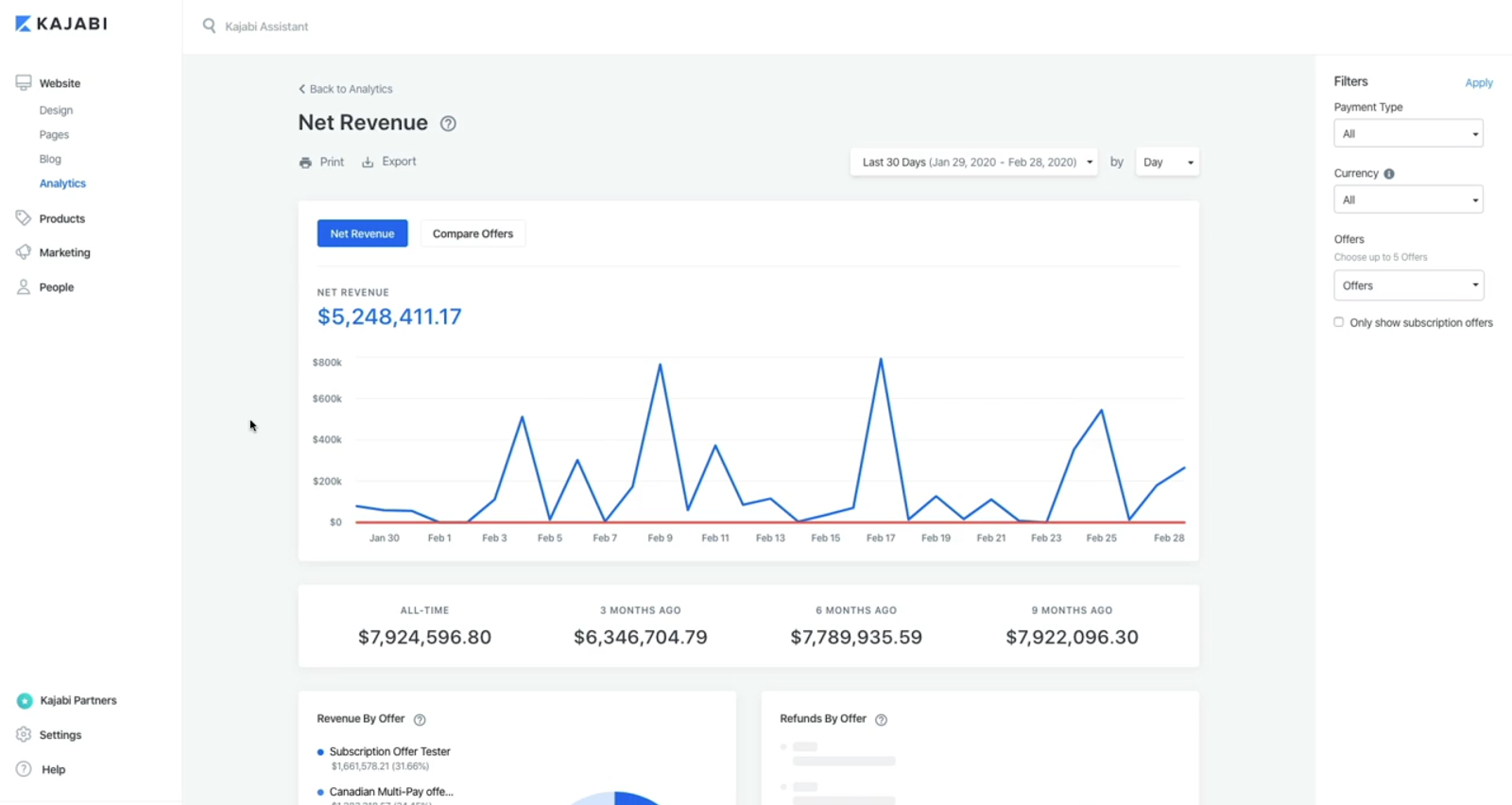
Its analytics connect directly with its email marketing and funnel-building tools, which makes it simpler to identify which stages in the funnel perform best and where optimizations are needed.
Additionally, Kajabi’s granular contact-level insights let you track individual user journeys in a much better way, like tracking purchases, interactions, and engagement.
Winner: Kajabi
For creators whose primary goal is simplified monetization, built-in funnels, and frictionless checkout with powerful marketing automation, Kajabi takes the crown.
Its unified marketing suite, with landing pages, email sequencers, events, affiliate onboarding, and conversion analytics, supports a sales-first approach with minimal setup friction.
However, LearnWorlds remains an excellent, flexible alternative when paired with external marketing tools like CRMs and email automations.
Where FreshLearn fits
FreshLearn delivers checkouts, email automation, and visual funnels natively at a lower price than Kajabi, with unlimited products and 0% platform fees.

The tradeoff worth naming: Kajabi's visual automation builder and funnel logic have had years longer to mature, and its ecosystem of templates and integrations is deeper. FreshLearn's marketing tools are genuinely native and included on every paid plan, but a creator running highly complex, multi-branch automation sequences may still find Kajabi more capable at that specific job.
Here's what FreshLearn includes:
- AI Agents for instant assets: It’s easy to generate complete course outlines, quizzes, and persuasive sales pages in a couple of clicks, which collapses days of copywriting and design into minutes.
- AI Page Builder: Drop in a title, choose a goal, and FreshLearn assembles a conversion‑ready landing page, complete with images, sections, and call‑to‑action buttons.
- Lead‑magnet studio: You can produce interactive quizzes, e‑books, or live workshops that feed directly into your lists.
- Responsive email designer: Create broadcasts in a visual builder that renders flawlessly on every screen and inbox.
- Integrated blog and newsletter hub: Publish articles, then push them straight to subscribers’ inboxes.
- Drag‑and‑drop email builder and automations: Design device‑perfect campaigns, then trigger them with a visual workflow canvas that segments subscribers automatically.
- Built‑in affiliate and referral engine: Launch a program, bulk‑convert any student into an affiliate, and track commissions without any external trackers.
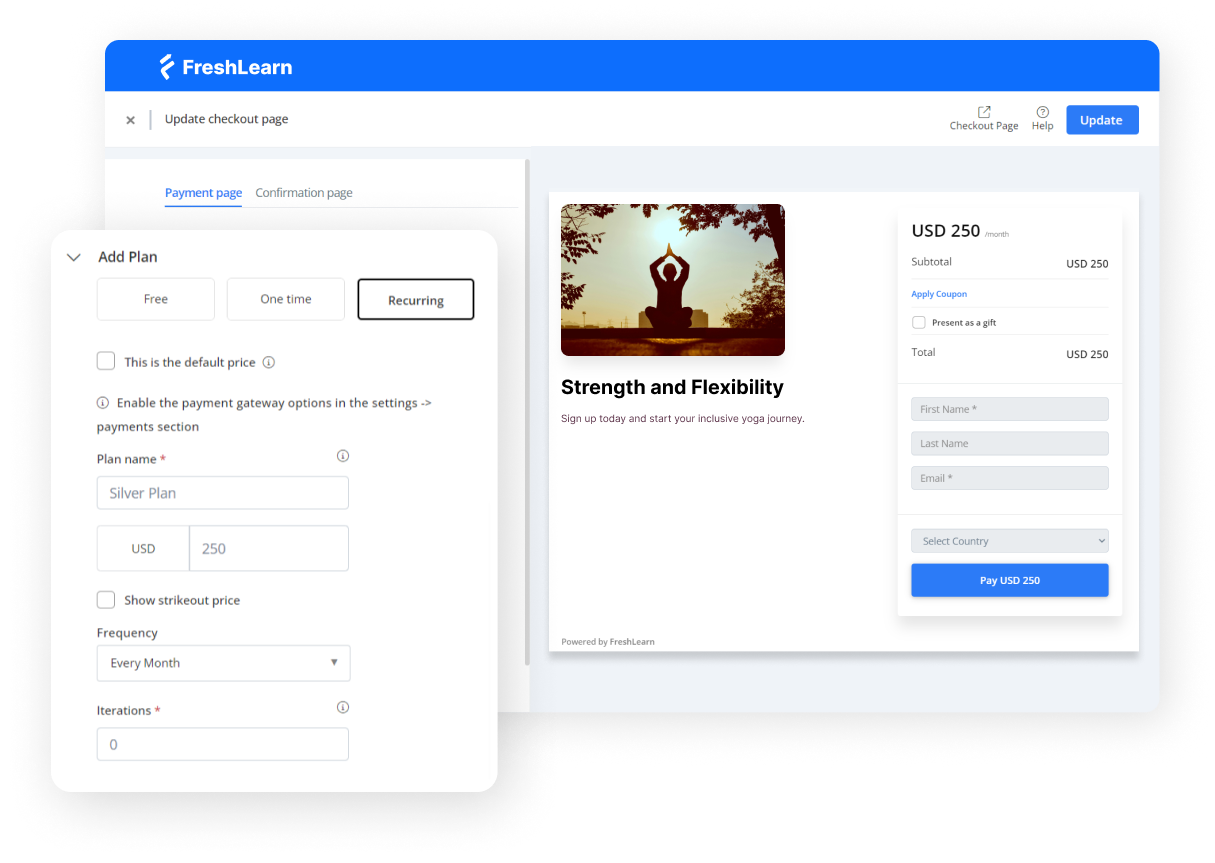
- Zero platform fees: You get to keep 100% of every sale while still processing one‑offs, subscriptions, or instalments through Stripe or PayPal.
The best part is that these pieces aren’t scattered around separate dashboards; they’re seamlessly blended inside FreshLearn’s Marketing hub. A creator can:
- Attract with a quiz or e‑book lead magnet,
- Capture the visitor on an AI‑built page,
- Nurture with pre‑written, behavior‑based email flows, and
- Convert via checkout at zero transaction fees, then hand the purchaser a unique referral link to start the cycle again.
Because analytics flow through the same pipeline, every open, click, and sale shows up in one report—no spreadsheet gymnastics.
Add the branded mobile app option and free SSL‑secured domains, and FreshLearn offers a marketing ecosystem that rivals Kajabi’s breadth while preserving the granular control that LearnWorlds fans love.
The Deciding Factor: Pricing
Kajabi's pricing was significantly restructured in January 2026, so the numbers below reflect the current live pricing on each vendor's site, checked in August 2026, not the older figures some guides still circulate.
The real cost of LearnWorlds
LearnWorlds' Pro Trainer tier costs $99/month (or $79/month billed annually) with no transaction fees. That's solid for hosting courses, but the moment you need a serious marketing stack, you have to add on extra tools:
Full stack, monthly billing: $99 + $79 + $49 = $227/month. Full stack, annual billing: $79 + $66 + $37 = $182/month.
That's three dashboards and three support teams either way.
Kajabi's "All-in-One" price and limitations
Kajabi bundles email, funnels, and checkout, but it controls growth with contact and product ceilings that were tightened in the January 2026 restructure:
- Basic: $179/month, or $143/month billed annually. 5 products, 2,500 contacts. Most creators outgrow the contact limit before the product limit.
- Growth: $249/month, or $199/month billed annually. 50 products, 25,000 contacts, affiliates, and advanced automations. This is the realistic entry point for anyone planning to run affiliates or multiple offers.
- Pro: $499/month, or $399/month billed annually. Unlimited products, 3 websites, 3 communities, for larger catalogs and multi-brand operations.
On Growth's annual billing, you're committing to $4,776 over 24 months; on monthly billing, that same 24 months runs $5,976. The product and contact ceilings still apply at every tier below Pro.
The FreshLearn advantage: Transparent, all‑inclusive pricing
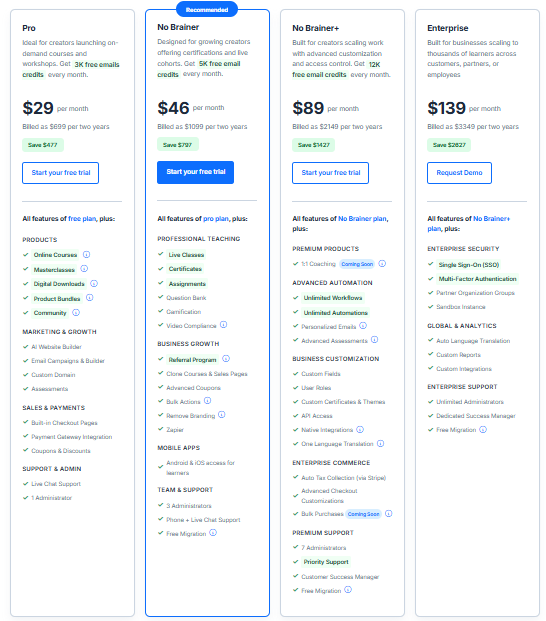
Every FreshLearn paid tier includes built-in email, funnel pages, AI page builder, referral engine, and 0% platform fees.
No Brainer is the closest feature match to Kajabi's Growth plan and LearnWorlds' Pro Trainer plus add-ons, since it's the tier that adds community, live classes, certificates, and gamification on top of the base marketing stack.
Total cost of ownership over 24 months, compared fairly
The fairest comparison holds billing cadence constant across all three platforms rather than mixing a discounted prepay rate against undiscounted monthly rates. Here's both cadences side by side, using FreshLearn's No Brainer tier as the closest feature match:
At either billing cadence, FreshLearn's No Brainer plan runs roughly one-third the cost of the LearnWorlds stack or Kajabi's Growth plan over two years, not the far larger multiple you'd get by comparing FreshLearn's deepest discount against competitors' undiscounted rates.
If you're willing to prepay for two years upfront, FreshLearn's No Brainer plan drops further to $49/month ($1,199 total for 24 months), but that's a genuinely different commitment length than the annual comparisons above, so it's called out separately rather than folded into the headline number.
What this means, without the inflated framing:
- LearnWorlds looks affordable on the surface, but once you add email and funnels, the full stack lands close to Kajabi's price, without the single-dashboard convenience.
- Kajabi removes the integration headache but charges the highest entry price and limits products and contacts until you upgrade.
- FreshLearn delivers a comparable marketing stack from day one at roughly a third of the cost of either alternative, though (as noted above) it doesn't match LearnWorlds' in-video interactivity or Kajabi's most advanced automation logic.
Finally: 3 Quick Questions to Find Your Perfect Platform
Scrolling through endless feature grids is no different than comparing jet engines to bicycles. Everything looks shiny until you ask the right questions. Use this three‑step filter to land on the platform that actually fits the way you work.
Question 1: What are you selling today (and tomorrow)?
Single signature course?
You want a friction‑free checkout and a player that makes your content look premium. LearnWorlds nails the interactive lesson side with perks like clickable video hotspots and in‑player workbooks. FreshLearn layers solid delivery onto a lighter-weight, lower-cost stack, without matching that in-video interactivity.
A portfolio of courses, downloads, or coaching offers?
Kajabi shines here with its drag‑and‑drop product catalog and unified dashboard; you can start a mini‑course, a membership, and a coaching program without leaving the interface. FreshLearn matches that breadth but adds free, one‑time, or recurring pricing options for every product, with no product cap on any paid tier.
A community‑driven membership?
Kajabi’s built‑in Communities keep discussions under one roof and marry neatly with its email automations. LearnWorlds can mimic this with integrated social feeds, but community is its side gig, not the headline. FreshLearn sits in between: flexible access rules, gamification badges, leaderboards, and progress tracking that turn lurkers into superfans.
Question 2: What’s the real budget: cash and time?
Bootstrapping or market‑testing?
FreshLearn’s free tier lets you launch a full course without swiping a credit card. You upgrade only when you need advanced automations or your custom domain; it’s handy when validation is priority one.
Laser‑focused on a single high‑ticket offer?
LearnWorlds’ $99/mo Pro Trainer plan, plus its beefy interactive toolset, makes sure every student feels the premium price tag. Just remember you’ll add on email and funnels elsewhere, which adds both dollars and dashboards.
Ready to scale with capital in hand?
Kajabi's Growth plan ($249/month, or $199/month annually) packs email, funnels, and an affiliate center behind one login, once you're past the Basic tier's product and contact limits. FreshLearn's No Brainer tier ($79/month, or $59/month annually) covers similar ground at a meaningfully lower price, with the tradeoffs noted above.
Question 3: How much flexibility will you need a year from now?
Brand‑first, highly customized experience?
LearnWorlds offers true white‑label control, starting from custom mobile apps to granular CSS tweaks. It’s ideal for corporate training or agencies serving multiple brands.
Automation depth without code?
Kajabi's visual pipeline builder handles complex "if-this-then-that" logic natively, and it's had years to mature. FreshLearn offers a drag-and-drop automations canvas on every paid tier, which covers most creators' needs without extra cost, though very complex multi-branch sequences are where Kajabi still has an edge.
Data freedom and integrations?
Both LearnWorlds and FreshLearn expose open APIs and robust Zapier hooks. Kajabi covers common scenarios but keeps advanced data flows closer to its chest.
Conclusion: The Best Platform Is the One That Fits How You Actually Work
A tool that looks inexpensive on paper can become the priciest option if you're stuck piling on add-ons or wrestling with limits every quarter.
- Choose LearnWorlds if in-video interactivity and white-label branding are mission-critical, and you don't mind adding marketing tools.
- Choose Kajabi if you want an all-in-one cockpit, can afford $179 to $499 a month, and need its most mature automation logic.
- Consider FreshLearn if you want a comparable all-in-one stack at roughly a third of the cost, and can live without LearnWorlds' in-video depth or Kajabi's most advanced automation branching.
FreshLearn aims to give you one login, a full marketing stack, and zero transaction fees, with the honest tradeoffs above. Launch free, upgrade only when revenue justifies it, and migrate if you're coming from elsewhere.
Ready to see if it fits? Start a test course on FreshLearn and answer these three questions for yourself.
FAQs
1. Can I migrate my existing courses from Kajabi or LearnWorlds to FreshLearn without losing data?
Absolutely. FreshLearn has a concierge migration service for annual subscribers that handles course content, student records, and payment links. You export your videos, PDFs, and user lists; the migration team maps them to FreshLearn’s course builder, recreates drip schedules, and issues new login credentials to learners.
2. How do transaction fees differ among LearnWorlds, Kajabi, and FreshLearn?
LearnWorlds charges a flat $5 fee per course enrollment on its Starter tier only, not a percentage; Pro Trainer and above have 0% platform fees, though you'll still pay Stripe or PayPal processing. Kajabi charges 0% platform fee when you use Kajabi Payments; connecting your own Stripe account instead adds a surcharge of 0.5% to 2% depending on plan, on top of standard card-processing rates (roughly 2.9% + 30¢). FreshLearn charges 0% platform fees on every tier, so after card-processing fees, FreshLearn and Kajabi-with-Kajabi-Payments land at similar per-sale costs, while LearnWorlds' Starter tier is costlier per sale at low volume due to the flat $5 charge.
3. If my catalogue explodes to dozens of courses and offers, which platform forces the fewest upgrades?
FreshLearn removes product caps entirely, with unlimited courses, funnels, and students on every paid tier. Kajabi's Basic tops out at 5 products and 2,500 contacts; most creators outgrow it into Growth (50 products, 25,000 contacts) or Pro (unlimited products, 3 websites). LearnWorlds allows unlimited "courses" but counts bundles and memberships as courses too, which can tangle reporting.
4. I rely on interactive elements to keep students engaged; does FreshLearn match LearnWorlds’ depth?
Not quite, and it's worth being direct about that. LearnWorlds leads with in-video quizzes, clickable hotspots, and interactive e-books built into the video player itself. FreshLearn answers with graded quizzes, assignments, gamified badges, leaderboards, lesson-triggered emails, and mobile push nudges, all living in the same dashboard as its marketing tools. That's a different, broader kind of engagement layer than LearnWorlds' in-video interactivity specifically, and creators for whom in-video interactivity is the priority should lean toward LearnWorlds.
5. When does FreshLearn become cheaper than Kajabi’s Growth tier in real dollars?
Kajabi Growth costs $249/month billed monthly, or $199/month billed annually. FreshLearn's No Brainer tier, the closest feature match, costs $79/month billed monthly, or $59/month billed annually, roughly a third of Kajabi's price at either cadence. Card-processing fees are similar on both platforms once you account for Kajabi's Stripe surcharge or use of Kajabi Payments, so the plan-price gap is the main driver of the difference.
6. Did Kajabi's pricing change recently?
Yes. Kajabi restructured its pricing in January 2026, raising Basic, Growth, and Pro monthly rates and tightening contact and product limits at each tier. Existing customers were transitioned to the new pricing rather than grandfathered at old rates, which generated pushback in creator communities. Guides that still cite Kajabi's older $149/$199/$399 figures are out of date.
7. Is LearnWorlds' Starter fee a percentage of sales or a flat fee?
It's a flat fee: $5 per course enrollment, regardless of the course's price. This means the fee's impact as a percentage of revenue is largest on lower-priced courses and shrinks as your price point rises, which is different from a true percentage-based transaction fee. The fee disappears entirely on the Pro Trainer plan and above.
You might also like
Hosted by