Skool vs Kajabi: The Definitive 2026 Comparison

Last updated: August 25, 2026
Quick Answer
Skool and Kajabi solve different problems: Skool is a community-first platform with a simple two-tier price ($9/month Hobby or $99/month Pro), while Kajabi is a full marketing and sales suite with a steeper price ($179 to $499/month) built for creators who need funnels, email automation, and deep customization. Skool's cheap Hobby tier carries a 10% transaction fee, the highest of any platform compared here; Kajabi charges 0% platform fees but starts at a much higher base price. FreshLearn sits between them: built-in community and marketing tools at $49 to $149/month with 0% transaction fees on every plan, though it doesn't fully match Skool's community-first depth or Kajabi's most mature automation.
Key Takeaways
- Skool now offers two plans: Hobby at $9/month ($7.50/month billed annually) and Pro at $99/month ($82/month billed annually). Hobby charges a 10% + $0.30 transaction fee on every paid transaction; Pro charges 2.9% + $0.30 on sales up to $899 and 3.9% + $0.30 above that.
- Kajabi restructured its pricing in January 2026: Basic now costs $179/month ($143/month annually) for 5 products and 2,500 contacts; Growth costs $249/month ($199/month annually) for 50 products and 25,000 contacts; Pro costs $499/month ($399/month annually) for unlimited products across 3 websites. Kajabi's previously advertised $89/month Kickstarter plan was removed from the public pricing page and now surfaces only through direct sales contact.
- Skool's Trustpilot rating is 1.7 to 1.9 out of 5 across a small review sample (roughly 50 reviews), driven mostly by billing and cancellation complaints rather than product complaints; its Google Play app rating is considerably higher at around 4.1/5, a gap worth knowing about before treating either number as the full picture.
- Kajabi holds approximately 3.5/5 on Trustpilot; FreshLearn holds 4.7/5 on Trustpilot.
- FreshLearn's Pro plan costs $49/month, $41/month billed annually, or $35/month billed every two years, with 0% transaction fees on every tier, including the free plan.
- FreshLearn's honest limitation: it doesn't match Skool's community-first depth (Skool's community is the default home screen; FreshLearn's is a strong add-on) or Kajabi's most mature funnel automation, since both of those platforms have had years longer to build out those specific specialties.
I spent four days researching Kajabi and Skool to tell you which is the better online course platform.
And if I had to boil down the choice between them in a few lines, it would be this:
If you want a clean, simple course-selling tool that also lets you engage with your audience regularly, Skool is for you.
On the other hand, if you want to sell an advanced course with branding, assessments, and certifications included, on a platform with a vast feature set, you're better off with Kajabi.
But...there's more I want to say.
Read on to see the detailed comparison between Skool and Kajabi and see my verdict.
Quick Verdict: Who’s Skool and Kajabi For
At-a-Glance Comparison: Skool vs Kajabi vs FreshLearn
As you’ll see a little later in the piece, FreshLearn is a better and more affordable alternative to both platforms.
We’ll talk more about FreshLearn later.
Here’s just a sneak peek of its features and how it compares against the two contenders in discussion.
The Fundamental Difference: Community-first Learning vs an All-In-One Online Selling Platform
Before I take you to a detailed comparison between Skool and Kajabi, here’s a quick overview of both platforms.
What is Skool?
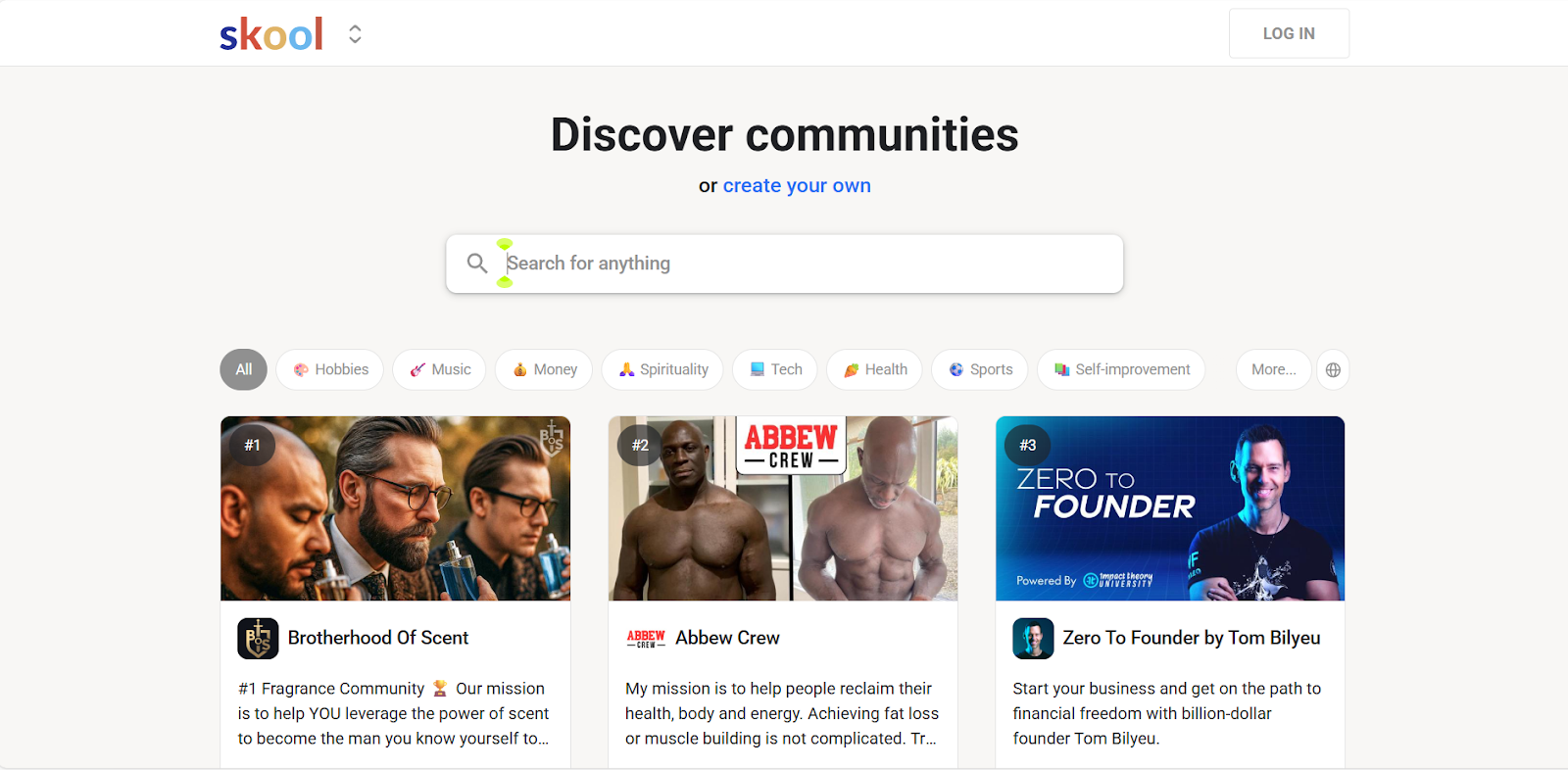
Skool is a sleek online platform built for creators who care about community as much as their course content. Skool combines discussion forums, online courses, events, and a light layer of gamification into a cohesive package, making it a suitable choice for creators who want to consistently engage with their learners.
The goal is to give you one home for your people and your programs.
As an online course tool, Skool doesn’t try to be a complex funnel machine or marketing suite. It’s designed to be a beginner-friendly platform to bridge the gap between learning and community and create a space where members don’t just consume content but interact and grow together.
However, if you just want to sell a traditional course or digital product and don’t care much about communities or live sessions, Skool may feel limiting. It doesn’t offer the best customization options, and you’re on your own if you want to market your courses or build a website for your digital offering.
What is Kajabi?
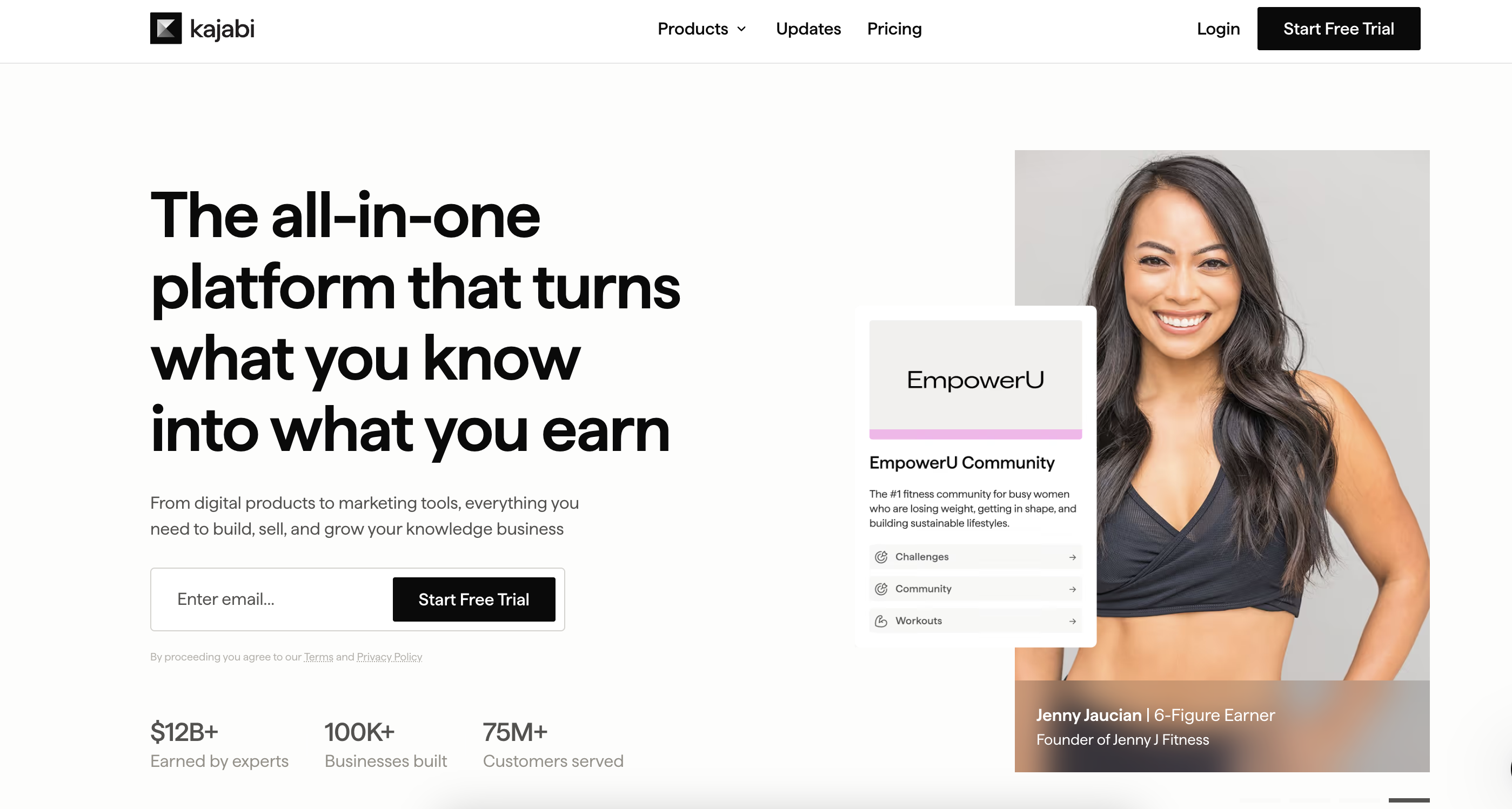
Kajabi is an online course creation platform (note that you can sell more than just courses here) that bundles marketing, sales, and landing page creation tools in one basket.
Kajabi users can do everything from creating their own mobile apps and websites to hosting webinars, without relying on tons of integrations or subscribing to new tools.
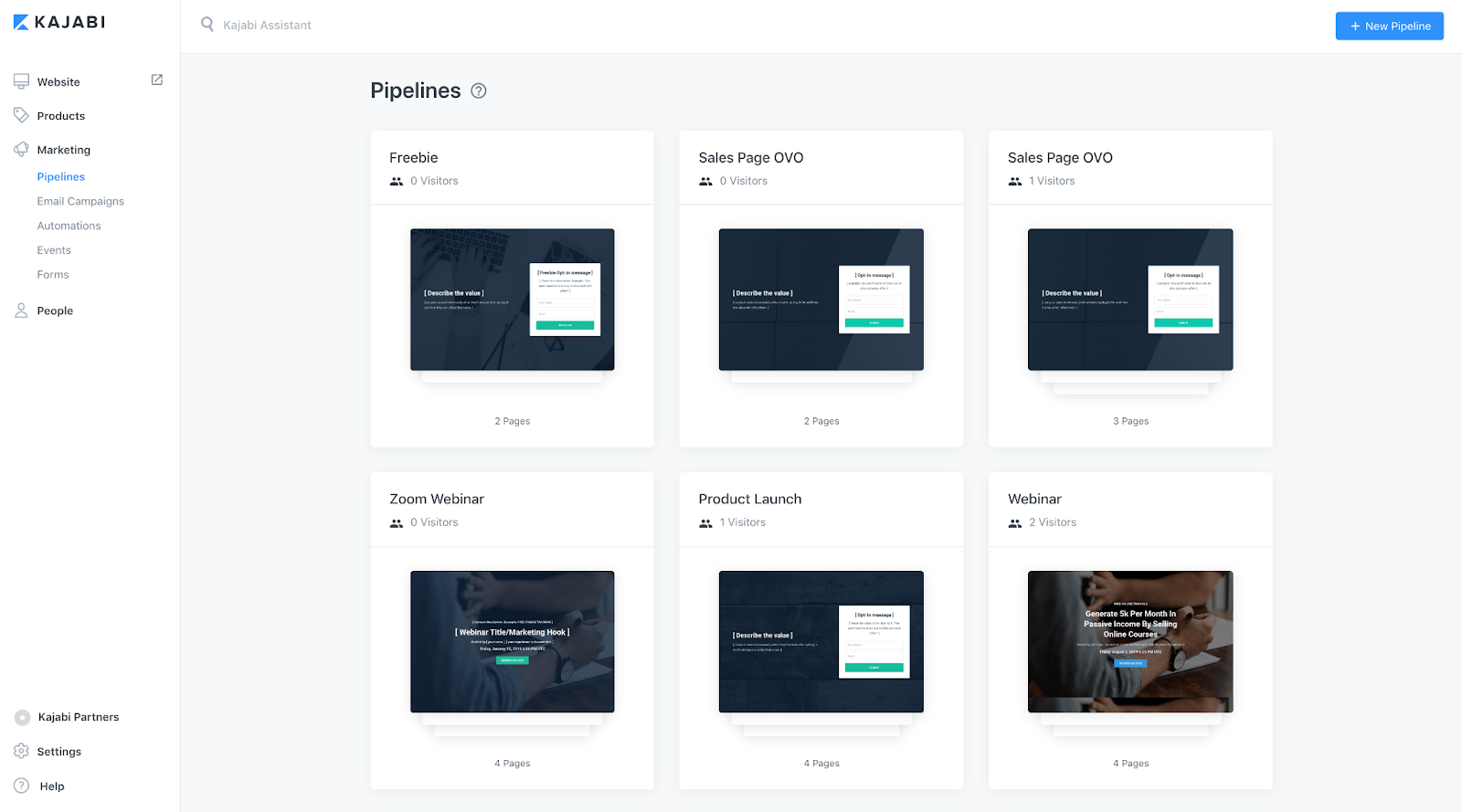
It stands out for its powerful built-in marketing engine. For instance, its Pipelines feature lets you create seamless, no-code sales funnels with landing pages. It also excels at email marketing and landing page creation, with automation, segmentation, and polished templates.
In a nutshell, Kajabi is a powerful tool to sell stuff online. It comes at a higher price tag than most competitors, but its 'all-in-one' approach justifies that investment for creators who use most of what it offers.
With so many features, its only downside is its complexity. Several users find its interface cluttered and disorganized.
If you don't have the time to read through the blog post, you can just watch the video here:
Feature Face-Off: The Detailed Breakdown of Skool vs Kajabi
Here’s the part you’ve been waiting for. I took a close, critical look at each platform to see how they stack up across key comparison criteria.
Let’s begin.
Course creation and learning tool
The choice between Skool and Kajabi in terms of course creation is simple: if you prioritize engagement and have a simple course to sell, Skool wins.
But if your priority is to create a more traditional course, while engagement and community come second, Kajabi is the better choice.
Skool
Skool offers a simple way to create courses with its Classroom feature. Here, you can create unlimited courses for your Skool group. You simply name your course, add a description, and organize it into modules and lessons.
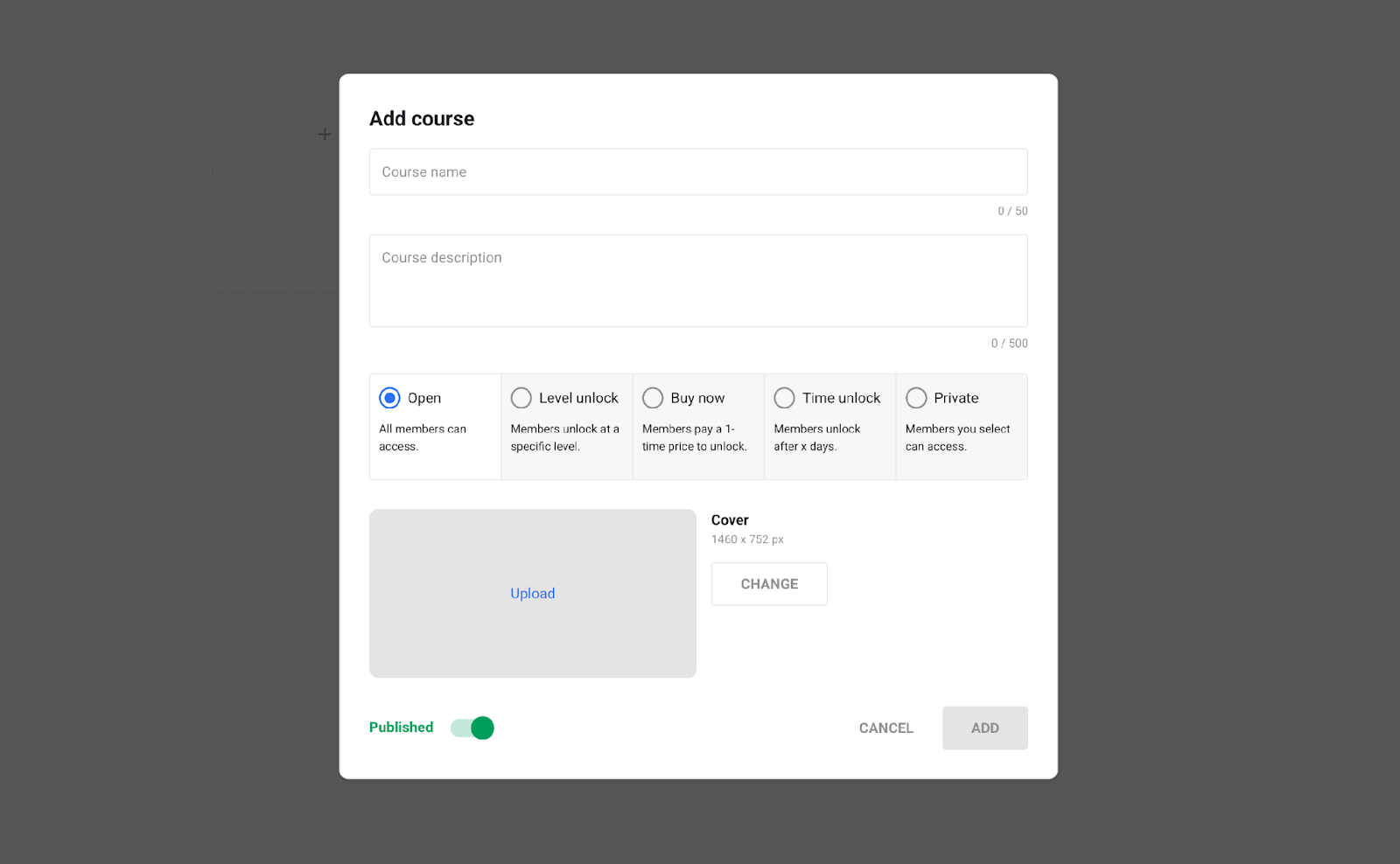
Within each lesson, you can include linked videos (hosted externally on platforms like YouTube, Vimeo, or Loom) and, now even available natively, text descriptions, transcripts, and action items—there’s a drag‑and‑drop flow for reordering content.
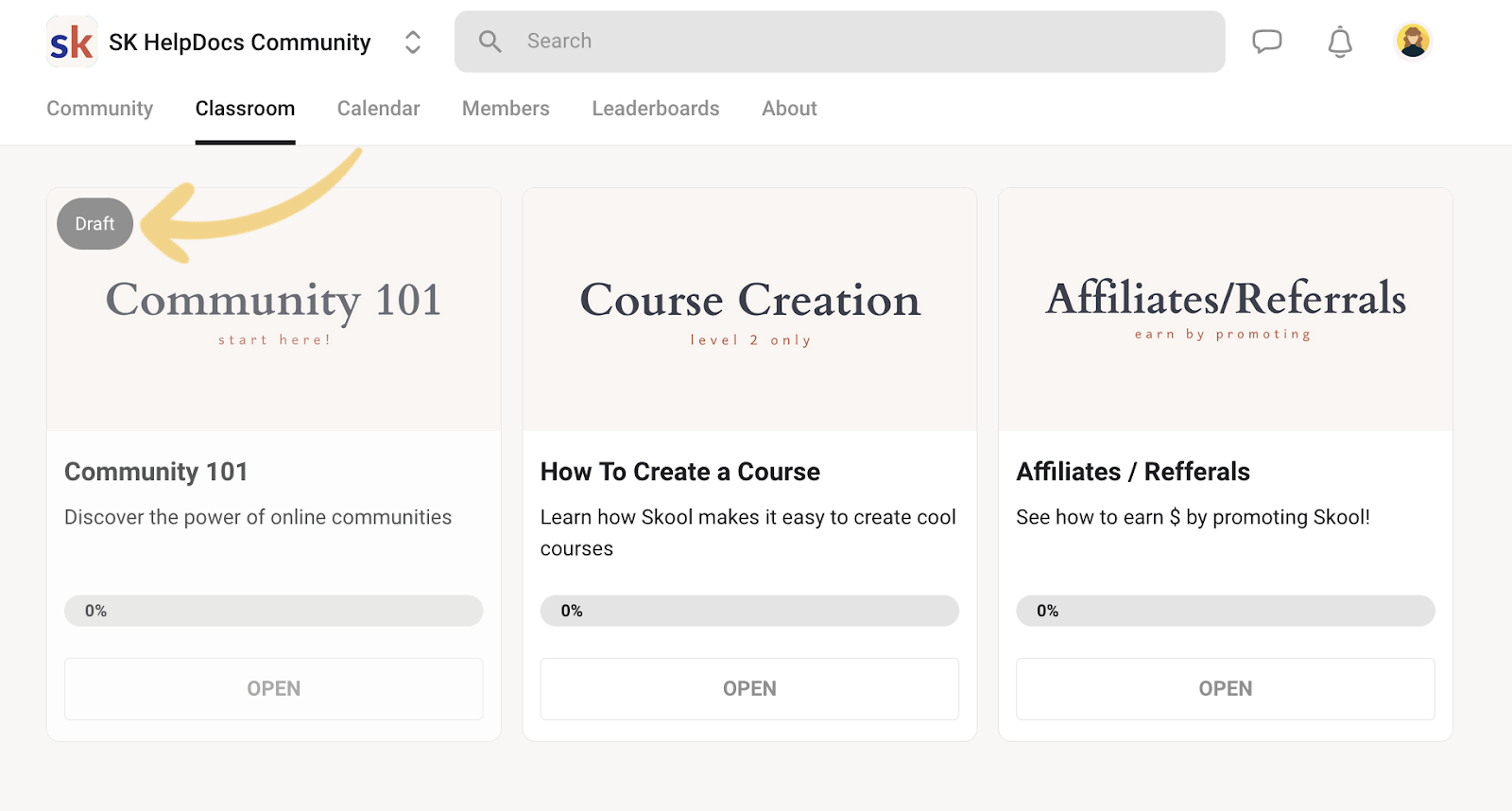
Once your course is ready, you get the option to share it with your Skool group for free (open), available to only certain members, paid, or have it unlocked only at a certain time or to specific members.
Skool also allows for progress tracking, giving members the option to mark modules as completed.
Where Skool truly shines is in weaving community and courses together. Discussions live right under lessons, polls, chat, and notifications, helping keep members engaged. Gamification adds fun—members earn points, climb leaderboards, and even unlock content based on activity.
The issues? There are quite a few:
- Lacks course assessment tools: There’s no built-in support for quizzes, certifications, or file uploads, which means you need to resort to Google Forms or Typeform integrations.
- Limited customization and branding: There’s not much you can do to brand your courses. They all follow the same layout as there’s minimal design flexibility.
- Basic analytics only: While you get completion rates and activity metrics, it falls short compared to dedicated LMS platforms.
- No native live streaming or file library: Live calls require integrations (e.g., Zoom), and there’s no centralized repository for downloadable resources, making resource organization across courses harder.
Kajabi
Kajabi offers much more powerful course-building features compared to Skool. To begin with, you get access to beautiful templates that you can use to speed up course creation, in addition to a drag-and-drop course builder.
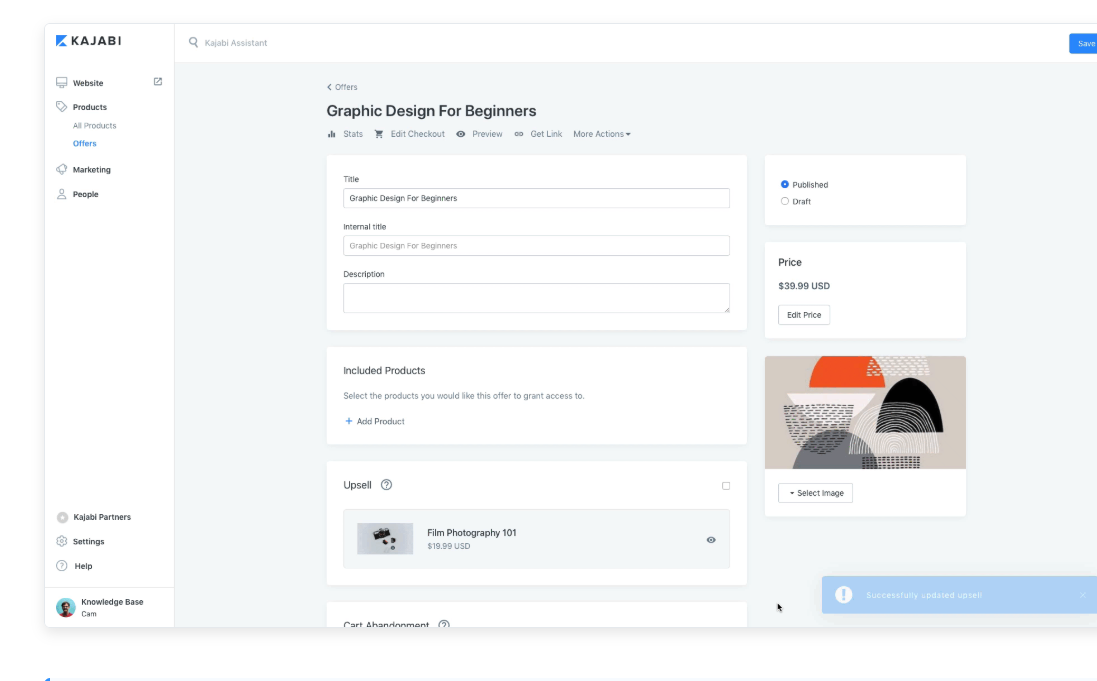
You can choose between evergreen courses (self-paced, asynchronous) or cohort-based (group-based, on a set schedule). For the latter, you can hold a live session directly within the platform to provide learners with a live learning experience.
Moreover, you can structure lessons and modules easily, upload videos (hosted via Wistia), PDFs, audio, quizzes, and assignments, and even set drip schedules or lock content until previous steps are complete.
Unlike Skool, interactive features come built in: there are quizzes, surveys, and graded assessments, and you can even issue branded course-completion certificates.
The best part? You can use Kajabi’s native AI to accelerate course creation. The analytics are also way more powerful, and you can even access detailed student profiles and progress to offer tailored support to your subscribers.
Cons? A couple of real ones:
- Quiz and gamification are basic: While Kajabi supports quizzes and certificates, it lacks advanced gamification like points, badges, or leaderboard systems natively.
- Basic assessment tools: If you want to use Kajabi for academic or corporate e-learning, it may not prove to be enough. Yes, it has quizzes and assessments, but don't expect timed exams or the ability to restrict the number of times a candidate can take an exam.
Winner: Kajabi, for the depth of its native course-building tools compared to Skool's intentionally lightweight Classroom feature.
That said, it's worth knowing there's a Kajabi alternative worth comparing on this specific criterion too: FreshLearn.
FreshLearn bundles a comparable feature set, with AI-powered course creation.
You get a course builder that supports varied content (video, PDFs, etc.) and native assessments with single-choice, multiple-choice, and short-answer questions, plus scoring and pass marks. That lets you check understanding without external forms.
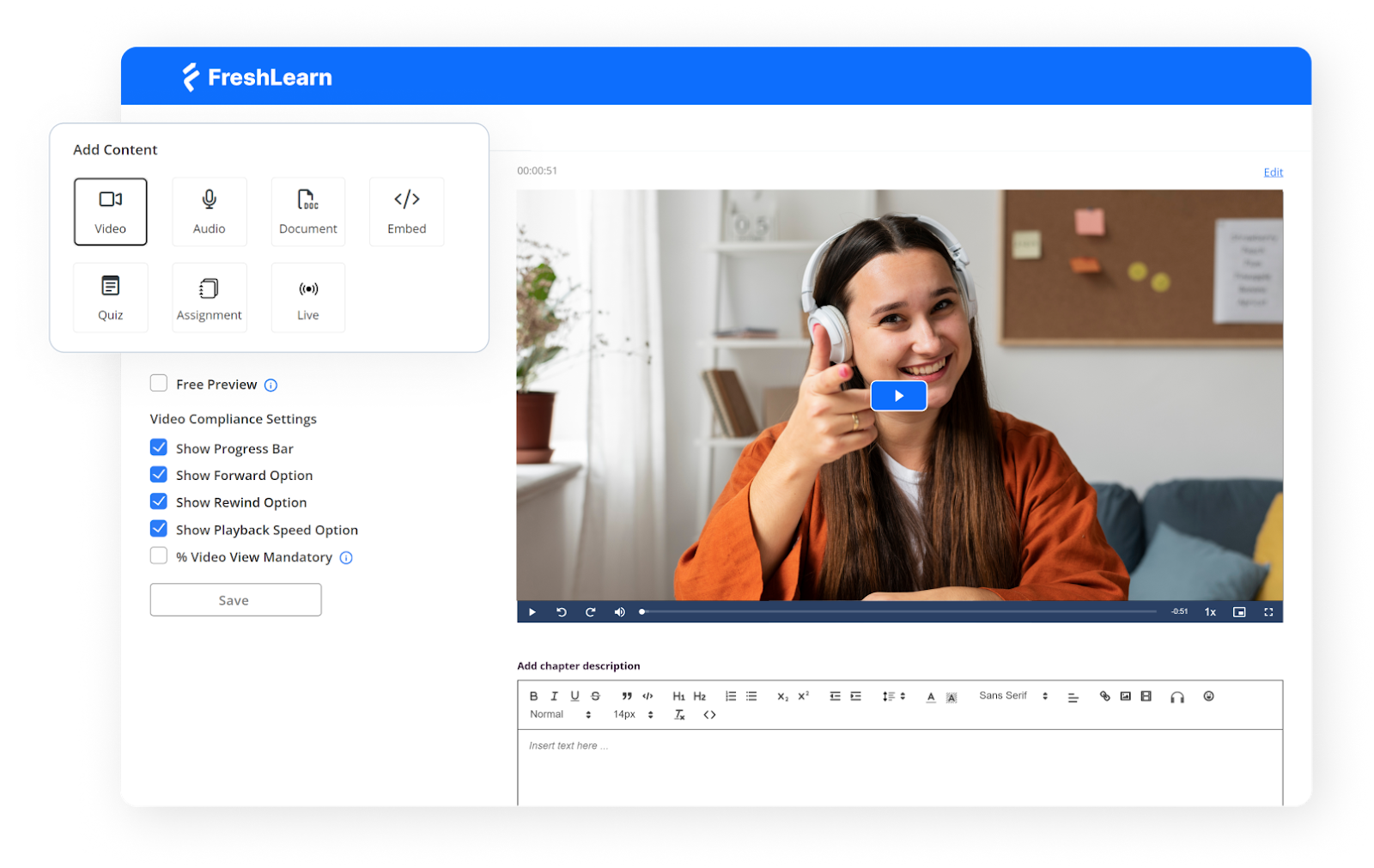
You can award completion certificates (with your branding) and motivate progress through built-in gamification (points/badges/leaderboards), which is something Kajabi lacks natively. And the Android and iOS learner apps keep participants engaged between sessions.
Even for teams, FreshLearn’s plan ladder adds administrative seats and support as you grow, while keeping 0% platform transaction fees across plans.
FreshLearn also serves a use case neither Skool nor Kajabi is designed for: agencies that need to build and manage white-label training portals for multiple B2B clients from a single account, with each client seeing only their own brand throughout the portal.
Community and engagement
No matter how technically perfect your content is, or how fast you can create content, it’s of no use if viewers and learners don’t engage with it, talk about it, and come back to revisit.
That brings us to our next comparison: community and engagement features.
Skool
Communities are Skool’s USP. In fact, the first thing learners access on Skool is a community where they can see your posts, comment, and interact with one another. Unlike Kajabi, where the course takes center stage, for Skool, the community is the home base, and learning unfolds around it.
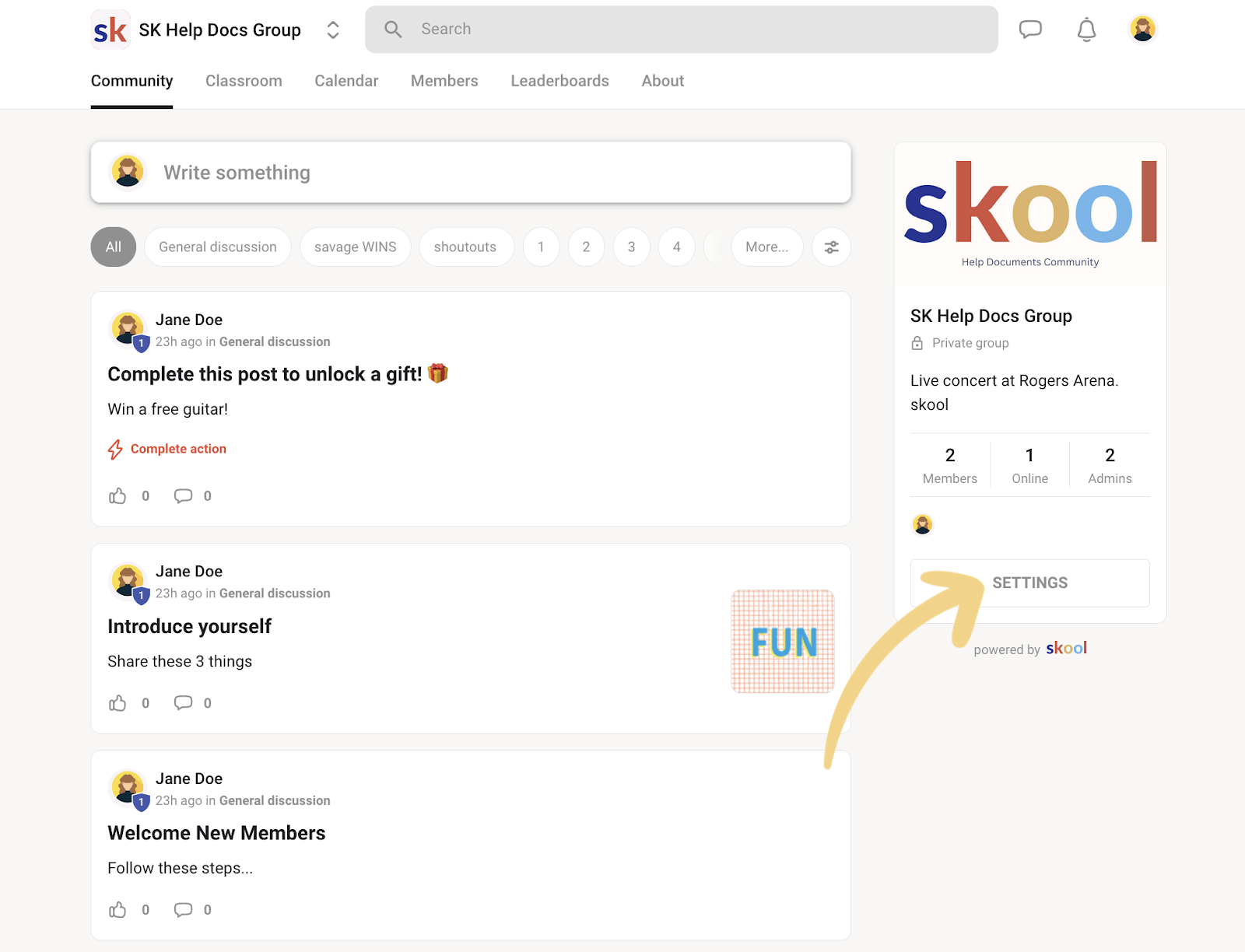
You can think of Skool’s community like a Facebook feed minus the distractions. You can post updates, host discussions, ask questions, create polls, and even pin important content. Members can like, reply, and @mention others, making the experience feel conversational and fluid.
Another highlight here is gamification. Members earn points for activity — commenting, completing lessons, attending events — which helps them climb a visible leaderboard. You can tie progress to content access too, unlocking modules or perks as users hit milestones. It's a light but clever way to keep people coming back, especially in cohort-based or group coaching programs.
But not all is rosy. Some trade-offs I noticed are as follows:
- No subgroups, private DMs, or advanced moderation tools are available at this time.
- Creators who need tiered discussions or segmented member groups might find the platform too restrictive.
- Branding options are minimal — you can set your cover photo and primary color, but the overall layout stays the same across all communities.
Kajabi
Kajabi Communities offer a solid way to help keep your audience engaged across courses, coaching, and more. You can create Channels to organize your members into smaller groups, host live meetups or rooms, and even run challenges to drive group participation.
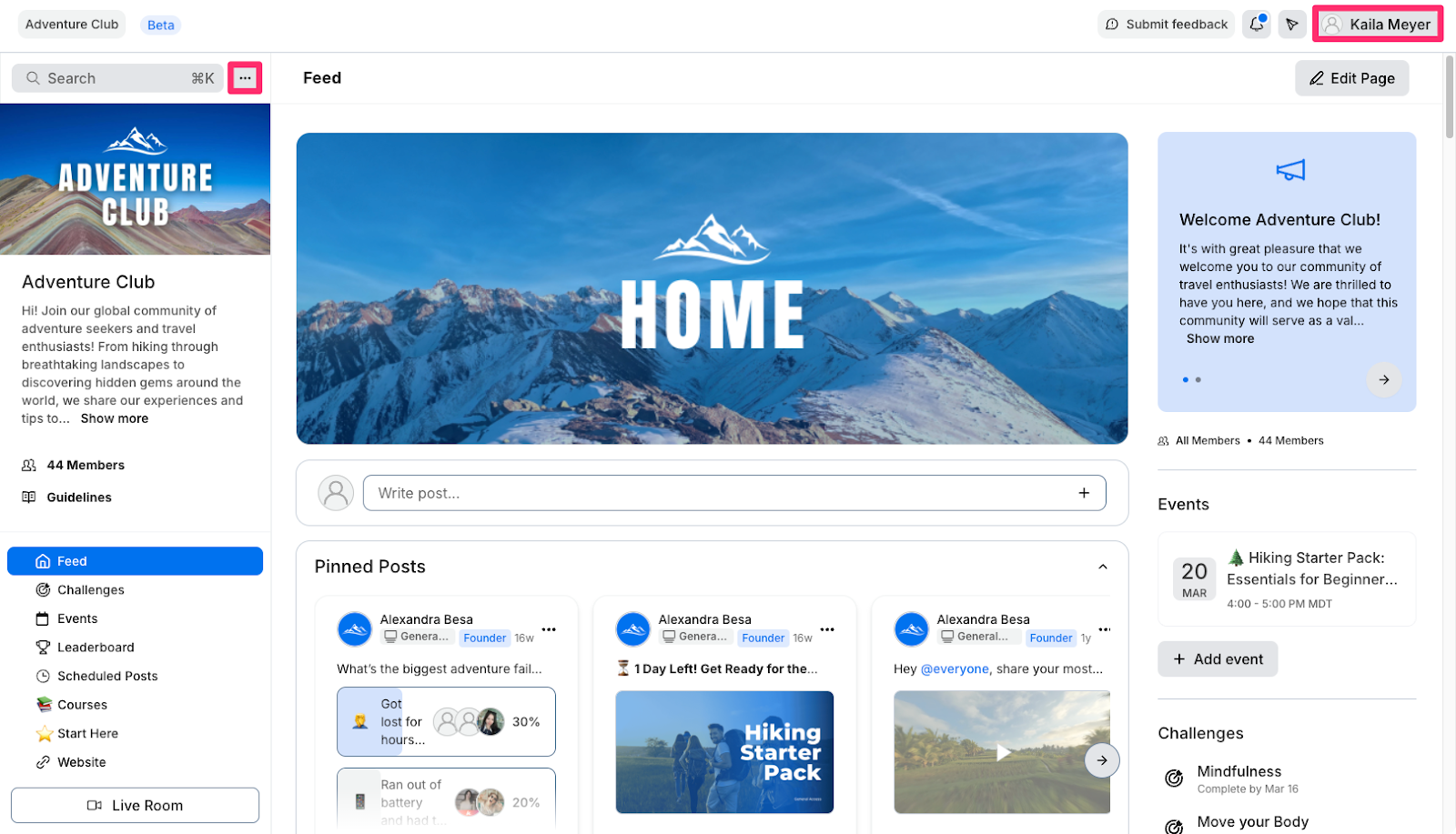
It’s all tightly connected with the rest of Kajabi. Your community can sit alongside your course or coaching content to make it easy for members to ask questions, connect, or share progress. You can even embed community spaces within course modules, which brings the learning and conversation closer together. There are also built-in analytics to keep track of member growth, post engagement, and event attendance.
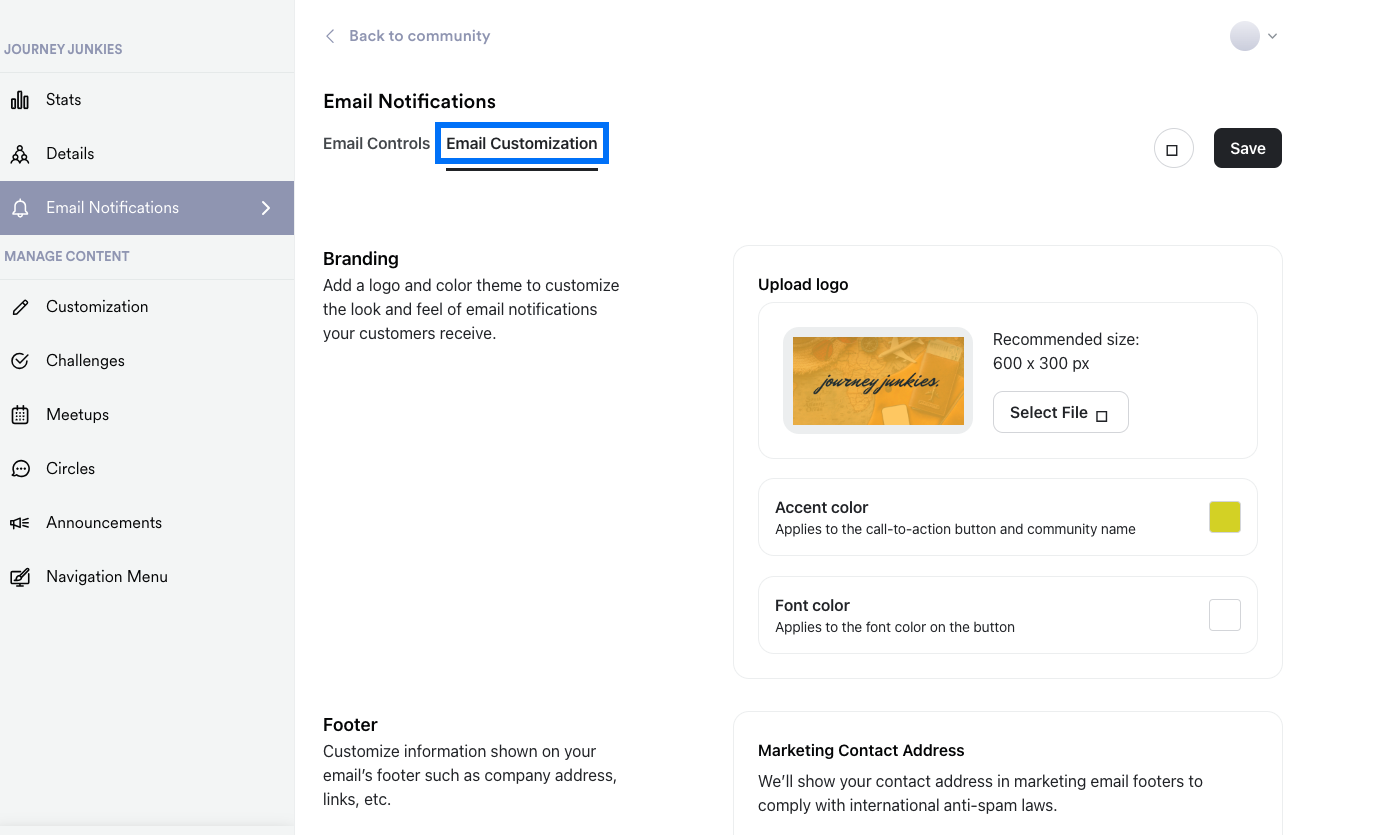
That said, I feel that Kajabi approaches community as more of a feature than a foundation. Skool is designed around community-first learning. The community is the default homepage, not an add-on, and features like gamification, leaderboards, in-lesson commenting, and automatic content unlocking based on activity are native to the experience.
Winner: Skool, and it isn't close.
There's no doubt Skool wins hands down when it comes to a community-first experience, and neither Kajabi nor FreshLearn should be mistaken for matching that specific depth. But if you need something that keeps learning, community, and rewards in the same workflow without extra subscriptions, and you're willing to trade some of Skool's community-specific depth for that, FreshLearn is worth a look.
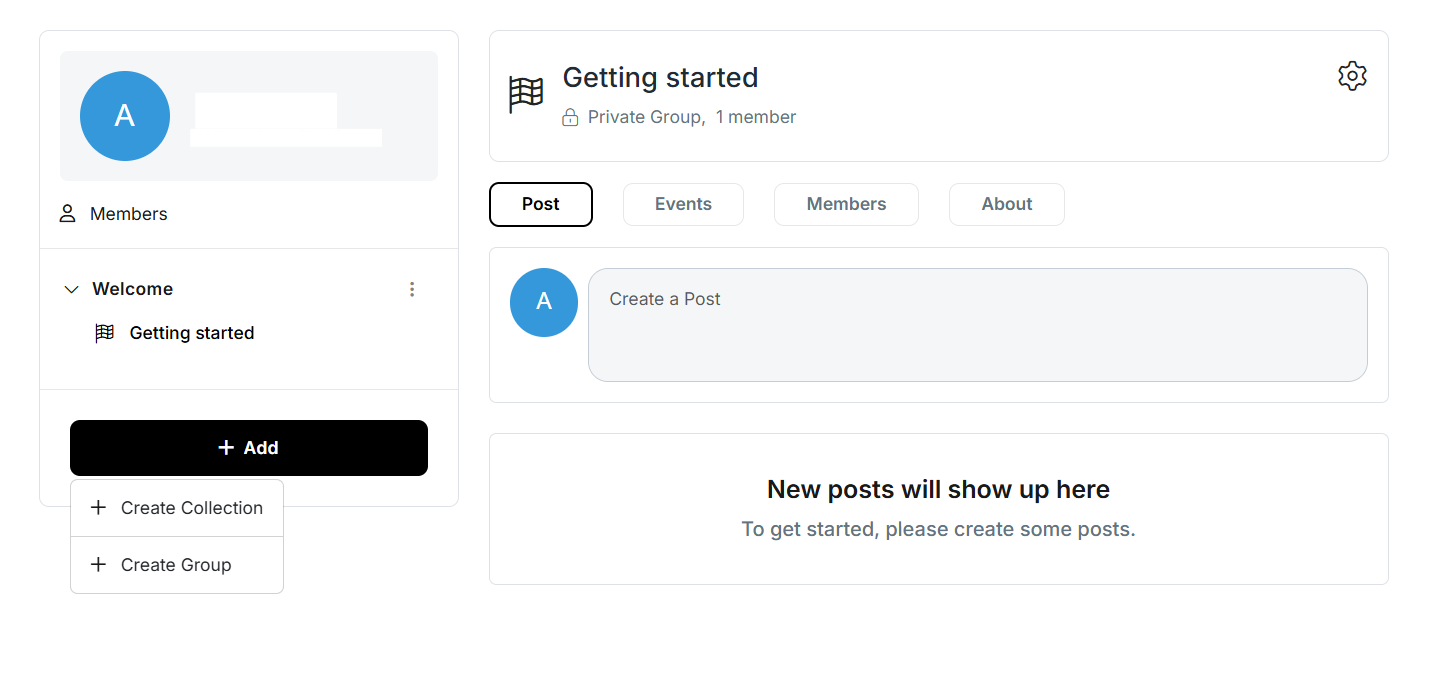
Courses, discussions, members, and memberships can live under one roof, so learners don’t hop between tools; FreshLearn’s Collaborative Learning feature groups course activity and community interaction, with moderation controls and monetization paths.
Engagement gets an extra nudge from gamification that pairs naturally with lessons and milestones. If your audience checks in on the go, the learner mobile app (iOS and Android) keeps them posting, replying, and completing lessons between sessions.
FreshLearn works best in programs where discussion reinforces instruction rather than standing alone as the main draw; for a community that needs to be the product, Skool remains the more purpose-built choice.
Marketing and sales
Now, one of the main reasons you’re even reading this is to make your journey as a creator profitable. So the business part is equally important.
Let’s see who wins in this department.
Skool
Skool falls short here. If you’re looking for ways to market your courses and make them reach a wider audience, Skool offers little help.
On the positive side, its design encourages creators to invite members directly into the community. Communities serve as a discovery mechanism, and posts are SEO‑optimized for organic visibility to attract new members over time.
There’s also an unusually generous referral program that offers a 40% lifetime commission for referring Skool.
That said, marketing isn’t Skool’s forte because it:
- Lacks core built-in marketing tools you’ll find in platforms like Kajabi
- Has no email sequences or lead capture tools, forcing reliance on manual follow-ups or external integrations
- Doesn’t let you A/B test offers or build traditional sales funnels inside Skool
- Lacks upsell tools or advanced affiliate management, limiting revenue functionality beyond simple referrals
Kajabi
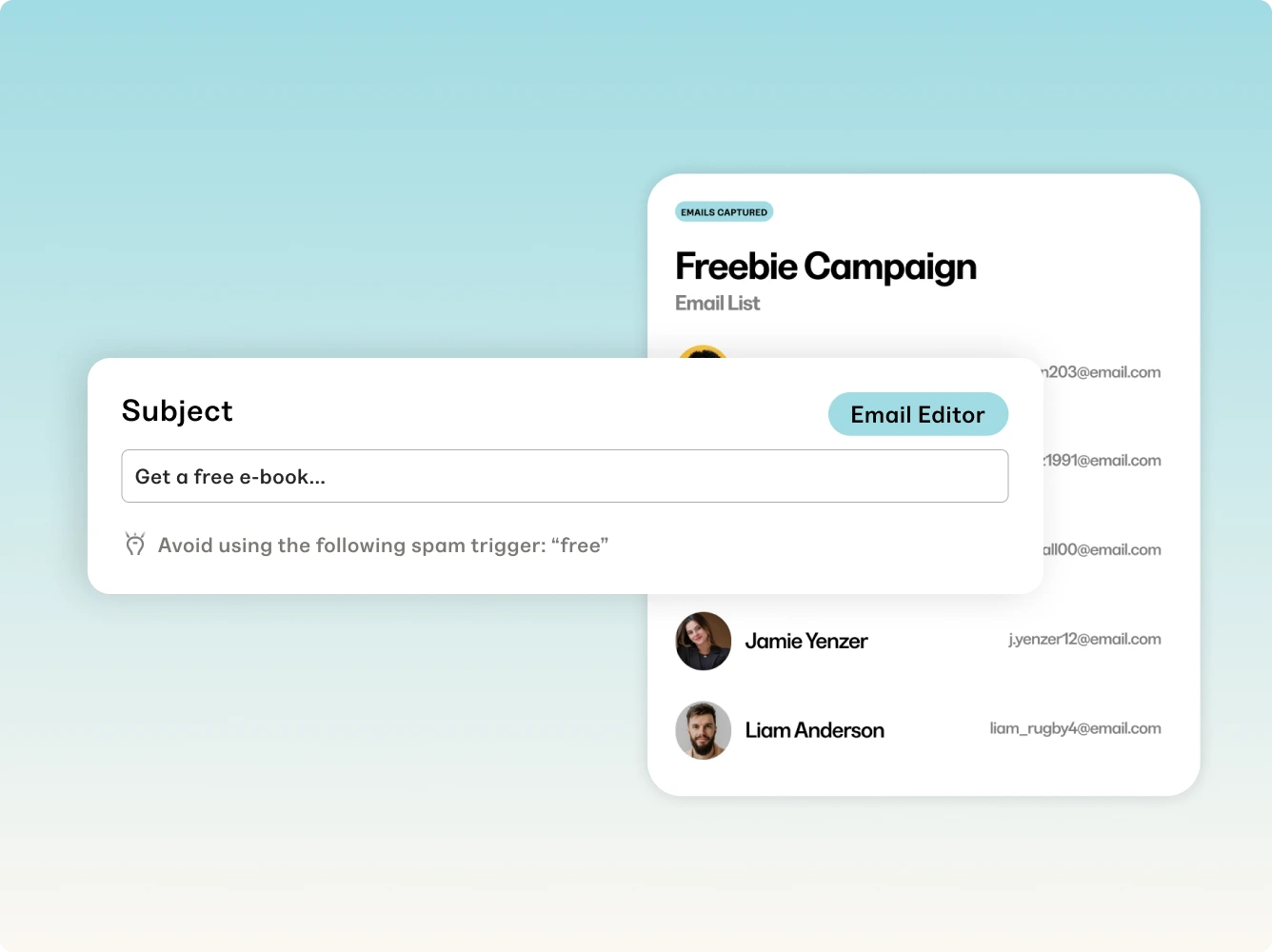
Kajabi, unlike Skool, offers powerful marketing and sales features to help you make more money from your courses or digital products.
To give you a gist, here’s all that you can do with Kajabi in terms of marketing and sales:
- Landing page builder: Design and launch responsive landing pages using customizable templates with a drag-and-drop editor.
- Sales funnels (Pipelines): Use pre-built funnels that connect opt-in forms, emails, checkout pages, and upsells to automate the customer journey.
- Email marketing and automation: Send one-time broadcasts or automated sequences with personalization, countdowns, segmentation, and A/B testing.
- Behavior-based automations: Trigger emails, course unlocks, or offers using “when–then–only if” rules based on user actions.
- Customer segmentation and CRM: Tag and group contacts based on behavior, purchase history, or custom rules to tailor your messaging.
- Built-in checkout and payment processing: Sell products, subscriptions, or coaching using integrated checkout pages that support Stripe and PayPal.
- Analytics and reporting: Track sales, email open rates, funnel conversions, and customer engagement from a centralized dashboard.
- Affiliate management: Launch and manage referral programs with built-in affiliate tools (available on Growth and Pro plans).
- Mobile app access: Let your customers access content, emails, and communities through Kajabi’s branded mobile apps.
- Templates and campaign blueprints: Jumpstart your marketing with ready-to-use templates for emails, landing pages, and entire funnels.
Hands down, Kajabi wins.
Winner: Kajabi
So, we found that Kajabi still leads for complex automation and experimentation. Skool is intentionally light on funnels and email.

FreshLearn lands between them on this criterion. You get meaningful email, checkout, and referrals with 0% fees, so most solo creators can launch and iterate without assembling a separate marketing stack, though Kajabi's automation logic (its "when-then-only if" rule builder in particular) has had years longer to mature and remains the more capable option for genuinely complex, multi-branch marketing sequences.
To expand, you get email campaigns inside the platform, without an extra ESP. Sales flows are covered by conversion-optimized checkout pages and customizable thank-you pages, so a basic funnel is native.
FreshLearn also offers 0% platform transaction fees and a Payments feature that connects Stripe, PayPal, and Razorpay in a few clicks.
For partner-led growth, the referral and affiliate program is included starting at the No Brainer plan (and above); from there, you can manage affiliates and track conversions with ease.
Website and Page Builder
If you need a home for your brand fast, you’d expect a website builder built into a tool. That’s why this comparison matters. Let’s see how these two compare in this regard.
Skool
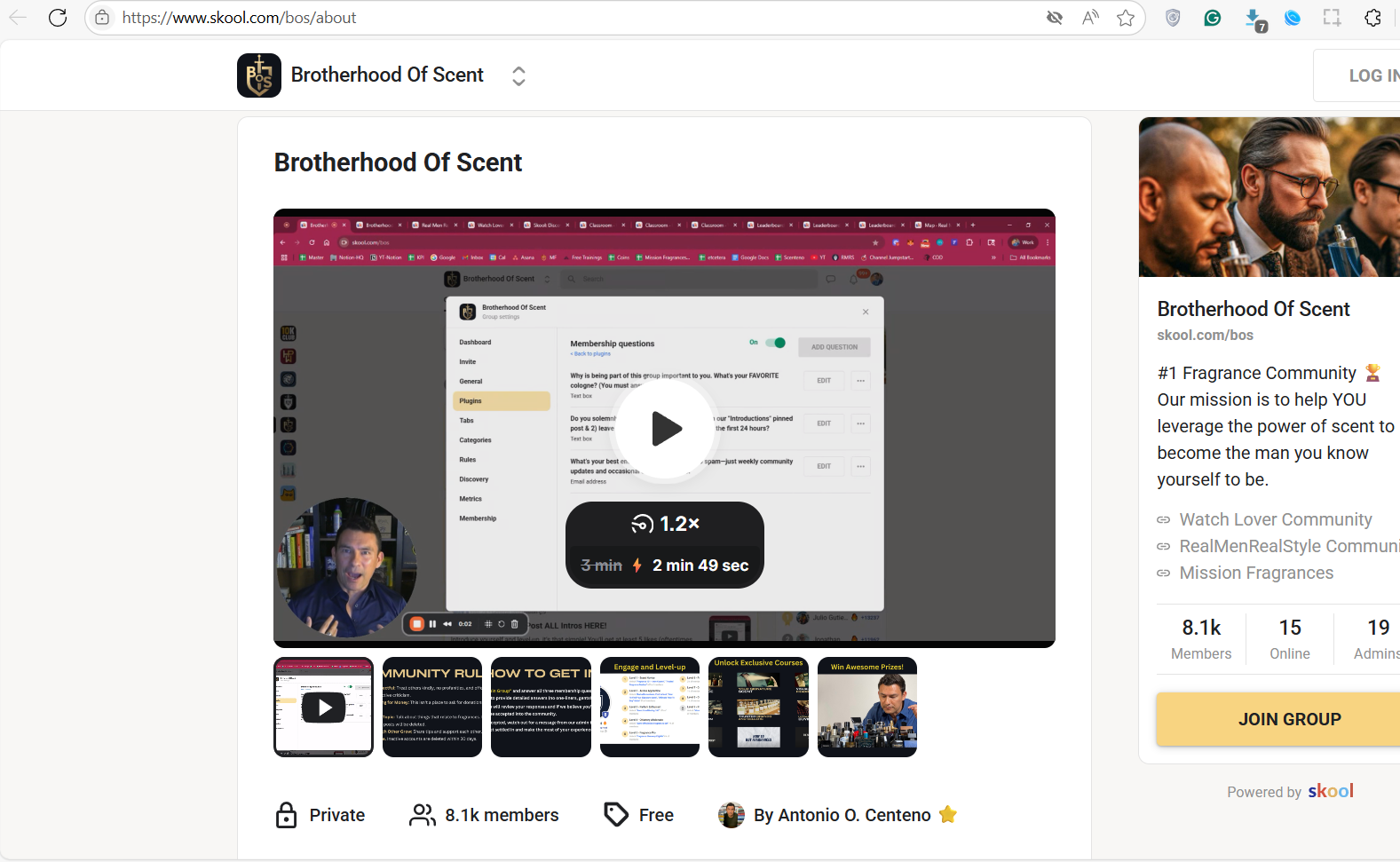
If you’re a serious creator who wants a branded course with your customized website, Skool again does not prove helpful.
It only offers a built‑in About page builder that functions as a customizable landing and checkout page for your community. You can upload images or videos, add a detailed program description, or showcase member testimonials and benefits.
The platform is simply not designed as a multi-page website builder. Instead, it encourages creators to use community posts and pinned content as ongoing pages or evergreen resources.
Skool also automatically displays pricing if you set up a paid subscription model (and allows switching to “Free” for public groups).
Kajabi
Kajabi, unlike Skool, is a better choice if you want a full-fledged course website.
It offers a no-code website builder that you can use to design websites that contain all aspects of your business in one place.
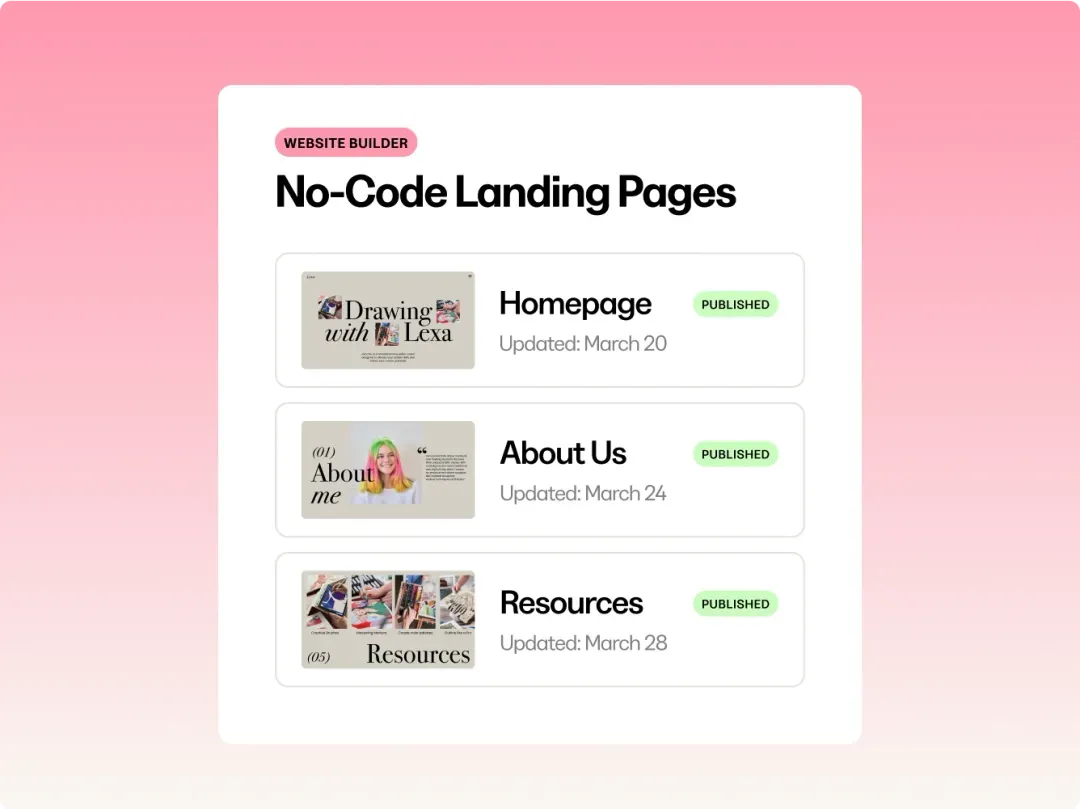
You can easily create multi-page websites with pages such as Home, About, Contact, Member Directory, Announcements, Blog, and an online store, all unified under one design theme with consistent headers, footers, and style settings.
There are also features like drag-and-drop call-to-action buttons, opt-in forms (including two-step pop-ups), video players, and testimonials. You can even embed custom HTML/CSS or JS on higher-tier plans.

However, you may encounter some challenges with Kajabi. For starters, since it’s a platform that packs so much, it may feel confusing and complex, especially for beginners.
There are some other limitations, such as:
- Limited design flexibility: While Kajabi’s drag-and-drop builder is simple, it offers fewer layout and style customization options compared to advanced tools like Webflow or WordPress.
- No full blog CMS experience: Kajabi includes basic blogging functionality, but lacks the robust content management features and SEO tools of dedicated blogging platforms.
- Template customization requires a workaround: Deep customization often requires editing custom code snippets or using third-party tools.
Winner: Kajabi
Kajabi’s web stack is deeper for heavily themed sites and complex experiments; Skool intentionally keeps the web surface area minimal to keep communities focused.
FreshLearn's pitch here is pragmatic rather than a claim of matching Kajabi's depth. You get enough site, blog, and landing capability to ship credible webpages that tie directly into your courses, community, email, checkout, and referrals, without multiplying subscriptions, but Kajabi's website builder remains the more flexible option for a heavily custom, multi-page brand site.
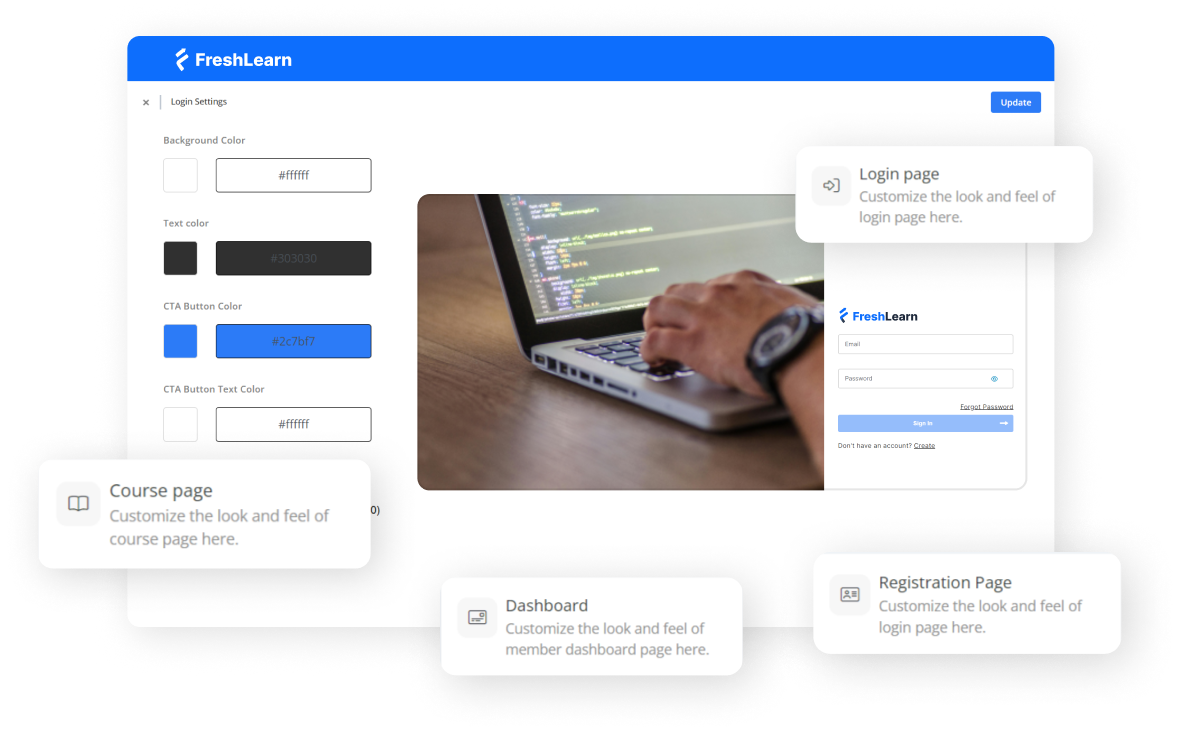
The most obvious thing you’ll notice is that FreshLearn’s website builder (with hosting and SSL handled for you) and 200+ templates make it quick to publish. You can run sales, landing pages, checkout, and thank-you flows, and place custom scripts on landing, blog, checkout, thank-you, and member-portal pages when you need tracking or embeds.
FreshLearn also includes a Blogging CMS and site pages on its plan lineup; even the Free tier has the blogging CMS, so updates and resources don’t require a separate CMS.
The Better Alternative: FreshLearn – Power and Affordability Combined
If you want Skool's community perks and Kajabi's marketing feature set, but don't want the extra baggage of add-ons or the steepest price tag, FreshLearn is worth comparing, with the tradeoffs above kept in mind rather than glossed over.
With FreshLearn, you get courses and live cohorts, a built-in community, email campaigns, a website and blog, checkout, referrals, certificates, and AI agents in one place.
Here's what you get:
- All-in-one: Courses, live cohorts, workshops, community, website building, email campaigns, automations, checkout, coupons, and referrals, plus AI Agents to speed course outlines, quizzes, and pages.
- Engagement built-in: Gamification, assessments, and certificates keep learners engaged without third-party plugins.
Cost clarity is where the FreshLearn advantage becomes the most obvious. Plans start at $49/month (Pro), $41/month billed annually, and at $149/month (No Brainer+), you get advanced automations, a flexible API, 12,000 email credits, and more. Annual billing lowers the price further still.
Beyond price, you'll notice a difference in launch speed and platform guidance. You get free migration (completed for 1,000+ creators) so your courses, pages, members, and enrollments move over cleanly. And support is 24/7 live chat with humans, with email and scheduled calls when you need them.
For delivery, FreshLearn covers both async and cohort-based formats: schedule live sessions, enforce video compliance, award certificates automatically, and trigger personalized emails at key moments. Learners can stay engaged on the go with white-label mobile apps. Gamification (points, milestones) is also native, so completion doesn't depend on manual nudges.
The business side is straightforward: 0% platform fees, your Stripe or PayPal payouts go straight to you, and email credits are included on each tier.
Where FreshLearn doesn't win outright, and it's worth saying directly: Skool's community-first design and Kajabi's funnel automation are each more specialized and mature at the one thing they do best. FreshLearn's pitch is breadth at a lower price, not a claim of beating either platform at its own specialty.
If you want most of Kajabi's capability without Kajabi's price, and you don't want to add marketing tools onto Skool, FreshLearn is a practical middle option for building, engaging, and scaling with fewer moving parts.
Pricing and True Cost: What Will You Actually Pay?
If we're being honest, when creators compare similar tools, the decision often comes down to pricing. And it's only natural, because without a satisfactory ROI, your learning business won't even see the light of day.
So, bear with us while we break down every detail about the pricing structure of both platforms, verified against each platform's own pricing page in August 2026.
Skool's pricing: two tiers, and the fee is where it gets interesting
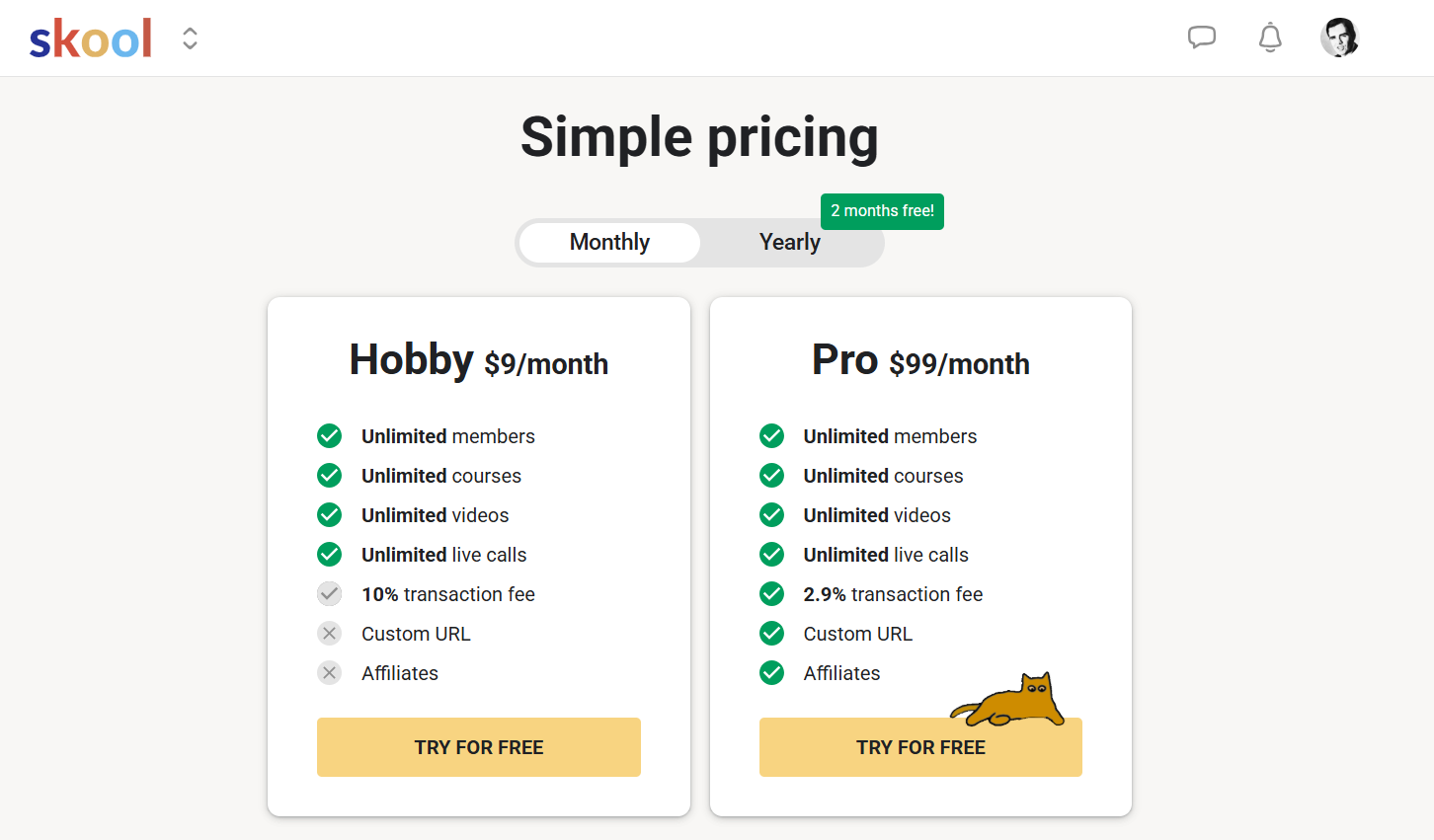
Skool now offers two plans, added in July 2025, replacing the single flat $99/month it originally launched with:
- Hobby: $9/month ($7.50/month billed annually, $90/year). Unlimited members and courses, but a 10% + $0.30 transaction fee on every paid transaction, the steepest fee of any platform in this comparison.
- Pro: $99/month ($82/month billed annually, $990/year). Unlimited members and courses, with 2.9% + $0.30 on transactions up to $899, rising to 3.9% + $0.30 on transactions above $900.
Where the two plans cross over financially: Hobby's low subscription price is cheaper up to roughly $1,268/month in paid member revenue; past that point, Pro's lower percentage fee makes it the cheaper plan overall despite the higher subscription cost. Each additional community on either plan requires its own separate subscription; there's no bundle pricing across multiple communities.
Until recently, many Skool creators paid for Vimeo or Wistia to host lesson videos. Skool has since added native video hosting (upload directly to Classroom and Community), included in your plan. You can still embed from YouTube, Vimeo, Loom, or Wistia if you prefer. If you still want an external host for specific analytics or workflows, budget $41/month for Vimeo Standard (month-to-month) or $99/month for Wistia Pro (billed monthly).
Since Skool doesn't include broadcast email or marketing automation, most creators who need it add an email platform. A realistic mid-list example is Kit at around $49/month for roughly 3,000 subscribers. If you want drag-and-drop landing pages and A/B tests, you can pair Skool with Leadpages ($49/month on Standard, billed monthly).
With all these added, a realistic monthly cost for a Skool Pro creator running email and landing pages looks like:
Skool Pro $99 + Kit $49 + Leadpages $49 = around $197/month before card processing and platform transaction fees.
And keep in mind Skool's own per-sale transaction fee (2.9% + 30¢ to 3.9% + 30¢ on Pro, or 10% + 30¢ on Hobby) applies on top of that, on every paid transaction.
Kajabi’s tiered pricing, post-restructure
Kajabi bundles website, landing pages, email marketing (unlimited marketing emails on paid tiers), funnels, automations, and hosting into its plans, and it doesn't charge a platform transaction fee. You still pay normal card processing, with Kajabi Payments starting at 2.9% + $0.30.
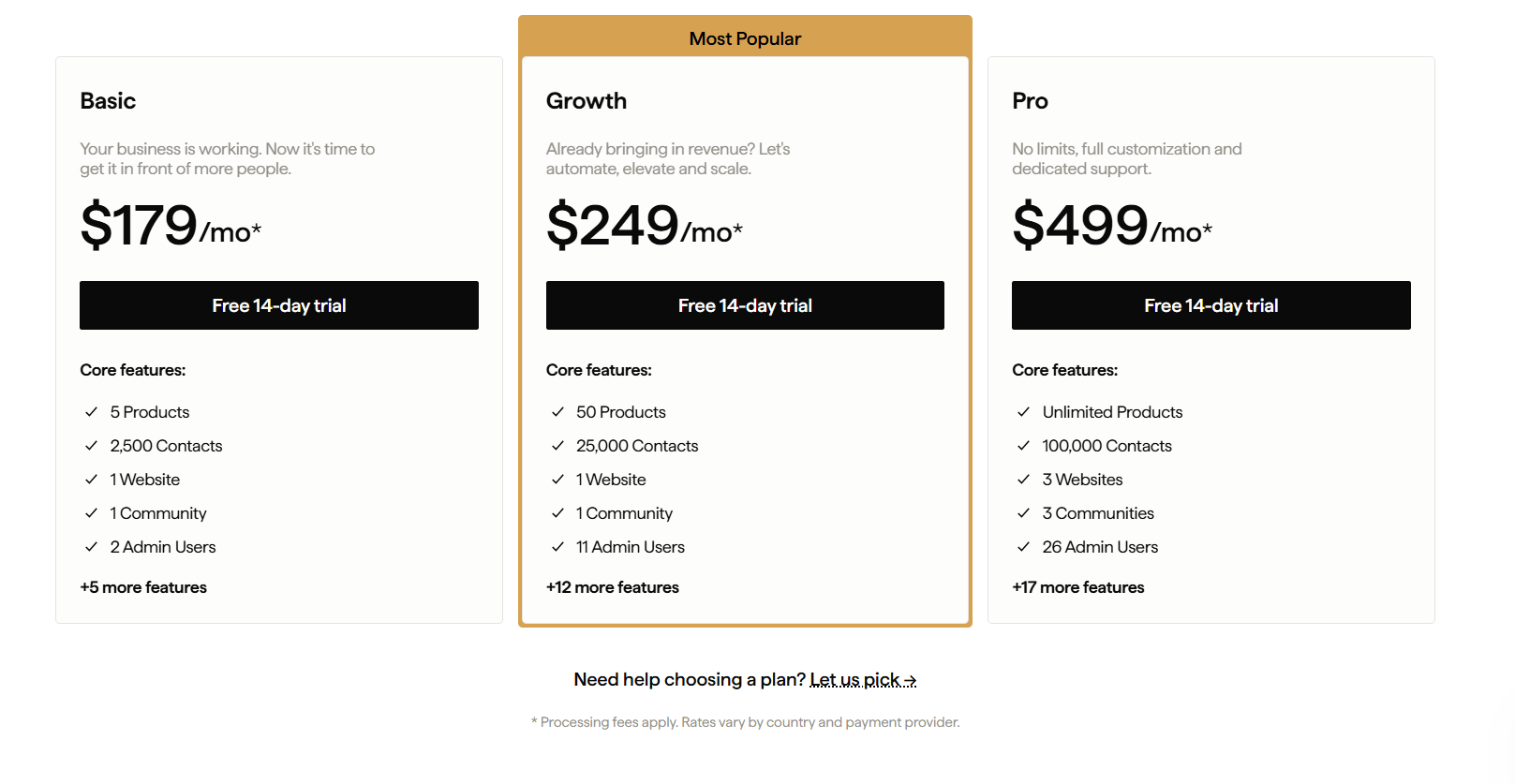
Kajabi restructured its plans and pricing in January 2026. Here's the current lineup:
- Kickstarter: no longer on the public pricing page. It previously listed at $89/month, but as of this restructure, it's only available through a direct sales conversation or occasional trial offers, and current reports put it closer to $89 to $99/month when it does surface, not a reliably bookable entry tier.
- Basic: $179/month, or $143/month billed annually. 1 website, 5 products, 2,500 contacts, unlimited marketing emails and landing pages, 0% platform transaction fee.
- Growth: $249/month, or $199/month billed annually. 1 website, 50 products, 25,000 contacts, advanced automations, affiliates, 0% platform transaction fee.
- Pro: $499/month, or $399/month billed annually. 3 websites, unlimited products, 0% platform transaction fee.
Because email, funnels, landing pages, and hosting are built in, there's usually no need for extra third-party subscriptions. That means your final cost is typically the Kajabi plan price, plus card processing.
Price Comparison Table
And the pricing winner?
If you're comparing apples to apples, i.e., Skool Pro plus email and landing page add-ons, Kajabi's Basic at $179/month (or $143/month annually) is now close to or above Skool's realistic stack (roughly $197/month before transaction fees), rather than clearly undercutting it the way it did before Kajabi's January 2026 price increase. On pure monthly spend, the two are now much closer than a simple sticker-price comparison suggests, and Skool's transaction fees (especially the 10% Hobby rate) matter more at higher paid-member volumes.
A few things worth weighing:
- If you already have an email tool or don't need funnels, Skool Hobby at $9/month plus its 10% fee can be the lowest out-of-pocket option below roughly $1,268/month in paid revenue.
- If your paid community revenue is meaningfully above that threshold, Skool Pro's 2.9-3.9% fee structure or Kajabi's flat pricing both become more attractive than Hobby.
- If you exceed Kajabi's contact limits for your plan, you'll need to step up a tier, so check your list size against the plan caps before committing.
Note: If you'd like to see Skool head-to-head with another tool that's close to it in functionality, read this excellent comparison of Skool vs Circle.
Why is FreshLearn the more cost‑effective option?
FreshLearn packages the pieces that many Skool users add separately, like website, sales pages/checkout, email campaigns, and hosting, and keeps pricing simple.
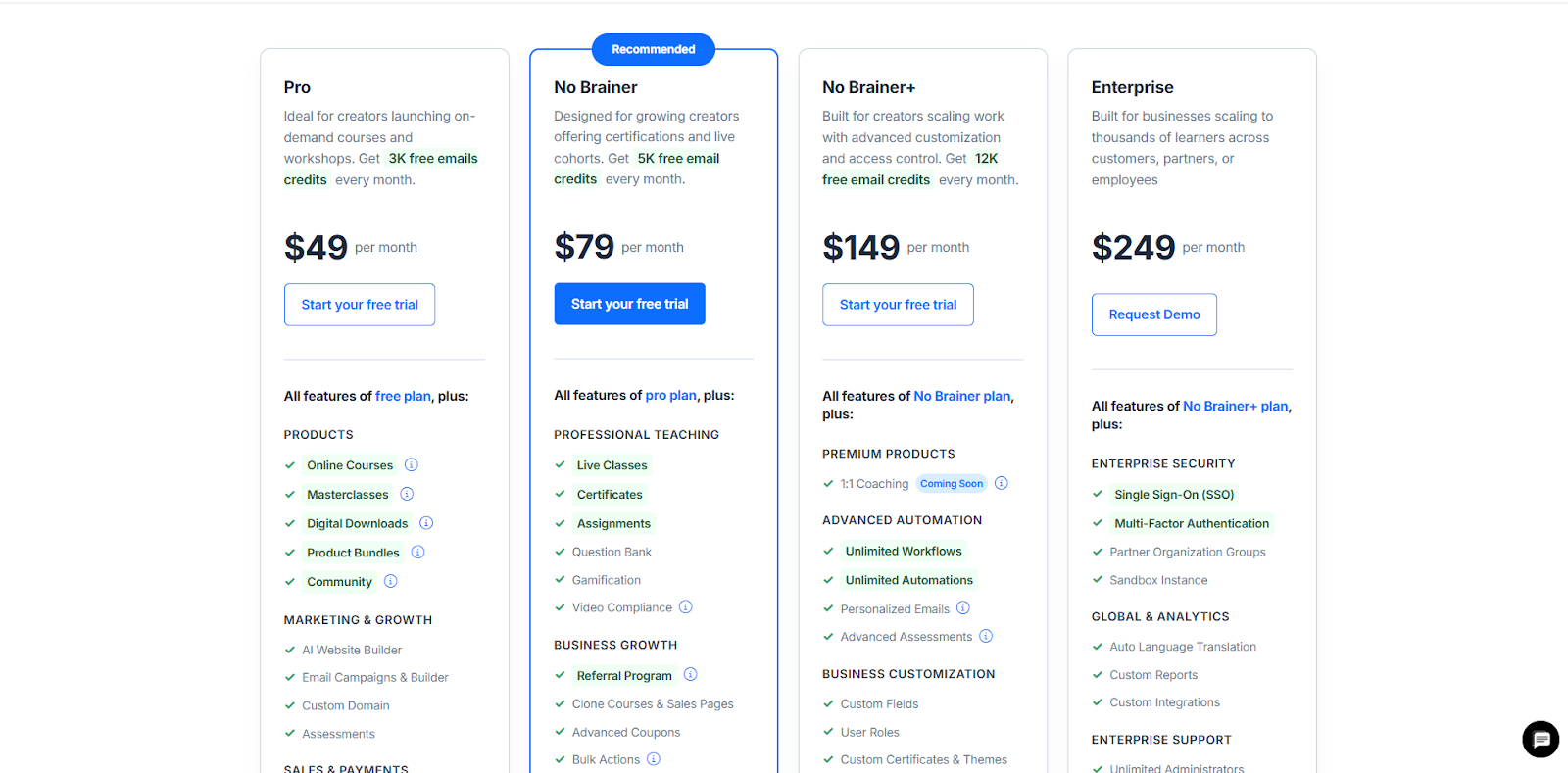
- Pro ($49/month): Includes product creation, site/blog, email campaigns with 3,000 free email credits/month, built‑in checkout, and more. 0% transaction fees.
- No Brainer ($79/month): Adds certifications, live cohorts, mobile apps for learners, removal of branding, 5,000 email credits/month, and more. 0% transaction fees.
- No Brainer+ ($149/month): Adds advanced automations, API/native integrations, and 12,000 email credits/month. 0% transaction fees.
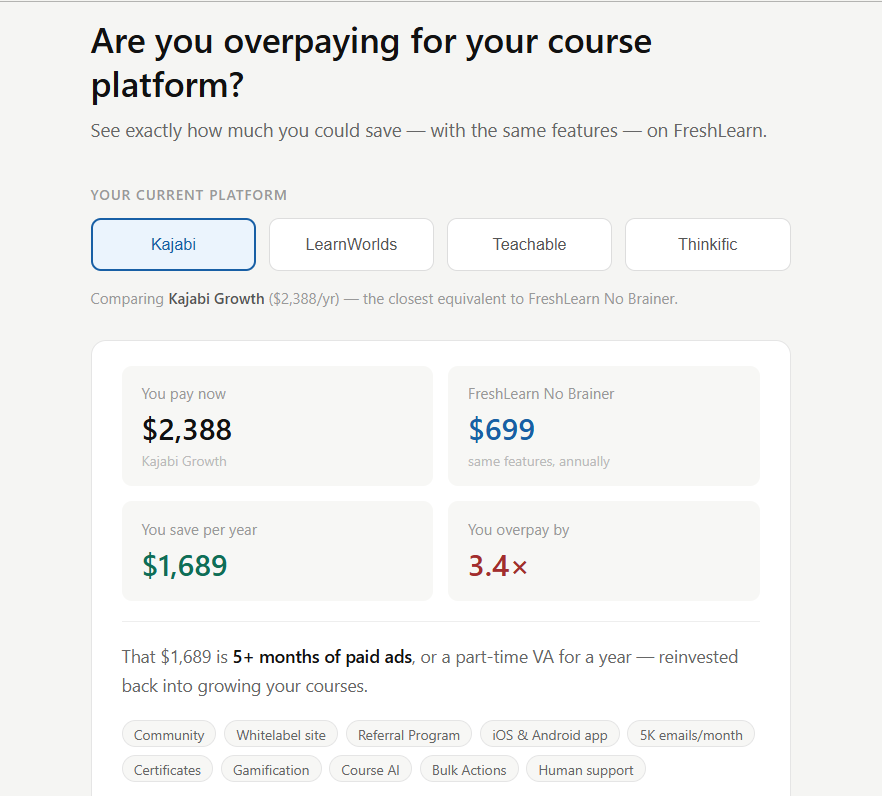
Given those inclusions, a creator who’d otherwise assemble Skool ($99) + Kit ($49) + Leadpages ($49) at around $197/month can get a comparable all‑in toolset with FreshLearn Pro at $49/month (or step up to No Brainer at $79/month), and avoid stitching tools together. That’s a savings of roughly $118 to $148 every month.
So, what’s the bottom line?
- Best sticker price for an all‑in‑one today: Kajabi Basic ($149) if you need email and funnels bundled.
- Best value if you want all‑in‑one at the lowest monthly cost: FreshLearn Pro ($49) or No Brainer ($79). You’ll pay less than both a Skool stack and Kajabi while still getting the essential tools in one place.
- Pro ($49/month, $41/month billed annually): Includes product creation, site/blog, email campaigns with 3,000 free email credits/month, built-in checkout, and more. 0% transaction fees.
- No Brainer ($79/month, $59/month billed annually): Adds certifications, live cohorts, mobile apps for learners, removal of branding, 5,000 email credits/month, and more. 0% transaction fees.
- No Brainer+ ($149/month, $119/month billed annually): Adds advanced automations, API/native integrations, and 12,000 email credits/month. 0% transaction fees.
Given those inclusions, a creator who'd otherwise assemble Skool Pro ($99) + Kit ($49) + Leadpages ($49) at around $197/month can get a comparable all-in toolset with FreshLearn Pro at $49/month (or step up to No Brainer at $79/month), with no platform transaction fee to layer on top, and avoid stitching tools together.
What's the bottom line on cost?
- If a low transaction fee ceiling on modest revenue matters most: Skool Hobby ($9/month) below roughly $1,268/month in paid revenue.
- If you want deep, mature marketing automation and can absorb the price: Kajabi ($179 to $499/month, 0% platform fee).
- If you want a comparable all-in-one at the lowest predictable monthly cost: FreshLearn Pro ($49/month) or No Brainer ($79/month), with 0% transaction fees on every tier.
In A Nutshell: What Should You Choose?
- Choose Skool if you want to be community and engagement-focused. You're building a learning environment where interaction, progress tracking, and group energy matter more than heavy marketing automation. You don't mind using separate tools for email or checkout flows, and you value a clean, focused space that encourages daily member activity through gamified engagement. Just budget for the transaction fee (10% on Hobby, up to 3.9% on Pro) alongside the subscription price.
- Choose Kajabi if you're running a more established business and want deep control over your sales and marketing. You've got the budget and the team (or time) to make the most of its robust automation, pipelines, and email marketing. Everything lives under one roof (courses, communities, funnels, coaching), but the trade-off is a steeper learning curve and, since its January 2026 price increase, a meaningfully higher monthly cost than before.
- Choose FreshLearn if you're a creator who wants a broad feature set without Kajabi's price tag or Skool's transaction fees, and you can live without Skool's community-first specialization or Kajabi's most mature automation depth.
Get the Best of Both With FreshLearn
In the end, Kajabi and Skool each do one thing better than almost anyone else: Kajabi on marketing depth, Skool on community-first engagement. If neither of those specialties is the deciding factor for you, and price and breadth matter more, FreshLearn is worth a look.
It's modern, creator-friendly, and built to scale with you, with the tradeoffs above kept in view rather than glossed over.
Build a free course on FreshLearn now.
FAQs
1. Does Skool have a mobile app?
Yes, Skool offers a fully native mobile app available for both iOS and Android to let users engage with their communities while on the go via posts, course access, push notifications, and direct messaging.
2. Can you host videos on Skool?
Yes, you can host videos directly on Skool. The platform now includes native video hosting as part of its plan. Videos are processed instantly with features like auto-generated English captions, playback speed and quality controls, and optional timestamps for chapters.
3. Does Kajabi charge transaction fees?
No, Kajabi does not charge transaction fees on sales. You only pay the standard processing fees through Kajabi Payments (via Stripe or PayPal), plus an optional $0.15 fee per transaction if you enable Kajabi-powered sales tax collection in eligible regions.
4. Is there a free version of Skool or Kajabi?
Neither Skool nor Kajabi offers a permanent free version, but both offer risk-free trial periods of 14 days.
5. What is Skool's Hobby plan, and is the low price worth the transaction fee?
Skool's Hobby plan costs $9/month ($7.50/month billed annually) but charges a 10% + $0.30 fee on every paid transaction, the highest transaction fee of any platform in this comparison. It's worth it mainly below roughly $1,268/month in paid member revenue; past that, Skool Pro's lower percentage fee (2.9% to 3.9%) or a 0%-transaction-fee platform like Kajabi or FreshLearn typically works out cheaper.
6. How much did Kajabi's prices increase in 2026?
Kajabi restructured its pricing in January 2026. Basic increased from $149/month to $179/month ($143/month billed annually); Growth increased from $199/month to $249/month ($199/month billed annually); Pro increased from $399/month to $499/month ($399/month billed annually). Product and contact limits were also adjusted at each tier. The previously advertised $89/month Kickstarter plan was removed from the public pricing page around the same time.
7. Is Skool actually well-reviewed?
It depends on the source, and the gap between sources is worth knowing. Skool's Trustpilot rating sits around 1.7 to 1.9 out of 5 across a small sample (roughly 50 reviews), with most complaints centered on billing and cancellation issues rather than the core product. Its Google Play app store rating is considerably higher, around 4.1 out of 5. Neither number alone gives the full picture; the billing-related complaints are worth taking seriously, but they're a different signal than product satisfaction.
You might also like
Hosted by