
15 Best Online Teaching Platforms for 2026

During our monthly connect, we reviewed a set of customer questions, and one stood out above the rest.
On a sales call in Q3 2025, a creator asked: “What platform will still work for me five years from now?”
And that’s a clear shift….. creators now aren’t just asking, “What’s best in the market right now?” They’re asking, “What will grow with me over time?”
With AI reshaping education, interactive classrooms replacing static lessons, and communities becoming central to learning, creators don’t just want a tool for today — they want a partner for the future.
For creators, time is money. To save you time, here’s a breakdown of the 15 best online teaching platforms (updated for 2026). I hope this will solve today’s problems and help you stay ahead for tomorrow’s opportunities.
Quick comparison table
Before we get into the full breakdown, here’s a quick glance at 15 online teaching platforms.
Types of online teaching platforms
Each online teaching platform differs in feature depth, UI/UX experience, and integration options. Understanding the main categories will help you identify which ones align with your teaching, selling, and audience growth strategies.
- All-in-one course creation platforms: Ideal for creators who want to build, market, and sell courses all in one place (FreshLearn, Kajabi, Thinkific, and Podia).
- Virtual classroom and live tutoring platforms: Perfect for those with a focus on live, synchronous teaching or tutoring. (Livestorm, LearnCube, Preply).
- Open-source and plugin-based learning platforms: Ideal for technically skilled educators and institutions who want full control over course structure and customization, either through open-source platforms (Moodle, Open edX) or WordPress plugin integrations (LearnDash, LifterLMS).
- Course marketplaces: Platforms where your course is listed alongside many others, making it easier to reach learners quickly. (Udemy, Skillshare, LinkedIn Learning, and YouTube.)
The 15 best online teaching platforms
Now, let’s take a closer look at the best online teaching platforms and see what makes each one different.
Category 1: All-in-one course creation platforms
1. FreshLearn
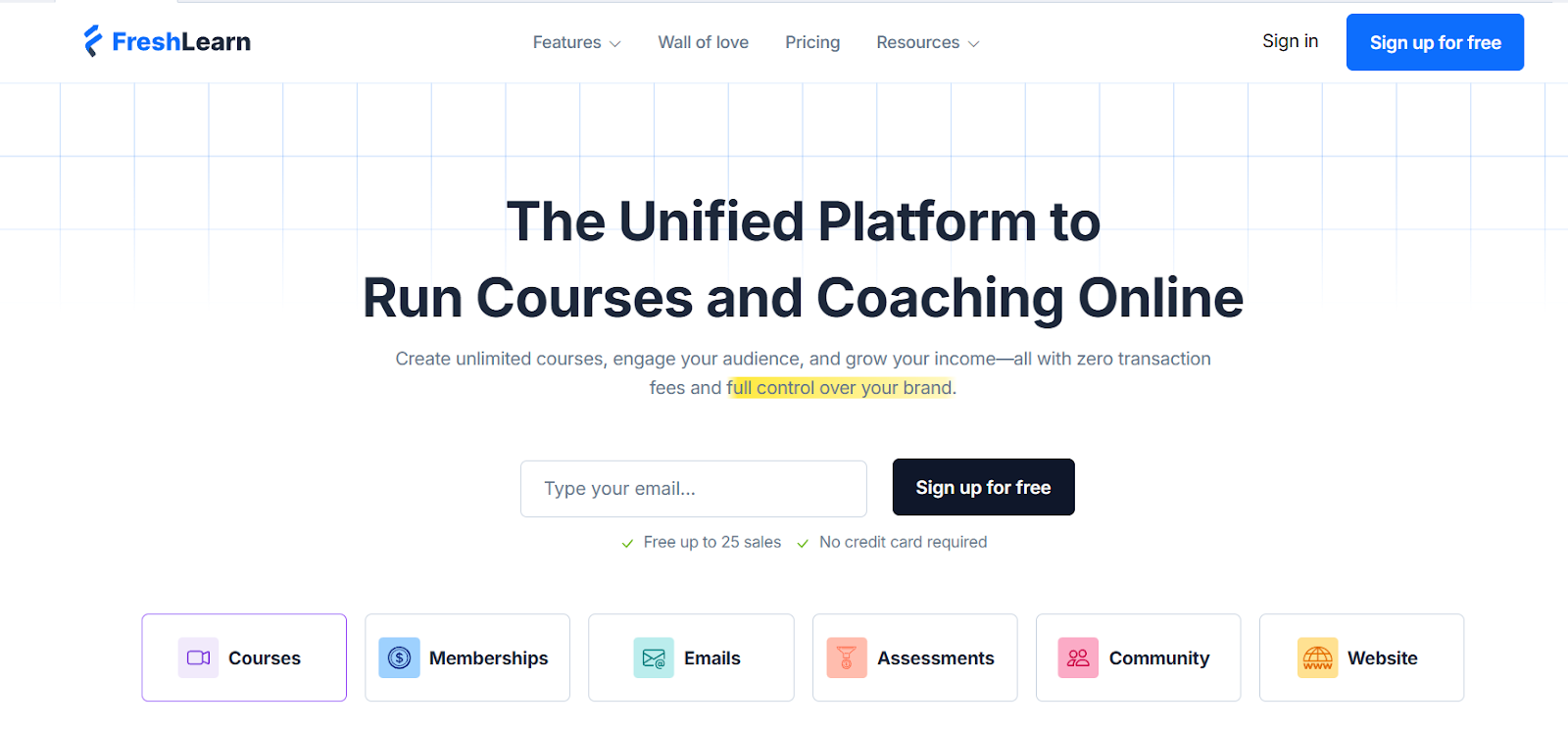
Who it's best for: Creators, educators, and small business owners seeking a versatile, user-friendly platform to build, market, and sell online courses, workshops, and digital products; all with 0% transaction fees.
Key features
- Blogging CMS: FreshLearn lets you create and manage blog posts to engage your audience and enhance SEO.
- Automation: Streamline your workflows with automated email campaigns, lead nurturing, and course delivery.
- AI Agents: The platform lets you use built-in AI tools to speed up course creation with features, including:
- Generate course outlines
- Validate new course ideas, and
- Create quizzes with just a few prompts.
- Drag-and-drop course builder: Easily create and organize courses using a visual editor, incorporating multimedia elements like videos, quizzes, and assignments.
- Comprehensive reporting: Access detailed analytics on student progress, sales performance, and engagement metrics.
- Live Cohort Management: FreshLearn facilitates live cohort sessions with tools for scheduling, communication, and engagement tracking.
- Centralized video and media library: FreshLearn allows you to upload, edit, and manage your video content from one central dashboard. You can add thumbnails, captions, and control video settings without needing to juggle external tools.
Pros
- Offers competitive pricing with a free plan and transparent, creator-friendly paid plans.
- Allows for white labeling and custom domains, helping you maintain your brand identity.
- Provides 24/7 customer support to assist with any platform-related queries.
- Supports multiple digital products, including:
- On-demand courses
- Workshops
- Digital downloads
- Memberships
Cons
- Features such as unlimited workflows, automations, and advanced assessments are only available on higher-tier plans.
- Provides limited funnel and automation features compared to dedicated platforms like Kajabi.
Pricing
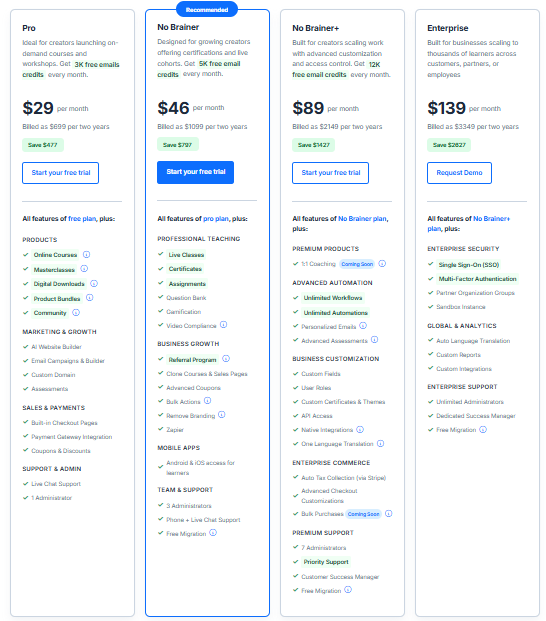
FreshLearn offers a free plan with core features for beginners. Paid plans start at $49/month or $37/month (when billed annually) or $29/month (when billed for 2 years), providing access to advanced tools and customization options.
2. Kajabi
Who it’s best for: Established creators, coaches, or entrepreneurs who want to run the full stack of marketing, funnels, courses, and communities from a single platform.
Key features
- Funnel and automation builder: Kajabi includes prebuilt sales pipeline templates and automation workflows that combine landing pages, email campaigns, and upsells.
- Website and page builder: Users can create branded websites and blogs using customizable templates with built-in hosting.
- Course and membership management: The platform supports self-paced courses, membership sites, and subscription products, with integrated payment handling.
- Community features: Provides members-only communities and discussion boards, though these are managed separately from course content.
- Built-in payments: Offers subscription billing, invoicing, and integrated payment processing without requiring a third-party gateway.
Pros
- Combines course delivery, marketing, and website management in a single system.
- Reduces reliance on external tools for payments, email campaigns, and landing pages.
- Provides a clean, student-friendly interface for accessing content.
Cons
- Pricing is among the highest in this category, which can be challenging for beginners.
- Feature limits on lower tiers (such as the number of products or contacts) may necessitate an upgrade sooner than expected.
Pricing
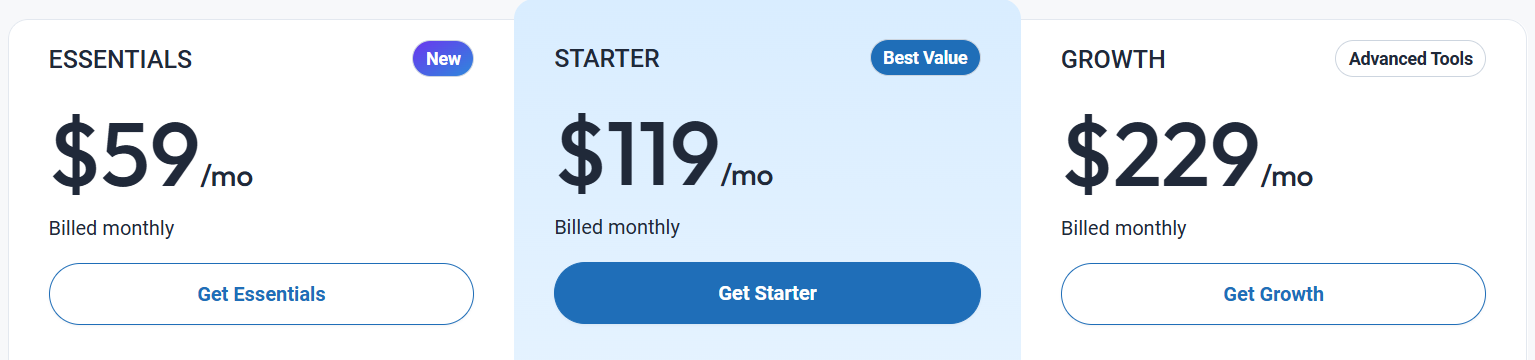
Kajabi does not offer a free plan, but it does provide a trial period. Paid subscriptions start at $89/month or $71/month (when billed annually). Higher plans, ranging from $249 to $499 per month, provide increased limits and additional features.
If Kajabi feels out of reach for your budget, the good news is that there are plenty of platforms that give you the tools to create and sell courses without the heavy price tag. Here are 10 great Kajabi alternatives worth checking out.
3. Thinkific
Who it’s best for: Individual creators, consultants, or educators who want a digital product delivery system with membership/bundle options, and a focus on course content first.
Key features
- Spaces and community organization: Thinkific allows you to create “Spaces” within communities to organize discussions, announcements, or course-related interactions by topic or cohort.
- Subscription and membership pricing options: You can set up subscription pricing, recurring billing, payment plans, or memberships for your courses or content. Also, Thinkific allows you to add free trials or custom first payments for subscriptions.
- Drip/scheduled content delivery: You can schedule content to drip-feed based on a student’s sign-up date, allowing learners to receive content over time rather than all at once.
- TCommerce and built-in checkout options: Thinkific includes TCommerce (their business management tools), along with support for various payment methods (including Stripe and PayPal), order bumps, coupons, and affiliate tools.
- Full course and content hosting + unlimited students (on paid plans): The platform allows you to host video, text, audio, PDFs, presentations, etc., with large student capacity (depending on plan), and you keep ownership of your content.
To know how Kajabi and Thinkific stack up against each other, read ‘Thinkific Vs Kajabi: The Showdown for Course Creators’.
Pros
- Thinkific gives you control over how you deliver your content, including scheduled releases, membership or subscription options, and bundles.
- Supports integrations with tools like Zapier, Mailchimp, and Google Analytics for workflow automation.
- Thinkific provides reporting that tracks learner progress, completion rates, and engagement.
- Thinkific allows you to offer course completion certificates automatically, helping validate learner achievements and add credibility.
Cons
- Advanced features like removing Thinkific branding, advanced analytics, and additional community offerings often require higher-tier plans, which increase the cost.
- Thinkific requires an additional investment to provide a fully branded mobile app, as standard plans do not include it.
- Customization of course site design and themes is limited, requiring coding knowledge for advanced changes.
Pricing
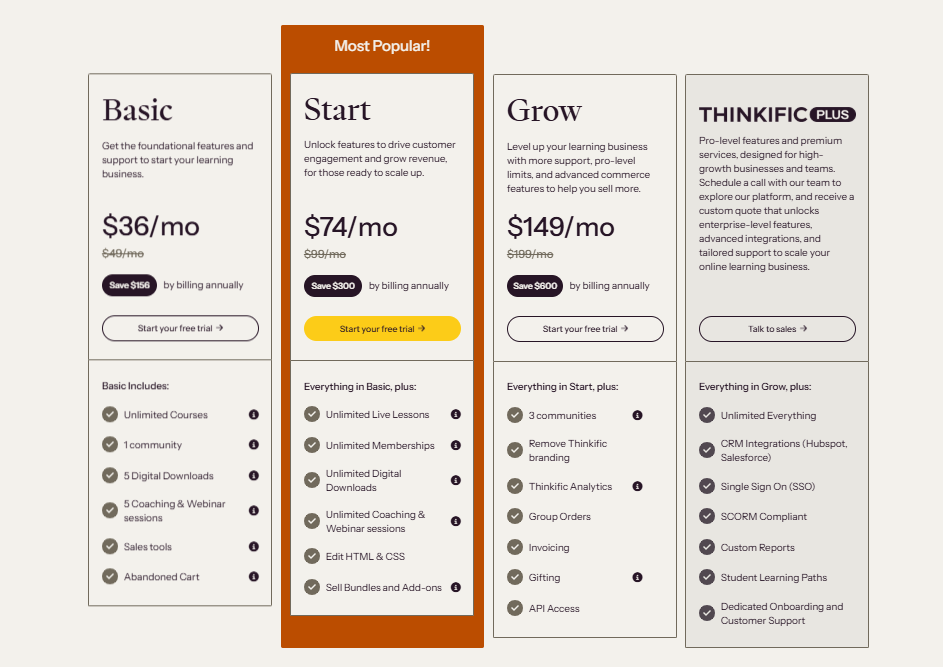
Thinkific provides a 30-day free trial with basic features. Paid plans start at $49/month or $36/month (when billed annually). Higher tiers (Start, Grow, and Thinkific Plus) offer additional features, including courses and community spaces.
If you’re considering Thinkific, you probably want to know how far it can take you. This article on ‘Thinkific Review: A Good Platform, But Will You Outgrow It?’ explains it all.
4. Podia
Who it's best for: Independent creators, coaches, and small businesses seeking a simple platform to monetize digital products without complex setups or technical expertise.
Key features
- Unified dashboard for products and marketing: Podia centralizes courses, memberships, digital downloads, and email campaigns in one interface, allowing creators to manage content, subscribers, and promotions.
- Customizable website and landing pages: Build a branded website with drag-and-drop templates for sales pages, landing pages, and homepages. Templates integrate directly with products and checkout flows.
- Email marketing and campaigns: Podia includes built-in email tools to send newsletters, automated campaigns, and set email sequences tied to user activity, helping creators nurture leads.
- Affiliate program management: Set up and manage affiliate programs directly in Podia, providing partners with unique tracking links, commission settings, and reporting.
- Webinar hosting and live content delivery: Host webinars, Q&A sessions, or YouTube live to interact with learners in real time, connect content to products, and drive engagement, with integrated registration and automated reminders.
Want to know about other platforms that are similar to Podia but may be a better fit in terms of pricing, features, or customer support? Check out our article on the best Podia alternatives.
Pros
- Podia offers an intuitive drag-and-drop course builder for easy setup.
- It integrates course creation, digital downloads, memberships, coaching, and webinars, allowing creators to manage multiple digital products in one place.
- Built-in email marketing lets creators communicate with students automatically.
- The platform allows easy integration with third-party tools like Zapier for workflow automation.
Cons
- Customization of storefronts and course layouts is limited compared with other platforms, requiring workarounds for advanced design needs.
- Podia does not offer a native mobile app, which may limit mobile access and engagement for some learners.
- Podia does not offer advanced marketing automation or sales funnels compared with more feature-rich platforms.
Pricing
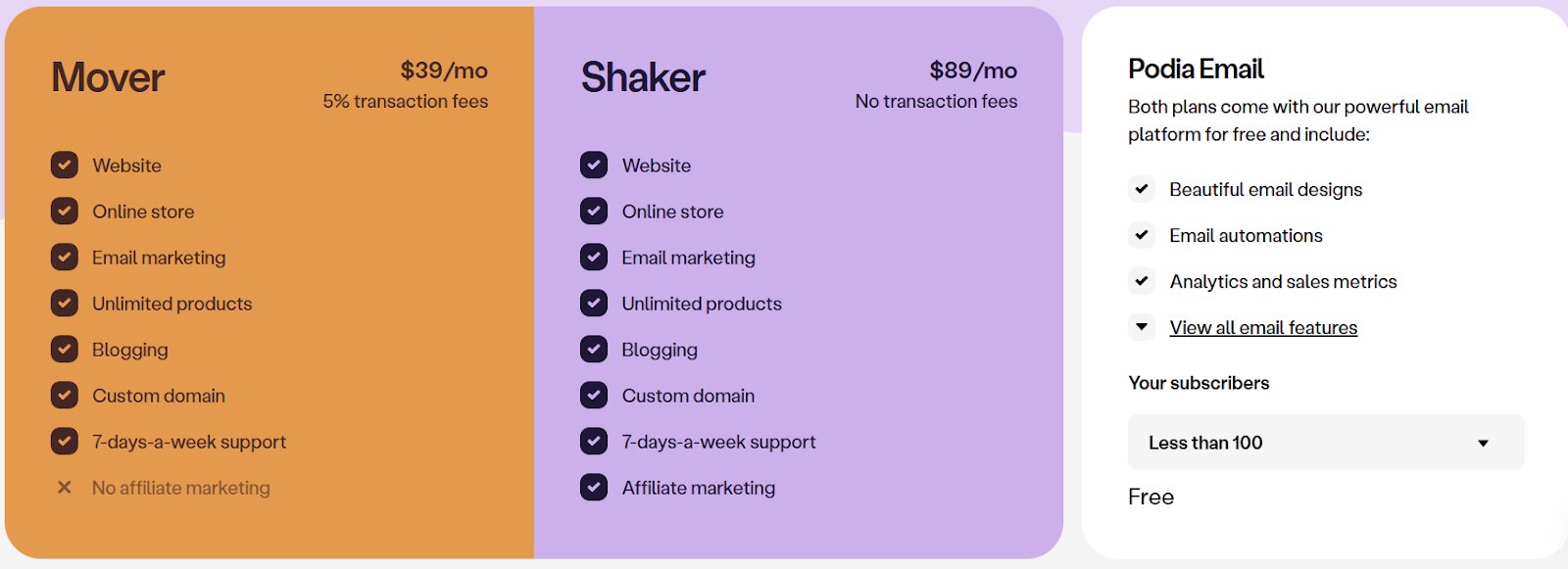
Podia offers a 30-day free trial with access to all core features. Paid plans start at $39/month ($33/month when billed annually) for the Mover plan, plus a 5% transaction fee, and $89/month ($75/month when billed annually) for the Shaker plan, which removes transaction fees and adds additional functionalities.
It also features Podia Email, a dedicated email platform that is free to use for up to 100 users.
Want to explore more granular details of Thinkific Vs Podia? Read our article: ‘Thinkific vs Podia: A Comprehensive Head-to-Head for 2026’.
Category 2: Virtual classroom and live tutoring platforms
5. LearnCube
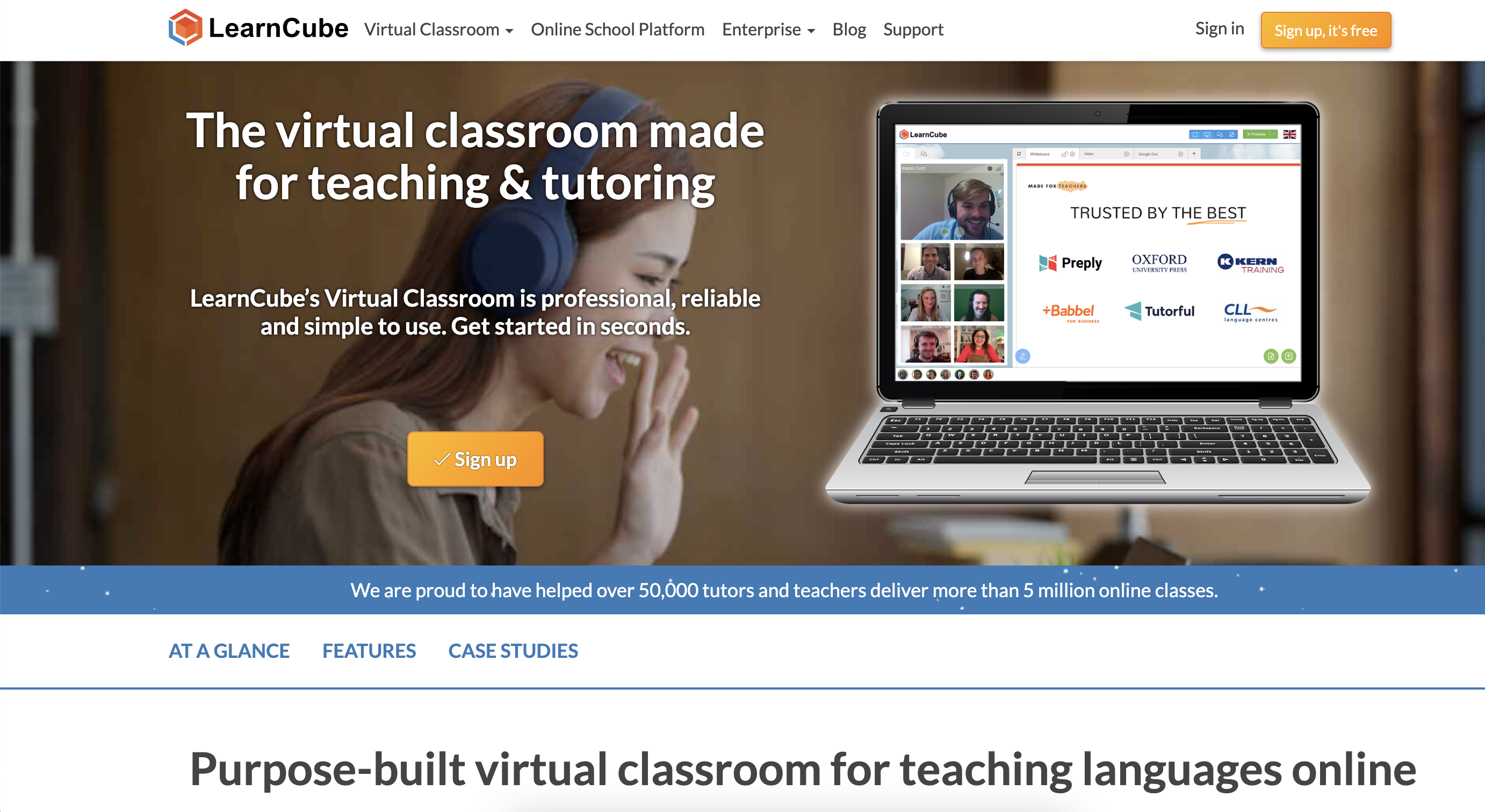
Who it's best for: Language schools, tutoring centers, and corporate training programs looking for a browser-based platform with integrated scheduling, payments, and reporting capabilities.
Key features
- Interactive multi-tab whiteboard: LearnCube allows teachers and students to collaborate in real time across multiple tabs, enabling drawing, writing, and sketching ideas during live lessons.
- Cloud-based content library: Store, organize, and access lesson materials from a central library, making it easy to share resources instantly during classes.
- Class scheduling and automated reminders: Schedule sessions and automatically notify teachers and students to reduce missed classes and streamline course management.
- Session recording and chat transcripts: Capture live classes and in-class discussions, allowing students to review lessons and teachers to track interactions.
- Custom branding options: Apply institutional logos, colors, and themes to the virtual classroom, ensuring a consistent and professional experience.
- Integrated payment handling: LearnCube enables educators to accept payments from students via supported payment gateways, including Stripe and PayPal.
Pros
- Browser-based access eliminates the need for downloads.
- Scalable plans cater to both solo educators and large institutions.
- The platform allows integration with third-party tools, such as WordPress or Google Analytics, helping educators simplify workflows and scheduling.
Cons
- Limited to 8 students per class, which may not be suitable for larger groups.
- Advanced features, such as AI-Teacher Assistant, are currently in beta.
- Some essential features, such as homework and premium ESL materials, are available as add-ons requiring additional investment.
Pricing
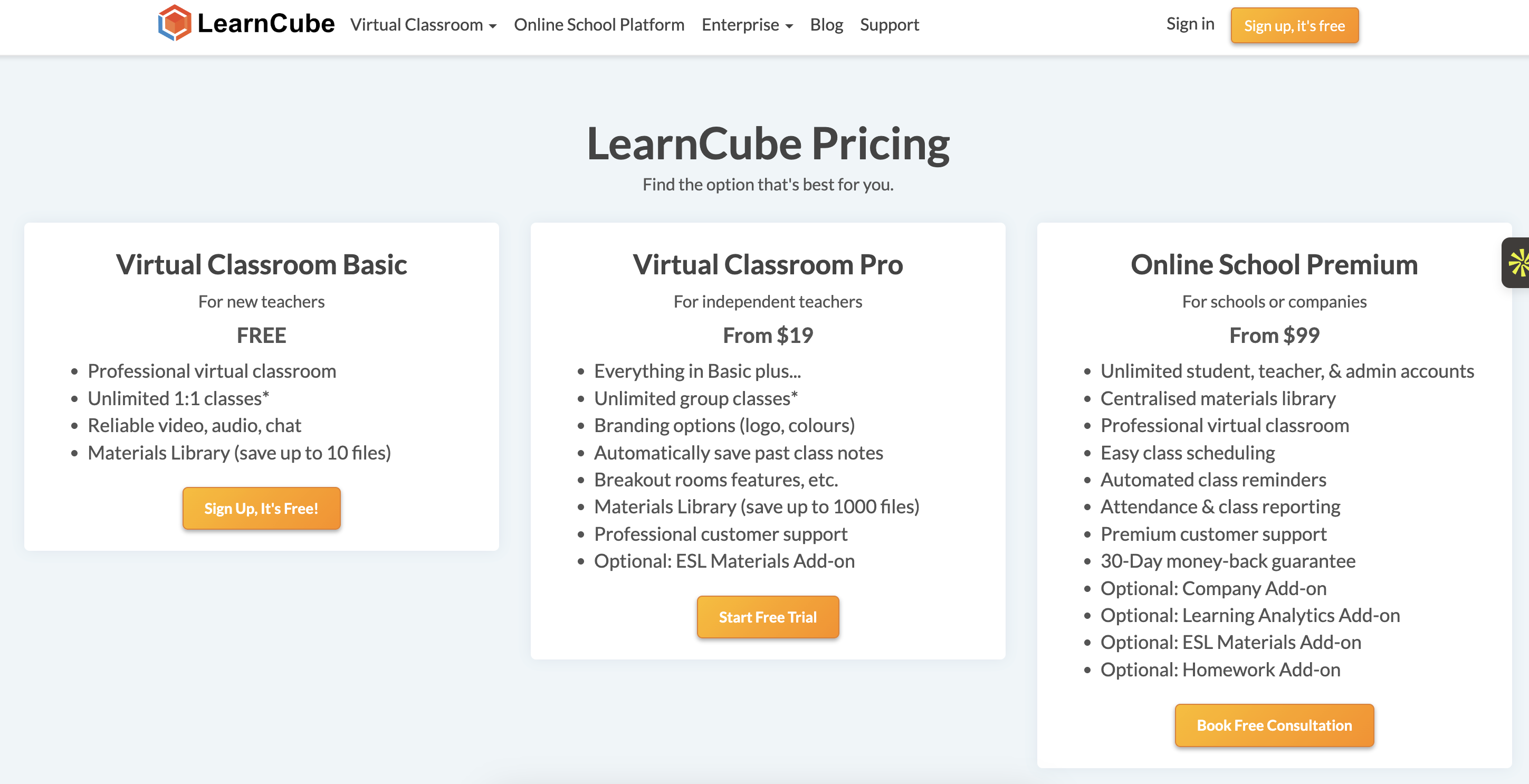
LearnCube offers a free version (for 14 days) with basic features. Paid plans start at $19/month for the Virtual Classroom Pro plan and $99/month for the Online School Premium plan.
6. Preply
Who it's best for: Learners seeking flexible, personalized language instruction with the ability to choose tutors based on specific criteria such as language, availability, and teaching style.
Key features
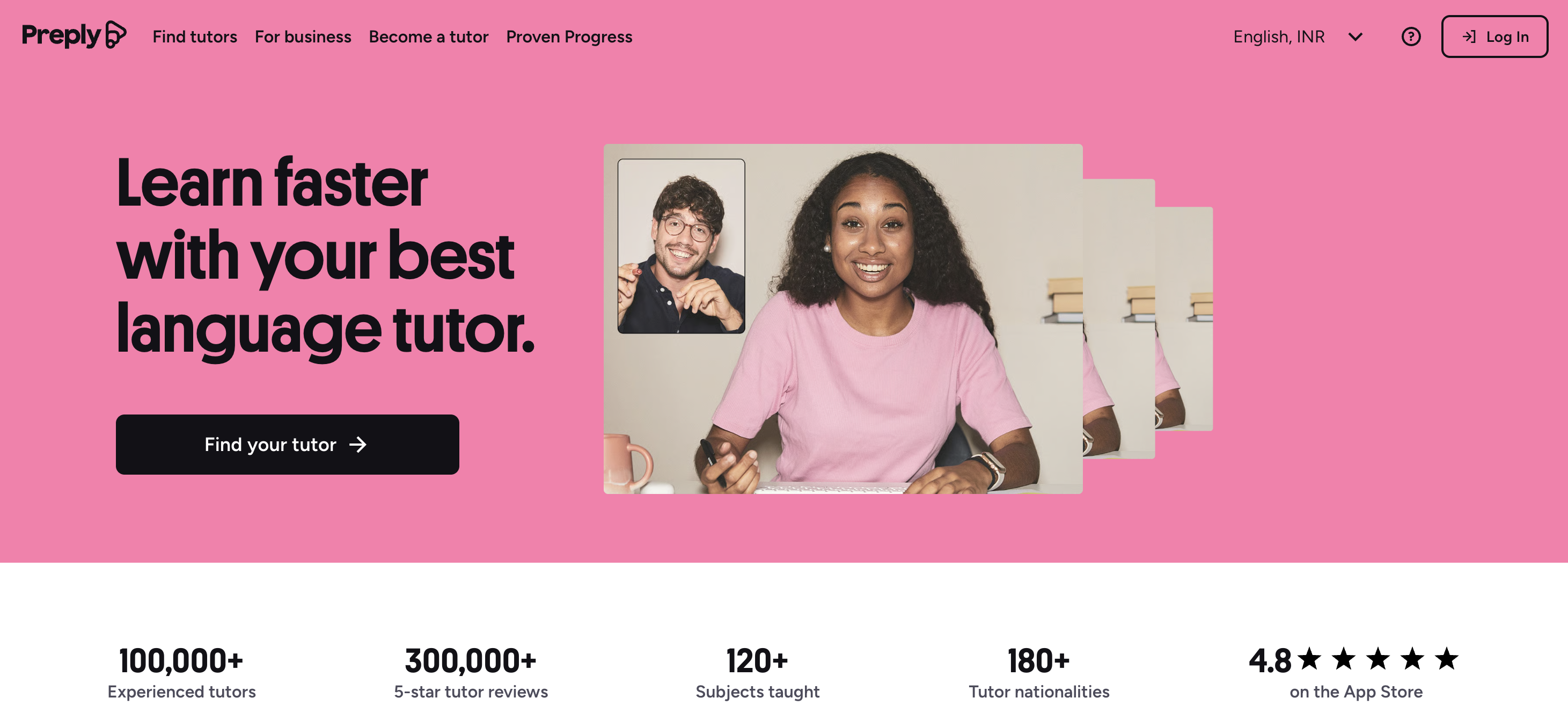
- AI-powered tutor matching: Preply utilizes a machine-learning algorithm to match students with tutors based on their subject, price, and range, as well as a few other criteria that enhance the chances of effective learning experiences.
- Diverse tutor profiles: Students can browse through a wide range of tutor profiles, each featuring introductory videos and reviews from other learners, allowing for informed decision-making.
- Integrated virtual classroom: The platform offers a virtual classroom equipped with video chat, messaging, file sharing, and screen sharing capabilities, facilitating interactive lessons.
- Flexible lesson scheduling: Tutors have the autonomy to schedule lessons at times that suit them, accommodating various time zones and personal schedules.
Pros
- The platform hosts a diverse pool of tutors, offering instruction in over 90 languages, catering to various learning needs.
- Students can select tutors based on specific criteria, such as teaching style, availability, and budget, tailoring their learning experience to personal preferences.
- Preply offers trial lessons, allowing students to assess a tutor's teaching style and compatibility before committing to a full course.
Cons
- Preply charges tutors a commission on their earnings (18% to 33%), which decreases as they accumulate more teaching hours on the platform. This fee structure may influence tutor pricing.
Pricing
Lesson prices on Preply typically range from $15 to $50 per hour, depending on the tutor's experience and expertise. Additionally, subscription plans are available, where students can choose the number of lessons they'd like to take each week, with automatic payments made every 28 days.
7. Livestorm
Who it's best for: educators, corporate trainers, and event organizers who require a reliable platform for delivering interactive sessions without the need for software downloads.
Key features
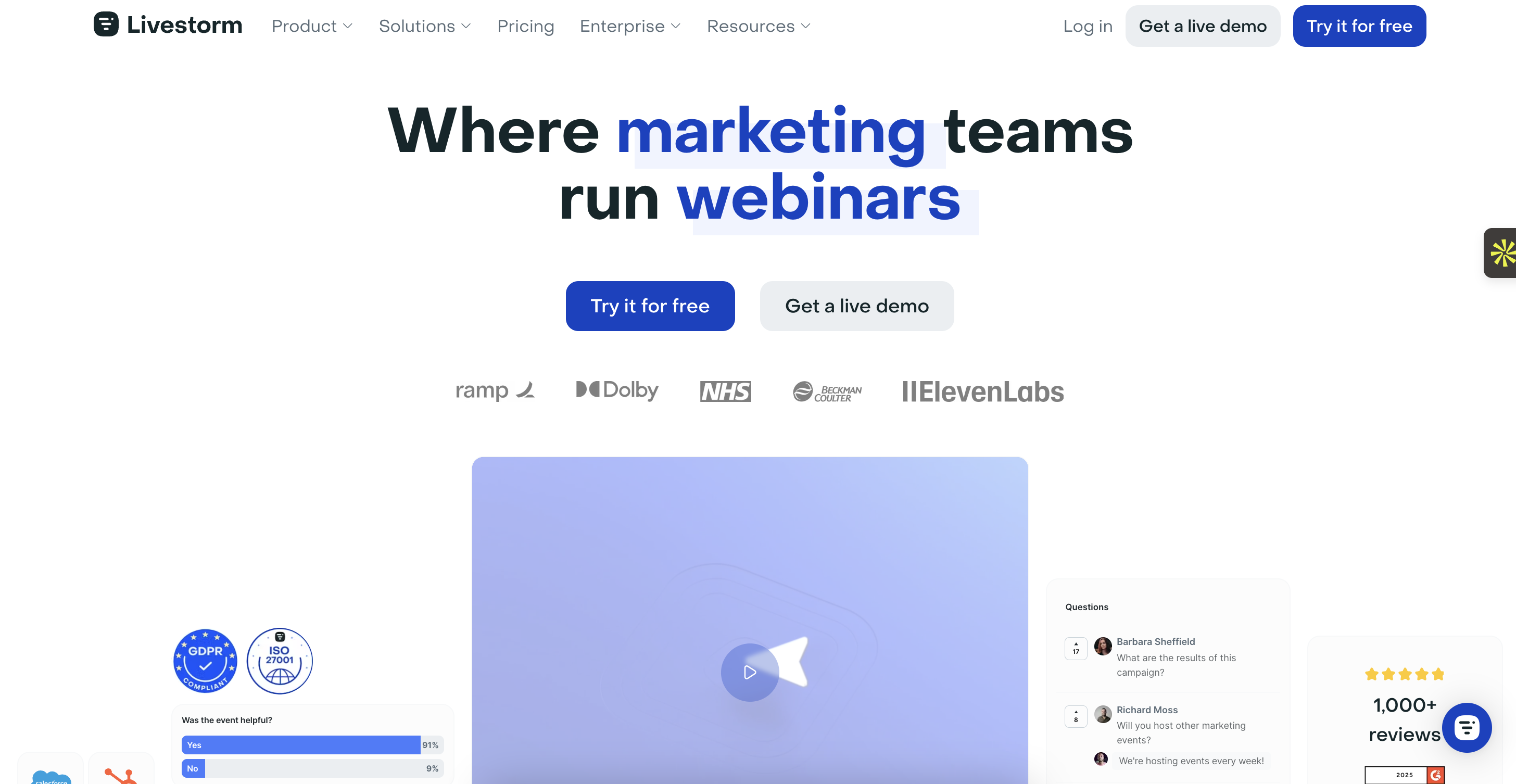
- Customizable event rooms: Design branded virtual spaces with features like file sharing, Q&A, and polls to enhance participant engagement.
- Advanced analytics: Access detailed reports on participation, engagement metrics, and conversion tracking to assess session effectiveness.
- Automated workflows: The platform helps you set up automated email sequences for reminders, follow-ups, and confirmations to streamline communication and increase efficiency.
- Breakout rooms: Livestorm facilitates small group discussions or activities within larger sessions to encourage collaboration.
Pros
- Participants can join sessions directly from their browsers, eliminating the need for downloads and reducing technical barriers.
- Tailor event rooms to match institutional branding, providing a cohesive and professional experience.
- Host events ranging from small workshops to large conferences with up to 3,000 attendees, accommodating various audience sizes.
- Connect with CRM systems, marketing tools, and other platforms to streamline workflows and data management.
Cons
- The free version restricts sessions to 20 minutes with a maximum of 30 attendees, which may not be sufficient for extended or larger-scale events.
- Paid plans work based on the number of active contacts, which can become costly for larger audiences or those with frequent sessions.
- Some users may find the platform's extensive features and customization options require a time investment to master.
Pricing
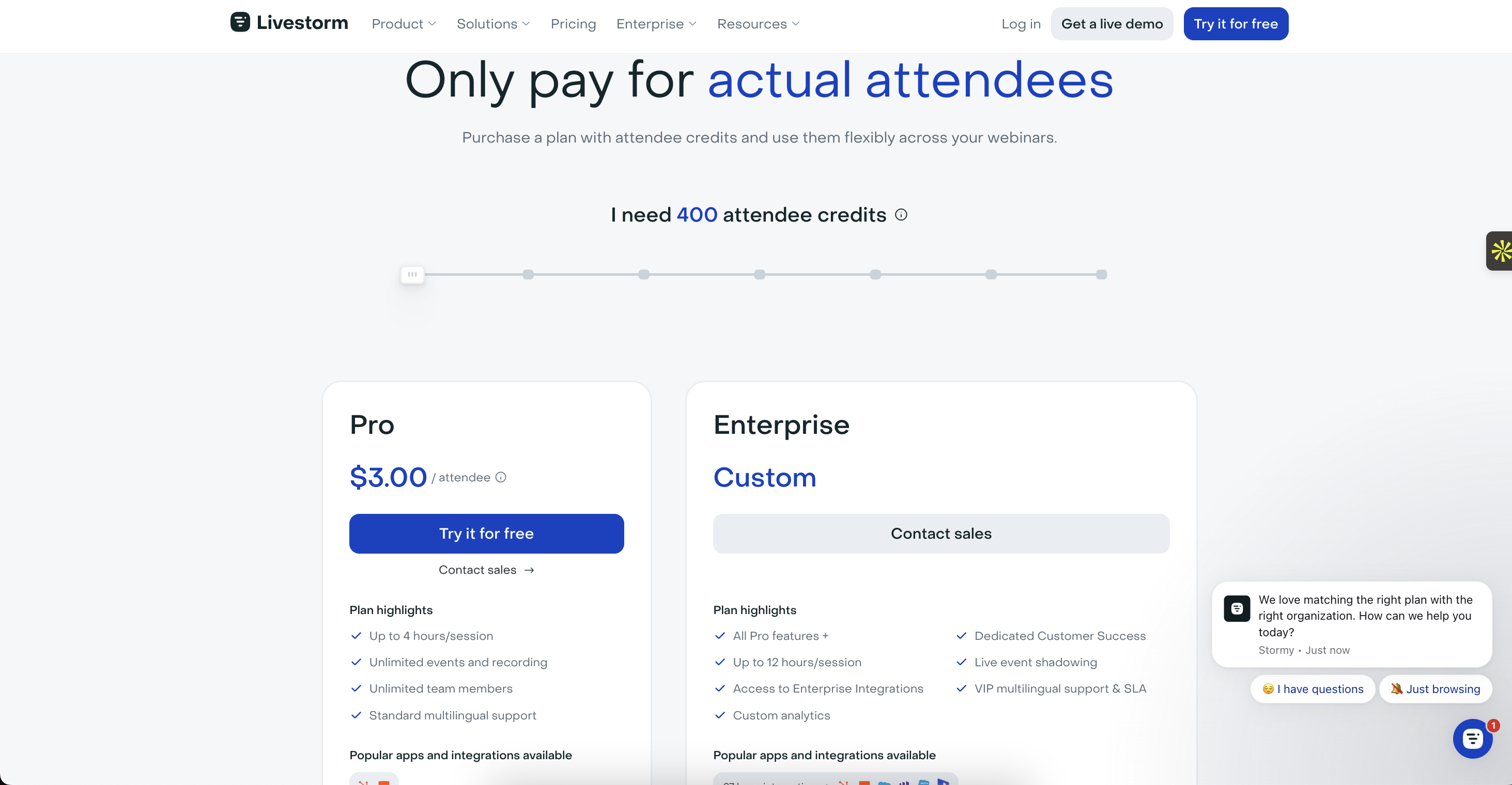
Livestorm offers a free plan allowing unlimited events, with limitations of 30 active contacts per month, 30 attendees per session, and a 20-minute duration per event.
Paid plans start at $105/month, offering extended session durations, increased attendee capacities, and additional features. Custom pricing is available for Business and Enterprise plans, which include advanced functionalities and support.
Category 3: Open-source and plugin-based learning platforms
8. Moodle
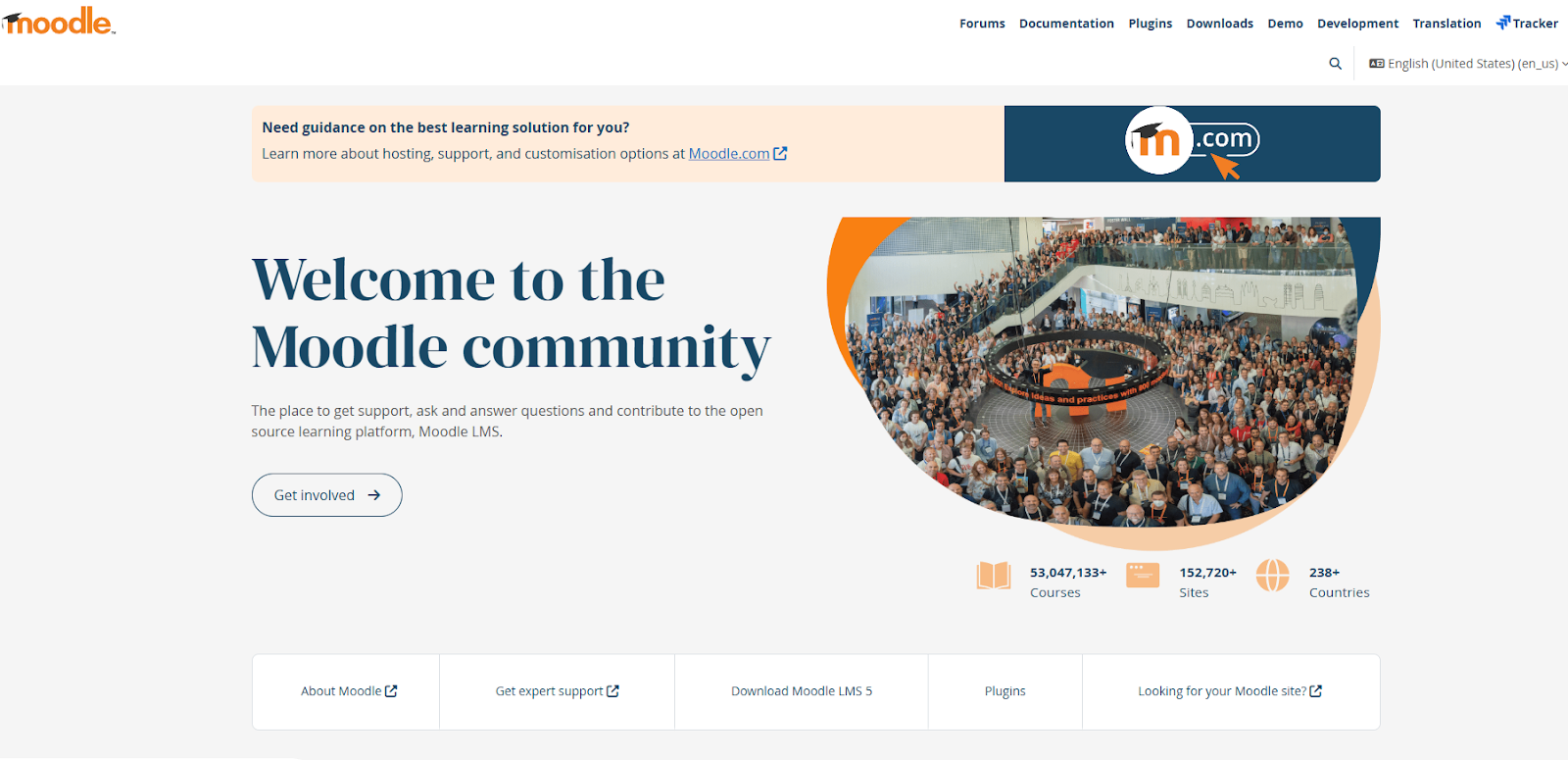
Who it’s best for: Educational institutions, trainers, and organizations seeking a flexible and scalable LMS that you can modify to specific teaching and learning needs.
Key features
- Customizable course structure: Moodle enables educators to design courses with various content formats, activities, and assessments tailored to diverse learning objectives.
- Comprehensive reporting tools: Provide detailed analytics on learner progress, activity completion, and assessment outcomes to inform instructional strategies.
- Mobile accessibility: Offers a mobile application that enables learners and educators to access course materials and participate in activities on the go.
- Multilingual Support: Supports multiple languages, making it accessible to a global audience and accommodating various linguistic needs.
- Integration capabilities: Facilitates integration with various third-party tools and services, improving the platform's functionality and adaptability.
For more platforms that can replace Moodle, read our article: Top 7 Moodle alternatives.
Pros
- Being open-source (self-hosted version), Moodle allows for extensive customization and adaptation to meet specific educational requirements.
- A large and active community provides resources, forums, and plugins to optimize the Moodle experience.
- Suitable for small classes to large institutions, Moodle can scale to accommodate growing user bases and evolving educational needs.
Cons
- New users may find the platform's extensive features and settings complex, requiring technical expertise.
- To achieve certain functionalities, reliance on third-party plugins may be necessary, which can vary in quality and support.
Pricing
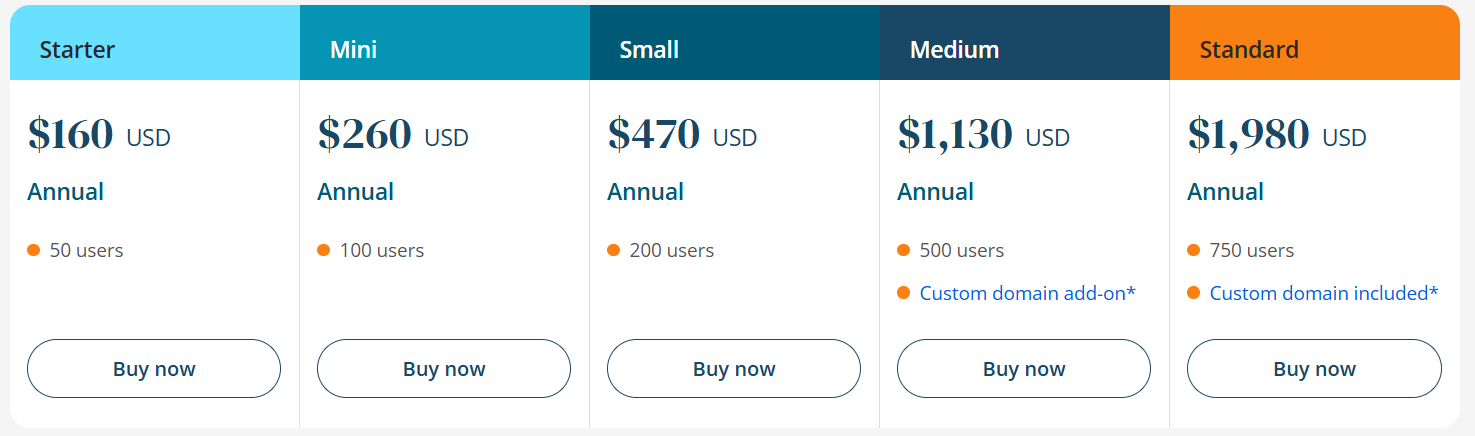
Moodle is free to download and use as open-source software. However, costs may arise from hosting, customization, and support services.
MoodleCloud, the cloud-hosted version, offers various plans starting from $160 per year, depending on the number of users and storage requirements.
9. OPEN edX
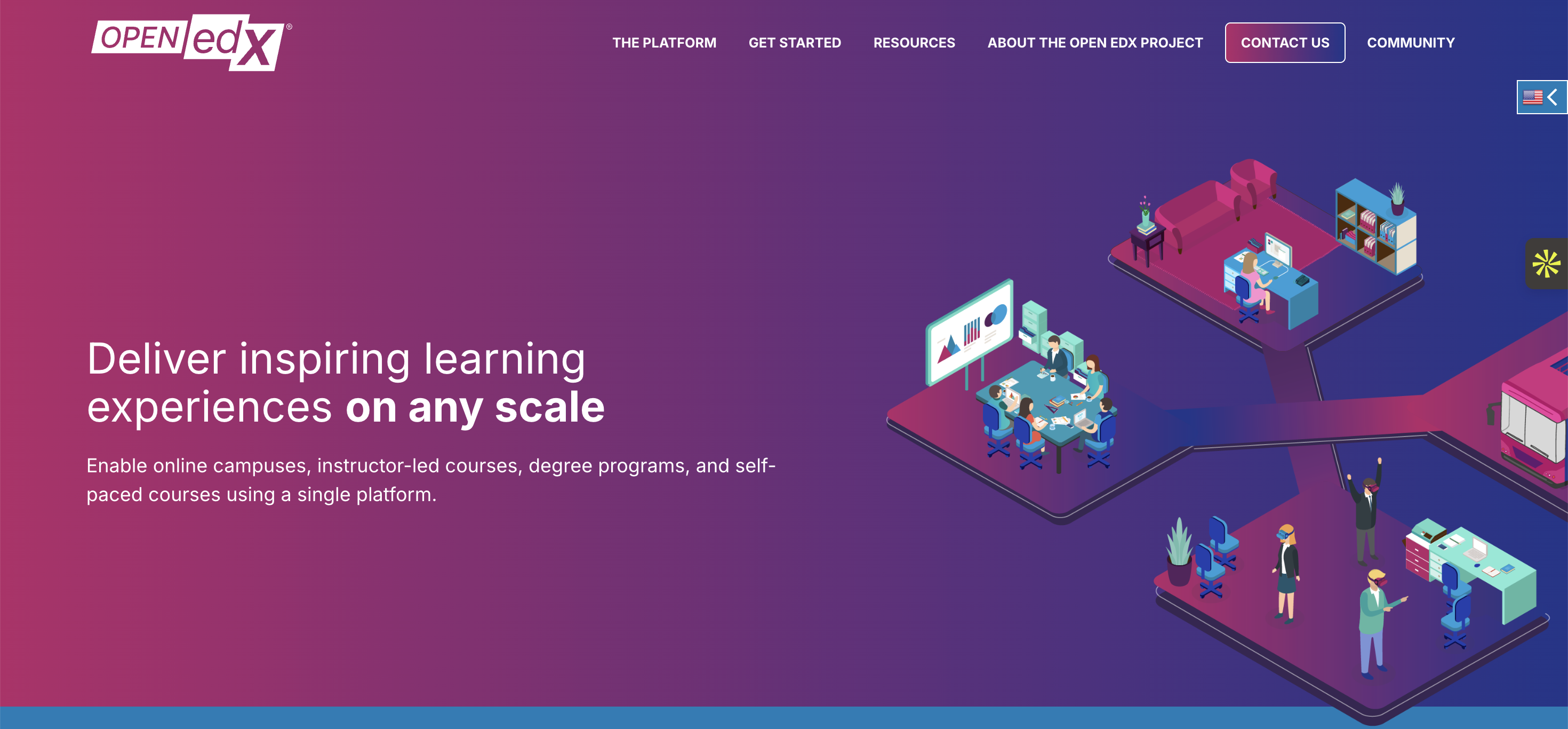
Who it's best for: Educational institutions, government agencies, and enterprises looking for a customizable, scalable platform for online learning, capable of supporting massive open online courses (MOOCs) and professional development programs.
Key features
- Studio (Course authoring tool): A web-based interface that allows instructors to create, organize, and manage course content, including videos, assessments, and interactive elements.
- XBlocks (Modular components): Customizable building blocks that enable the integration of various interactive and multimedia elements into courses.
- Analytics and reporting: Provides real-time analytics and reporting tools to track learner progress and the course’s effectiveness.
- Mobile compatibility: Offers responsive design and native mobile applications for iOS and Android, improving accessibility for learners on various devices.
- Multilingual support: Supports over 50 languages, facilitating global access to educational content.
Pros
- Allows institutions to customize and extend the platform to meet specific educational needs.
- Capable of supporting a large number of concurrent users, suitable for global deployments.
- Backed by a strong community contributing to continuous improvement and innovation.
- Offers a wide range of features, including assessments, discussions, and certification, to improve the learning experience.
Cons
- Requires technical expertise for installation, customization, and maintenance, which may be challenging for some institutions.
- The user interface may appear complex to new users, requiring training and adaptation.
- While highly customizable, extensive modifications may lead to increased development time and costs.
Pricing
Open edX is free to use as an open-source platform; however, institutions must consider costs associated with hosting, customization, and maintenance. Third-party providers offer managed services with pricing varying based on features and scale.
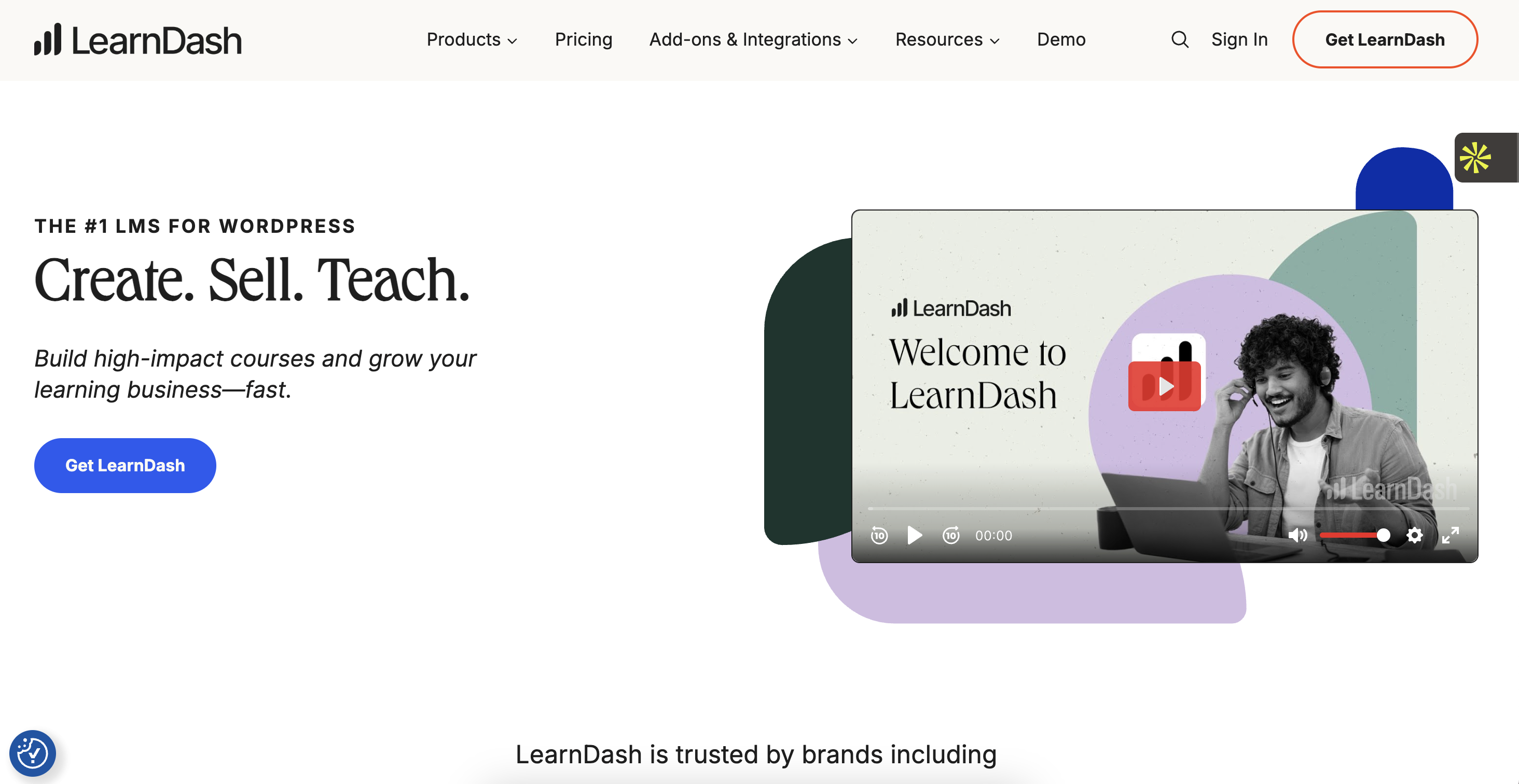
10. LearnDash
Who it's best for: WordPress-based course creators, including small businesses and educational institutions, looking to build and monetize structured learning programs.
Key features
- Drag-and-drop course builder: LearnDash offers an intuitive drag-and-drop interface for course creation, allowing you to design courses without any coding knowledge. This feature simplifies the process of adding lessons and quizzes.
- AI-powered course outline builder: The platform automatically generates course outlines based on basic input, streamlining the course creation process and saving time for instructors.
- Advanced quizzing capabilities: LearnDash supports 8 question types, custom messages, modifiable question display, and more, providing a strong assessment tool for instructors to effectively evaluate learner progress.
- Focus mode: This feature in LearnDash helps eliminate distractions by hiding irrelevant content, allowing learners to concentrate solely on the course material.
- Blended learning support: LearnDash facilitates the integration of both virtual and in-person learning elements into courses, offering a flexible approach to education that caters to diverse learning preferences.
Pros
- Supports various pricing models, including subscriptions, memberships, one-time purchases, and bundles, providing flexibility for course creators to generate revenue.
- Offers a wide range of extensions to optimize functionality, allowing users to customize their learning platform to meet specific needs.
Cons
- Users need familiarity with WordPress for installation and customization, which might pose a barrier for those without technical expertise.
- Some advanced features require the purchase of separate add-ons, which can potentially increase the overall cost for users seeking extended functionality.
Pricing
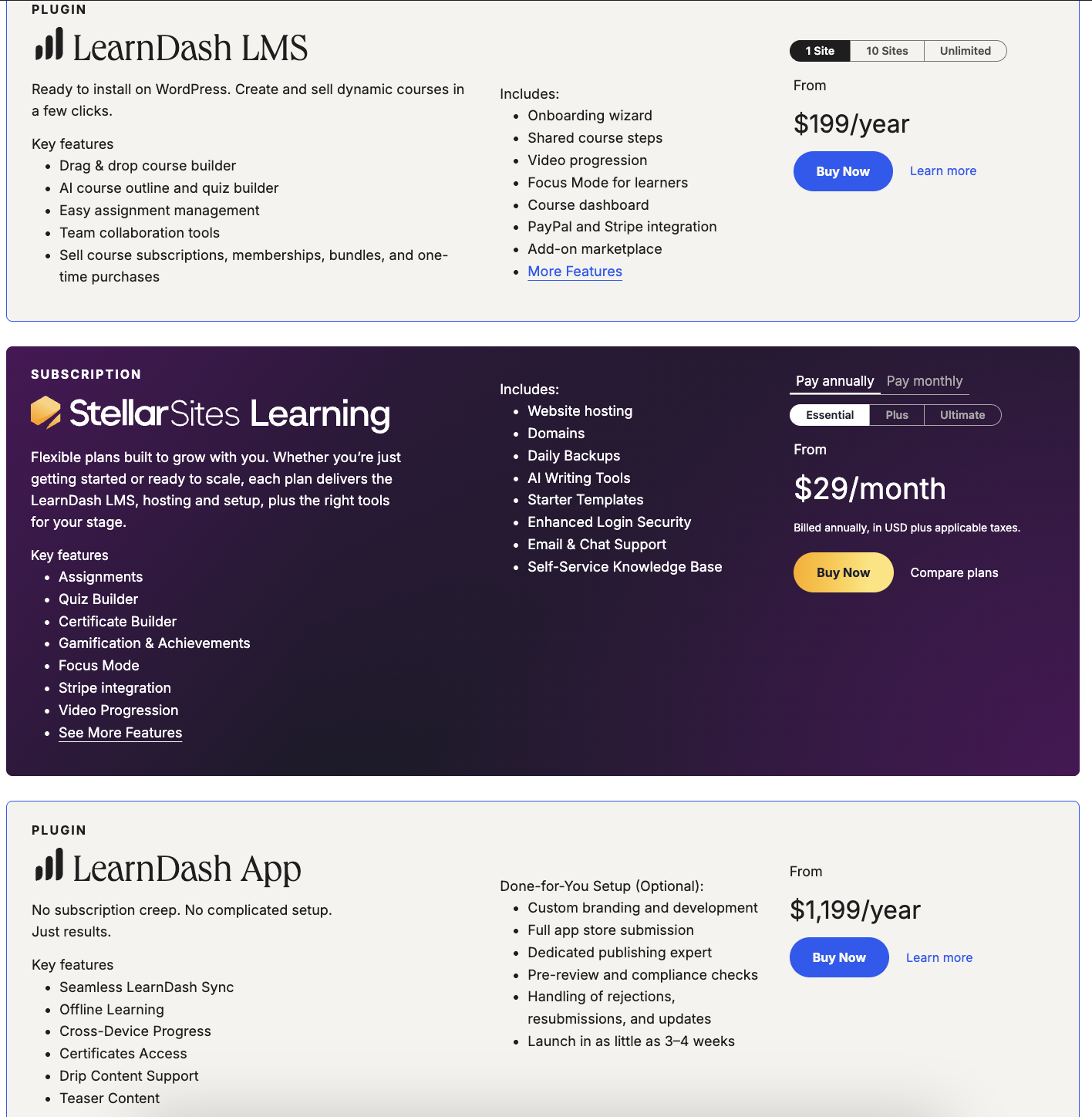
LearnDash offers a plugin starting at $199/year for a single site. Subscription-based hosted pricing plans are available, with prices ranging from $29 to $79 per month.
It offers a separate LearnDash app, which costs $1,199 per year.
LearnDash also offers add-ons for advanced features, which are available at an additional cost.
If LearnDash’s pricing sounds confusing and not budget-friendly because of the multiple pricing tiers and add-ons, read our guide: LearnDash Pricing and Comparison with Affordable Alternatives.
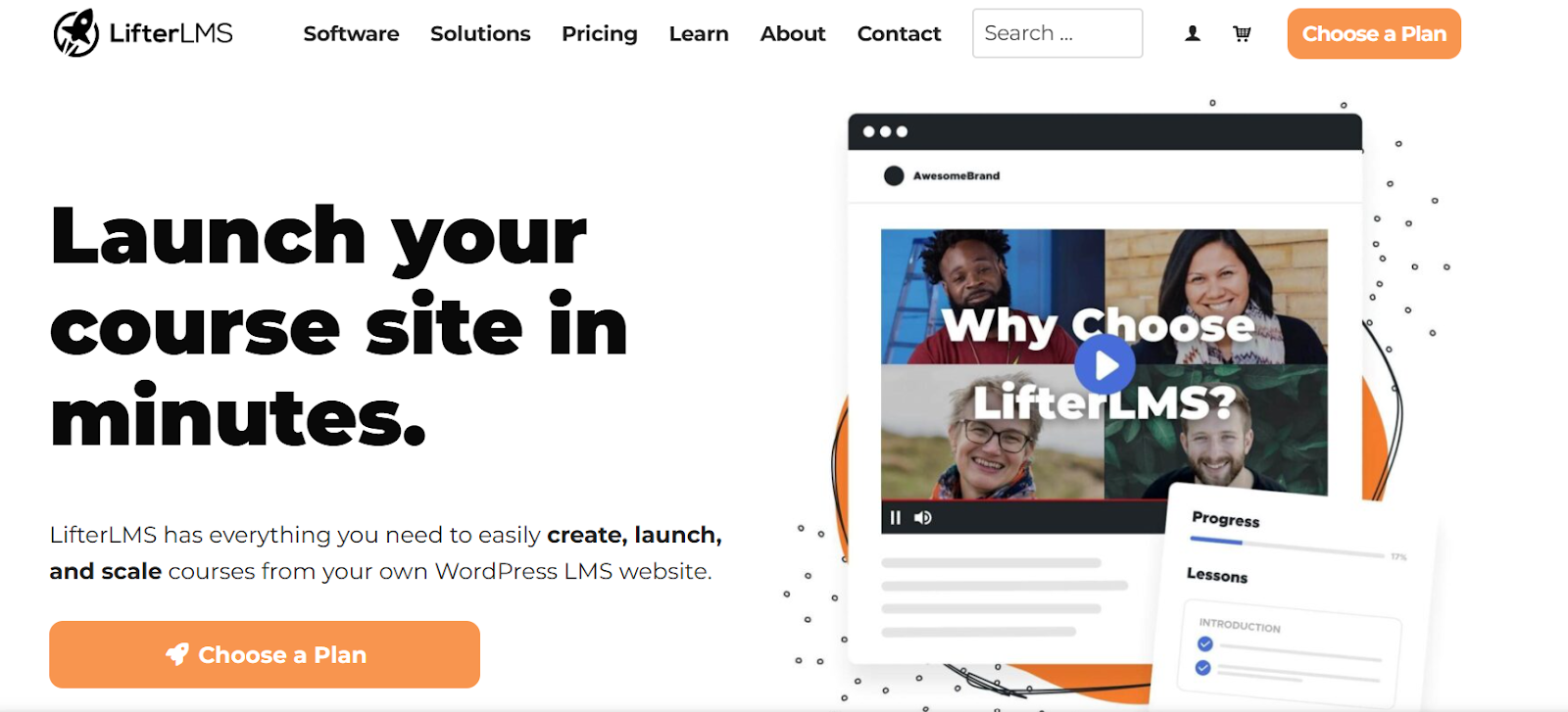
11. LifterLMS
Who it's best for: WordPress-based creators who want to build courses alongside memberships or communities, including entrepreneurs, coaches, and small businesses.
Key features
- Advanced quizzes: LifterLMS offers comprehensive quizzing capabilities, supporting 11 question types, custom pass scores, and detailed analytics to assess learner performance.
- Assignments: The platform allows instructors to create step-by-step tasks and essay collections, with options for file uploads and passing score ranges, facilitating comprehensive assessment methods.
- Advanced videos: LifterLMS enhances video lessons with features like requiring full video completion, analytics, player branding, and auto-resume, improving engagement and tracking.
- Course cohorts: LifterLMS enables the grouping of students into cohorts, allowing for cohort-based learning experiences and streamlined management of group activities.
- Private site: LifterLMS offers a private site feature, allowing course creators to restrict access to content, ensuring that only authorized users can view and engage with the material.
Pros
- Supports various pricing models, including one-time payments, subscriptions, and free trials, providing flexibility for course creators.
- Offers a wide range of add-ons and themes to improve functionality, allowing users to customize their learning platform to meet specific needs.
Cons
- Advanced membership or subscription setups can become complicated, requiring careful configuration to manage access and payments.
- LifterLMS may experience performance issues when managing large courses or high traffic volumes, which can impact the user experience.
Pricing
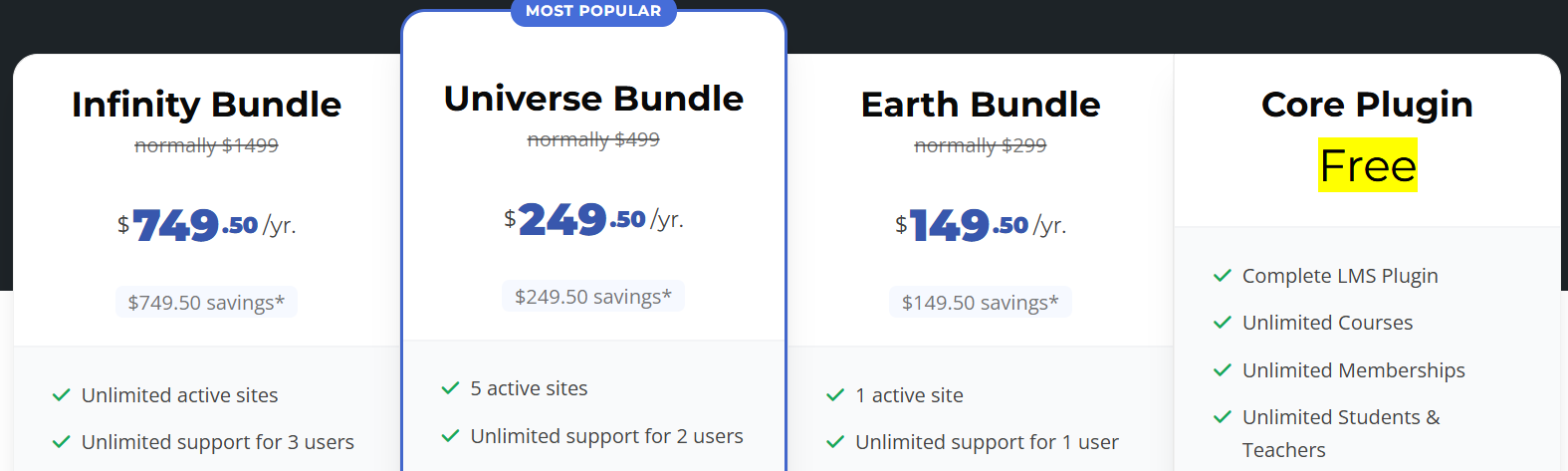
LifterLMS offers a free core plugin with essential features. The paid plans start at $149.50/year for the Earth Bundle, with a maximum pricing of $749.50/year with additional features.
Category 4: Course marketplaces
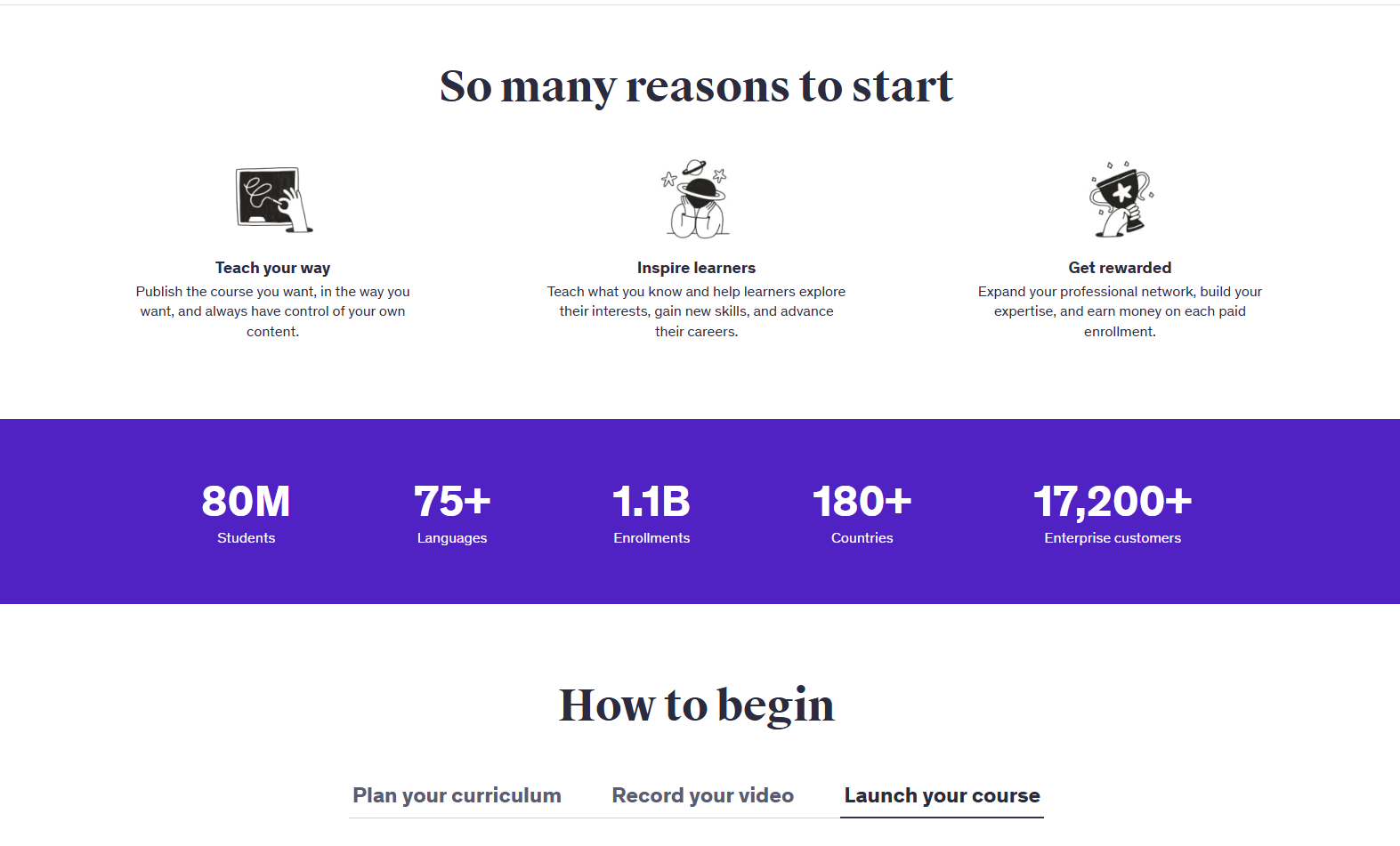
12. Udemy
Who it's best for: Independent instructors, entrepreneurs, and subject matter experts who want to reach a large audience and monetize their courses without building their own platform.
Key features
- Instructor revenue share: Instructors earn a percentage of each course sale, with rates depending on whether the sale comes through organic Udemy traffic or instructor promotions.
- Course creation dashboard: Tools for uploading content, creating lectures, quizzes, and assignments, and organizing courses efficiently.
- Analytics and reporting: Udemy lets you access detailed insights on sales, learner engagement, and course performance to optimize content and marketing.
- Promotional tools: Instructors can create coupon codes, run discounts, and leverage Udemy’s marketing programs to attract learners.
- Mobile accessibility: Courses can be accessed on iOS and Android apps, increasing reach and learner convenience.
Pros
- Access millions of learners worldwide without investing in marketing or platform setup.
- Udemy handles infrastructure, payment processing, and platform maintenance.
- Promotions, deals, and Udemy’s internal search increase course visibility.
Cons
- Udemy takes a percentage of course sales, especially when learners purchase through the Udemy marketplace rather than instructor promotions.
- Instructors have minimal control over the platform’s branding and user interface.
Pricing
Free to create and publish, but the platform takes revenue based on the learner’s mode of joining.
When a learner discovers and purchases a course through Udemy's marketplace without any instructor promotion, the revenue share is:
- Instructor: 37%
- Udemy: 63%
If an instructor promotes their course using a coupon or referral link, the revenue share improves:
- Instructor: 97%
- Udemy: 3%
To know about Udemy’s competitors, read our article: Top Udemy Alternatives for Learners and Course Creators.
13. LinkedIn Learning
Who it’s best for: Instructors with recognized expertise in business, technology, or creative domains, wanting to reach professionals aiming to improve their skills for career advancement.

Key features
- Upfront payment structure: Instructors receive a one-time payment for course creation, typically ranging from $1,000 to $5,000, depending on factors like course complexity and expected viewership.
- Royalty-based earnings: Post-publication, instructors earn royalties based on the number of views their courses receive, with reported rates ranging from 10% to 15% of course revenue.
- Professional production support: LinkedIn Learning provides instructors with a full production team, including content managers and editors, to assist in course development and ensure high-quality content delivery.
- Integration with LinkedIn profiles: Completed courses are seamlessly integrated into instructors' LinkedIn profiles, enhancing their professional credibility and visibility.
- Access to a global professional audience: Courses are accessible to LinkedIn's extensive user base, providing instructors with a broad, career-focused audience.
Pros
- Courses meet the needs of professionals seeking to advance their careers, ensuring content relevance.
- Instructors benefit from professional-grade production resources, leading to polished and engaging course content.
- Being part of LinkedIn, the platform offers credibility and a built-in audience of professionals.
Cons
- The royalty-based earnings model may result in lower income compared to platforms offering higher revenue shares.
- Securing a contract to create courses can be highly competitive, as LinkedIn Learning selects instructors based on specific criteria.
Pricing
LinkedIn Learning pays instructors through a combination of upfront payments and royalties, and instructors do not incur any fees to publish their courses.
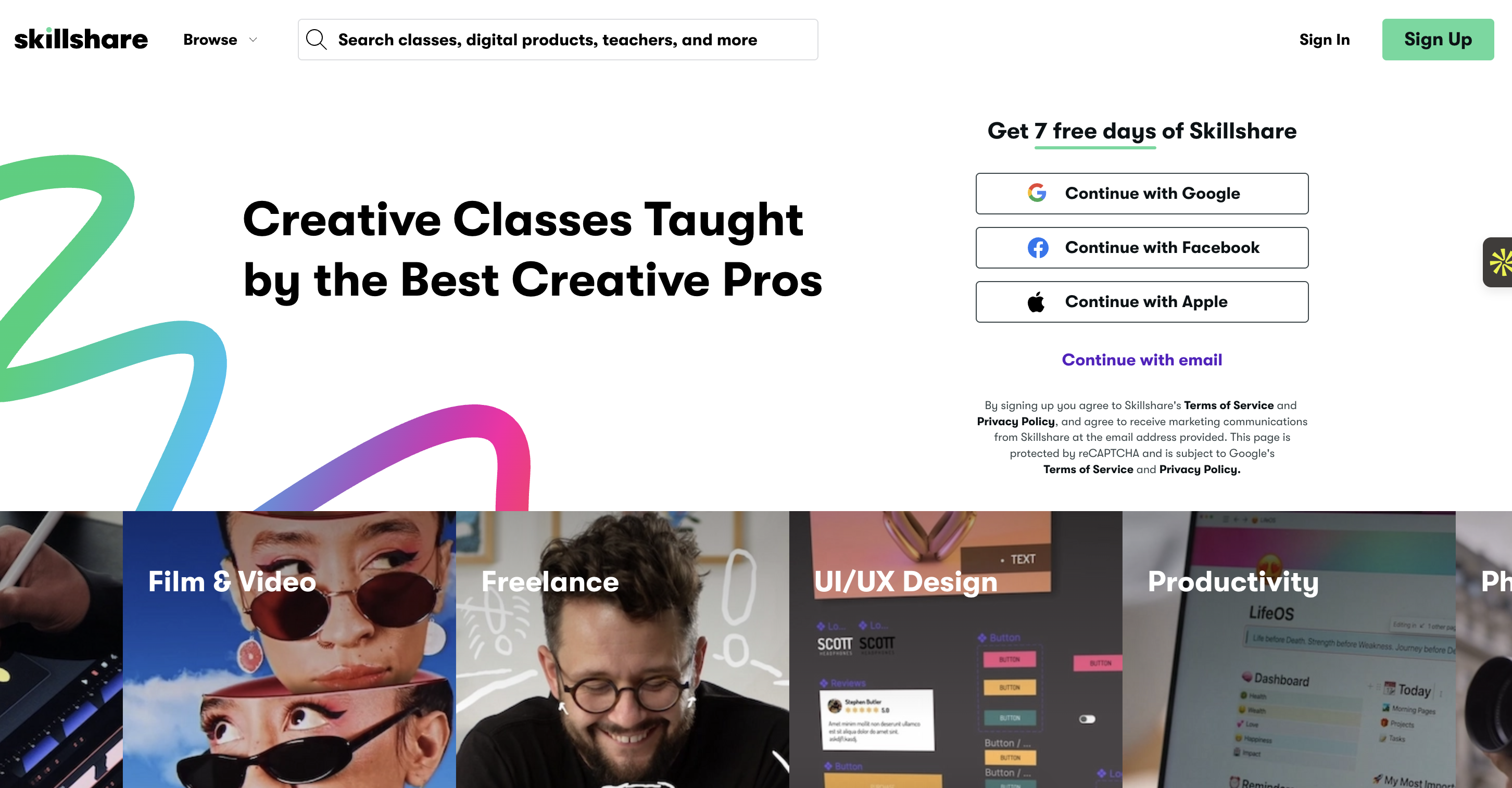
14. Skillshare
Who it’s best for: Instructors who deliver content in creative and practical fields such as design, photography, writing, entrepreneurship, or lifestyle, and want to engage learners through short, project-based classes.
Key features
- Project-based class builder: Instructors can structure courses around hands-on projects, allowing learners to immediately apply skills and showcase their work.
- Class structure and duration: Skillshare offers structured classes with 20–60 minutes of pre-recorded video content, divided into short lessons ranging from 2 to 8 minutes each. Classes must be at least 10 minutes long to meet the platform's quality standards.
- Creator hub access: Instructors can access the ‘creator hub’ to manage their classes, track performance, and engage with students. This centralized dashboard streamlines the teaching experience.
- Mobile Accessibility: Skillshare's mobile app allows students to access classes on the go, enhancing the learning experience. Instructors benefit from this feature as it increases the potential reach of their classes.
Pros
- Instructors can tap into thousands of active learners worldwide.
- Flexible formats let instructors create short, project-based classes and experiment with different teaching approaches.
- Analytics and community features help you track engagement and improve your offerings.
Cons
- Instructors earn a portion of subscription revenue rather than full course sales.
- Classes are informal, which may limit appeal for learners seeking certifications.
Pricing
Free to publish; instructors earn revenue through Skillshare’s royalty system, which distributes subscription revenue based on minutes watched.
15. YouTube
Who it’s best for: Educators, subject matter experts, and content creators aiming to reach a broad audience and who are comfortable with self-managing content creation, audience engagement, and monetization strategies.

Key features
- Monetization via the YouTube Partner Program (YPP): Instructors can earn revenue through ads, channel memberships, Super Chats, and YouTube Premium revenue, provided they meet the eligibility criteria of having 1,000 subscribers and 4,000 watch hours in the past 12 months, or 10 million YouTube Shorts views in the last 90 days.
- Player for education: A classroom-safe embedded player that allows educational institutions to license content, providing instructors with an alternative revenue stream based on watch time within educational settings.
- Interactive engagement tools: Features like live streaming, community posts, and comment sections help instructors to interact with their audience, fostering a sense of community around their content.
- Content customization: Instructors can organize content into playlists, add timestamps, and utilize chapters to enhance the learning experience and navigation for viewers.
- Analytics dashboard: Provides detailed insights into viewer demographics, watch time, and engagement metrics, assisting instructors in refining their content strategy.
Pros
- YouTube's vast global audience offers instructors the potential to reach millions of learners worldwide.
- Beyond ad revenue, you can explore memberships, Super Chats, and educational licensing through Player for Education.
- Instructors have the autonomy to create various content types, from short-form videos to in-depth tutorials, catering to different learning preferences.
Cons
- Achieving eligibility for the YouTube Partner Program requires meeting specific criteria, which can be challenging for new creators.
- Managing comments and ensuring a positive community environment can be time-consuming and may require active moderation.
Pricing
Creating and uploading content on YouTube is free of charge. However, monetization through the YouTube Partner Program requires meeting the eligibility standards.
How to choose the right online teaching platform
We now have the list, and I know it's overwhelming to consume and choose the one platform for your online teaching. So, here are the key factors to consider to make the right choice.
- Your business model
- Decide whether you want to sell one-off courses, run a membership community, or offer live coaching.
- Platforms like FreshLearn and Podia work well for memberships, while Udemy and Skillshare are good at reaching a broad audience for single courses.
- Technical skill level
- Consider how comfortable you are with tech and course setup.
- If you prefer a drag-and-drop interface with minimal setup, FreshLearn or Thinkific can save time.
- For instructors who prefer customization and advanced tools, platforms like Moodle or LearnDash offer greater flexibility and customization options.
- Budget and pricing model
- Evaluate whether the platform charges monthly fees or takes a percentage of each sale.
- Free-to-publish platforms like Udemy or Skillshare reduce upfront costs.
- Paid platforms may cost more but give you full control over branding, sales, and revenue.
- Marketing and sales needs
- Determine the amount of built-in marketing support you need.
- Look for features like email automation, landing pages, or affiliate tools.
- Platforms like Kajabi provide advanced marketing tools, while others may require external integrations.
- Community and student engagement
- Check if the platform supports discussion boards, project submissions, or live Q&A sessions.
- Platforms that encourage interaction help students stay active, give feedback, and share positive reviews, which can attract more learners to your courses.
Wrapping up
Ultimately, the best online teaching platform is the one that aligns with your business model, technical comfort, budget, marketing needs, and need for student engagement. By comparing the factors and features mentioned in this guide across platforms, you can make an informed choice that fits both your teaching style and growth goals.
For instructors looking for a simpler, streamlined approach that balances ease of use with course building, a strong community, AI-powered features, and transparent pricing, FreshLearn offers an intuitive platform that helps you focus on teaching while managing your courses effortlessly.
Ready to teach and grow your audience? Create your account on FreshLearn for free and get started.
FAQ
1. What is the difference between an online course platform and a traditional LMS?
An online course platform focuses on creating, hosting, and selling courses to learners, often with built-in marketing tools and access to their target audience. An LMS (Learning Management System) supports managing, tracking, and reporting learning progress, often for organizations or internal training programs.
2. Can I earn money by teaching online?
Yes. Instructors can earn revenue by selling courses, running memberships, offering live coaching, or monetizing through ad-supported platforms like YouTube. Your income depends on your platform, pricing model, audience size, and engagement level.
3. What is the easiest platform for a beginner to use?
FreshLearn stands out for beginners because it provides a simple, intuitive interface for creating courses, managing students, and processing payments; all in one place. You don’t need technical skills or complex integrations, which lets you focus on teaching rather than platform management.
4. How much does it cost to sell online courses?
Costs vary by platform. Some platforms, like Udemy or Skillshare, let you publish courses for free but take a percentage of sales. Paid platforms, like Kajabi or Podia, charge monthly fees but let you keep all revenue. FreshLearn offers a free plan to get started, making it low-risk for new instructors.
5. What qualifications do I need to teach online?
You don’t need formal qualifications to teach online. Platforms value expertise and practical knowledge. If you can teach a skill clearly and provide value to learners, you can start creating courses (though formal accreditations increase your brand value). Certain professional platforms, such as LinkedIn Learning, may require verified experience in a specific subject.
You might also like
Hosted by
