
Top 12 LearnDash Alternatives for Frustrated Creators [2026]

LearnDash is no doubt a powerful tool. It gives you flexibility, control, and a ton of features to build courses on WordPress. But power isn’t always practical.
If I had to rely on a tool that makes me stack multiple add-ons, deal with technical setup, and still carry an expensive tag without knowing how the outcome will turn out, I’d think twice about it.
And I know many creators feel the same.
But good for you, this guide will help you with that. It’s a comprehensive look at the best LearnDash alternatives, options that eliminate the technical pain points and let you focus on teaching.
Whether you’d rather stick with WordPress or move to an all-in-one platform that handles everything behind the scenes, this list will help you find the right fit.
Why you should consider a LearnDash alternative
Even though LearnDash is a popular choice, it’s not perfect for everyone. Let’s break down the main reasons you might want to explore alternatives.
The hidden costs of a WordPress LMS
LearnDash isn’t just the license fee. Once you start building a full-featured course, the costs add up fast. You need hosting to run your WordPress site reliably (If you choose the LearnDash LMS plugin), and good hosting isn’t cheap.
Then come premium themes to make your site look professional. On top of that, you often need paid add-ons for essential features like advanced payment gateways, memberships, or course automation.
Before you know it, the total expense can easily increase your investment costs.
Let’s say you purchase LearnDash’s LMS plugin for 1 site, which costs $199/year.
Though the actual site purchase cost is $199/year, you will end up paying $1,296 to set up a decent learning management setup. That’s four to six times more than what comprehensive all-in-one platforms charge.
The technical burden
Running LearnDash on WordPress isn’t plug-and-play. You must maintain an edge with WordPress updates, keep all your plugins compatible, and continually monitor for security vulnerabilities. One wrong update or a plugin conflict can take your site offline.
Site speed can be another challenge. Heavy plugins and bloated themes can turn a smooth course experience into a slow, frustrating one for your students.
Many LearnDash users also convey the same concern:


Limited all-in-one functionality
LearnDash is a plugin-first solution, which means it relies on a patchwork of tools to cover everything you need. If you want integrated hosting, built-in support, automated payments, and student management all in one place, WordPress alone won’t provide it.
If you’re tired of managing WordPress plugins and external hosting, switching to a platform built for consolidating your creator tech stack will save you hours of technical troubleshooting.
All-in-one platforms offer a comprehensive experience: they handle hosting, security, support, and the features you need without forcing you to glue together multiple plugins.
The best LearnDash alternatives in 2026 (At a glance)
Before I explain the ins and outs of all the LearnDash alternatives, here is a quick table showing the main players and what they bring to the table.
The 12 best LearnDash alternatives in 2026 (Deep dive)
Let’s now see the capabilities of all the LearnDash alternatives in detail.
1. FreshLearn
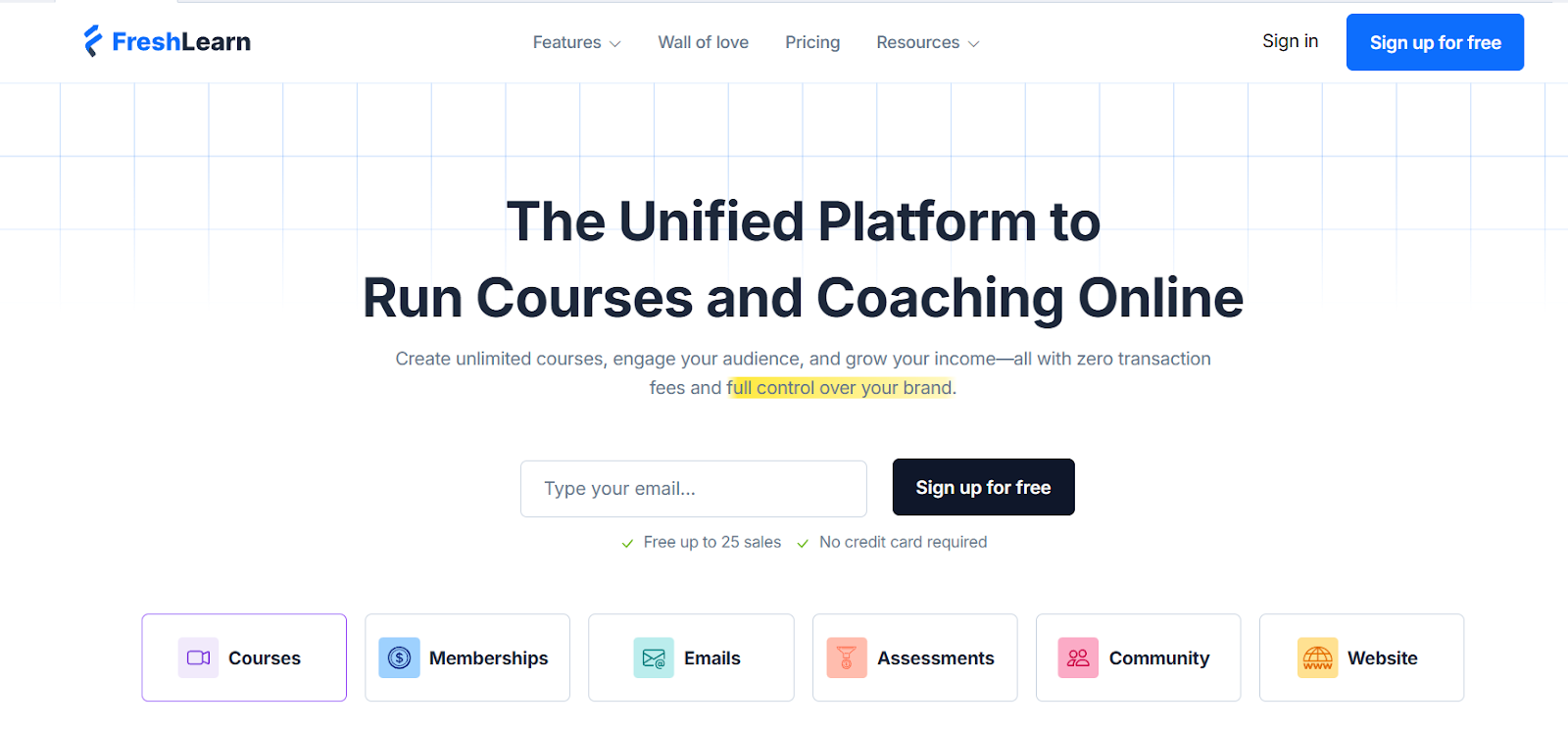
FreshLearn is an all-in-one platform built for course creators, coaches, and enterprises who want to share their expertise and teach online, whether that’s:
- On-demand courses
- Corporate trainings
- Live cohorts
- Workshops or
- Digital downloads
Instead of juggling WordPress plugins or multiple third-party tools, FreshLearn gives you a single dashboard where you can design your site, build courses, market them with email campaigns, and monetize with memberships and product bundles.
Who it’s best for: Creators and small to medium-sized businesses (SMBs) who want to get courses up fast and cheap, avoid tech hassles, and keep everything under one roof (course content, website, sales).
Key features
- SCORM support: Makes it incredibly easy to migrate and host professional-grade eLearning content by offering native support for SCORM 1.2 and SCORM 2004. Instead of rebuilding your complex, interactive courses from scratch, you can simply upload your existing SCORM ZIP files directly into the Course Builder.
- Blogging CMS: FreshLearn lets you email your subscriber list using lead magnets like quizzes, workshops, newsletters, or free mini-courses. Pick from ready-made email templates, tweak them with drag-and-drop, match your brand colors, and send or automate campaigns.
- Automations and workflows: FreshLearn lets you create automated subscriber journeys using a drag-and-drop workflow builder. Set up welcome emails, sales sequences, post-purchase follow-ups, or freebie deliveries with ease. You can define rules to control who receives what and when, and track performance with detailed analytics on opens, clicks, and engagement.
- Sales pages: FreshLearn’s AI sales page builder can generate a ready-to-go sales page with your course outline in just a few steps. Pick from hundreds of templates and personalize them with your brand. You can include custom scripts like Google Analytics, and your page comes with free hosting and a secure SSL certificate.
- AI agents: FreshLearn offers several AI-powered functionalities called AI agents, which include:
- AI course outline generator: Once you have an idea, this AI creates a structured course outline automatically. It breaks your content into modules and lessons, giving you a clear way to develop your course.
- AI course idea validator: This tool helps you check if your course idea has potential before you spend time building it. It analyzes market demand, audience interest, and topic relevance through a sales page to give you feedback on whether your idea is likely to succeed.
- AI quiz generator: After creating your course, this AI helps you generate quizzes automatically from your content. It creates different question types to test learner understanding and engagement without having to craft every question manually.
FreshLearn also has plans to include the following AI-supported features:
- AI blog generator: FreshLearn’s AI blog generator will create blog posts based on your course topics. The posts will be SEO-optimized and ready to share, helping you market your course and engage your audience efficiently.
- AI video caption file generator: The AI video caption generator will produce accurate subtitle files for your videos. This will improve accessibility and allow your content to reach a wider audience.
- AI course content generator: FreshLearn’s AI course content generator will generate detailed course material aligned with your objectives. You will be able to customize the tone and style, saving time while covering the subject thoroughly.
Want to know the best AI tools that can assist in your course creation process? Check out this article: ‘8 Best AI Tools For Online Course Creators’.
Pricing
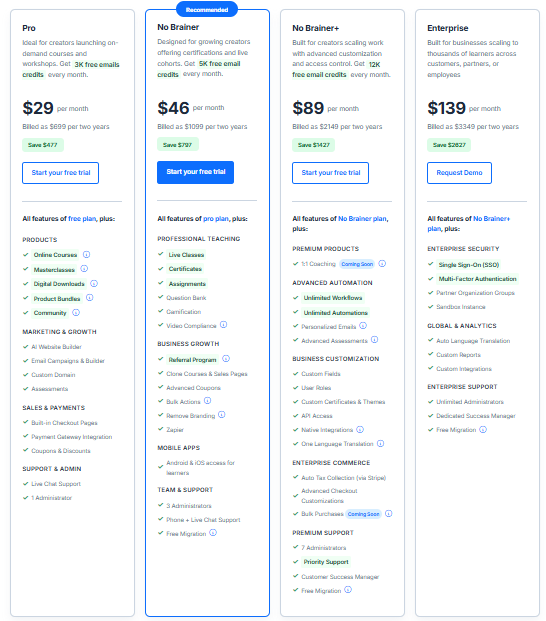
FreshLearn offers a free plan (which includes all the core features) and charges 0% transaction fees on all paid tiers. Its pricing options include:
- Pro: $49/month or $37/month (when you pay annually) or $29/month (when you pay biennially).
- No brainer: $79/month or $59/month (when you pay annually) or $46/month (when you pay biennially).
- No brainer +: $149/month or $119/month (when you pay annually) or $89/month (when you pay biennially).
- Enterprise: $249/month or $169/month (when you pay annually) or $139/month (when you pay biennially).
2. Teachable
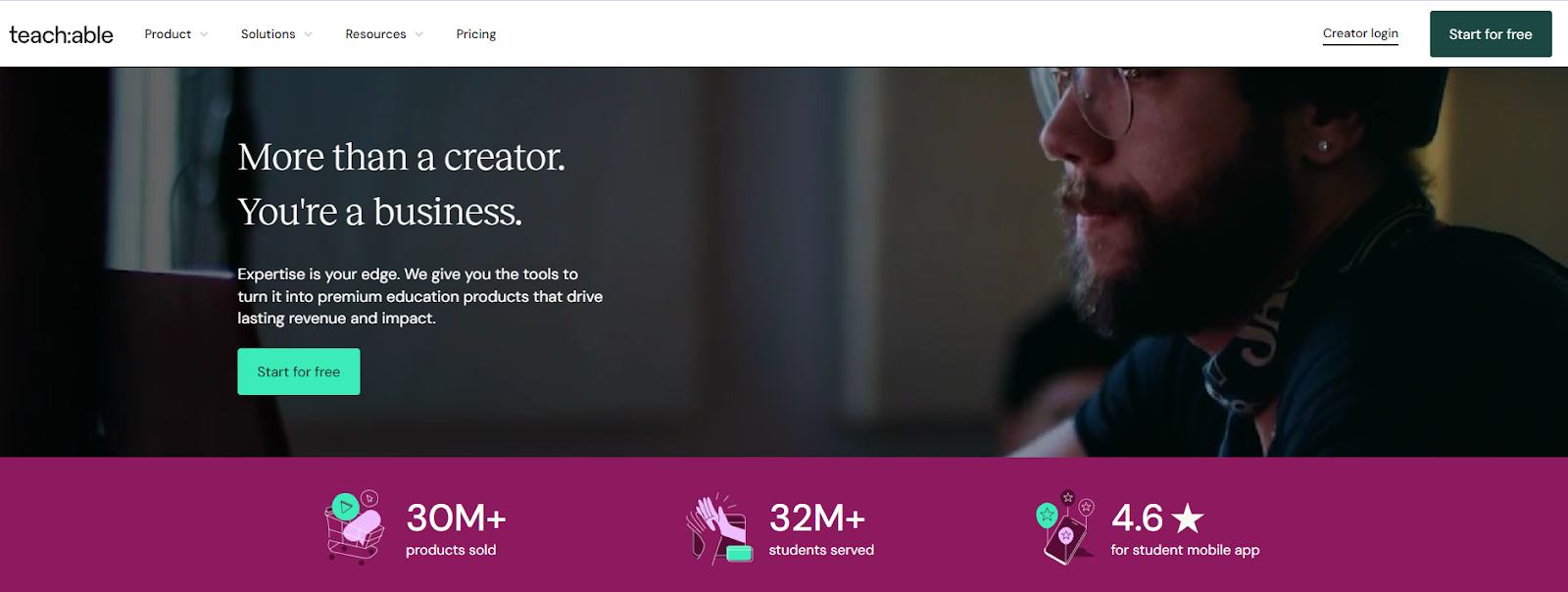
Teachable is a cloud-based learning management system (LMS) developed to help individuals and businesses create and sell online courses and digital products. It combines course creation tools, payment processing, student management, and marketing features in a single platform, reducing the need for third-party integrations.
Users can design courses with multimedia content, drip schedules, and assessments, while also offering coaching, memberships, or digital downloads alongside their core curriculum.
Who it’s best for: Course creators who want to launch and manage their online teaching business with minimal technical setup and reliable core features.
Key features
- Student management and tracking: The platform provides built-in features for monitoring how learners progress through courses. Instructors can see lesson completion, quiz results, and engagement reports.
- Sales and monetization: Teachable supports one-time payments, subscriptions, memberships, and bundles. The platform offers upsells, order bumps, affiliate programs, and coupon codes. It also manages tax collection for regions, including VAT, GST, and US sales tax.
- Student experience: In Teachable, students can access content through a browser or the mobile app and leave comments under lessons. It also provides AI-supported subtitles and translations on higher plans.
- App hub: Teachable provides an App Hub that connects with third-party tools. It includes integrations for email marketing, analytics, community platforms, and workflow automation.
To know more about Teachable and what it has in store, check out this article: ‘Teachable Review 2025: Pros, Cons & Real Insights After Testing’.
Pricing
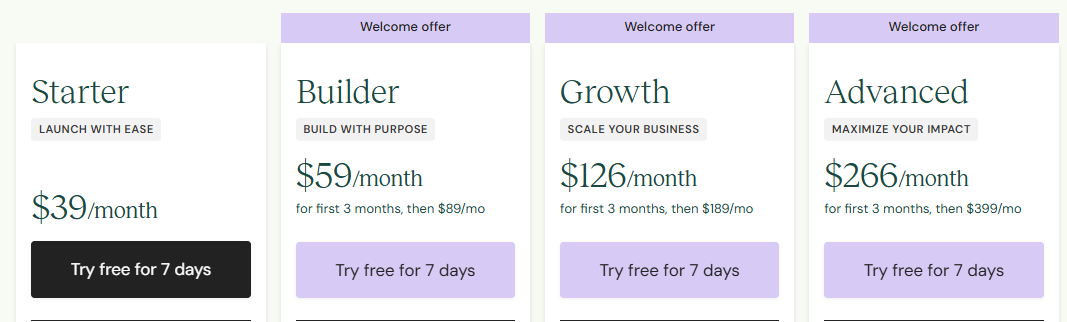
Teachable provides a 7-day free trial. Its pricing plans are:
- Starter: $39/month or $29/ month (When you pay annually) + 7.5% transaction fee.
- Builder: $89/month or $69/ month (When you pay annually).
- Growth: $189/month or $139/ month (When you pay annually).
- Advanced: $399/month or $309/ month (When you pay annually).
To know whether this pricing is worth your investment, read our article on ‘Teachable Pricing Plans’.
3. Thinkific
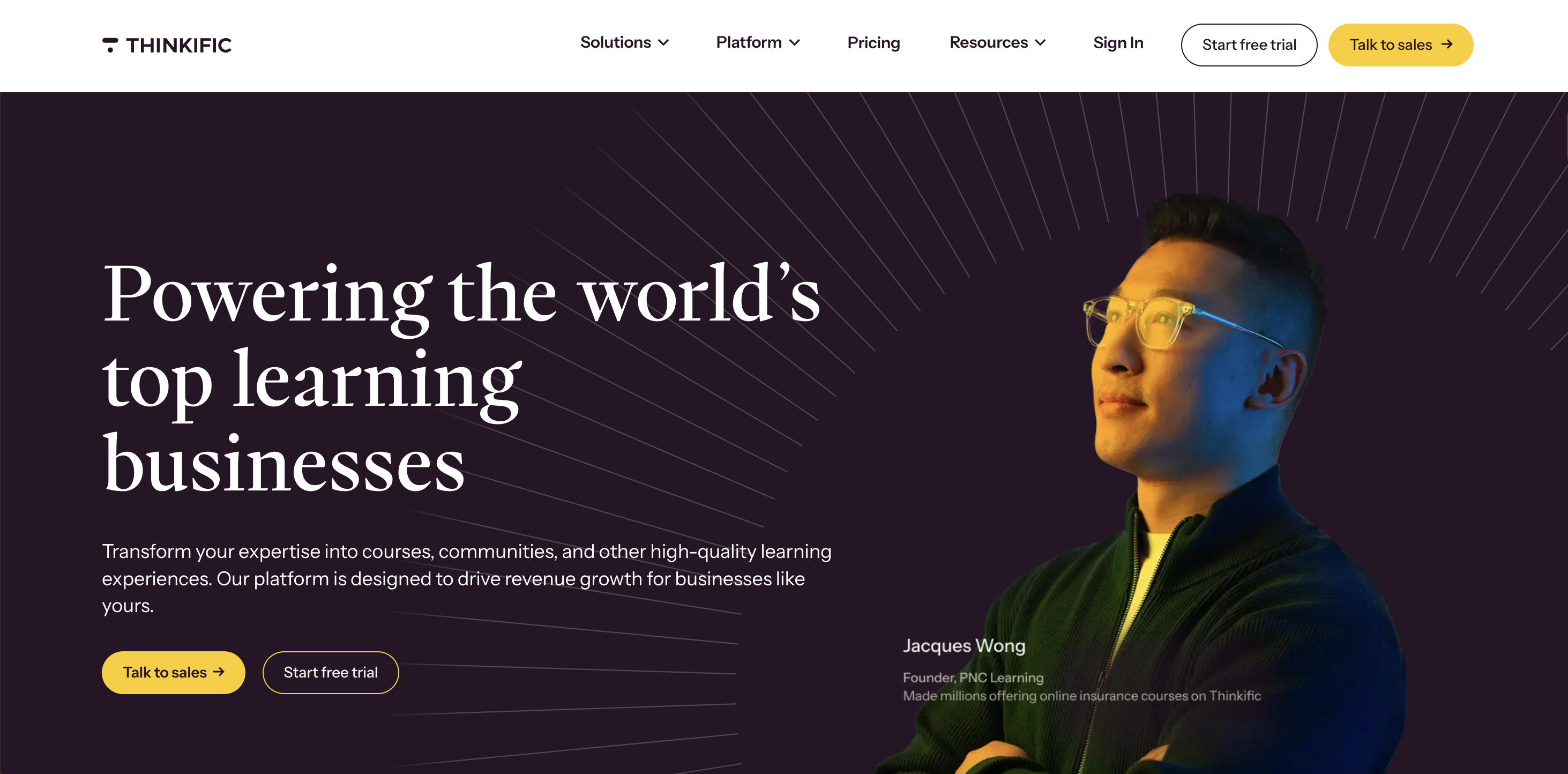
Thinkific is a cloud-based learning platform that enables users to create, organize, and sell courses and digital products. It supports multiple content formats, including video, text, quizzes, and assignments.
Thinkific includes a drag-and-drop course builder for organizing content into lessons and modules. It offers various payment models, including one-time payments, subscriptions, and payment plans. It also tracks course completion, generates basic analytics and reports, and supports mobile access.
Who it's best for: Educators, coaches, and businesses looking to host and sell online courses without needing technical expertise.
Key features
- Payment automation: Automates handling of failed payments and incomplete purchases through scheduled retries and reminders.
- Subscription analytics: Provides data on recurring revenue, including metrics for subscriptions and payment trends.
- Lead tracking: Records information about leads such as source, date acquired, and current status. Supports exporting lead data and integrating it with email campaigns.
- TCommerce: Enables selling products and services directly within the platform, including options for upsells, bundles, and payment plans.
Pricing
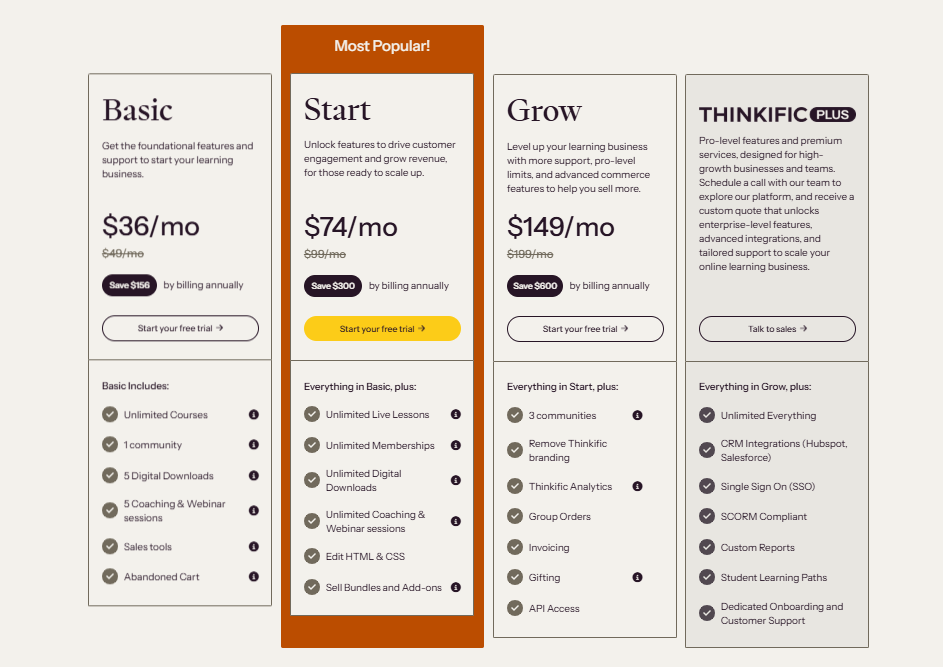
Thinkific provides a 30-day free trial and does not incur a transaction fee on its paid plans. The platform’s pricing plans are:
- Basic: $49/month or $36/month (When you pay annually)
- Start: $99/month or $74/month (When you pay annually)
- Growth: $199/month or $149/month (When you pay annually)
- Thinkific Plus: Custom pricing.
If you consider utilizing Thinkific and want to know whether you will outgrow its features, have a look at our article ‘Thinkific Review’.
4. Kajabi
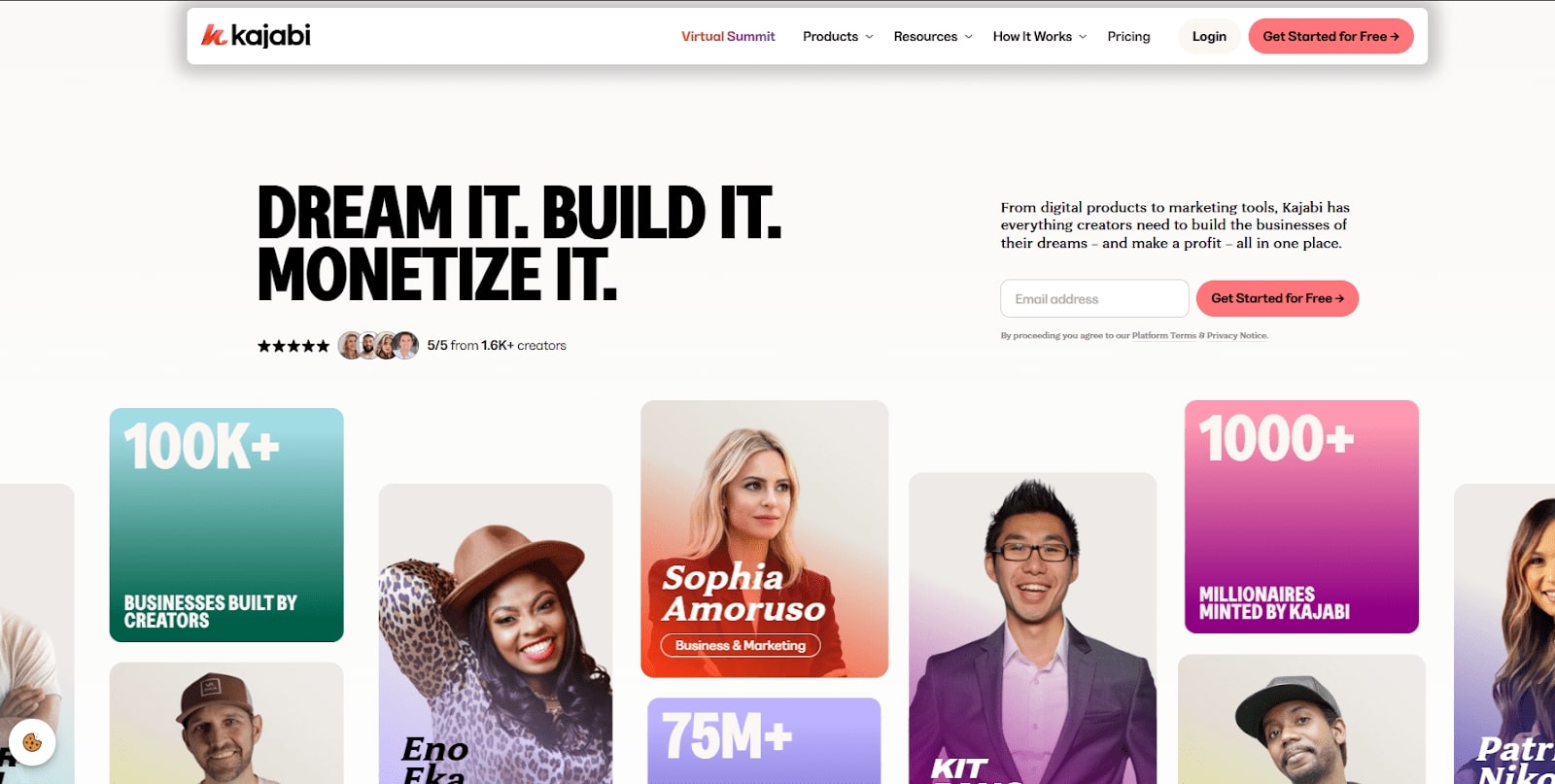
Kajabi is an online platform developed for creating, managing, and selling digital products, including online courses, memberships, and coaching programs. It provides tools for building websites, hosting content, and managing students or subscribers in one interface.
The platform supports multiple content formats, including video, audio, text, quizzes, and assignments. It also offers features for automating workflows, managing email campaigns, and tracking user engagement.
Who it’s best for: Entrepreneurs and educators seeking an integrated solution to manage and monetize digital content through automated marketing funnels.
Key features
- Pre-built campaigns: Users can set up marketing and sales campaigns with ready-made funnels that connect landing pages, email sequences, and product offers.
- Contacts CRM: In Kajabi, users can tag, segment, and filter contacts, and automate interactions such as triggering emails, coupons, or product access based on predefined rules.
- Email marketing tools: Users can include content elements such as videos, countdown timers, and personalized fields in their email campaigns, and validate subject lines before sending.
- Website builder: Offers an integrated platform for designing and hosting websites that showcase products and content. Users can pick from a library of templates and customize design and layout without external tools.
- Membership and automation: Kajabi supports membership-based content delivery and automated workflows, such as sending emails after lesson completion or when users enroll in courses.
Pricing
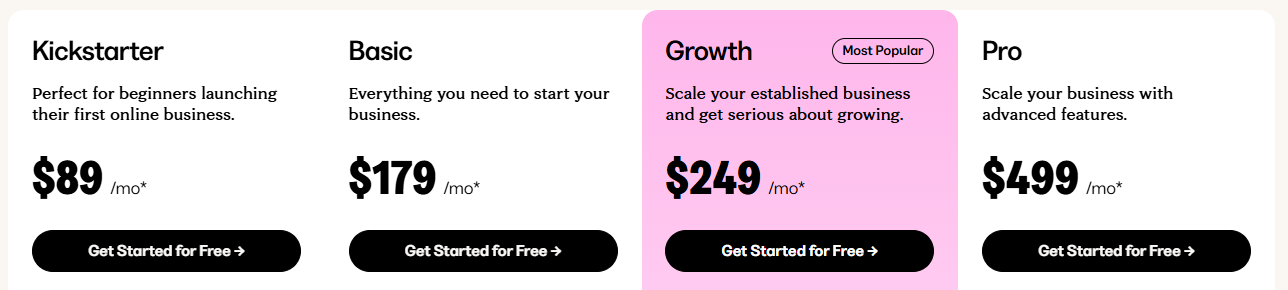
Kajabi gives you a 30-day free trial. It does not charge transaction fees on its paid plans. Its pricing tiers are:
- Kickstarter: $89/month or $71/month (when you pay annually)
- Basic: $179/month or $143/month (when you pay annually)
- Growth: $249/month or $199/month (when you pay annually)
- Pro: $499/month or $399/month (when you pay annually)
To know how Thinkific and Kajabi stack up against each other in terms of pricing and feature offerings, check out our guide on ‘ Thinkific vs Kajabi’.
5. Podia
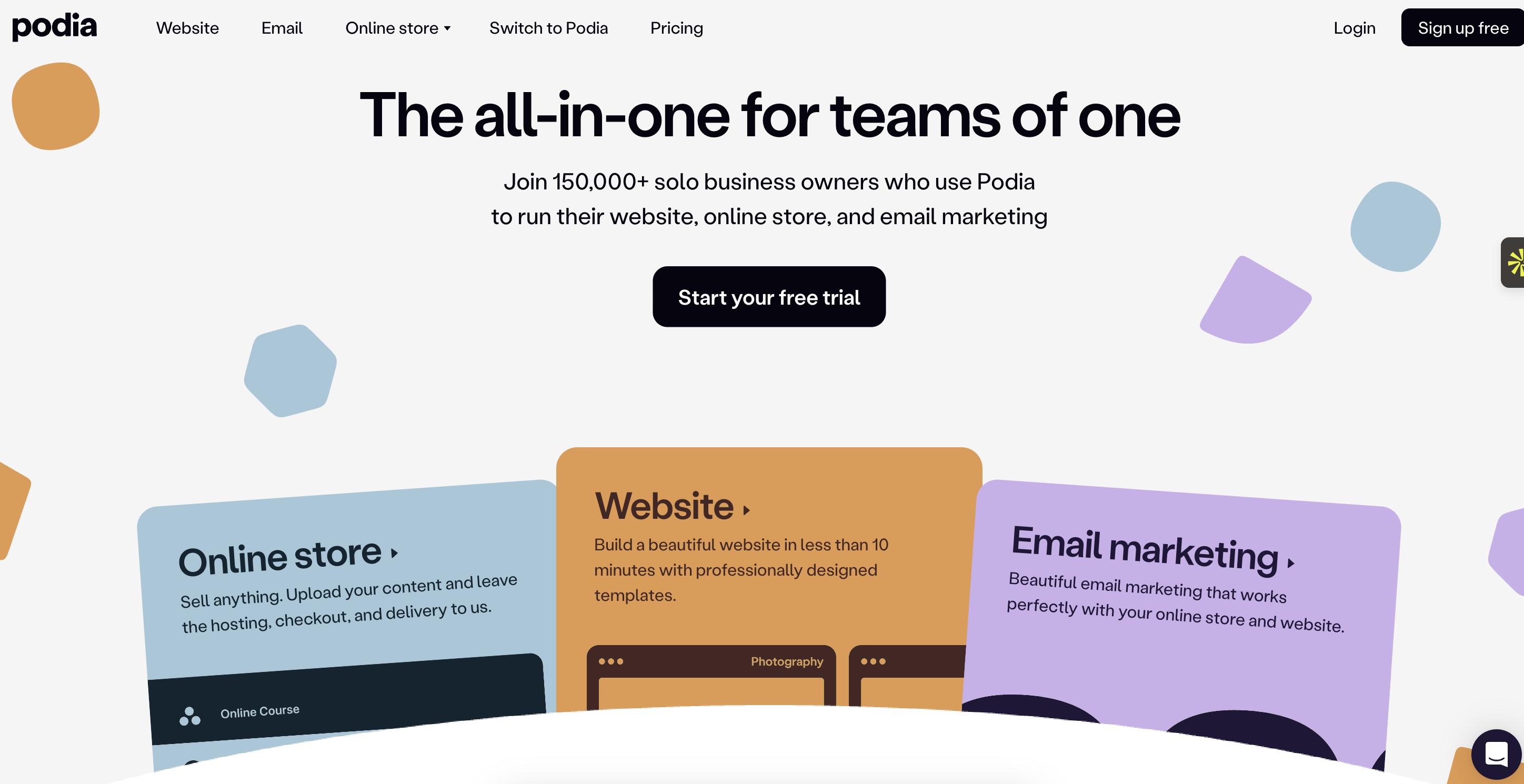
Podia is an all-in-one platform that helps creators and entrepreneurs sell digital products, including online courses, memberships, digital downloads, and coaching sessions.
It provides tools for building websites, hosting content, and managing customer interactions. Users can create and organize content into courses or products, set pricing models, and manage sales through integrated payment processing.
Who it’s best for: Creators, educators, and entrepreneurs who want a simple platform to sell digital products without the need for multiple tools.
Key features
The following are the differentiating features of Podia:
- Webinars: Podia allows users to host live webinars where attendees register with their email addresses. Webinar sessions can be recorded and converted into digital products for sale, distribution, or bundling with other products.
- Online store: Podia offers a platform for selling digital products, including courses, downloads, and coaching sessions. The system manages product access for paying customers and supports the addition of related products or services during checkout. Community access can be granted automatically to customers based on their purchases.
- Coaching: Integrates with scheduling platforms such as Calendly, Acuity, YouCanBookMe, SavvyCal, or custom links, allowing users to manage session bookings and payments.
- Community: Supports free and paid membership tiers, enabling discussion and interaction around products and expertise. The platform manages membership access and technical setup.
Pricing
Podia gives a 30-day free trial. The following are its pricing plans:
- Mover: $39/month or $33/month (when you pay annually) +5% transaction fees
- Shaker: $89/month or $75/month (when you pay annually)
- Podia email: Up to 100 subscribers, it's free. Above that, the pricing starts at $7/ 7/month.
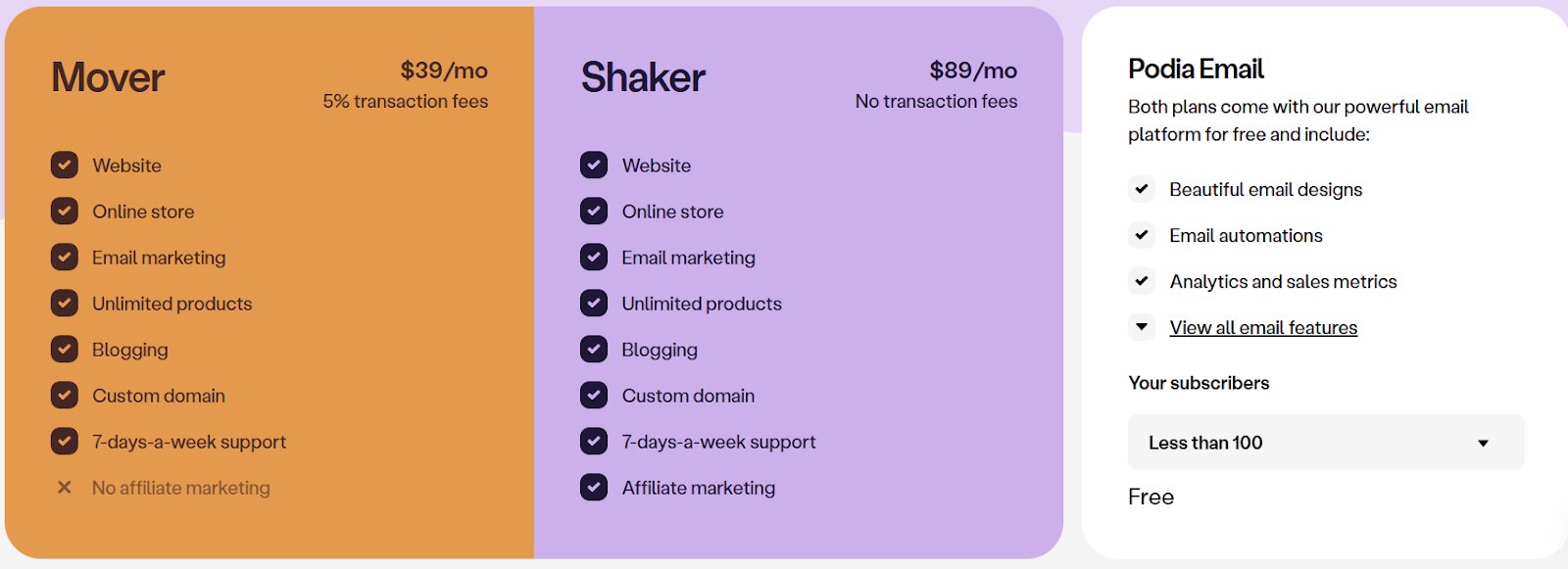
Source: Podia pricing
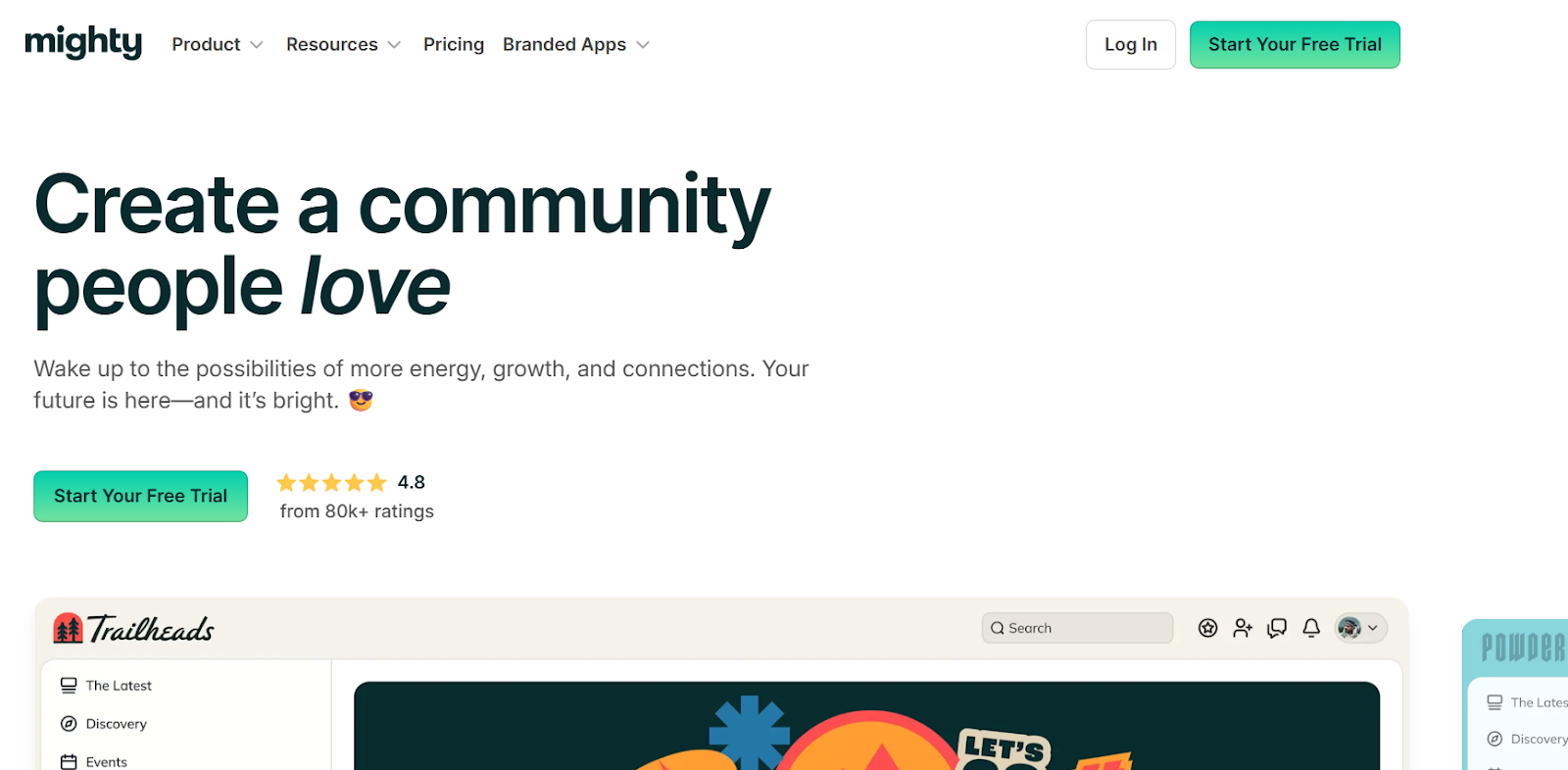
6. Mighty Networks
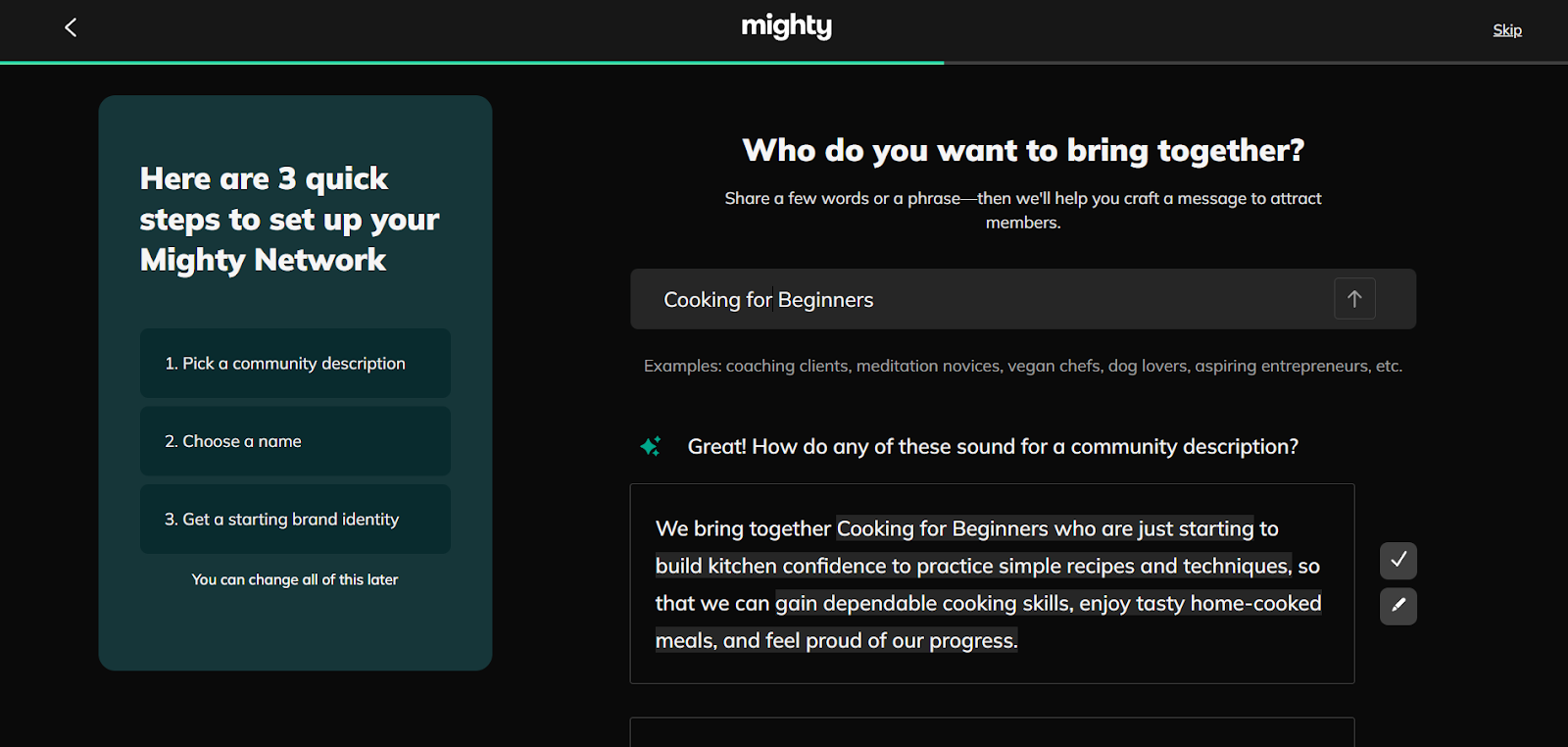
Mighty Networks is an LMS platform designed to help creators, entrepreneurs, and educators build and manage online communities. It offers tools for creating branded spaces where members can engage through posts, discussions, and events.
Users can also develop and sell online courses (as spaces inside the community), host live streams, and organize challenges. The platform provides mobile applications for iOS and Android, allowing members to access content and interact on the go.
Who it’s best for: Educators and entrepreneurs who wish to cultivate a dedicated online community around their content or expertise.
Key features
The following are the differentiating features of Mighty Networks:
- People Magic AI: People Magic AI is an AI tool within Mighty Networks that supports member engagement in online communities. It provides functionalities such as identifying relevant members, suggesting introductions, and generating conversation prompts.
- Chat: Mighty Networks supports 1:1, small group, and space-wide chats. Users can create threads, participate in discussions within courses, challenges, or events, and upload images or GIFs.
- Gamification: Mighty Networks tracks member activity using points, streaks, milestones, and calendars. Members earn points for participation, course completion, and engagement, and can use points to recognize other members.
- Branded app (Mighty Pro): Mighty Pro allows communities to provide a mobile experience under a custom brand. Users can access courses, events, chats, and community content through iOS and Android apps that display the community’s logo and colors.
Pricing
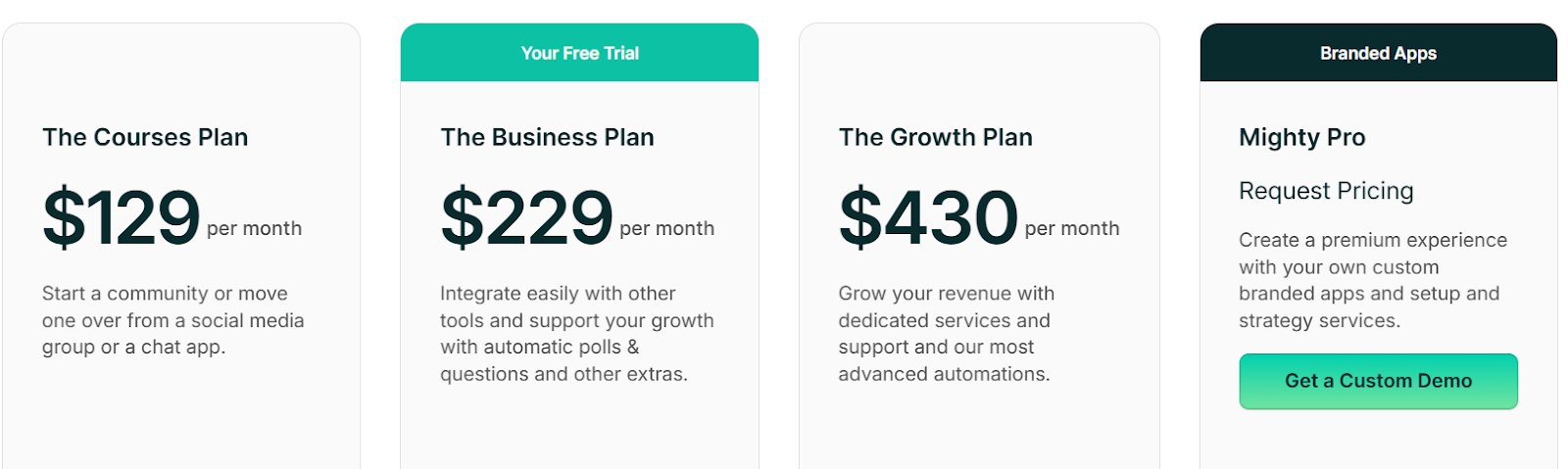
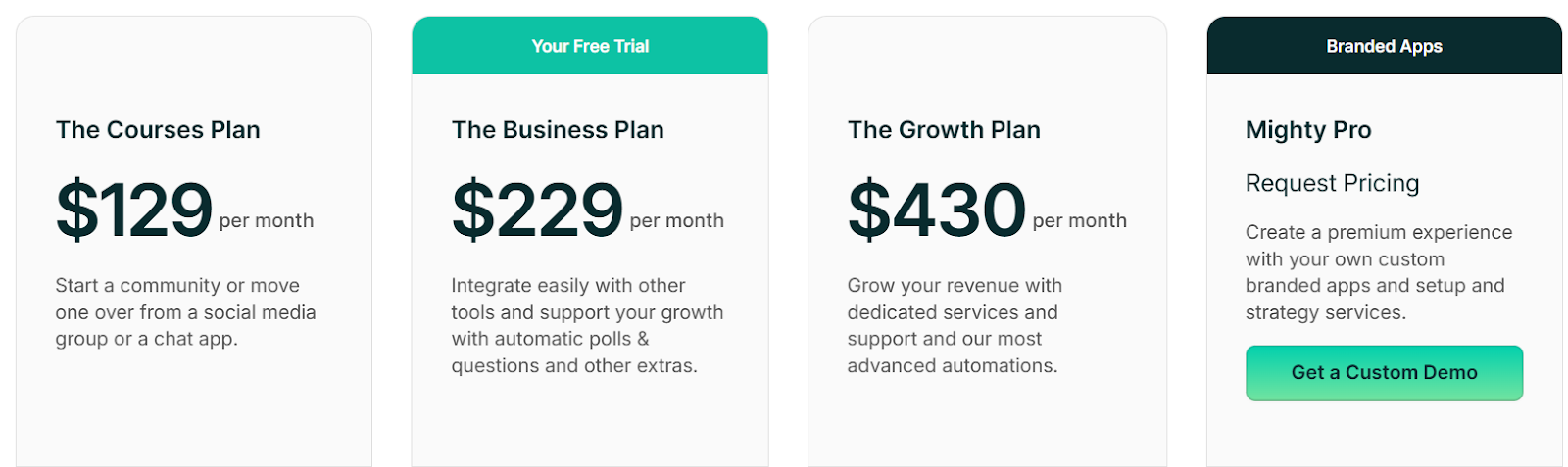
Mighty Networks offers a 14-day trial. The platform’s pricing plans are:
- The course plan: $129/month or $109/month (when you pay annually) + 2% transaction fee.
- The business plan: $229/month or $189/month (when you pay annually) + 2% transaction fee.
- The growth plan: $430/month or $360/month (when you pay annually) + 1% transaction fee.
- Mighty pro: Custom pricing (includes 1% transaction fee)
7. LearnWorlds
LearnWorlds is an online learning platform that focuses on delivering structured digital learning experiences with built-in interactivity. The platform allows course creators to design video-based lessons with embedded quizzes, transcripts, and note-taking tools, which add engagement directly within the learning material.
It also includes options for course assessments, certificates, and learner progress tracking. Alongside these, it also provides analytics for monitoring learner activity and course performance.
Who it’s best for: Educators and training providers seeking to create interactive, learner-focused online courses.
Key features
The following are the differentiating features of LearnWorlds:
- Interactive video: LearnWorlds supports interactive video lessons where educators can add questions, checkpoints, and feedback directly into the video. This feature reinforces key concepts during playback.
- Custom user roles: The platform allows administrators to duplicate and modify existing roles by adjusting permissions. This feature also works for B2B training, partner access, or corporate learning setups.
- Pop-up builder: LearnWorlds includes a drag-and-drop builder for creating responsive pop-ups. Instructors can set triggers like exit intent, page scroll, or inactivity.
- Survey builder: Users can design surveys and forms from a central dashboard, with options to set conditions and edit responses. This helps collect structured feedback or run course-related surveys without needing extra tools.
Pricing
LearnWorlds offers a 30-day free trial. The platform’s pricing plans are:
- Starter: $29/month or $24/month (when you pay annually) + $5 per course enrollment.
- Pro trainer: $84.15/month or $79/month (when you pay annually)
- Learning center: $254.15/month or $249/month (when you pay annually)
- Learning center+mobile app: $508.30/month or $598/month (when you pay annually)
8. Tutor LMS
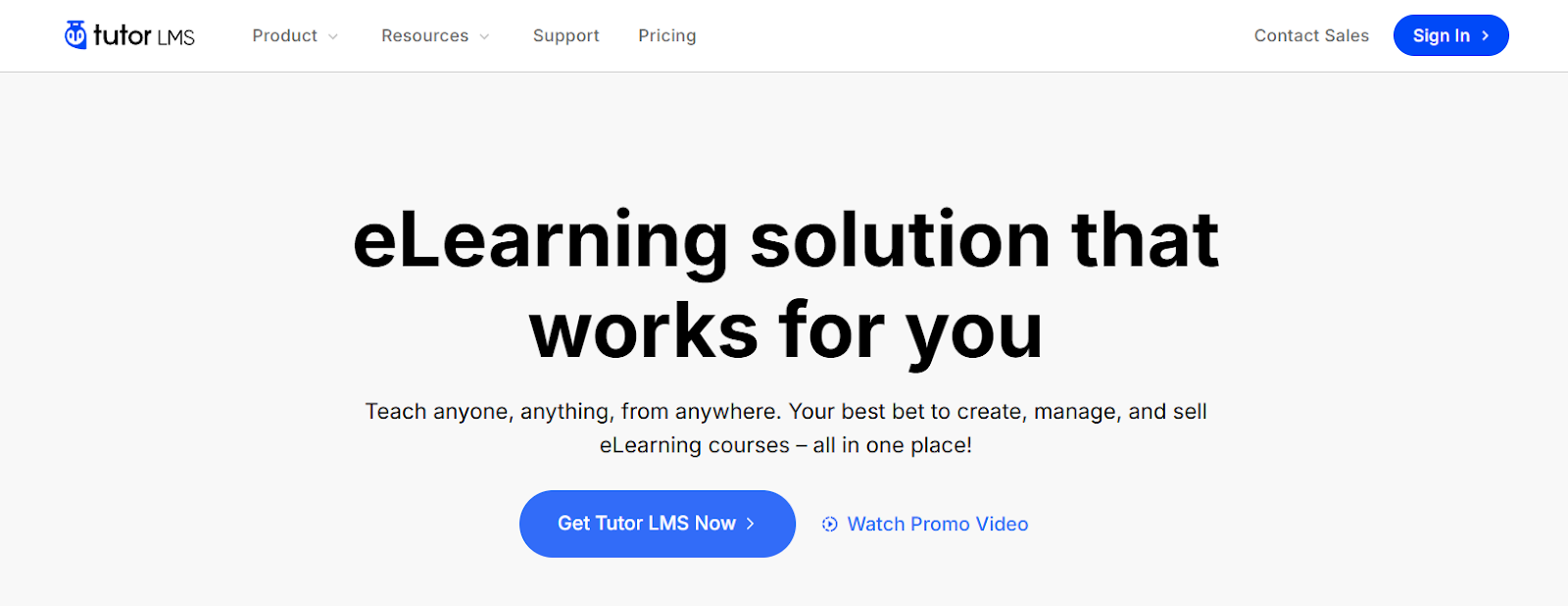
Tutor LMS is a WordPress-based learning management system that enables users to create, manage, and deliver online courses from their own websites. It supports multimedia lessons, quizzes, assignments, and certificates, providing structured learning paths for students.
The platform includes content drip scheduling, frontend dashboards for instructors and students, and tools for managing course enrollments. It includes analytics and reporting features for tracking learner progress and course performance.
Who it’s best for: WordPress site owners, educators, or training centres that want control over hosting, course structure, and customization.
Key features
- E-Commerce: Tutor LMS provides tools to manage course sales, including tracking and updating orders, marking them complete, or canceling as needed. Administrators can set custom pricing, discounts for individual students, and apply regional tax rates for courses.
- Course prerequisites: Instructors can assign prerequisites to courses to create structured learning paths. Students must complete foundational courses before advancing, and you can select the prerequisite from a simple dropdown menu for quick setup.
- Certificate builder: The platform allows the creation of certificates using pre-built templates or custom designs. Instructors can include student names, course details, and instructor information using shortcodes and adjust fonts, colors, and images to format the certificates.
- Gradebook: Tutor LMS automates grade calculations and generates reports for analysis. Instructors can define grading scales aligned with institutional standards, track student performance, and provide targeted feedback based on detailed grading data.
Pricing
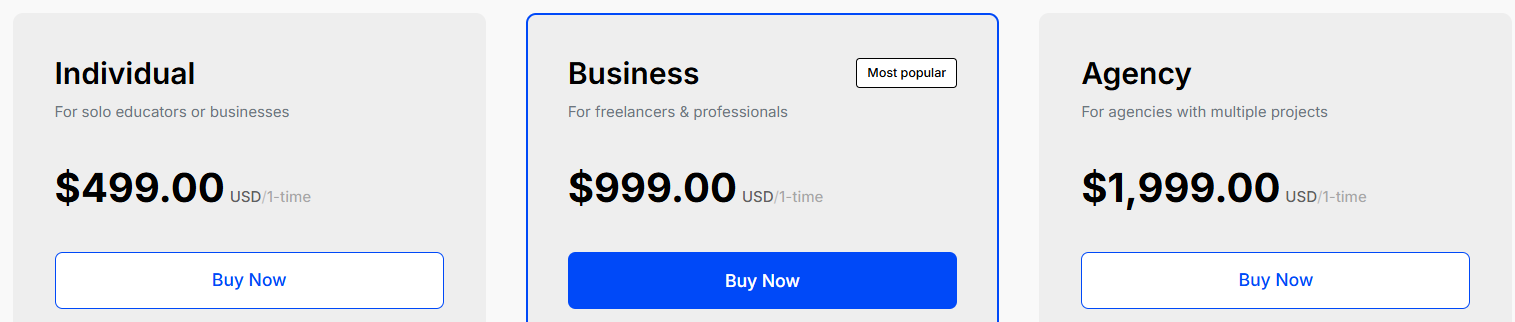
It offers a free version. Besides that, the following are the pricing plans of Tutor LMS.
- Individual: $199/year or $499 for lifetime access.
- Business: $399/year or $999 for lifetime access.
- Agency: $799/year or $1,999 for lifetime access.
9. LifterLMS
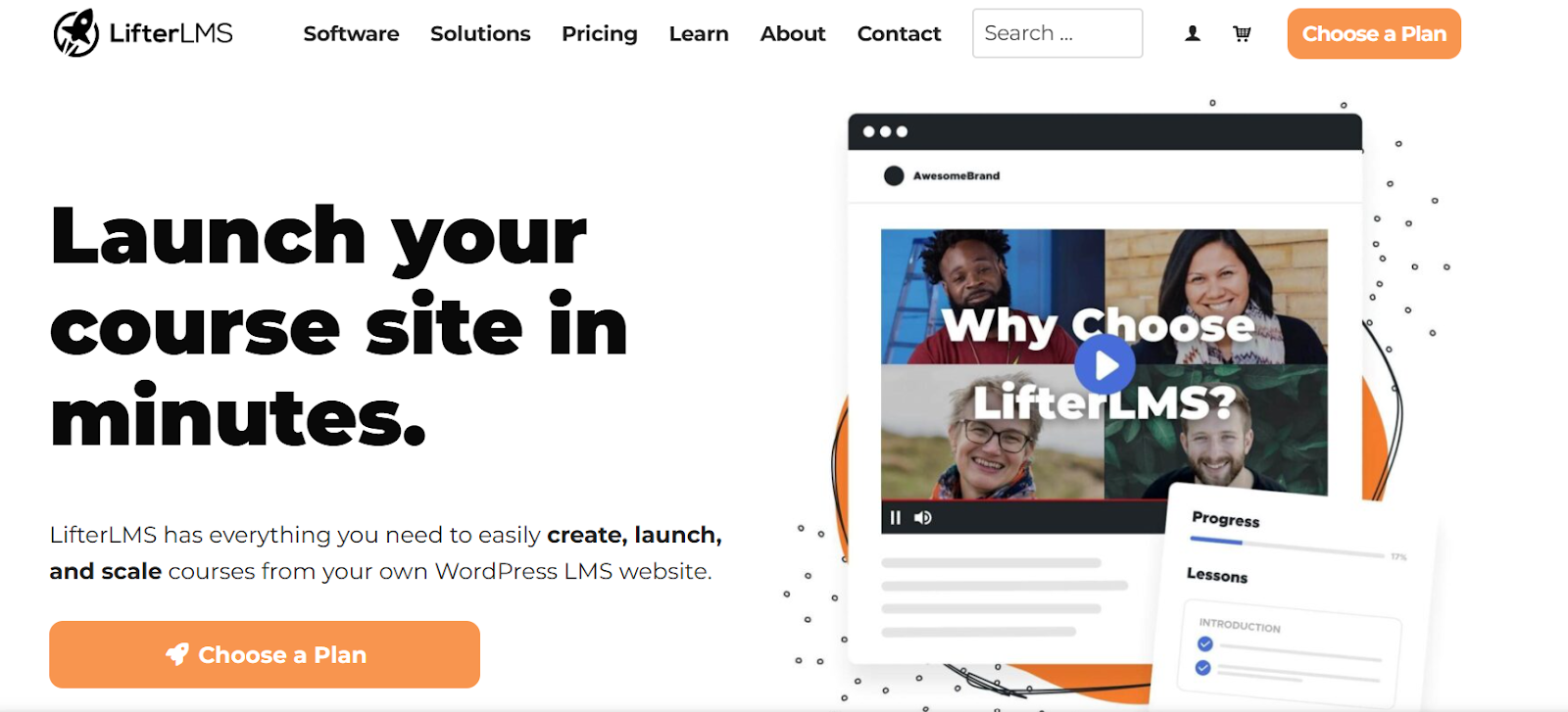
LifterLMS is a WordPress plugin that helps users create, organize, and deliver online courses directly from their own websites. The core plugin is free, but most advanced functions, such as payment gateways beyond PayPal, advanced quizzes, or private coaching, require paid add-ons.
The system includes features for creating multimedia lessons, setting up quizzes and certificates, restricting or dripping content, and managing memberships or subscriptions.
It integrates with common tools like Stripe, WooCommerce, and popular WordPress themes, giving users flexibility in design and payment options.
Who it’s best for: Course creators and small-to-medium businesses using WordPress who want to host and manage online courses, track learners’ progress, and control access to content.
Key features
- Course builder: Users can set up courses from a single screen with a drag-and-drop interface that supports multi-tier structures.
- Question banks: LifterLMS helps instructors create pools of quiz questions, making assessments more flexible and reducing the risk of repetition or cheating.
- Course cohorts: LifterLMS helps in organizing groups of learners to move through a course together while allowing instructors to track their collective progress through cohort reporting.
- Preselling: Courses can be listed for purchase before content is available, allowing creators to test interest or set pre-launch pricing.
- E-commerce dashboard: Sales data and analytics are available in a centralized dashboard, with options to generate custom reports for tracking revenue and accounting needs.
Pricing
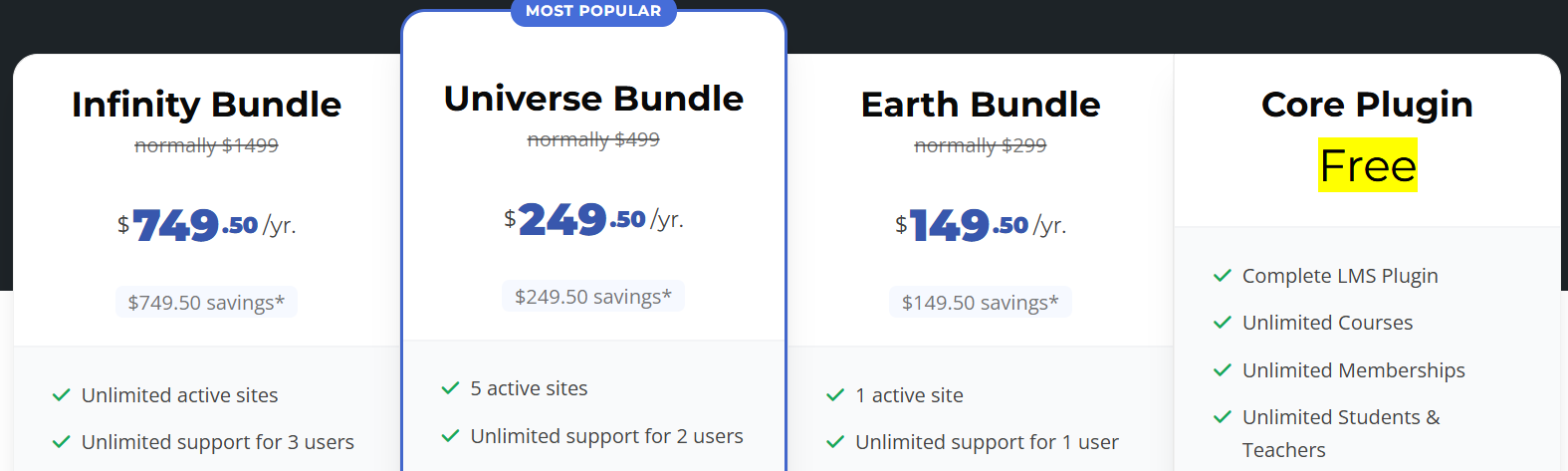
LifterLMS offers a free core plugin. It also has the following pricing plans:
- Infinity bundle: $749.50/year
- Universe bundle: $249.50/year
- Earth bundle: $149.50/year
10. MemberPress
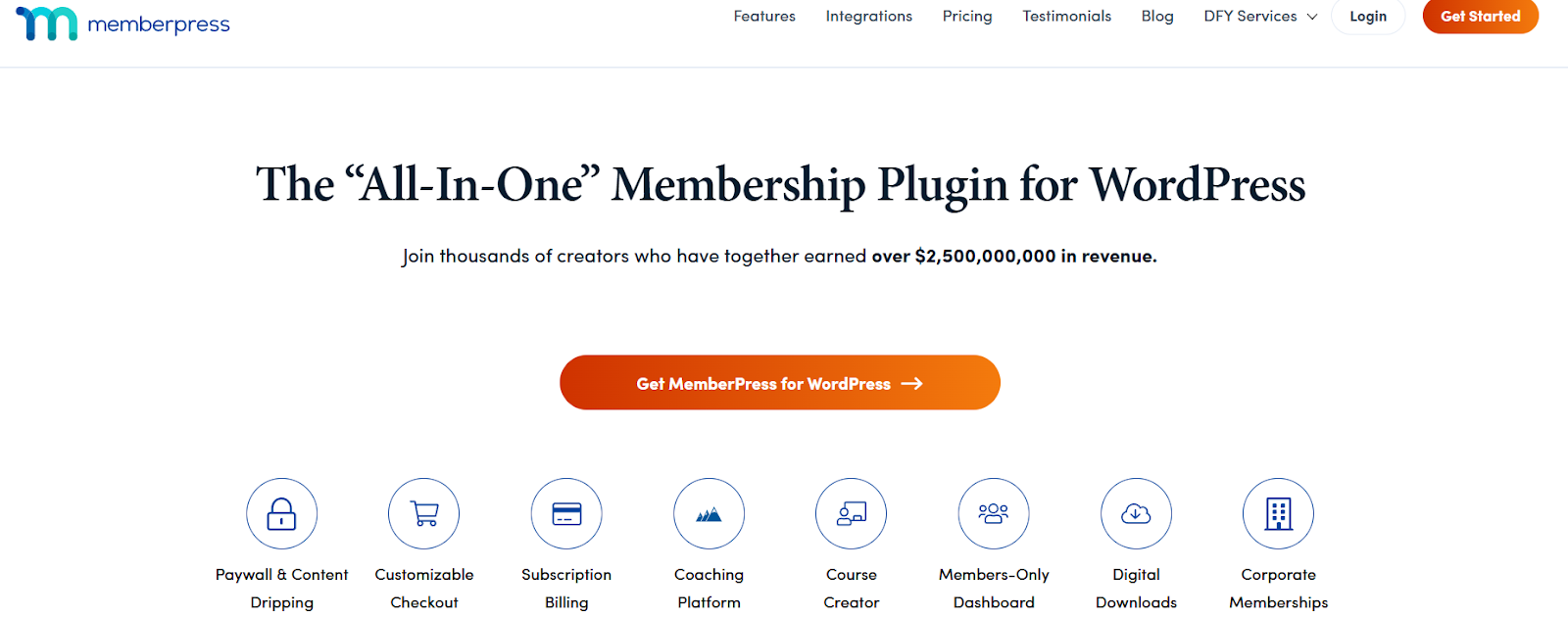
MemberPress is a WordPress plugin that helps users create and manage membership sites. It offers features such as content protection, subscription management, and integration with payment gateways.
The plugin allows users to control access to content based on membership levels, manage recurring payments, and restrict access to specific posts, pages, or categories. While the core plugin provides essential functionalities, advanced features like course creation and additional integrations may require purchasing add-ons.
Who it’s best for: individuals or businesses looking to monetize content through memberships on their WordPress sites.
Key features
- CoachKit™: Users can create multiple coaching programs, each tailored to specific objectives and client needs. You can also offer programs to other coaches under management.
- VIP Forums: The plugin supports private forums where access can be restricted based on membership level or duration, allowing targeted engagement for different member groups.
- Coupons: Users can generate and customize coupon codes, define expiration dates, set discounts (percentage or fixed), and choose which membership packages the discounts apply to.
- ReadyLaunch™: MemberPress allows scheduling or releasing content at specific times, helping instructors manage course rollout efficiently.
Pricing
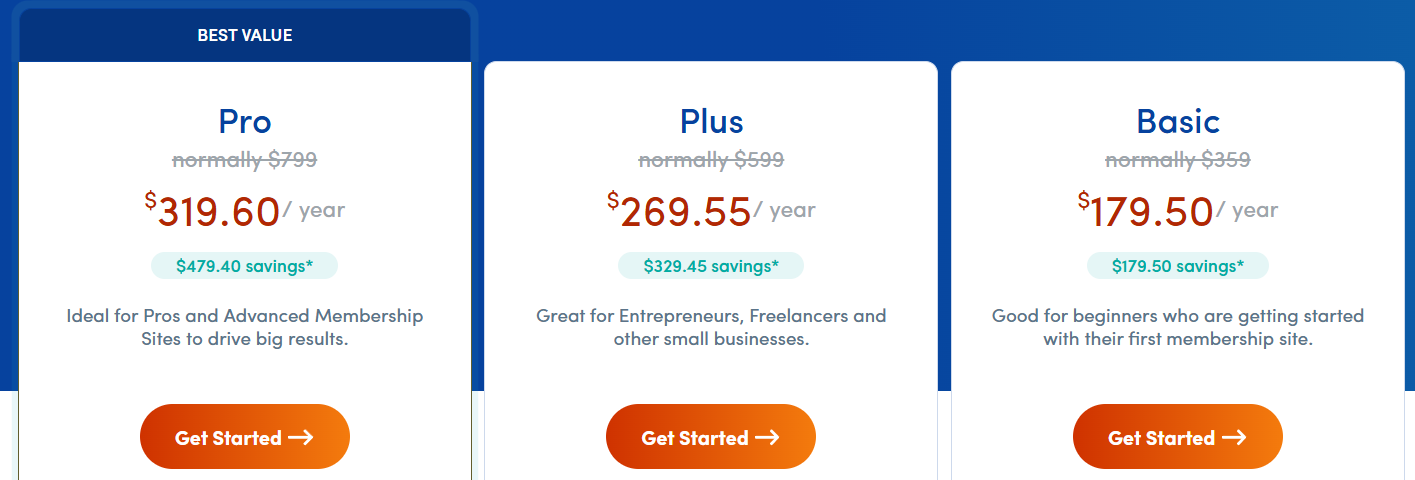
The following are the pricing plans of MemberPress:
- Pro: $319.60/year
- Plus:$269.55/year
- Basic:$179.50/year
11. Udemy
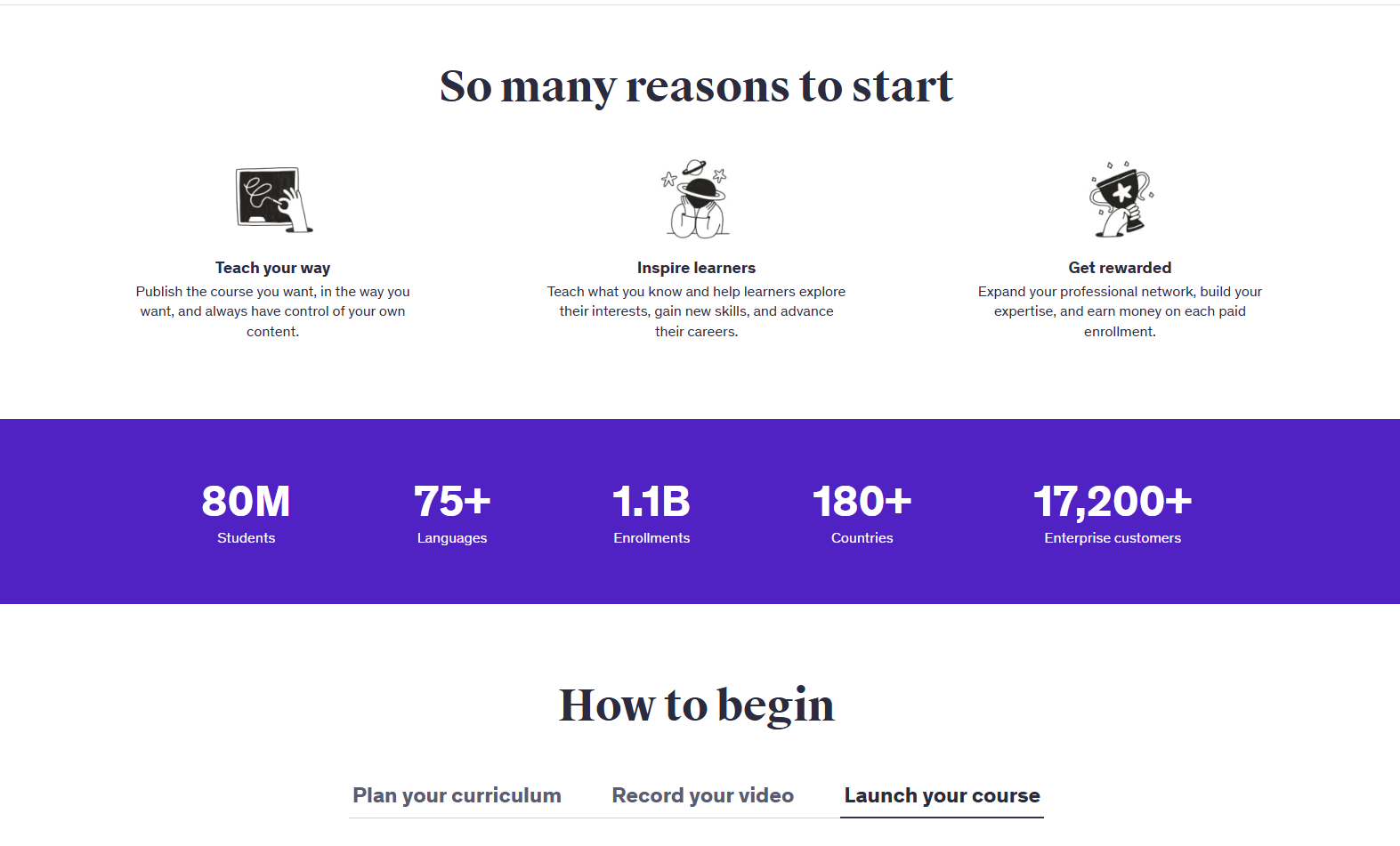
Udemy is an online learning platform where instructors create and publish courses across a wide range of subjects, including technology, business, personal development, and creative skills.
Learners can purchase courses individually and access them at any time, allowing for self-paced study with lifetime access to purchased content. The platform also offers organizational solutions through Udemy Business, which provides access to a selection of courses for teams and enterprises.
Who it’s best for: Instructors who want to reach a large, global audience without building and maintaining their own platform.
Key Features
- Wide audience access: The platform gives course creators exposure to a large, international user base.
- Course publishing tools: Instructors can upload video lessons, quizzes, and supplemental resources in a flexible course structure.
- Engagement features: Q&A sections and discussion boards allow creators to interact with learners and address questions.
- Analytics and insights: Basic reporting shows enrollment numbers, learner progress, and ratings, helping instructors understand course performance.
- Certification: Creators can issue certificates of completion to learners for paid courses, thereby enhancing the credibility of the course.
Pricing
Instructors earn a percentage of course sales. The share depends on how the student finds the course:
- Instructor-promoted sales: Instructors retain 97% of the revenue if the student makes a purchase through a unique instructor coupon or referral link.
- Organic Udemy sales: Instructors receive 37% of revenue when Udemy promotes the course and the student purchases without using the instructor’s referral link.
Note: For tech companies, LMS platforms like LearnUpon may be a good fit.
12. TalentLMS
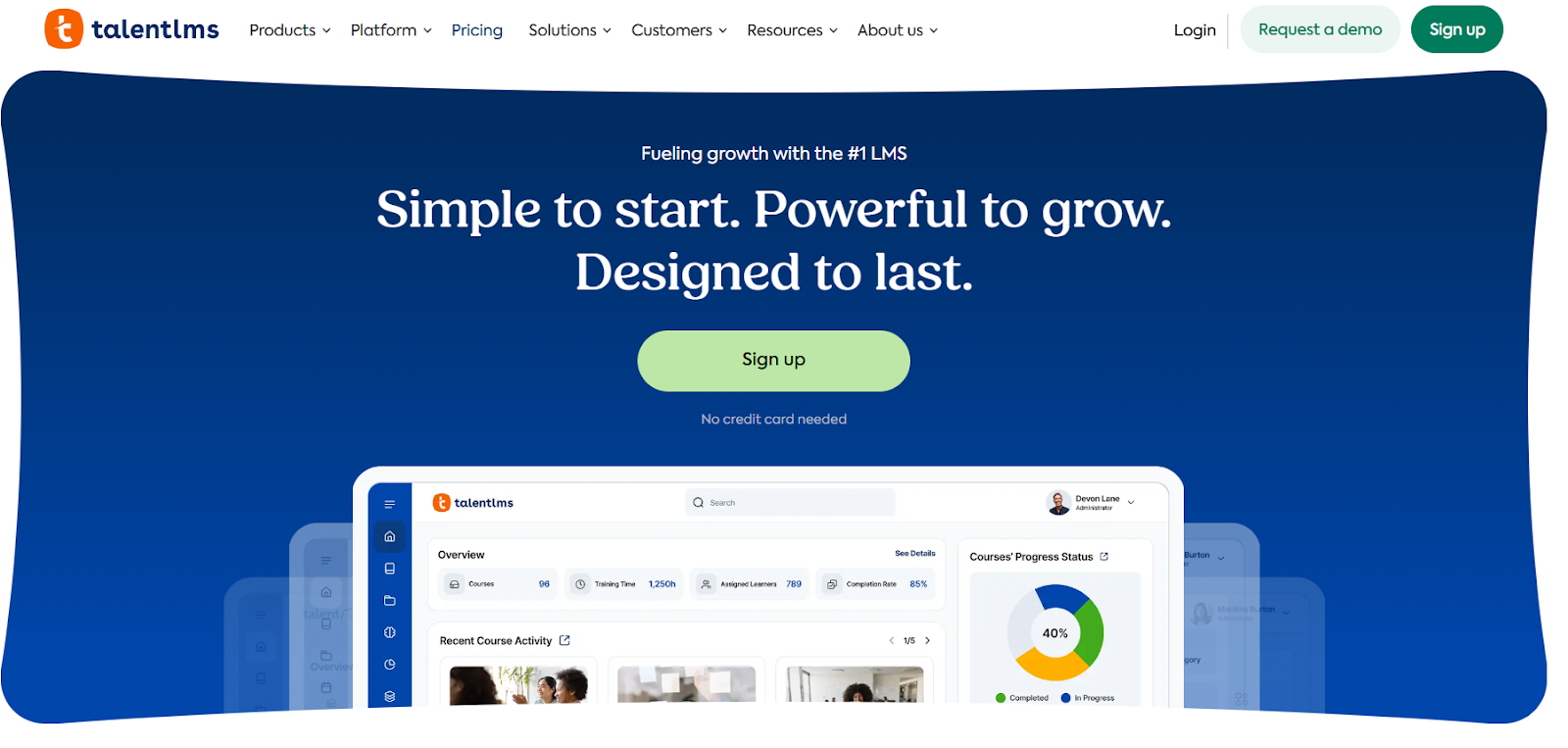
TalentLMS is a cloud-based LMS that helps organizations create, deliver, and manage online training programs. It enables administrators to build structured courses with multimedia content, quizzes, and interactive elements, and to assign courses to learners based on roles or departments.
The platform includes features for reporting and analytics, which allow managers to track learner progress, completion rates, and training effectiveness. TalentLMS also supports gamification, mobile access, and multiple languages.
Who it’s best for: Organizations seeking to implement structured training programs for their employees, customers, or partners.
Key features
- Blended learning support: TalentLMS supports both instructor-led and self-paced learning, allowing organizations to create a blended learning space that caters to diverse training needs.
- Customizable certifications: Instructors can design custom certificates with or without expiration dates, and set up automated recertification processes to ensure compliance and recognition of learner achievements.
- Multi-tenancy (Branches): TalentLMS allows organizations to create multiple sub-accounts, referred to as "Branches," each with its own set of users, courses, and branding.
- Integrated video conferencing: The platform supports integration with various video conferencing tools, including Zoom, Microsoft Teams, and BigBlueButton, facilitating live virtual training sessions.
Pricing
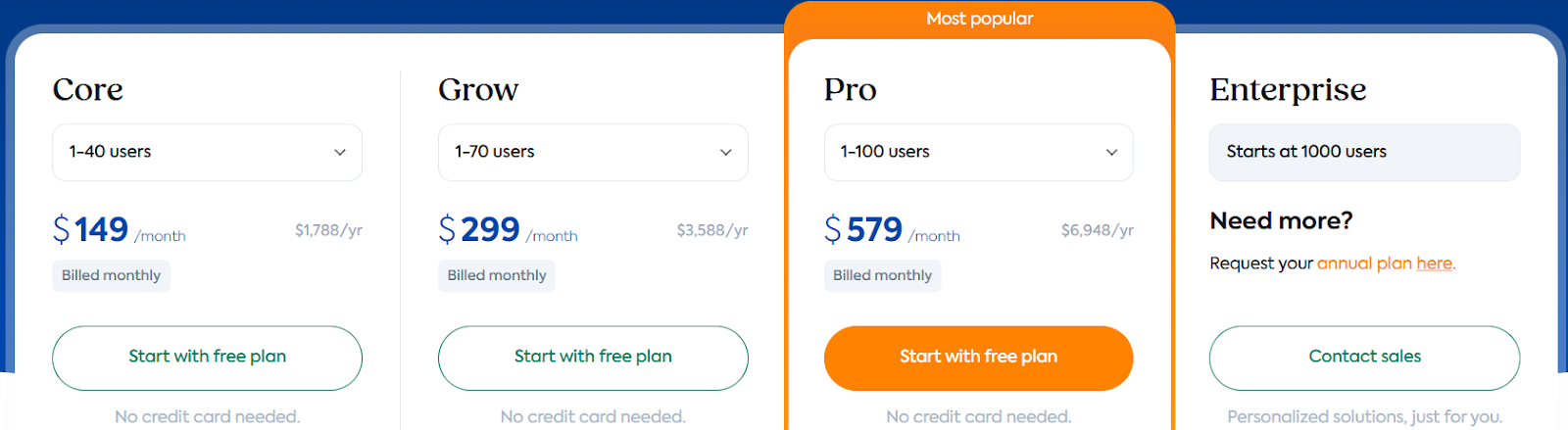
TalentLMs has a free plan covering features, including 5 users, unlimited email, support, and more. Besides that, its pricing plans are:
- Core: Starts at $149/month or $119/month (when you pay annually). Supports up to 100 users.
- Grow: Starts at $299/month or $229/month (when you pay annually). Supports up to 500 users.
- Pro: Starts at $579/month or $449/month (when you pay annually). Supports up to 1000 users.
- Enterprise: Custom pricing (for 1000+ users).
This pricing will increase if you opt for the TalentLibrary™. If you choose a flexible user limit, pricing starts at $779/month or $559/month (when paid annually) (up to 500 users, plus $6 per additional user).
How to Choose the Right LearnDash Alternative for You
You’ve got a dozen LearnDash alternatives to consider; let’s cut through the noise and find the one that actually clicks for you.
To do that, there are certain checkboxes to tick. Let’s see them one by one.
First, decide: WordPress plugin vs. all-in-one platform?
When evaluating alternatives, the first major decision is whether to stay within the WordPress ecosystem or switch to an all-in-one LMS platform.
WordPress plugins:
- Pros: High customization potential, access to thousands of plugins, and complete control over your website.
- Cons: Requires technical know-how for setup and maintenance, potential plugin conflicts, and hosting responsibility falls on you.
All-in-one platforms:
- Pros: Quick setup, fully hosted solution, integrated support and security, minimal technical maintenance.
- Cons: Less control over branding and flexibility, recurring subscription fees, and potential platform lock-in.
What is your primary goal?
Identify the main purpose of your LMS to narrow down options.
- Selling simple courses: Focus on platforms with eCommerce features, a simple course builder, and marketing support.
- Building a paid community: Look for strong membership management, engagement tools, and community forums.
- Corporate training: Prioritize compliance features, reporting, and integration with HR or enterprise software.
What’s your true budget?
Consider not just the base cost but all associated expenses:
- Licensing or subscription fees
- Add-ons or extensions
- Payment gateway fees
- Hosting (for WordPress solutions)
- Maintenance and support
Understanding your actual cost ensures you choose a solution that is sustainable long-term.
What features are non-negotiable?
List must-have features to avoid compromising your vision:
- Mobile app availability for learners on the go
- Advanced quiz functionality to measure learning outcomes
- Marketing tools such as email automation or coupon management
- Certification and reporting for professional or compliance needs
- Gamification elements to increase engagement
By clarifying your non-negotiables, you can efficiently filter options and find the LMS that aligns with your goals.
Final verdict
With so many options available, it helps to narrow things down based on what matters most to you. Here’s a look at the platforms that stand out for different needs.
Best all-in-one platform: FreshLearn
FreshLearn stands out for its balance of powerful features and ease of use. It provides a free plan with essential features, 24/7 support, and its paid plans do not charge transaction fees, making it affordable and predictable for course creators.
Best WordPress plugin alternative: Tutor LMS
Tutor LMS offers a free version, which is ideal for those just starting out. Its interface and ongoing development make it a more user-friendly and flexible WordPress plugin option compared to alternatives.
Best for community building: Mighty Networks
Mighty Networks focuses on engagement and membership. Its tools are purpose-built for building communities around courses, making it the top pick for creators who prioritize interaction and member retention.
If you need an all-in-one platform that combines powerful features, an intuitive design, and a support team you can always count on, sign up with FreshLearn now and see how we can help transform your course creation journey.
FAQ
1. What is the best free LearnDash alternative?
FreshLearn is a top alternative to LearnDash because it lets you create, manage, and sell courses from a single platform without upfront costs. It offers an intuitive interface, engagement tools like quizzes and certificates, and reliable support, making it easy for new instructors to get started.
2. Is Tutor LMS better than LearnDash?
Tutor LMS provides a more user-friendly interface and a strong free version, while LearnDash offers advanced features and extensive integrations. Choosing between them depends on whether you prioritize ease of use or advanced functionality.
3. Can I move my courses from LearnDash to another platform?
Yes, you can migrate courses from LearnDash, but the process may require exporting your content from WordPress and reformatting it for the new platform. Some LMS platforms, like FreshLearn, have a dedicated migration team to help make the process a lot easier.
4. What are the main disadvantages of using a WordPress LMS plugin?
WordPress LMS plugins give you flexibility, but they require regular maintenance, plugin updates, and hosting management. Advanced features may need paid add-ons, and plugin conflicts can affect performance if not handled carefully.
You might also like
Hosted by
