
How to Sell eBooks Online: From Downloads to a Scalable Knowledge Business

After talking to plenty of creators selling ebooks (and then getting stuck), the conclusion derived is: The ebook wasn’t the problem. The setup was.
Some people were selling plenty of copies, but couldn’t grow beyond that first product. Others were quietly turning one ebook into courses, certifications, and a steady income without chasing discounts or fighting platforms.
A smart move is to use ebooks as a starting point for something bigger.
Let’s see how.
Two types of eBook creators (And why this changes everything)
Selling an eBook depends a lot on whether anyone is already paying attention to you.
That difference changes where you sell, how you price, and what you should build next.
Here, most creators fall into one of two groups.
Creators starting from zero
This group is simple to describe and hard to be in.
You’ve written an ebook, but you don’t yet have an audience waiting for it. You don’t have an email list, a community, or even regular readers who already trust your work.
In this case, the biggest problem is discovery.
People can’t buy what they can’t find. For creators in this group, marketplaces make sense early on. Sites like Amazon or Gumroad already have traffic. Amazon alone accounts for roughly 68% of global ebook sales, and millions of readers already search there when they want something new to read. Gumroad sees over 23 million visits in a single month, bringing steady traffic from people actively looking for digital products.
With marketplaces, you’re renting attention instead of building it, but at this stage, that trade-off can be useful. Marketplaces handle a lot for you: payments, file delivery, and basic visibility.
The downside shows up later.
You don’t really know who bought your ebook. You can’t reach them directly unless the platform allows it. And it’s hard to turn that one sale into a longer relationship.
For first-time creators, that may be acceptable. Your only goal here is to create proof.
Can you finish the ebook? Will anyone pay for it? What topics get clicks or reviews?
Marketplaces are good testing grounds when you’re still answering those questions. Now, the next ones.
Creators who already have an audience
This is a very different situation.
You already have people listening to you. They’ve either read your newsletter, watched your videos, attended your workshops, or followed your advice. When you release an ebook, you’re already responding to their interest.
For this group, the main challenge is not discovery; it's the setup. If you already have an audience, you don’t want your income tied too tightly to someone else’s algorithm or fee changes.
And most importantly, you should own the customer relationship, keep more of each sale, and grow beyond a single PDF.
An ebook, in this case, is rarely the final product. It’s a strong entry point into deeper learning with videos, guided lessons, assessments, or even certifications.
From here on, this article focuses mainly on creators in this second group (to keep the scope broader for growing creators who have already figured out a path).
For creators with an audience, the next decision is whether to sell your ebook on a marketplace or sell it on your own terms. Let’s see what each option quietly takes away.
The hidden trade-offs of selling eBooks on marketplaces
Marketplaces may feel like the next best step when you sell ebooks. They already have traffic, search, and a checkout flow. Readers already trust the brand, so your ebook can borrow that trust.
That’s all helpful. But once you go long term, you’ll see trade-offs appearing in the background.
1. Platform fees and revenue leakage
Most marketplaces take a cut of every sale. Sometimes, there is a clear percentage, and sometimes there are extra charges for payment processing, taxes, or promotions.
At first, this feels fine. You’re just happy someone bought your ebook.
But imagine you price your ebook at $20. First, the platform takes a fee, and then the payment processor takes a fee. And finally, you pay tax on what’s left.
By the time the money hits your account, your “$20 ebook” becomes a $12-$14 product. Do the math across hundreds or thousands of sales, and the gap could have funded a funnel that turns ebook buyers into repeat customers, a bundled offer, or a second product (templates, advanced guide, or workshop) that increases revenue per buyer on time to turn your ebook into a course.
So, the bottom line. The marketplace helped you reach readers, but you “pay rent” on every single sale.
2. Limited customer data
Most marketplaces protect buyer data. For creators, this creates a quiet ceiling on growth.
Limited access really means:
- You don’t build an email list that compounds future launches. Which means,
- No audience segmentation to increase conversion rates, and
- No A/B testing to learn what actually drives revenue
So even if your ebook sells well, you’re watching numbers on a dashboard, not relationships you can grow. And when you’re ready to launch a course, membership, or certification, you don’t have a direct line to the people who already paid for your work.
3. Difficulty bundling or upselling
Upselling ≠ , selling a single PDF forever.
You’ll want to bundle ebooks together, add videos or templates, or offer a starter version and then a deep dive version.
Marketplaces don’t always support this. You’ll end up with multiple product pages that confuse buyers, limited ways to offer bonuses, and no simple flow to move readers from an ebook to a course and then probably a higher-tier offer.
You can still do it, but you work with the system and never get to design your own flow.
4. Ebooks stay stuck as single products
On many marketplaces, your ebook appears as just one product in a long list of others. The page sells that ebook only. It cannot show your full ecosystem of knowledge. Your framework stays in a static file and never becomes a full learning experience.
For new creators, these trade-offs can be acceptable. You get discovery and proof. But for audience-first creators, they can limit how much leverage they get from each ebook.
A smarter model for audience-first creators: Sell knowledge, not just eBooks
Treating an ebook as the final product often undersells its real value. If you look closely, most strong ebooks fall into one of these categories.
- A framework: This is a way of seeing a problem clearly. The ebook explains the parts, how they connect, and how to apply them. Readers don’t just want to read it once. They want to use it.
- A method: This is a repeatable process. For example, step one leads to step two. If someone follows it correctly, they should get a result. These ebooks are often full of examples, checkpoints, and “do this next” moments.
- A curriculum: Some ebooks are already structured like lessons. Each chapter builds on the last. By the end, the reader has learned a complete skill, not just an idea.
In all three cases, the ebook is doing the work of teaching. That’s the signal that it can grow into more.
Take a simple example. An ebook on productivity might explain how to plan a week, review tasks, and fix common mistakes. On the surface, it’s a PDF. But underneath, it’s a system. That system can be taught in more than one format. Creators who think this way can expand their ebooks into:
- Video lessons: Some ideas are easier to show than explain. A short video can walk through a process faster than text and help learners follow along.
- Courses: Here, chapters become modules, and sections become lessons. The same ideas are organized, so learners move in order instead of jumping around.
- Quizzes and assessments: These help people check if they actually understand the material. They also help passive reading become active learning.
- Worksheets and locked PDFs: Creators will make templates, checklists, and exercises out of knowledge and give readers a place to apply what they learned.
- Certifications: For some topics, proof matters. A certificate shows that someone didn’t just buy the ebook, but completed the learning behind it. (An example model using all these formats is added below.)
Real examples of this model in action
Before ‘Atomic Habits' became a global bestseller, the core ideas reached people through articles and behavior-change frameworks.
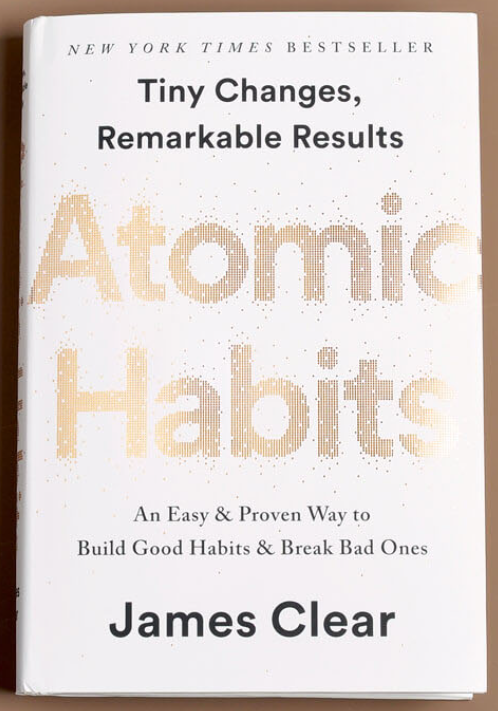
That same structure later became workshops, speaking programs, and learning material that teams and educators started using.
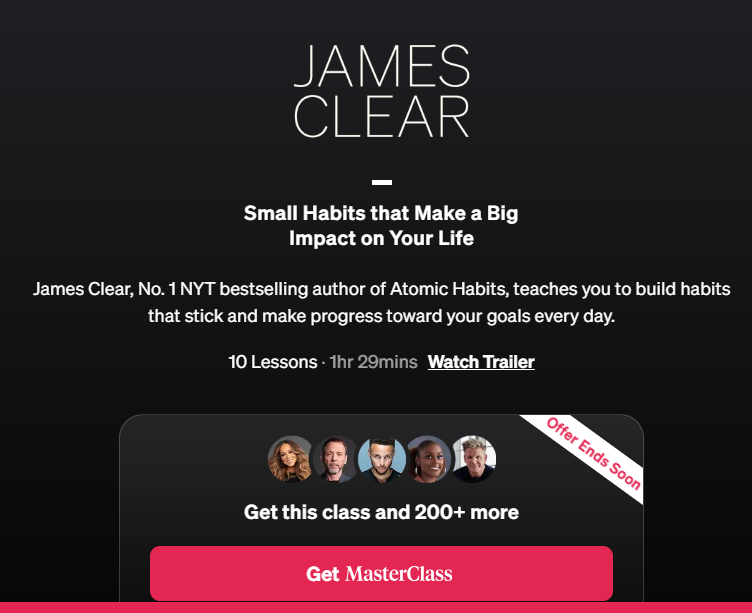
The core ideas stay the same. Only the format changes to support practice.
The second example is ‘Building a Second Brain’ by Tiago Forte. The book presents a way to organize digital information.
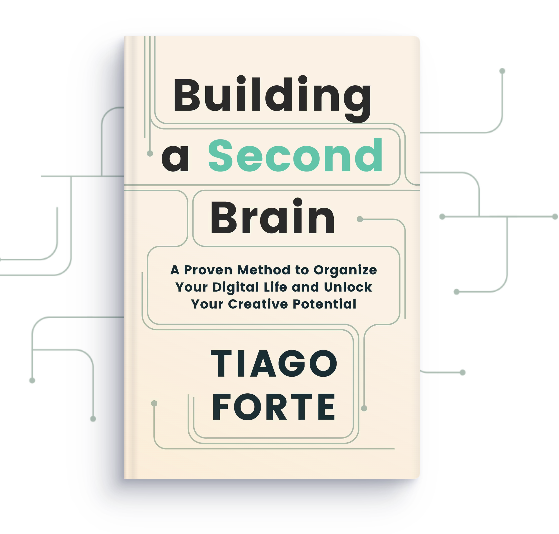
But when readers try to apply it, they’ll choose tools, set rules and prevent common mistakes. Here, the readers will find the BASB Foundation course helpful.
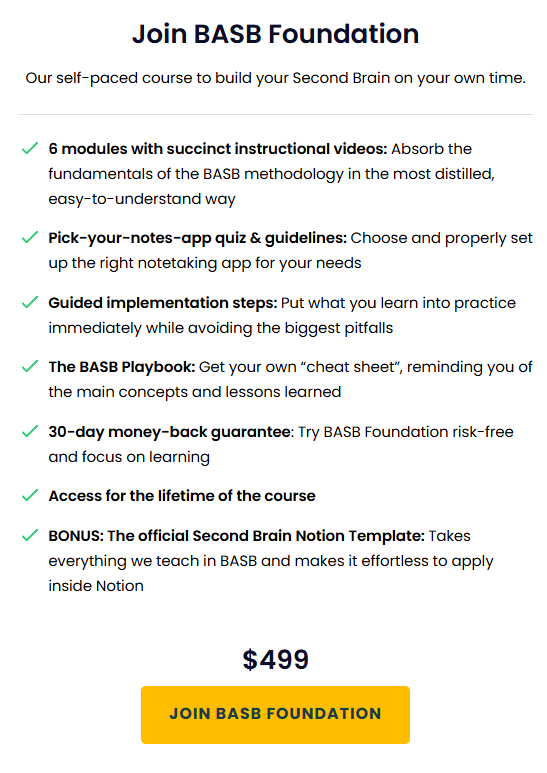
The course slows the ideas down. It adds short videos, guided steps, quizzes, and templates so learners can actually implement the system.
Selling eBooks from your own website (What changes)
Now that you already know what you give up to sell your ebooks on marketplaces, let’s see what you’ll gain when you sell them from your own website.
The biggest gain is ownership, and here is how it appears.
You control the price
On your own site, you’re not locked into one flat price.
You can test different price points, bundles, and “pay what you want” options without asking anyone’s permission.
For example, you might start with $19 for the ebook alone. A month later, you notice people keep asking for templates. You can create a “Pro Pack” at $39 with the ebook plus worksheets. If that sells better, you keep it. If not, you change it again. There’s no need for an approval queue or a rule book.
You can also read real signals from your audience. If your newsletter readers say the ebook is saving them hours each week, you can slowly raise the price to match the value and not stay stuck at whatever felt safe on a marketplace.
Your brand stays intact
On a marketplace page, the platform decides the layout, fonts, and colors. Your brand is mostly your cover and a short description.
But on your website, you can match the sales page with your newsletter, YouTube channel, or community. You can show who you are, who the ebook is for, and what the learning path looks like after the ebook.
You can add sample pages, an explainer video on who will benefit most, or a short story about how you tested the method. The whole page builds trust in you beyond your ebook file.
You can access customer data
On your site, you can see:
- Which traffic source led to the sale
- Which ebook did a reader buy first
- Whether they come back for more
You have insights like most buyers first came from a specific blog post or podcast episode. That tells you where to double down. For example, if your “Beginner Guide” ebook achieves a good conversion rate, you can easily scale up and create an advanced workshop within three months. As you’ve already set a demand, the supply is of no fear.
Customer insights help you plan better and position your product more effectively.
Email becomes part of your product experience
When you sell from your own website, email is also part of how people learn. For example, you can send a welcome email to explain how to use the ebook. Share task-based reminders to complete a specific chapter or exercise. Send follow-ups that share examples, edge cases, or common mistakes tied to that exact step after important sections
It won’t feel pushy when it’s done well. It feels helpful, and readers stay connected. For example, after a purchase, you can build a flow that looks like:
Day 0: Purchase and delivery
Day 1: Email with “start here” guidance
Day 3: Example of someone applying the method
Day 7: Check-in and a short survey
Later: Invite to a course, workshop, or higher-tier product
With every message, the reader gets more value from their purchase.
You spend less in fees
With a direct setup, you spend much less than in marketplaces. Sometimes that can be zero commission, and sometimes just basic payment processing. You’ll see the difference gradually.
Say you sell a $20 ebook and make 500 sales. On Gumroad, a direct sale costs about 10% + $0.50 per purchase. That means you keep roughly $17.50 per sale. Across 500 sales, you earn about $8,750.
If you sell the same ebook from your own website using a payment processor, you might pay around 3% in processing fees. You keep about $19.40 per sale. Across 500 sales, that’s $9,700.
That’s a $950 difference on the same ebook, with the same buyers.
Over dozens or hundreds of sales, these differences can fund your next move.
What to look for in an all-in-one platform (eBooks + knowledge products)
One tool for ebooks, another for courses, a third for email, and a fourth for certificates — not a smart creator style.
An all-in-one platform replaces all of these in a single system. Here’s what’s actually worth checking before you commit.
1. Zero commission on sales
Start with the pricing page.
You will always pay payment processing fees (Stripe, PayPal, etc.). That’s normal. What you don’t want is a platform that also takes a cut of every sale.
So, look for:
- A monthly or yearly price
- 0% platform commission on each transaction
If a tool charges 5% per sale, at $49 per ebook or course, you’ll end up paying close to $25 for every 10 sales. A flat platform fee is usually easier to plan for and rewards you as you grow.
2. Support for more than just ebooks
If the platform only handles PDFs well, you’ll be limited to that particular format and never be able to diversify your income.
For example, you should be able to upload the ebook PDF and control access so that only buyers can open it. If you later fix errors, add examples, or update sections, buyers should receive the updated version of the same ebook file without being asked to repurchase.
From there, you can add worksheets that help readers apply the material from one chapter, checklists that summarize key steps, and bonus PDFs that go deeper into one topic.
3. Built-in courses and video lessons
If your ebook is a framework or method, you’ll want to turn it into lessons later. So, it helps to have a platform that already comes with:
- Course structures with modules and lessons
- Certifications and assignments to track understanding
- Drip schedules, so lessons appear with progress
All-in-one platforms like FreshLearn let you create an entire course outline using AI agents. So, assemble your ebook's content and test the trial by converting it into a course in under an hour. If it feels difficult now, it’ll be worse when you have ten products.
4. Built-in email marketing
On marketplaces, email is mostly transactional. Buyers get receipts or platform updates, but creators can’t control onboarding, timing, or follow-ups based on how someone uses the ebook.
On your own website, email gives you more control, but you’ll need a separate tool, manual tagging, or integrations to track who bought what and where they are in the learning process.
All-in-one platforms connect email directly to the product. The system knows what someone purchased, which lesson they completed, or whether they finished a certification. That makes it easier to send the right message at the right time.
For example:
- Ebook buyers can receive onboarding emails tied to specific chapters
- Course learners can get progress-based reminders or next steps
- Certified users can receive different follow-ups from new buyers
Also, remember, someone who just bought your ebook should not receive the same emails as someone who completed your certification six months ago. Product-aware email makes that possible without much setup.
5. A customizable website you actually control
With all-in-one platforms, you don’t start from a blank screen. You can choose from pre-built sections for hero banners, feature highlights, testimonials, pricing tables, and FAQs.
Page builders today work in a “block” style. You can add or remove sections for stats, customer logos, countdown timers, email signups, contact forms, or link-in-bio pages without touching design settings. This setup makes it easy to:
- Launch one page for an ebook
- Spin up a separate page for a bundle or course
- Reuse the same layout across products so everything feels consistent
You can connect your own domain in a few clicks, with hosting handled for you. Security should be included as well, so buyers see a trusted, secure site without warnings.
Also, check how it looks on mobile. Many of your audience will open your sales page on their phones, often via social links or email.
6. No need for multiple tools
Every extra tool adds a layer of difficulty: More logins, more updates that fail, and more time spent fixing instead of creating.
On marketplaces, most things are handled for you, but only at a basic level. You get hosting and payments, but little control beyond that. If you want email onboarding, bundles, certificates, or follow-up offers, you usually need to bolt on other tools outside the marketplace.
Standalone websites give you more control, but you have to use one tool for pages, another for payments, another for email, and another for courses or certificates.
All-in-one platforms work differently. Pages, payments, content access, email, and certificates are all found in the same system. When someone buys, access is granted automatically. Emails are triggered based on what they purchased or completed. You don’t have to move data between tools or manually keep things in sync.
With fewer tools, it's easier to expand from an ebook into bundles, courses, or certifications without rebuilding your setup.
Example: Turning one eBook into multiple revenue streams
Now, it’s time to see how this works in real life. Here’s a path you’ll follow.
Start with one specific ebook
You begin with an ebook that answers a problem your audience keeps running into.
For example, you run a small newsletter for people working in SaaS operations roles. Over time, the same questions keep coming up: How do we handle user data safely? What actually counts as personal data? What should we do when a user asks for their data to be deleted?
Instead of answering these questions again and again in emails or Slack threads, you write a focused ebook called “Data Privacy Basics for SaaS Operations Teams.” It’s about 90 pages long.
Inside the ebook, you explain core privacy concepts like consent, data access, retention, and deletion. You lay out a simple decision framework that teams can follow when handling user data. You also include real workplace scenarios that show what safe and unsafe decisions look like. The ebook is priced at $39.
But the ebook is mainly a reference. It explains what to do and why it matters. When the goal shifts from understanding privacy rules to applying them correctly in day-to-day work, reading alone isn’t always enough.
Add video to support understanding
Video lessons convert the guidance from the ebook into step-by-step walkthroughs. Each ebook chapter maps to a short lesson that applies the same framework to specific scenarios, such as data access requests, retention decisions, or third-party data sharing.
The videos focus on decision points: what information to check, which rule applies, and which action is compliant. Users will have less ambiguity and a standardized approach to how the framework is applied across teams.
At this stage, the ebook becomes reference material inside a course. The course version, priced at $69, is built for readers who need consistent, repeatable application of privacy rules rather than conceptual understanding alone.
Add downloads that turn reading into action
Next, you focus on the application. You can add task-based downloads tied to specific decisions in the ebook. These include request-handling checklists, consent-logging templates, and data retention worksheets.
After each section, learners complete a short verification step. The check confirms that the correct rule was applied, the required action was taken, and the decision was documented.
These downloads standardize the application.
The ebook is still there, but now it’s part of a working system.
Introduce a certification for credibility
Some readers want proof they’ve mastered the skill. So, you can add a scenario-based assessment that covers the full privacy workflow: data access requests, consent verification, retention rules, and third-party sharing decisions.
Certification is issued only after all lessons are completed and the assessment is passed. It confirms that the learner can apply privacy rules correctly in common operational cases.
You can now offer this as a premium product at $79.
Bundle for different goals
At this point, the core value is the same, but you’ll have multiple products. You can bundle them into higher tiers now:
- Starter: An ebook at $39
- Guided pack: Ebook + videos + downloads at $69
- Professional pack: Everything from the guided pack, plus certification at $79
Your buyers can choose different levels. Some might only need the ebook, but others would want structure and feedback. As a creator, you’re not forcing anyone upward. The options are simply there.
Platforms that support this model (Without lock-In)
The platforms fall under the following buckets.
TL; DR Marketplace Vs Owned vs All-in-one platforms
Marketplaces
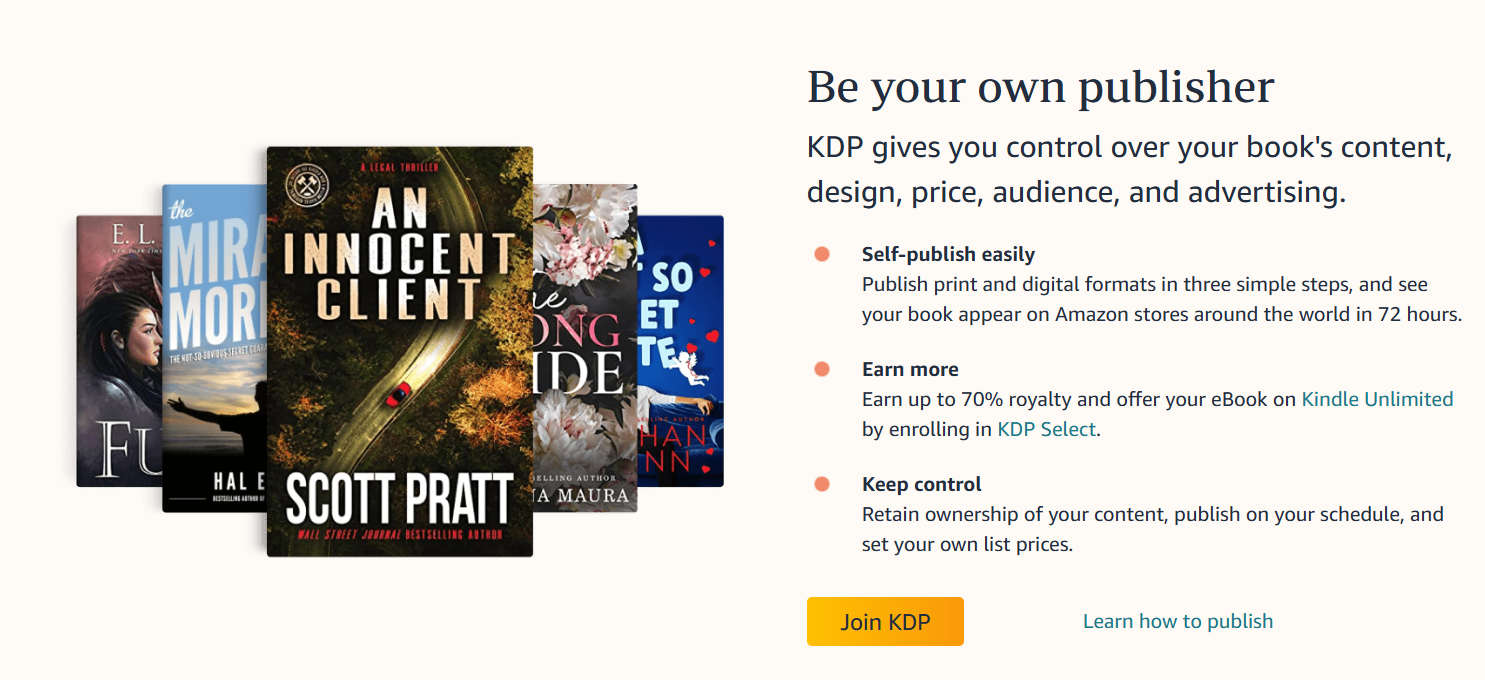
Amazon Kindle Direct Publishing (KDP) is the biggest example. On KDP, you can choose a royalty option (35% or 70%). The 70% option can also subtract delivery costs, and it only applies in eligible territories.
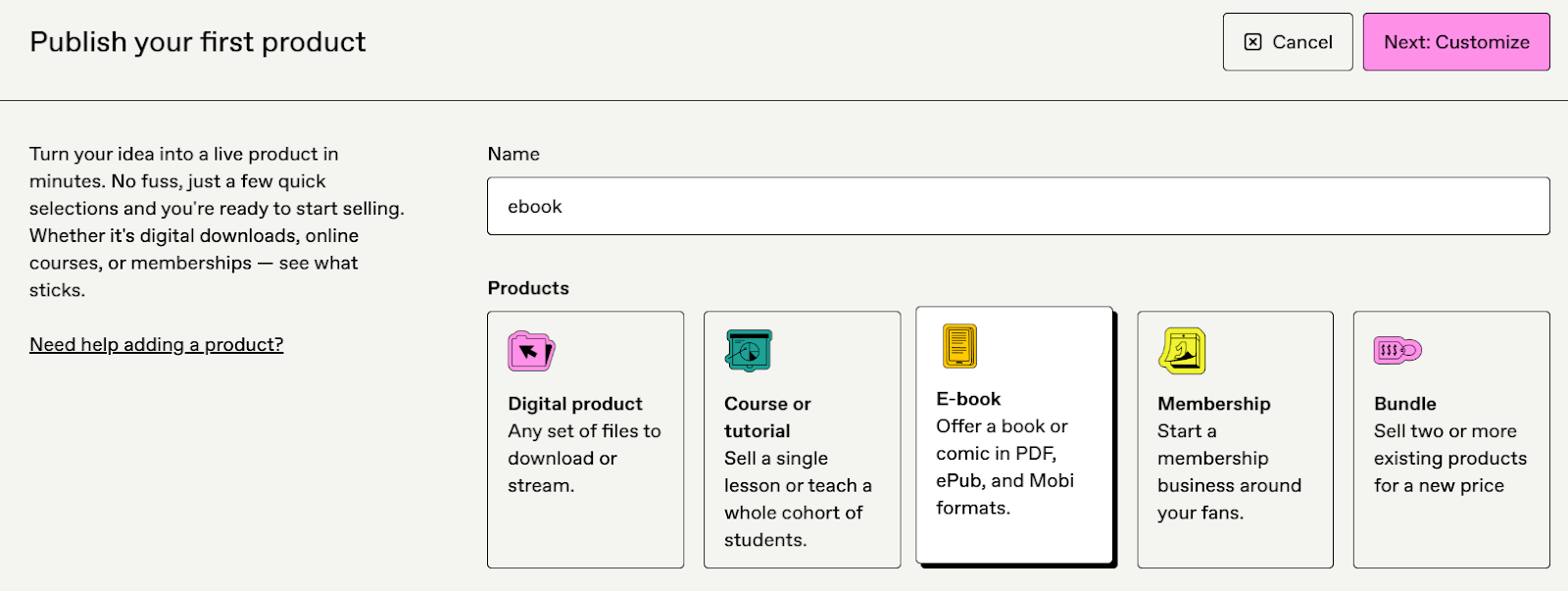
Gumroad is another option many creators know. It charges a 10% + $0.50 fee on sales that come from your own profile or links. And it takes a 30% per sale when customers find you through its Discover marketplace.
As stated, marketplaces work great when you want to test demand or reach people who don’t know you yet. But they keep tight control over pricing rules, buyer data, and the workflow. That makes it harder to expand one ebook into a full learning path all within the same platform.
Owned platforms
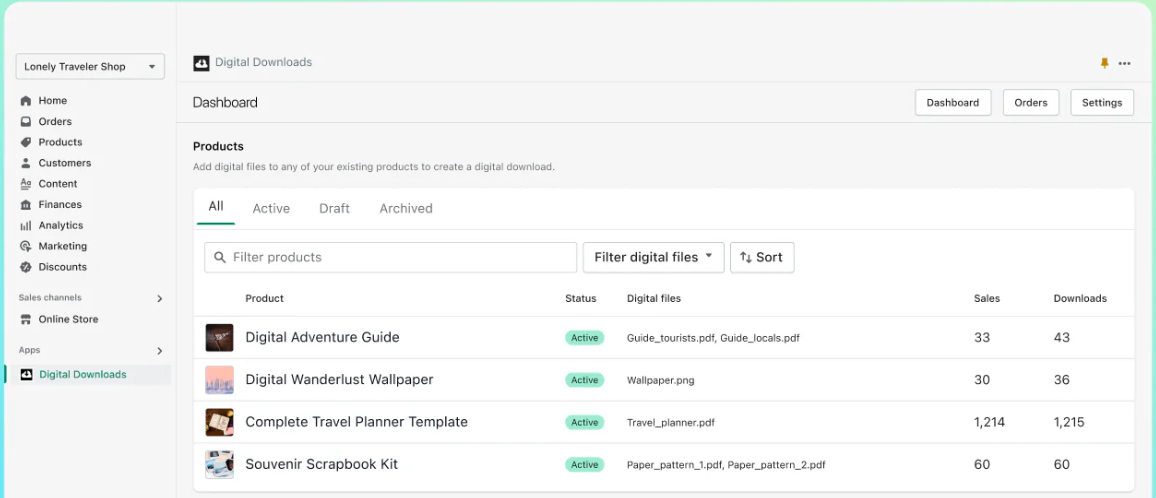
Shopify is one common choice. With the free Digital Downloads app, you can upload files like ebooks and send buyers a download link after purchase. You still pay normal payment processing fees, but you’re not sharing a marketplace commission on every ebook sale.
A real-world example of the owned approach is Nathan Barry’s website.
Nathan doesn’t sell his book ‘Authority’ as a single item. On his own site, the same book becomes three different offers:
- A basic version for readers who just want the ideas
- A higher-priced edition that adds videos, interviews, and a launch plan
- A premium option that includes one-on-one strategy time
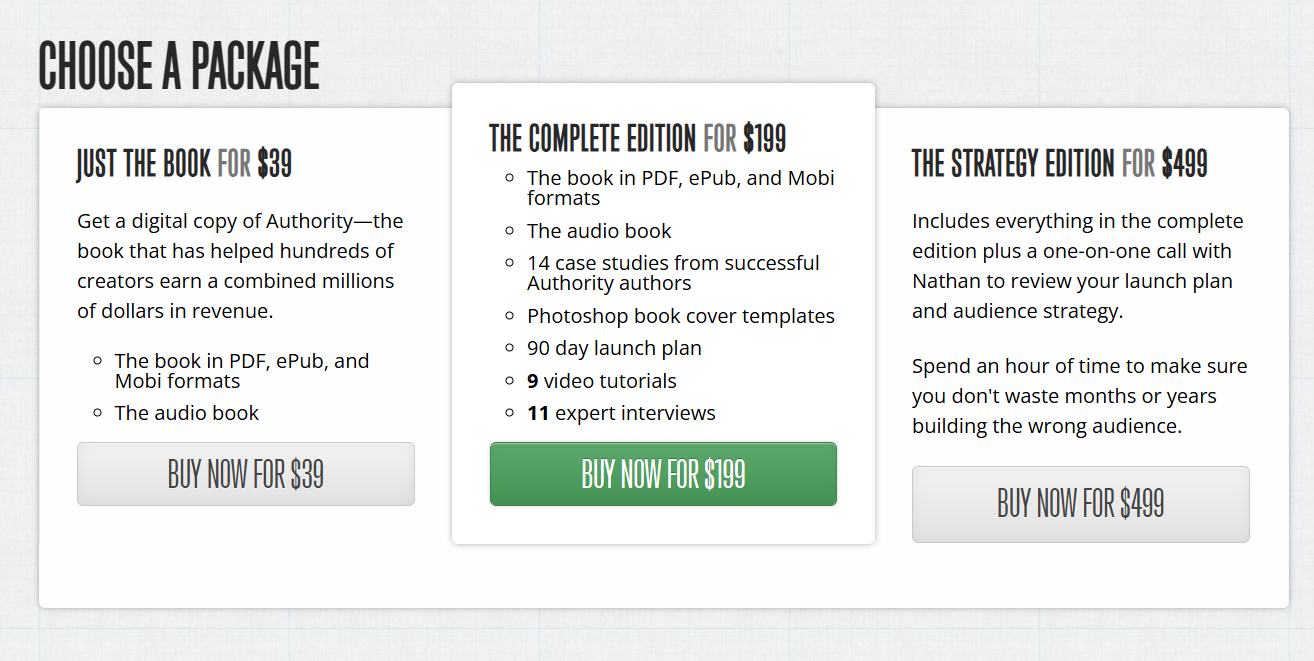
The content at the center stays the same. What changes is the level of support and access.
None of this would work well on a marketplace page. It works because the website is his. He controls the layout, the story, and how buyers move from one level to the next.
The only trade-off is that you often need more than one tool behind the scenes. For example, one for email, one for downloads, maybe another for courses.
All-in-one creator platforms
All-in-one platforms are another type of owned setup. You still control your brand and customers, but you don’t have to stitch five tools together.
An all-in-one system lets you:
- Sell digital downloads (like ebooks and locked PDFs)
- Host courses and also add video lessons
- Give quizzes, assessments, and completion certificates
- Run email campaigns that react to your learners' purchases or milestones
Why zero-commission platforms matter as you scale
As you add bundles, your price usually increases. With a commission-based platform, your platform costs grow as your revenue increases.
Here’s a simple example. If you sell a $99 bundle and make 1,000 sales, that’s $99,000 in revenue. On a platform that takes 5% commission, $4,950 goes to fees before payment processing. At 10%, that jumps to $9,900. The more successful the product becomes, the more you give up on every sale.
But with zero-commission (platform) pricing, your costs are more predictable, especially when you start selling higher-value bundles instead of one ebook at a time. Whether you sell a $39 ebook or a $199 bundle with courses and certification, you keep the full amount (minus standard payment processing). You can price bundles higher, test new formats, and scale without recalculating margins every time.
To make it creator-friendly and affordable, FreshLearn charge 0% transaction fees on payments to your account and doesn’t add extra charges for products, members, or enrollments. We also support digital downloads, courses, certifications, and email in the same system.
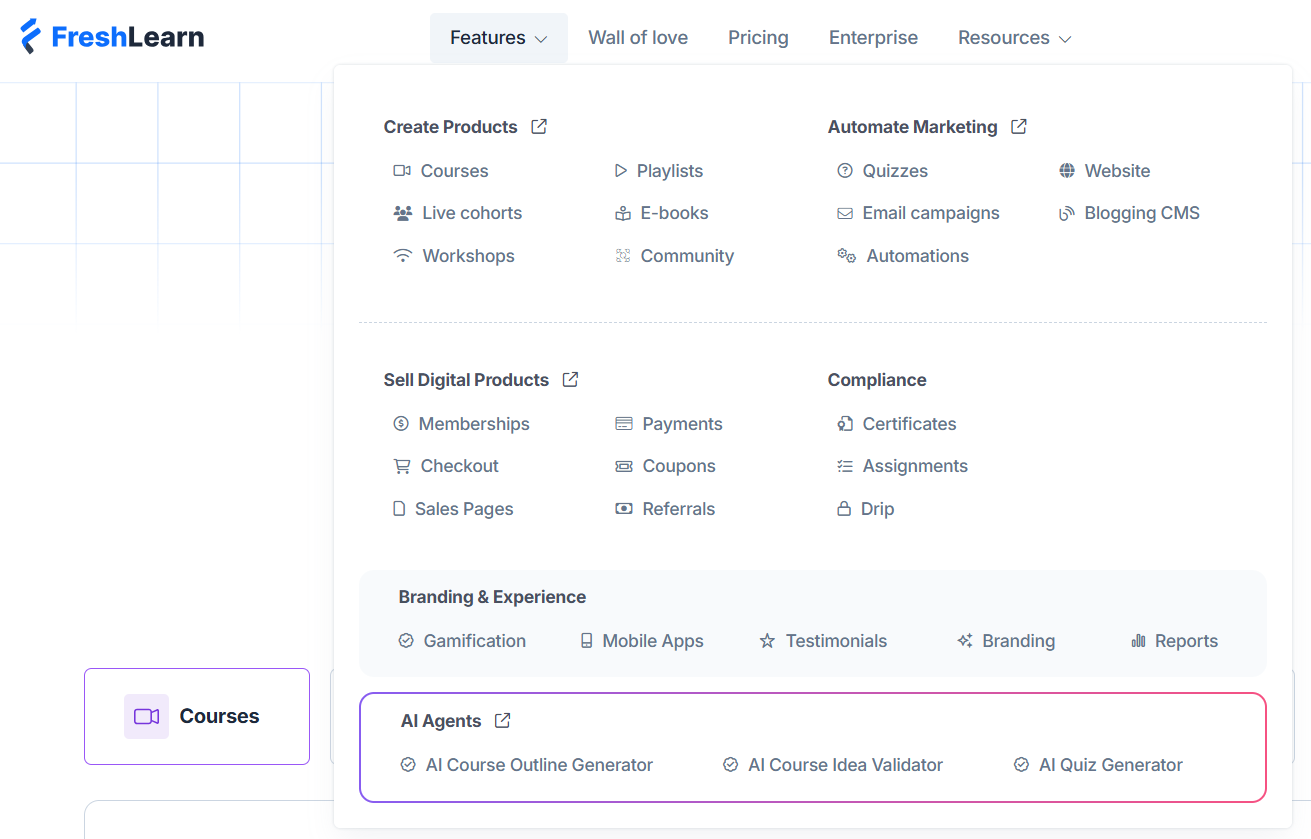
You also get a customizable website and built-in email, so you can guide learners after they buy. The setup works well when an ebook is only the starting point, and you’re planning to build structured learning, not just deliver files.
Getting started (Actionable next steps)
This is where ideas turn into action. Keep the steps small and clear so you don’t stall before you start.
Step 1: Validate demand with real signals
Ask your audience directly. Share a short outline in your newsletter or post the main promise on social media. Replies, saves, and questions matter more than likes. You can also run a poll to gather what your followers think. If people ask when this is coming out, you have enough signal to move forward.
Step 2: Decide the role of the ebook early
Before writing, decide what the ebook is meant to do. Is it a complete solution on its own, or is it the first step in a longer learning path? This choice will help you finalize the length, structure, and tone.
Step 3: Pick a platform that won’t slow you down later
Choose a setup that can handle what you plan to add next. That might be videos, downloads, or assessments. Switching platforms after launch is possible, but a flexible setup saves you from future work.
Step 4: Set up basic email onboarding
Write a short email sequence that helps buyers start. One email to explain how to use the ebook, another one to show a real example. And a third one to ask what they’re stuck on. This improves outcomes and builds trust fast.
Step 5: Launch with bundles, not discounts
Instead of cutting the price, add value. Pair the ebook with templates, checklists, or a short video. Bundles protect your pricing and make the offer feel complete from day one.
Wrapping up
As you’ve seen, an ebook works best when you don’t treat it as the end product. It’s a clear way to package what you know, test demand, and earn trust. From there, the real leverage comes from how you price it, where you sell books, and whether you can build deeper learning around it.
For audience-first creators, that leverage is worth the effort. And platforms like FreshLearn make it easier to sell ebooks and expand into courses, certifications, and guided learning without giving up a percentage of every sale as you grow. Start with the forever free plan to test the platform and then choose the plan that fits your growth.
FAQs
1. Is selling ebooks profitable?
Yes, it can be. Once the ebook is written, it costs almost nothing to sell again. Platforms take a cut, but if people want what you’re teaching, each sale adds up. Profit depends on demand, pricing, and how you reach readers.
2. Can I sell my eBook for free?
Yes. Some platforms let you set the price to free or “pay what you want.” Others allow free promos for a limited time. Free ebooks work best when you want email sign-ups, early feedback, or a way to introduce people to your paid work.
3. What kind of ebooks sell best?
On marketplaces, fiction like mystery and sci-fi sells well because readers buy often. To your own audience, practical ebooks do better like guides, frameworks, or step-by-step help that solves a problem people already ask you about.
You might also like
Hosted by
