Best Sales Funnel Builder Tools for Course Creators

If you sell courses or digital products online, a sales funnel is the difference between a landing page that sits there and a system that actively converts visitors into paying students.
Most course creators build a decent product and then wonder why sales are inconsistent. The answer is usually the same: there's no deliberate funnel guiding potential students from "I've heard of this" to "I'm buying this." A sales funnel builder is the software that lets you build that journey — without stitching together five different tools.
This guide covers the best sales funnel builder tools, with verified pricing and honest assessments of what each one is actually good for — especially if you're an educator or creator, not a full-stack marketer.
What Is a Sales Funnel? (The Short Version)
A sales funnel is the path a potential customer takes from first hearing about you to making a purchase. For course creators, a typical funnel looks like this:
Awareness → Someone finds you through a blog post, social media, or a recommendation. They visit your site or landing page.
Interest → They sign up for a free lead magnet — a checklist, a free lesson, a short guide — in exchange for their email address.
Decision → They receive a nurture sequence of 5–7 emails over a week or two. Each email teaches them something useful and builds trust. By the end, they understand what your course offers and why it's worth the price.
Action → They land on your sales page, read through it, and enroll.
A sales funnel builder is software that helps you build and automate each of these steps — landing pages, lead capture forms, email sequences, checkout pages, and upsells — in one place rather than across four different tools.
What to Look for in a Sales Funnel Builder (For Course Creators)
Before comparing tools, here's what actually matters if you're an educator building funnels to sell courses or digital products:
Page builder quality. Your sales page is where the conversion happens. Look for a drag-and-drop editor with conversion-optimized templates and the ability to add testimonials, video, pricing tables, and CTAs without needing a developer.
Email automation. The nurture sequence between lead magnet and purchase is where most conversions happen. A funnel builder without solid email automation forces you to add a separate email tool, which adds cost and complexity.
Checkout and payment processing. Friction at checkout kills conversions. Look for a clean, fast checkout flow with multiple payment options and, if you need it, payment plan support.
Course or product integration. If you're selling courses, you want your funnel tool and your course platform to talk to each other — ideally on the same platform, so enrollment is automatic after purchase.
AI-assisted building. Most major funnel builders now offer AI tools for generating page copy, email sequences, and funnel structures from a prompt. This has meaningfully reduced setup time for solo creators.
Pricing model. Some tools charge a flat monthly fee; others take a percentage of revenue. At low volumes, the difference feels small; at scale, it's significant.
The Tools: Honest Assessments for Course Creators
1. ClickFunnels
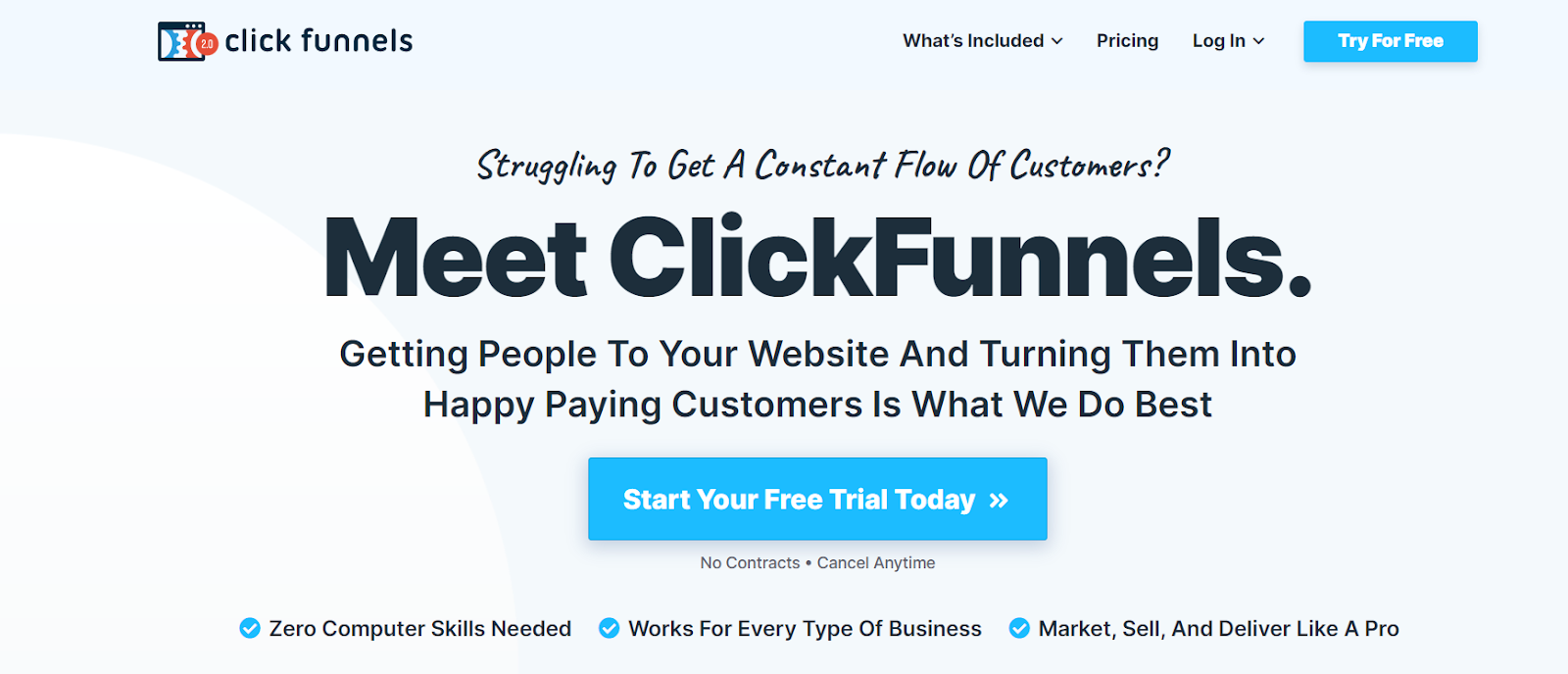
Best for: Marketers and course creators who want the most established funnel-building platform with a large ecosystem of templates, training, and integrations.
ClickFunnels is the platform that popularized the concept of the sales funnel as a marketing tool, and it remains the most recognized name in the category. Its strengths are its template library, its opinionated funnel-building workflow, and the depth of marketing education built around it.
ClickFunnels 2.0 (the current version) is a significant rebuild from the original. It now includes a website builder, CRM, course hosting, email marketing, and community features alongside the core funnel builder — making it a more complete platform than it was even two years ago.
For course creators: ClickFunnels' course builder is functional — it supports modules, lessons, drip content, and certificates (added in 2026). But it's built on a funnel architecture, which means students navigate course content through funnel-style page sequences rather than a traditional course dashboard.
This works fine for a launch-focused business where students buy through a funnel and consume content once; it creates friction for creators whose students return to course content repeatedly over weeks or months.
Worth noting: ClickFunnels adds a 1% gateway fee if you use your own Stripe account rather than their native Payments AI. For creators doing $5,000+/month in revenue, this adds up quickly.
ClickFunnels pricing (2026):
- Launch: $97/month ($81/month annual) — 3 courses, 10K contacts, 50K emails/month, 5 custom domains
- Scale: $197/month ($164/month annual) — 6 courses, 75K contacts, unlimited emails
- Optimize: $297/month ($248/month annual) — 10 courses, 150K contacts, affiliate system
- Dominate: $5,997/year — 20 courses, unlimited contacts
- 14-day free trial on all plans
The honest limitation: ClickFunnels is built for marketers who sell through funnels. If courses are your primary product and students engage with them heavily post-purchase, ClickFunnels' course experience will feel limited compared to a dedicated course platform.
2. Kartra
Best for: Online businesses that want a true all-in-one platform — funnels, email marketing, memberships, video hosting, and helpdesk — without stitching together separate tools.
Kartra is the most comprehensive all-in-one option in this comparison. Unlike ClickFunnels (which is primarily a funnel builder that added other features), Kartra was designed from the start as a complete marketing platform. Its funnel visualization, email automation, and membership site features are all native and integrated — not bolt-ons.
For course creators, Kartra's membership site and course delivery features are more purpose-built than ClickFunnels' course layer. Combined with its email automation, affiliate management, and checkout tools, it covers the full creator stack without external integrations.
The significant limitation: Kartra's Starter and Essentials plans include a 5% transaction fee on sales processed through the platform. This fee is waived on the Growth plan and above. At $99+/month price points, that transaction fee can be a meaningful cost until you're ready to upgrade.
Kartra pricing (2026):
- Starter: $59/month — 2,500 contacts, 1 custom domain, 5% transaction fee
- Essentials: $119/month — 7,500 contacts, 3 custom domains, 5% transaction fee
- Growth: $229/month — 12,500 contacts, 3 custom domains, 0% transaction fees
- Professional: $549/month — 25,000 contacts, 5 custom domains, 0% transaction fees
- Annual billing saves approximately 20–25% across all plans
The honest limitation: Kartra's interface has a learning curve. New users consistently report that the setup process — particularly for email sequences and funnel flows — is less intuitive than ClickFunnels or simpler tools. If you want a polished experience out of the box, Kartra requires more upfront investment to get running.
3. Leadpages
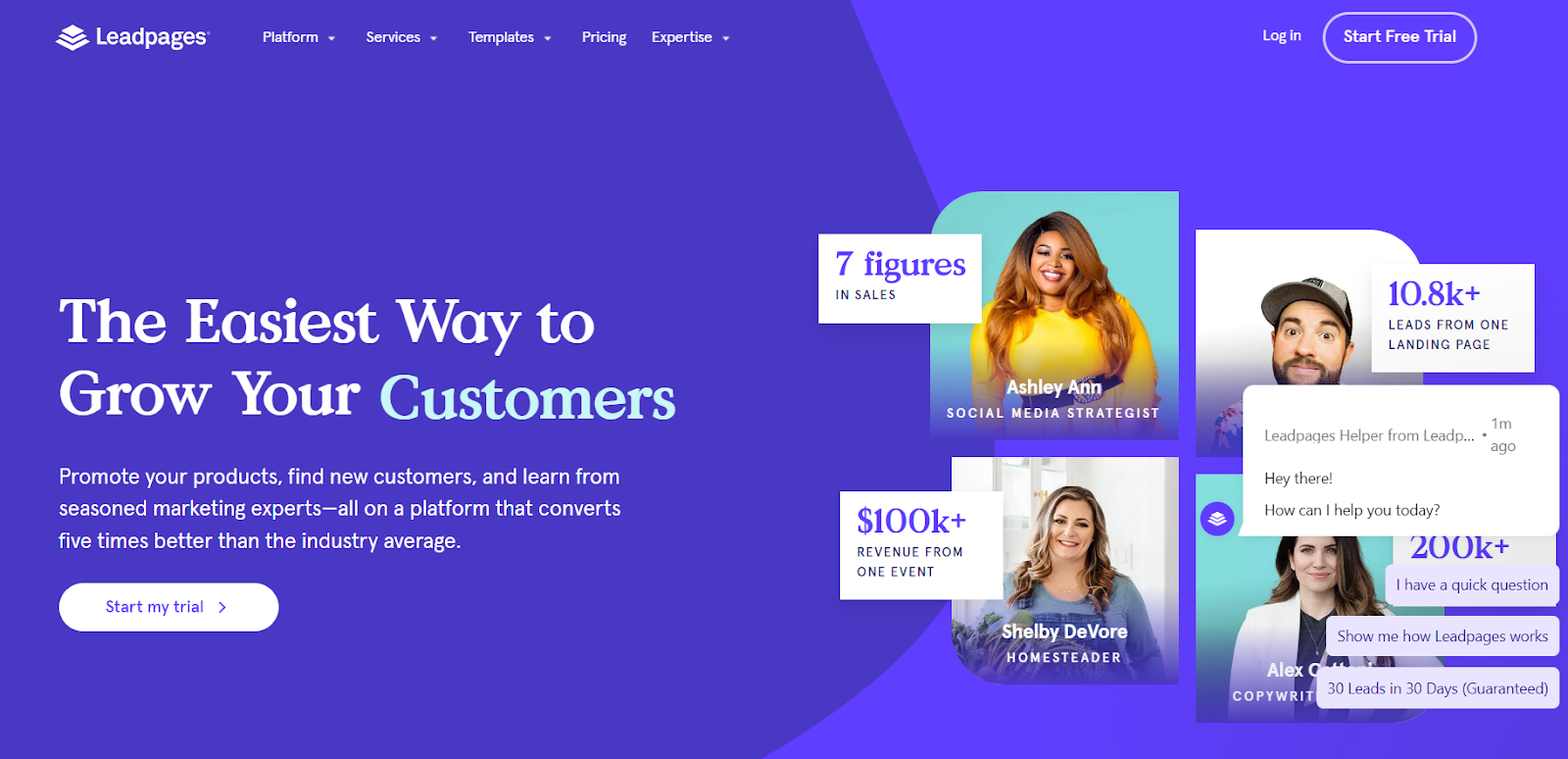
Best for: Creators and small businesses who need a focused, high-quality landing page builder without the complexity (or price) of a full funnel platform.
Leadpages is the most focused tool in this comparison. It doesn't try to be an all-in-one platform — it specializes in landing pages and lead generation, and it does that job very well. Its conversion guidance features (real-time tips on page elements likely to improve or hurt conversions), template quality, and page loading speed are consistently among the best in the market.
For course creators using a separate course platform (FreshLearn, Teachable, Thinkific), Leadpages makes a practical companion tool for building high-converting sales pages, opt-in pages, and webinar registration pages, then handing off to the course platform for delivery.
Where it falls short: Leadpages is not a full funnel builder. You can link pages together into a basic funnel, but there's no native email automation, no CRM, and no checkout beyond basic Stripe integration. For a complete funnel, you'd still need a separate email tool (Kit, Mailchimp, or similar).
Leadpages pricing (2026):
- Standard: $49/month ($37/month annual) — landing pages, pop-ups, unlimited traffic and leads, 1 custom domain
- Pro: $99/month ($74/month annual) — 3 custom domains, A/B testing, online sales and payments
- Advanced: $399/month — advanced features, sub-accounts
- 14-day free trial available
The honest limitation: No free plan. At $49/month for the Standard plan, it's more expensive than several competitors that offer free tiers or lower entry points. And without native email automation, it's only one piece of a complete funnel — you'll pay for additional tools to complete the workflow.
4. HubSpot
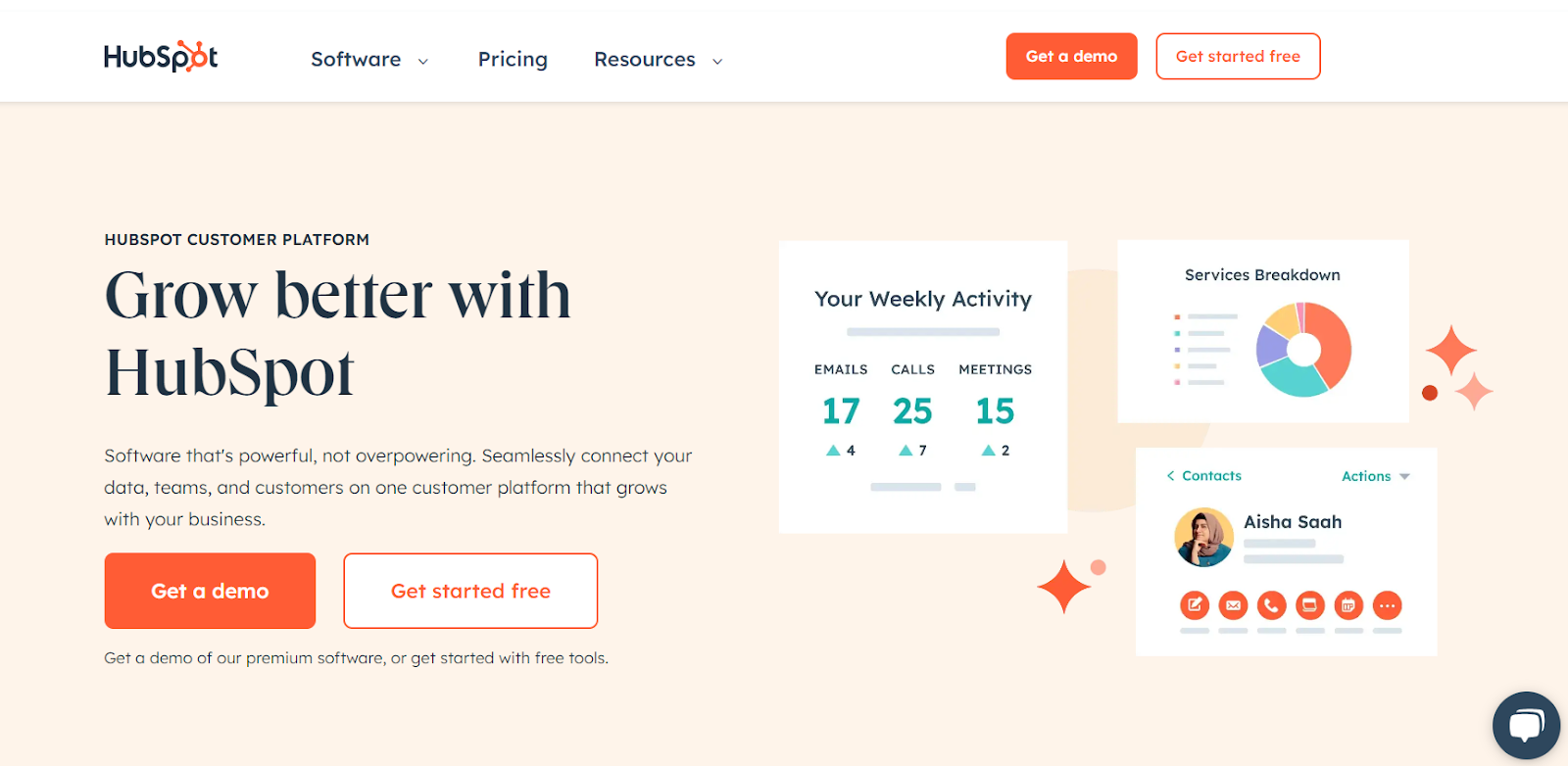
Best for: Course businesses that have grown beyond the solo-creator stage and need a CRM-native funnel system with strong sales pipeline management.
HubSpot is a different category of tool from the others here. It's primarily a CRM and marketing automation platform that happens to include landing page building and funnel management — not a funnel builder that added a CRM. That distinction matters for who it suits.
For educators running larger operations — a team, a B2B training product, or a business where sales conversations happen before enrollment — HubSpot's CRM pipeline, contact management, and deal tracking make it genuinely powerful. For a solo creator building simple course funnels, it's significant overkill and expensive.
HubSpot's AI tools (content generation, email writing, SEO recommendations) are among the most mature in the marketing software space and increasingly useful for creators who produce a lot of content to drive funnel traffic.
HubSpot pricing (2026, Marketing Hub):
- Free tools: Basic CRM, forms, email (HubSpot branding)
- Starter: $20/month/seat — removes branding, basic automation
- Professional: $890/month (3 seats) — advanced automation, A/B testing, custom reporting
- Enterprise: $3,600/month (5 seats) — full feature set
The honest limitation: HubSpot is expensive at the tiers where it becomes genuinely powerful. The free and Starter plans are limited enough that most course creators will quickly hit their ceiling. Professional at $890/month is justified for an established business with a sales team; it's hard to justify for a solo educator.
5. FreshLearn
Best for: Course creators who want a complete funnel for selling educational products — without managing a separate funnel builder, course platform, and email marketing tool.
This is where FreshLearn fits into the sales funnel conversation — and it's worth being clear about what it is and isn't.
FreshLearn isn't a dedicated funnel builder like ClickFunnels. It's a course creator platform that includes all the pieces of a course sales funnel built in. The distinction matters: if you're a course creator, you need a funnel that leads to enrollment in a course. FreshLearn is built specifically for that end-to-end journey, from first touchpoint to student completion.
The funnel components built into FreshLearn:
Top of funnel — Awareness:
- AI Website Builder for your public-facing creator site
- Blog and CMS for SEO-driven content that attracts organic traffic
- Digital downloads for lead magnets — offer a free ebook, checklist, or sample lesson in exchange for an email address
- Live masterclasses and webinars — free sessions that showcase your expertise and convert attendees into buyers
Middle of funnel — Interest and nurture:
- Email campaigns with drip sequences, segmentation by enrollment and behavior, and automation triggered by actions (downloaded a lead magnet, attended a webinar, started a free course)
- Quizzes and assessments — interactive content that qualifies leads and keeps them engaged between touchpoints
- Testimonials page — collect and display social proof to build trust during the consideration stage
Bottom of funnel — Decision and conversion:
- Sales page builder — drag-and-drop editor with conversion-focused templates, no coding required
- Checkout page — optimized checkout flow with multiple payment options and payment plan support
- Coupons and discounts — time-limited offers to create urgency and drive decisions
- 0% transaction fees on all plans
Post-purchase — Retention and upsell:
- Course delivery — the actual product, delivered automatically after purchase
- Community — keeps students engaged and creates social proof for the next cohort
- Affiliate and referral program — turns happy students into your best acquisition channel
- Analytics — track which funnel stages are converting and where students drop off
The key difference from ClickFunnels or Kartra: when a student completes the purchase, they're already inside the course platform. There's no redirect, no manual enrollment, no integration to manage. The funnel and the product are the same system.
FreshLearn pricing (2026, annual billing):
- Free: $0 — 1 product, 25 manual enrollments, 3 sales pages
- Pro: $41/month — courses, digital downloads, email campaigns (3K/month), sales pages, checkout, custom domain
- No Brainer: $59/month — adds community, live classes, certificates, gamification, referral program, mobile app
- No Brainer+: $119/month — advanced automation, API access, custom certificates, 12K emails/month
The honest limitation: FreshLearn is built for selling educational products. If you're selling physical goods, SaaS subscriptions, or running a traditional e-commerce store, you'd be better served by a dedicated funnel builder. And if you need the most sophisticated funnel analytics and split-testing capabilities, tools like ClickFunnels have more mature funnel-specific tooling.
How to Choose the Right Tool
The right sales funnel builder depends almost entirely on what you're selling and where you are in your business:
How AI Has Changed Funnel Building
A year ago, building a complete funnel — landing page, email sequence, sales page, checkout — took days. AI has significantly reduced that timeline.
Most tools now offer AI-assisted funnel building in some form:
ClickFunnels includes AI copy generation for funnel pages and email sequences. You describe your offer and target audience; AI produces a draft funnel structure and page copy you then customize.
Kartra has introduced AI email writing and sequence suggestions based on your offer type and audience.
FreshLearn's AI Studio generates course outlines, lesson summaries, quiz questions, and sales page copy from your own course material — useful for creators who want their funnel copy grounded in their actual content rather than generic marketing language.
Leadpages offers AI headline generation and conversion recommendations based on page structure.
The honest note on AI funnel tools: AI gets you to a usable draft faster. It doesn't replace the judgment required to know your audience, position your offer accurately, or recognize why a funnel is underperforming. Use AI to compress the setup time, then apply your own expertise to the copy and structure that actually converts.
Building a Simple Course Sales Funnel: The Sequence That Works
For most course creators just starting out, this funnel structure consistently outperforms more complex approaches:
Step 1: Lead magnet. Create a free resource that solves a specific problem for your ideal student. One chapter of your course, a checklist, a template, a short video lesson. The lead magnet should be immediately useful — not a teaser for your course, but something valuable in its own right.
Step 2: Opt-in page. A single-purpose landing page that presents the lead magnet and collects the email address. Keep it simple: one headline, three to five bullet points, one form, one button. No navigation, no distractions.
Step 3: Welcome email. Sent immediately after opt-in. Deliver the lead magnet. Introduce yourself briefly. Set expectations for what's coming next.
Step 4: Nurture sequence (5–7 emails over 7–14 days). Each email teaches one useful thing related to your course topic. The last two emails introduce your course specifically — what it covers, who it's for, what results students have gotten, and the price.
Step 5: Sales page. A longer-form page that makes the complete case for your course. Cover the problem it solves, what's inside, who it's for, what students have said, the price, and what happens after they enroll. A well-written sales page does the sales conversation in text.
Step 6: Checkout. Clean, fast, with payment plan options if your course is priced above $200. Every unnecessary field or extra click loses conversions.
Step 7: Post-purchase sequence. A 3-email onboarding sequence that congratulates the new student, orients them to the course, and gets them to their first lesson within 24 hours. Students who start quickly are far more likely to complete and leave testimonials.
This sequence can be built entirely within FreshLearn, or across ClickFunnels and Kartra for the funnel pages and a separate course platform for delivery. Either approach works — the integration approach just adds more moving parts.
FAQs
1. Do I need a dedicated funnel builder if I'm a course creator?
Not necessarily. If your course platform includes sales pages, email automation, and checkout, it may cover everything you need. FreshLearn, for example, includes all the components of a course sales funnel without requiring a separate tool. Dedicated funnel builders like ClickFunnels or Kartra make more sense if you need advanced split-testing, complex multi-product funnels, or funnel-specific analytics.
2. What's the difference between a landing page builder and a sales funnel builder?
A landing page builder (like Leadpages) helps you create individual pages — opt-in pages, sales pages, webinar registration pages. A sales funnel builder connects those pages into a sequence and automates the journey between them — including email follow-up, behavior-based triggers, upsells, and checkout. Most full funnel builders include landing page capabilities; most landing page builders only partially cover funnels.
3. How long does it take to build a course sales funnel?
With a modern funnel builder and AI assistance, a basic funnel (opt-in page, 5-email sequence, sales page, checkout) can be built in a focused day or two. The writing — lead magnet, email copy, sales page — takes longer than the technical setup. Give yourself a week for a polished first funnel, including testing.
4. What conversion rates should I expect from a course sales funnel?
Benchmarks vary widely by niche, price point, and list quality, but typical ranges: opt-in page conversions of 20–40% (visitors to leads); email-to-sales page click rates of 2–5%; sales page conversions of 1–3% from cold traffic, 5–15% from a warm, nurtured list. A well-designed email sequence is usually the highest-leverage place to improve funnel performance.
5. Can I build a free funnel?
Sort of. FreshLearn's free plan includes sales pages and basic product delivery. Systeme.io offers a free plan with funnel building included. Both are limited but workable for validating an offer before investing in a paid plan. ClickFunnels and Kartra both offer free trials (14 days) but no permanent free tier.
You might also like:
Hosted by