
Best LMS for Healthcare: Top Choices for Hospitals, Clinics, and Private Practices

In this guide, we’ve categorized LMS for healthcare under the following groups:
Healthcare is the one industry that requires the most critical training: HIPAA, OSHA, CME, infection control, emergency response… and so on.
Here, part of the challenge is that not all LMS for healthcare training is the same. Doctors, nurses, and other clinical professionals need platforms that provide certifications and regulatory compliance.
But many staff onboarding, patient education, and partner training demand something more flexible and user-friendly. Given these differing needs, you can explore the space further.
And here’s the angle most buyers don’t hear: Legacy LMS solutions routinely cost $25,000+ per year, even before implementation services. Modern alternatives like FreshLearn now offer all the required functionalities: secure hosting, assessment tracking, certificates, and compliance workflows, at just about 10% of that cost.
Understanding the healthcare LMS landscape
When people talk about healthcare learning management systems (LMS), they often lump all tools together. But the truth is, the market actually serves two very different needs.
Clinical/CME focused
Some LMS platforms are focused solely on clinical training and certifications. These are the tools hospitals and medical institutions rely on to track board certifications, manage complex credentialing, and stay in compliance with strict regulations.
Think of platforms like Oasis or Relias; Doctors, nurses, and other clinical professionals use them to meet formal accreditation requirements.
Operational/training focused
Then there’s a whole other group of LMS platforms designed for operational and organizational training. This includes onboarding staff, ensuring employee compliance, educating patients, and training B2B partners.
FreshLearn and TalentLMS fall into this category: they make training simple, flexible, and easy to manage.
Internal training (Staff onboarding and compliance)
Onboarding new staff in healthcare means getting everyone trained quickly, correctly, and in line with rules. An LMS can automate this process, track a course’s completion status, and make compliance easier to manage.
For healthcare organizations, the ability to manage compliance training for mid-size companies is critical to maintaining certifications and meeting strict regulatory standards at scale.
External training (Patient education and B2B partner training)
Providing high-quality care requires more than just clinical skill; implementing a robust strategy for patient education ensures that individuals understand their diagnosis and treatment options.
Training doesn’t stop with employees. Many times, patients, partners, and collaborators will also need guidance. The correct LMS can help you create structured courses, health education content, and product training outside the organization.
It also lets healthcare providers engage external audiences in a professional, branded way, making sure everyone has access to the right knowledge at the right time.
Critical features every healthcare LMS needs
Healthcare teams need an LMS that actually works for them: simple to use, keeps everyone on track, and handles compliance without issues. These are the features that make it happen:
- Security and HIPAA compliance: Beyond just protecting data, a secure LMS prevents costly breaches, protects patient trust, and keeps the organization audit-ready. When staff know the system handles privacy correctly, it lets them concentrate on patient care rather than worry about compliance errors.
- Certification and recertification automation: Expired credentials do more than extensive paperwork. They can slow down procedures, lead to fines, and compromise patient safety. Automated tracking ensures clinicians stay certified, freeing administrators from manual follow-ups and keeping teams ready and confident.
- Mobile accessibility: Healthcare staff are constantly on the move. A mobile-friendly LMS will help in productive learning, letting nurses or technicians complete necessary modules between rounds or during breaks. This guarantees training happens without disturbing your patient's care.
- Blended learning support: Clinical skills require practice, not just theory. By tracking both online and in-person learning, a blended LMS makes sure that the knowledge translates into action, helping staff perform procedures correctly and reducing errors.
Top healthcare LMS platforms (Categorized)
Large hospitals and medical education programs often rely on LMS platforms that can handle scale, compliance, and complex training workflows. These “heavyweight” systems manage thousands of users and support continuing medical education, each in its own way.
Category 1: The "heavyweights" (Best for large hospitals and CME)
Extensive hospital networks operate in a space where regulatory accuracy matters (equal to the training). These teams need an LMS that does more than course delivery. It should also support CME tracking, audits, and clinical competency programs.
The platforms I've mentioned below provide those features.
a) Relias
Perfect for: Hospitals standardizing clinical training, nursing teams maintaining certifications, and healthcare organizations managing compliance at scale.
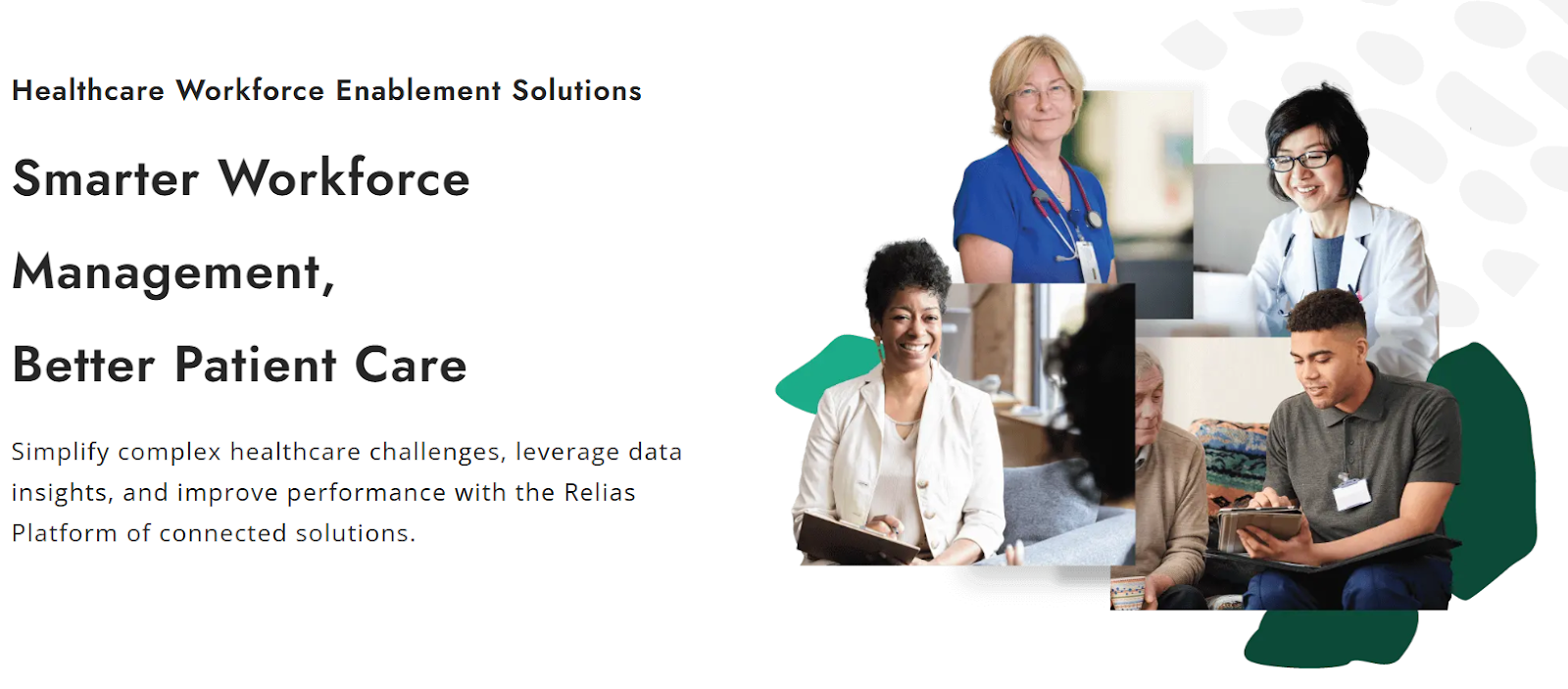
If you need an LMS that can handle large-scale training across hospitals, senior care facilities, or behavioral health organizations, Relias is a dependable choice. It offers a large library of healthcare-focused courses and prioritizes compliance, helping your team stay current with certifications and regulatory requirements.
With features like role-based assignments, automated reminders, and detailed reporting, Relias makes it easier for administrators to track thousands of staff members across multiple sites without managing dense paperwork.
At the same time, it’s important to acknowledge that Relias comes with trade-offs. The platform can feel outdated with fewer plugin capabilities. Some organizations also find the pricing on the higher side and the interface less modern than those of newer LMS platforms.
Key features of Relias
- Blended learning and mixed-modality support: Relias supports online courses, live workshops, webinars, and events. All formats are centrally trackable, which helps teams stay compliant without switching multiple systems.
- SCORM and eLearning standards, including custom content: Relias supports SCORM, AICC, and xAPI. Healthcare teams can upload their own training content and build custom modules. This gives them flexibility rather than depending mainly on the pre-built library.
- Custom learning paths based on roles: You can assign training by job title, department, or specialty. New hires can receive onboarding in stages, while experienced clinicians can access advanced development tracks. Every learner receives the training that fits their responsibilities.
- Automated compliance and certification management: Recurring training, recertification requirements, and deadline reminders run automatically. Nurses, technicians, therapists, and other staff will receive notifications when a renewal is due, reducing manual follow-ups and the risk of expired credentials.
b) HealthStream
Perfect for: Hospitals and healthcare systems that want compliance training and workforce development. It also ties patient outcomes and staff performance.
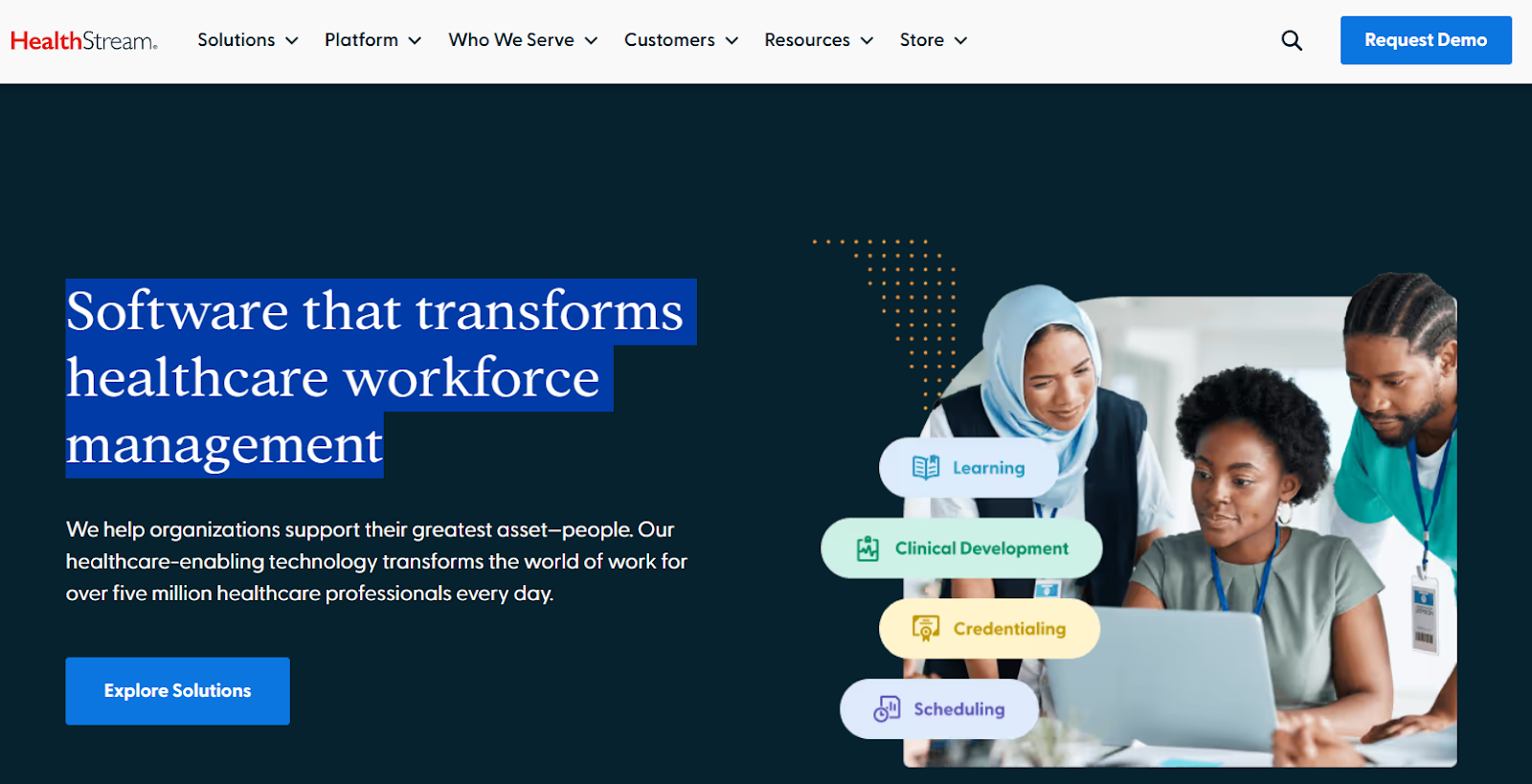
HealthStream is widely used in U.S. hospitals, linking learning to clinical competency, credentialing, onboarding, and patient-safety goals. It also automatically maintains audit‑ready records of certifications and compliance training as part of its core functionality.
Although many large health networks rely on it, HealthStream isn’t the best fit for every type of healthcare organization. Growing teams can find the system rigid, and some users say that advanced reporting and customization feel clunky and hard to use as they scale up.
Key features of HealthStream
- Healthcare-specific compliance and content library: HealthStream offers a large library of pre-built, compliance-ready courses, which is a major benefit for organizations working under regulatory requirements.
- Custom course creation and content upload: Administrators can build custom lessons, upload various content types (video, presentations, assessments), and distribute them to relevant staff groups.
- Performance and competency management integration: HealthStream’s “Performance Center” integrates learning outcomes with performance appraisals, goal-setting, development plans, and recognition, making training a part of talent management and workforce readiness.
- Integrated credentialing: HealthStream’s CredentialStream module handles provider credentialing, privileging, and licensure tracking. It supports onboarding, primary‑source verification, re‑credentialing workflows, and maintains audit-ready documentation for compliance purposes.
c) Oasis LMS
Perfect for: Hospitals, medical associations, and CME/CE providers that need to automate credit tracking and stay fully compliant with accreditation requirements.
Oasis LMS (its Healthcare LMS) is purpose-built for healthcare institutions, medical associations, and accredited education providers. It helps to manage Continuing Medical Education (CME), certification, and compliance workflows.
The platform supports hybrid delivery (live events, on-demand courses, automates credit tracking and certification, and integrates with accreditation systems to create audit‑ready records.
That said, Oasis LMS is mainly for full-scale CME and CE administration with accreditation workflows and detailed reporting. Smaller clinics or teams with basic training needs often find it more complex than it needs to be.
Key features of Oasis LMS
- CME and ACCME‑ready workflows: The platform automates the assignment of CM and credits, provides for partial credit claiming (even .25‑hour increments). It also creates certificates and transcripts that follow the accreditation requirements.
- Organization- and association‑friendly features: Oasis LMS supports employer/organization-level dashboards and also gives you tools for multi-portal or group management (useful for hospital networks, medical associations, hospitals, or institutions with multiple departments).
- Monetization and eCommerce tools: Support group purchasing, subscription models, course bundles, and member vs non‑member pricing. This is particularly useful for medical societies or associations that monetize CME/CE.
- Isolated hosting for each client: Oasis LMS offers a single-tenant architecture (each client gets a separate instance) with a strong security and compliance posture. This is important when handling sensitive healthcare/certification data.
Category 2: The "agile and affordable" (Best for private practices, MedTech, and course creators)
An enterprise-grade method of credential issuance and cross-departmental governance isn't necessary for all healthcare organizations. Most of them need faster ways to build courses, train their staff and partners, and then easily monetize their knowledge without having to wait months to get established.
The platforms below serve those teams.
a) FreshLearn
Perfect for: Private clinics training staff, MedTech companies training partners, and healthcare educators selling medical courses without relying on expensive enterprise LMS platforms.
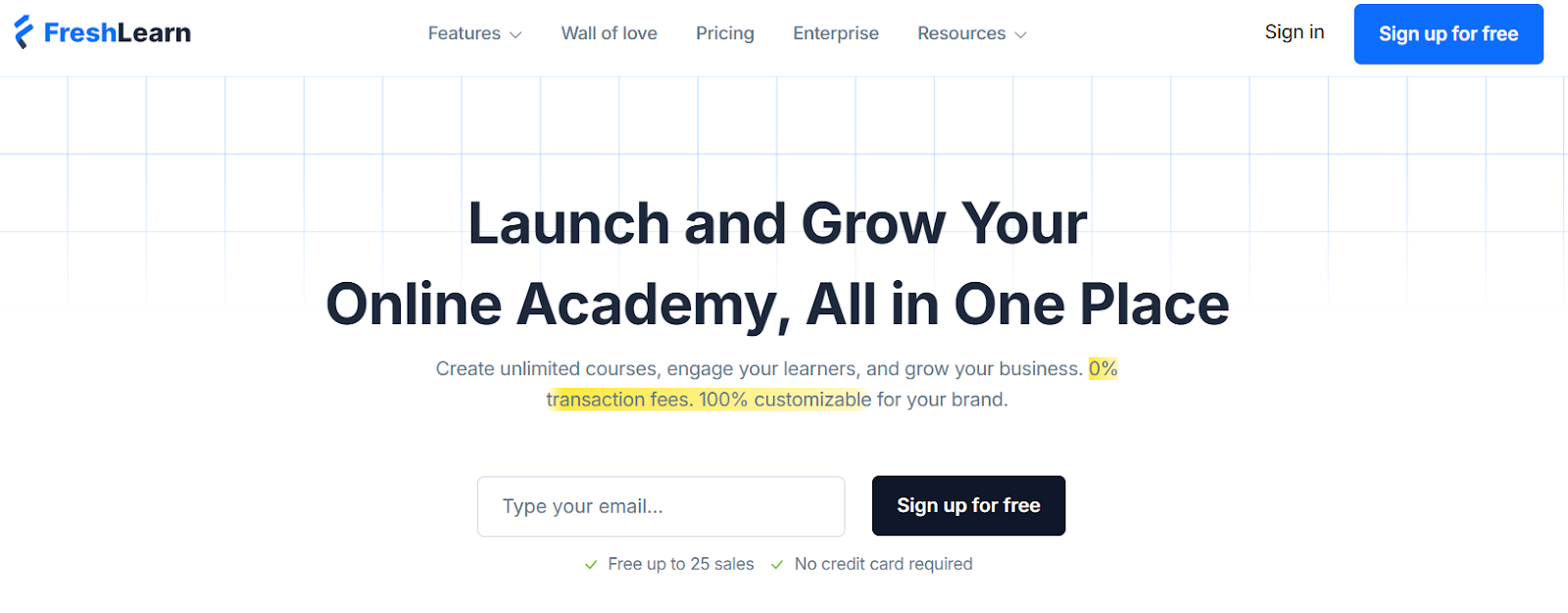
FreshLearn supports small to mid-sized healthcare teams and independent course creators who need efficient, scalable training or CE/CME delivery, without the complexity and cost you will incur in a dedicated enterprise software. It also has SCORM support for enterprise-grade compliance.
It helps build courses, deliver live or on-demand training, automate certification, and manage revenue from medical education on a single platform with ease. The platform also supports recurring education, cohort-based learning, skill paths, and partner-facing training, making it useful for both internal upskilling and external commercial programs.
Teams can build learning products quickly using templates rather than relying on outsourced development. FreshLearn also supports revenue features such as product bundling, coupons, and affiliate marketing, enabling learner acquisition without external marketplace tools.
Still, as FreshLearn targets agile teams and creators, large hospital networks wanting heavy compliance workflows or custom system integration may find it limiting.
Key features of FreshLearn
- Unlimited course creation and flexible delivery formats: Deliver on-demand courses, live cohorts, workshops, video playlists, e-books, and more under a unified system, giving creators flexibility in how they structure training.
- Built-in monetization with 0% transaction fees: Sell courses, memberships, or subscriptions directly through FreshLearn without additional transaction costs, making it suitable for organizations that want to sell CME/CE or training externally.
- Community engagement and discussion spaces: Build learner communities with public or private groups, discussion forums, and interactive spaces where learners can ask questions, share insights, and collaborate.
- Newsletters and email campaigns: Send newsletters, automated emails, and targeted campaigns to keep learners informed, share updates, or drive course participation.
- White-label branding and customizable portals: Provides custom domains and branding so that clinics, MedTech firms, or educators can deliver training under their own name rather than a third-party brand.
- Fast setup and usability for non-technical teams: FreshLearn enables course creators to launch training quickly, even with limited technical skills, removing challenges for small practices or individual educators.
b) TalentLMS
Perfect for: Small to mid‑sized clinics, individual practitioners, and course creators, needing a simple-to-launch, budget-friendly LMS for staff training, partner education, or selling courses.
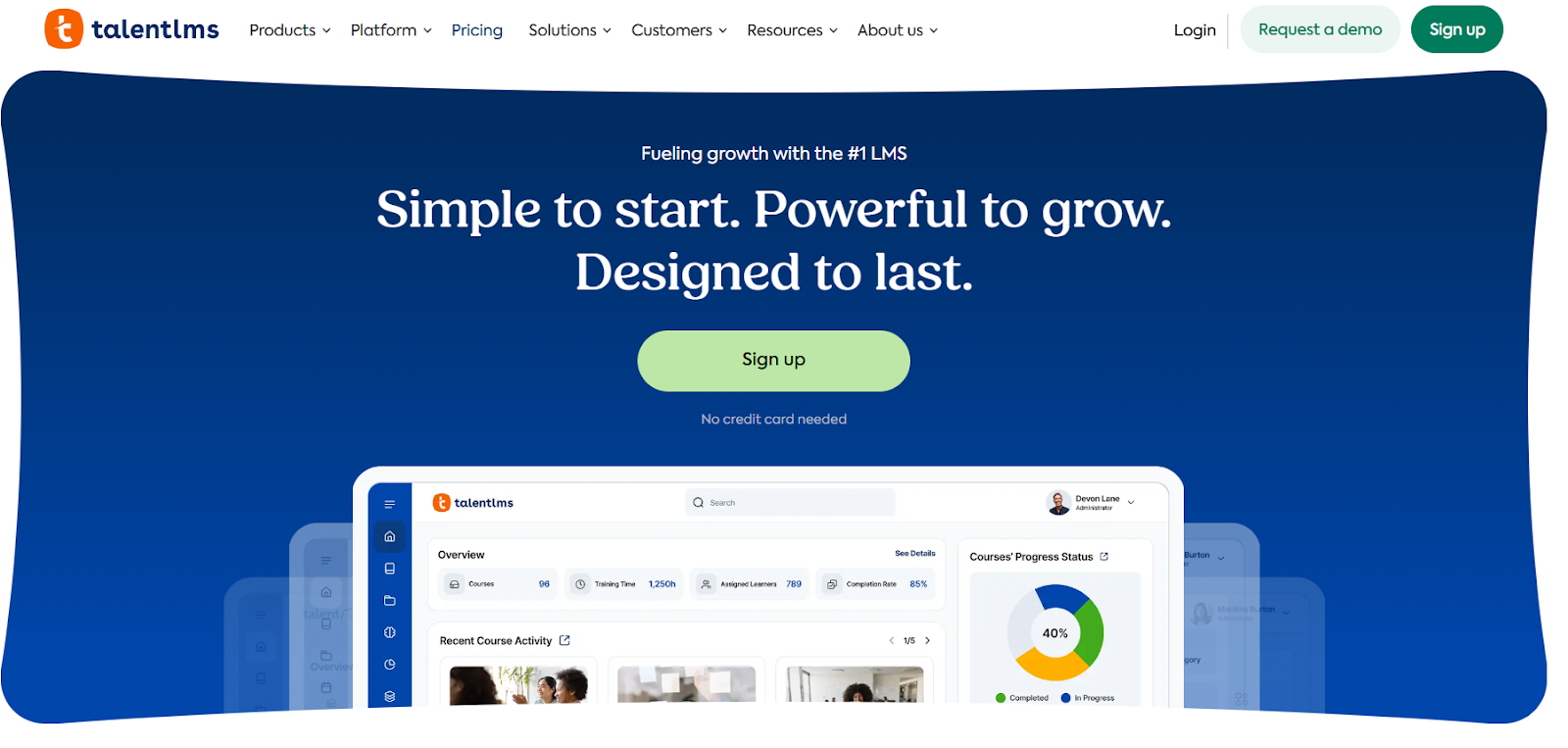
TalentLMS focuses on simplicity and speed, letting instructors, clinics, and course creators set up training programs without heavy technical overhead. The platform emphasizes ease of use, quick onboarding, and straightforward content delivery, which makes it ideal for teams or individuals launching courses for the first time.
Some users point out limitations: reporting and analytics are basic compared to enterprise LMSs, advanced customization options are limited, and the mobile interface still needs improvement.
These factors can make scaling or managing complex training programs more challenging.
Key features of TalentLMS
- Easy course creation and multimedia support: Build courses using videos, PDFs, SCORM/xAPI files, quizzes, and surveys without external authoring tools.
- Blended learning and flexibility: TalentLMS supports self-paced courses, instructor-led sessions, and webinars. This can be useful for clinics combining online modules with hands-on training.
- Groups, branches, and role‑based access control: Organize users by department, team, or role, assign courses accordingly, and manage permissions; helpful when different staff roles (nurses, admin, tech) need different training.
- Built‑in eCommerce and monetization support: If you intend to sell courses externally (to other clinics or partners), TalentLMS supports course payment, pricing, and user enrolment for medical educators, trainers, or small teaching practices.
c) EducateMe
Perfect for: Small teams, startups, independent educators, or organizations delivering cohort‑based training or partner/customer onboarding who want a flexible LMS without enterprise‑scale complexity.
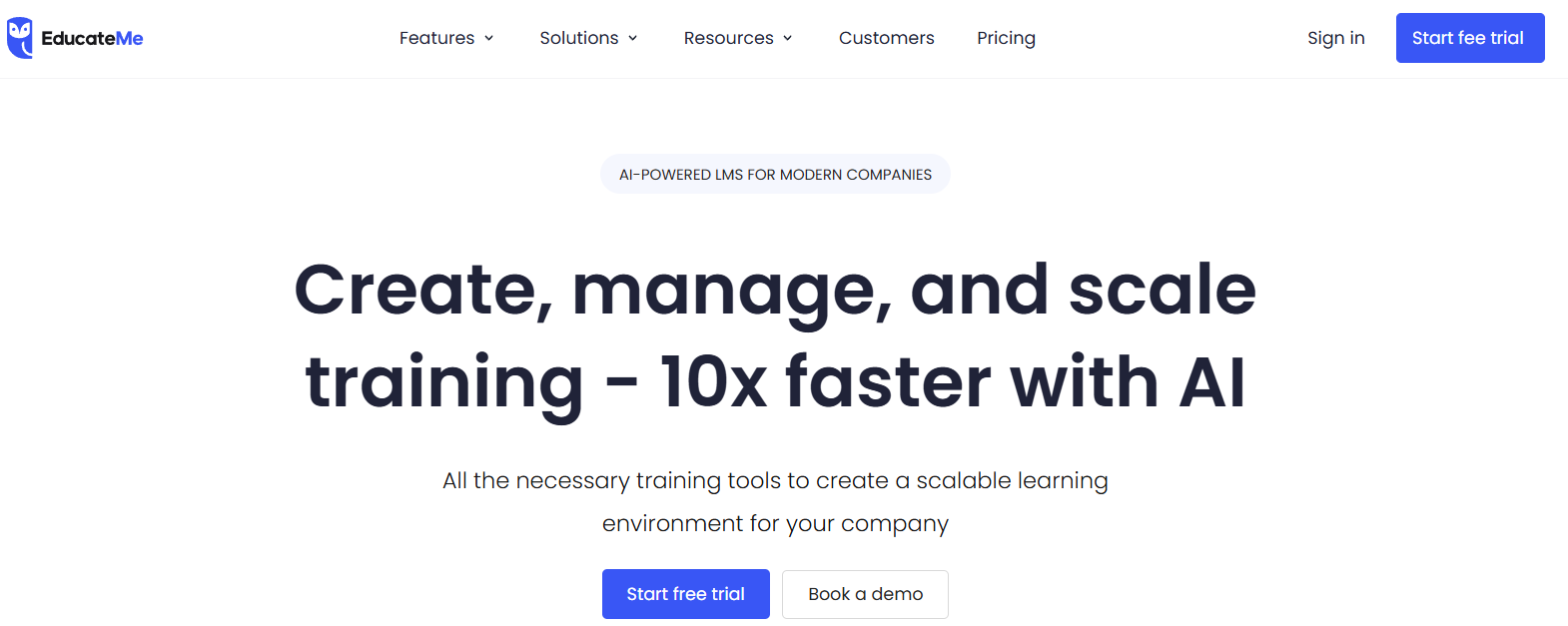
EducateMe delivers a clean LMS that mixes flexible content creation, cohort‑based learning, automation, and community features. It suits teams that want to run structured programs, whether live sessions, self‑paced courses, or blended tracks.
It has minimal setup time and straightforward workflows. Also, its automation tools simplify enrolment, reminders, progress tracking, and feedback loops.
However, some users report that EducateMe lacks flexibility in customization and deeper feature support. For instance, the content editor and layout options remain inflexible.
A few users also say that EducateMe lacks certain features that could improve engagement and compliance-readiness, such as advanced gamification, which reduces learners' motivation.
Key features of EducateMe
- Cohort and user management with automation: The platform allows tagging, cohort‑based course assignment, automated enrolment workflows for your training, helps send reminders, and provides progression tracking. All of these will be useful for onboarding clients, partners, or staff.
- Community and collaboration tools: EducateMe includes built-in community features: discussion groups, chats, and forums inside courses, creating engagement, peer interaction, and collaborative learning.
- Program or library structure for organized content delivery: Trainers can organize their courses into structured paths or content libraries, using modules, lessons, and resources. This, in turn, helps learners to easily find their material and follow a clear progression.
- Live‑session integration + automation and analytics: EducateMe integrates live‑session tools (like Zoom), automates scheduling, sends reminders, and tracks completions/performance, giving admins a central dashboard to track learner journeys.
How to switch LMS platforms without headaches
Most LMS platforms boast their feature offerings, but very few address the most painful part of the journey: migration.
Organizations that want to switch platforms often feel trapped by vendor lock-in, worried they’ll lose course data, learner history, certifications, and progress reports if they move.
The result? Many teams stay on outdated platforms simply because switching feels risky and exhausting. But switching doesn’t have to be challenging. A simple migration checklist reduces uncertainty and ensures that you lose nothing important in transition:
Step 1: Audit your learning content
List all course materials you’ll move: SCORM/HTML5 modules, videos, PDFs, quizzes, live session recordings, certifications, and automation workflows.
Step 2: Export learner data + history
Download user lists, enrollments, progress history, assessment scores, feedback, and certification records. All these are usually available in CSV format on most LMSs.
Step 3: Choose an LMS partner that offers free migration services
This is where switching becomes effortless. Instead of manually uploading files and rebuilding learning paths, choose a platform that transfers courses, members, and progress for you.
FreshLearn does this end-to-end using our dedicated migration team. Meaning, teams don’t spend weeks re-creating their learning ecosystem. Our team will move your content, learners, and data without interruption to your programs.
Conclusion and next steps
Not every healthcare LMS needs to be a heavyweight compliance engine; sometimes the priority is agility.
Hospitals that require ACCME-level integrations, credentialing procedures, and learning structures (that are policy-based) will be more at home with platforms like Relias, Oasis LMS, and HealthStream, built for large institutional governance and long onboarding cycles.
But healthcare teams that value speed of setup, ease of use, recurring education, and the ability to turn training into a scalable revenue stream don’t need that level of complexity.
They need a platform that lets them launch programs quickly, iterate fast, and grow without depending on IT or external course development.
Here, FreshLearn is a practical and scalable option. Create your free FreshLearn account and see why it’s the new favorite.
Frequently asked questions (FAQ)
1. What is an LMS in healthcare?
A Healthcare Learning Management System (LMS) is a digital platform that hospitals and medical organizations use to train staff, manage continuing medical education (CME), track clinical certifications, and ensure compliance.
It centralizes learning materials, tracks employee progress, automates renewal alerts, and helps maintain regulatory readiness.
2. What is the difference between CMS and LMS?
- A CMS (Content Management System) stores and publishes digital content such as web pages, blogs, or documents.
- An LMS (Learning Management System) delivers and tracks training programs, assessments, certifications, and learner progress.
In short, CMS manages content. LMS manages learning.
3. What is the difference between a Hospital LMS and a Corporate LMS?
- A Hospital LMS primarily supports clinical training and accreditation workflows. It includes CME credit tracking, license renewals, compliance reporting, and audit-ready documentation.
- A Corporate LMS focuses on workplace learning and performance enablement, such as onboarding, soft skills, product training, and partner or customer education.
Both are training platforms, but they differ in terms of learning and regulatory requirements.
4. Can I use an LMS to sell medical courses?
Yes. Many modern LMS platforms allow medical professionals and educators to monetize their expertise through courses. Some systems also support live cohorts, paid memberships, bundled programs, and certification-based training.
5. Which two are examples of an LMS?
- FreshLearn
- Relias
Healthcare teams, MedTech companies, and professional educators actively use these platforms for training and course delivery.
You might also like
Hosted by
