What Is Certification Management Software?

Quick Answer
Certification management software is a platform that runs the lifecycle of a credential: issuing it, verifying it, gating it behind assessment rules, tracking renewals, and keeping records an auditor can ask for later. The confusing part is that four different kinds of software get sold under the same phrase, aimed at four different buyers: certificate issuers, workforce license trackers, board-level credentialing bodies, and training providers who issue their own credentials. Figuring out which buyer you are is most of the decision. A CE provider issuing credit hours needs almost nothing that a national credentialing board needs, and vice versa.
Key Takeaways
- Certification management software handles the credential itself (issuance, verification, gating, renewal, records), not just the course content that leads up to it.
- Four distinct product categories share the "certification management software" label: bulk certificate issuers, workforce license trackers, association-grade credentialing systems, and training platforms with built-in credentialing.
- Certificate management and certification management are not the same category. A certificate tool designs and sends a document; a certification system enforces the standard behind it.
- The distinction is formalised in international standards: ISO/IEC 17024 governs bodies certifying persons, while ANSI/ASTM E2659 is the separate standard practice for certificate programs.
- Association-grade tools like Momentive, Cobalt, and ARMATURE handle applications, eligibility review, and recertification cycles; they are priced and scoped for credentialing boards, not individual providers.
- CE providers and training academies typically need issuance gating, seat-time tracking, verifiable certificates, and exportable audit records; they rarely need eligibility review workflows.
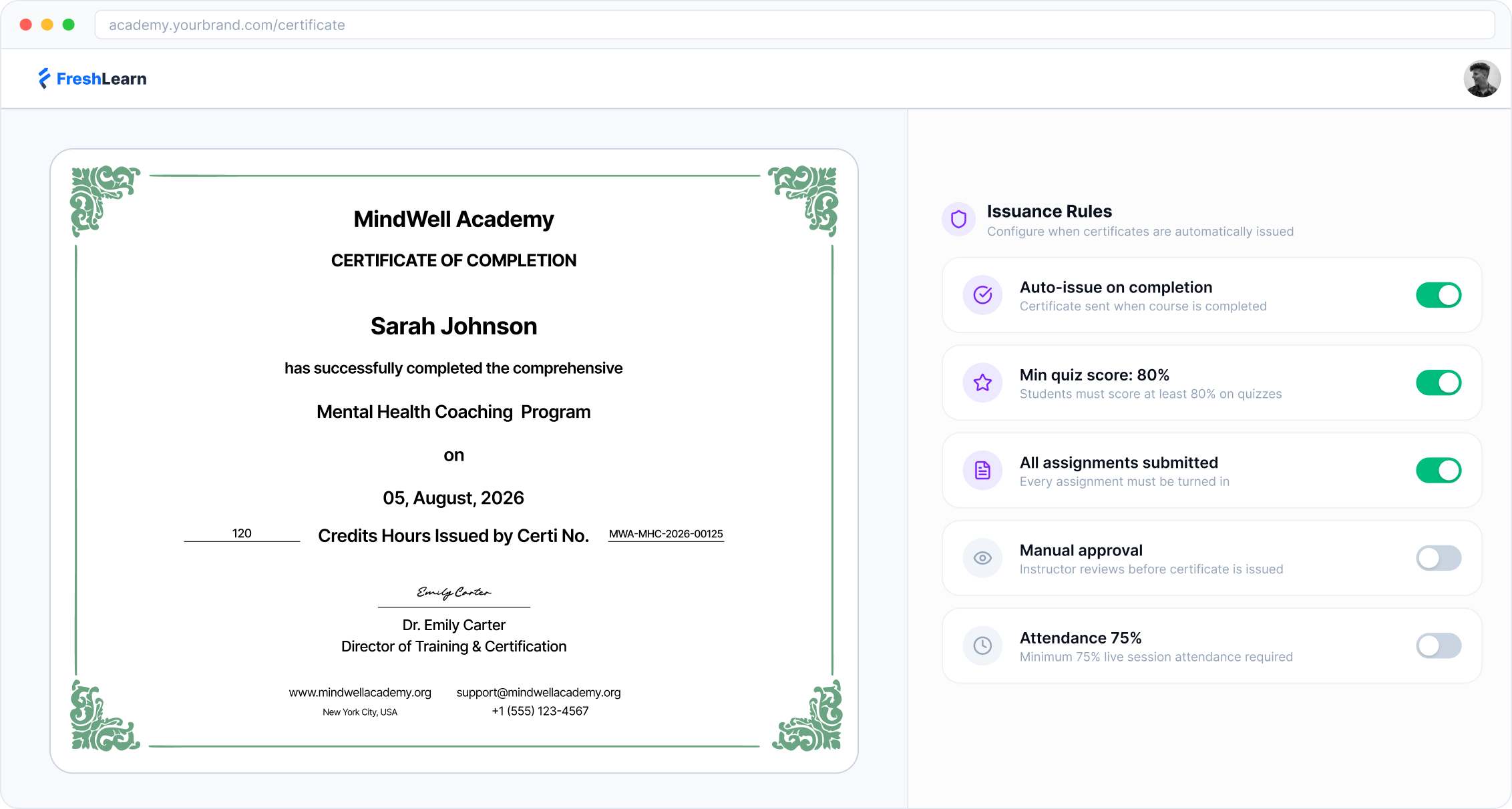
- A defensible certification record captures at minimum the recipient's full legal name, completion date, score against the stated pass threshold, unique certificate ID, credit hours where applicable, and the issuing organization.
- FreshLearn auto-issues certificates with unique serial numbers, public verification pages, and QR codes, and gates issuance on completion, minimum exam score, verified attendance or seat-time, and a completed evaluation.
- FreshLearn does not run application review, eligibility scoring, or automated recertification cycles; providers needing those belong on association-grade credentialing software instead.
The phrase means four different things
Search "certification management software" and the results look like they're describing one product category. They aren't. Four distinct types of software share the label, and the difference matters because buying the wrong one is expensive in both directions.
Certificate issuance tools. These design and send certificates at scale: templates, branding, dynamic fields, bulk generation, a dashboard of who opened what. Certifier and Accredible sit here. They're good at producing the document and bad at enforcing what the document claims, because that isn't what they're for.
Workforce license tracking. Built for HR and compliance teams watching credentials that other people earned: which nurses have licenses expiring in 60 days, which technicians are overdue on recertification. The software doesn't issue anything. It watches expiry dates and chases people. Certemy and MyComply are examples, and you'll often see this category called certification tracking software rather than management software.
Association-grade credentialing systems. Momentive, Cobalt, and ARMATURE build for credentialing boards and professional associations running formal certification programs. That means application intake, eligibility rules, documented references and transcripts, exam vendor integrations (Pearson VUE, Prometric), recertification cycles, and committee review workflows. Heavy machinery, appropriately priced.
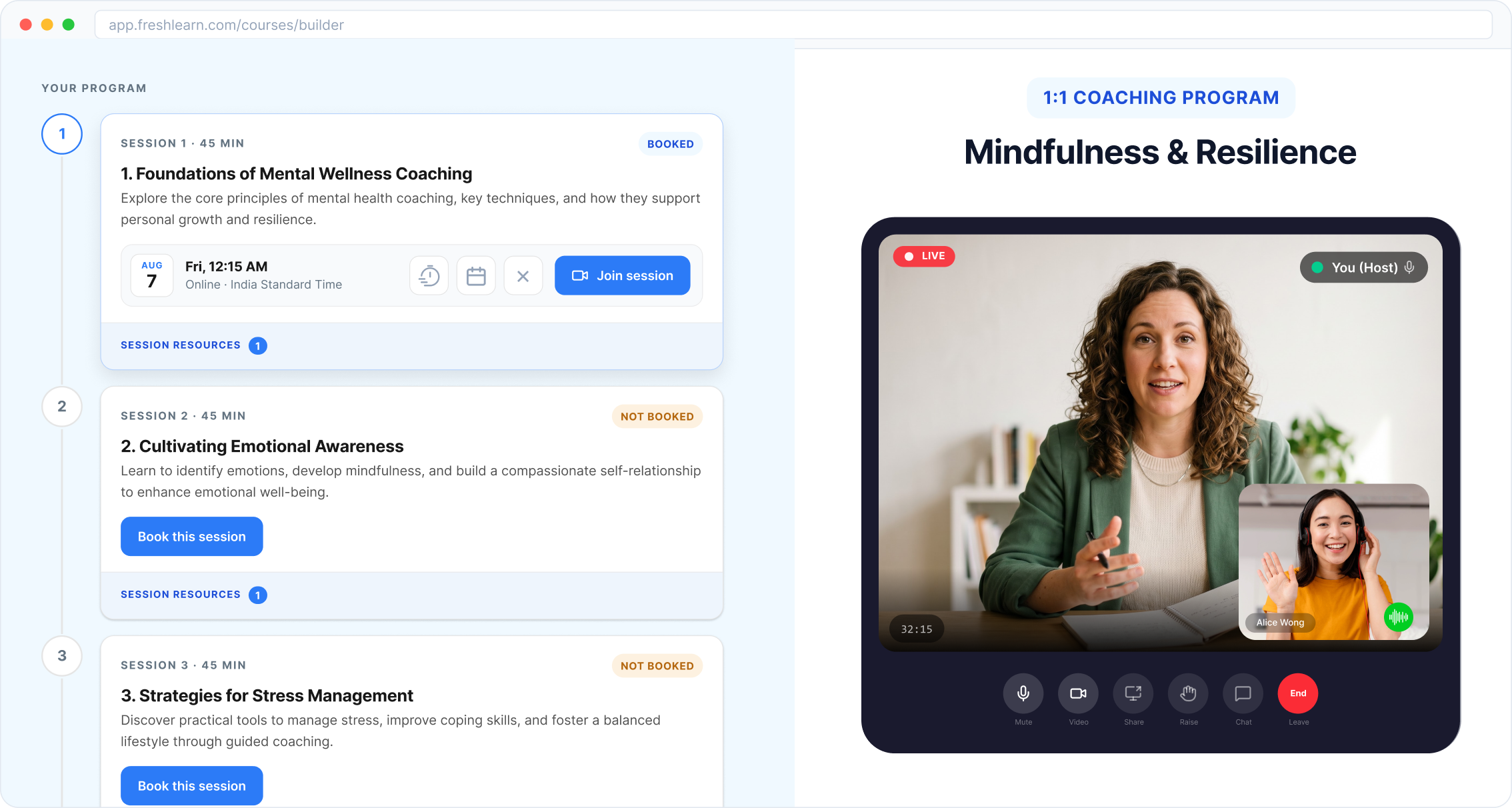
Training platforms with credentialing built in. This is where CE providers, training academies, and individual certifiers usually land. You're teaching the content and issuing the credential, so you need both jobs handled in one place: assessment, gating, certificate issuance, verification, and records.
Certificate management is not certification management
This distinction gets blurred constantly, and it's worth being precise about because vendors on both sides benefit from the fog.
Certificate management is about the document: generating it, branding it, delivering it, storing it. Certification management is about the standard behind the document: did this person actually meet the criteria, can a third party confirm it, and can you produce the evidence if challenged?
That's not just a marketing distinction. It's codified in separate international standards. ISO/IEC 17024 sets the requirements for bodies operating certification of persons, and it is assessment-based: under that standard, a certification can only be conferred on someone who has passed a competency-based examination that is fair, valid, and reliable. Certificate programs are covered by a different standard entirely, ANSI/ASTM E2659, precisely because they're a different kind of thing.
You almost certainly don't need ANAB accreditation to run a legitimate program. But the fact that standards bodies felt the need to write two separate standards tells you the categories genuinely differ, and it's a useful sanity check when a vendor claims one piece of software covers both jobs.
If your certification requires reviewing transcripts, verifying supervised practice hours, checking professional references, and convening a committee to approve candidates, an LMS is genuinely the wrong tool. You need credentialing software, and no feature comparison will change that.
But most people searching this term aren't running a national credentialing board. They're running a CE program or a training academy where the standard is: complete the content, pass the exam, put in the verified hours, submit the evaluation. That standard is fully enforceable inside a well-built learning platform, and routing it through association-grade software would be paying for machinery you'll never switch on.
If you're still working out whether what you're building is a certificate or a certification in the first place, that distinction is worth settling before you shop for software; there's a full breakdown of certificate vs certification covering what each term commits you to.
What the software actually does
Strip away the category differences and certification management software does some subset of six jobs.
Issuance. Generates the credential automatically when conditions are met, personalized with the recipient's name, the standard achieved, credit hours where relevant, and the issuing organization's details.
Gating. Enforces the conditions before issuance. This is the feature that separates a certification from a participation trophy: a minimum exam score, verified attendance, a required evaluation, or all three in combination.
Verification. Gives the credential a unique identifier and a way for an outside party (employer, board, client) to confirm it's real without contacting you. Usually a serial number plus a public verification page, often with a QR code.
Tracking. Monitors who holds what, at what score, earned when. In workforce-tracking tools, this extends to expiry dates and renewal reminders.
Renewal and recertification. Handles credentials that expire on a cycle: reminders, re-enrollment, credit accumulation toward the next cycle.
Records and reporting. Keeps an exportable history of enrollments, attendance, scores, evaluations, and issued credentials. This is the boring one that becomes the only one that matters the day an auditor asks.
Most tools do three or four of these well and gesture at the rest. Work out which three actually matter for your program before you compare feature lists.
What a certification record needs to capture
This is the part that stays invisible until someone asks for it, and then it's the only thing that matters. Plenty of programs issue thousands of clean-looking certificates and still fail a review, because the record behind the certificate is missing a field nobody thought to configure on day one.
At minimum, every record should hold:
- Full legal name, matching whatever identity document your field requires.
- Completion date: the day the standard was actually met, not the day the certificate was emailed.
- Score achieved and the pass threshold it was measured against. A score with no stated threshold proves nothing.
- Unique certificate ID or serial number, traceable back to this specific person and program.
- Credit hours earned, with the credit type, for CE and CPD programs.
- Expiration date, where the credential expires.
- Issuing organization and program name, plus your provider approval number if you hold one.
Regulated fields usually want more. Healthcare CE often needs the specific version of the training completed, since clinical guidance shifts; finance typically needs the regulatory module and the rules in effect on the completion date.
The test to apply: could you answer a compliance question about a credential you issued four years ago without contacting the person who earned it? If not, your record is incomplete, and the software you choose should be the thing that fixes that rather than the thing that hides it.
How renewal and recertification actually work
Renewals are where most programs quietly break, usually because the credential was designed carefully and its expiry was designed not at all.
A working renewal cycle runs in five stages. The certificate issues with a firm expiration date attached from the start. The credential sits active while the holder uses it. A pre-expiry window opens (90 days out is the common default) and automated reminders begin. The holder completes whatever the renewal path requires: a retake, accumulated CE credits, or a refresher module. A fresh certificate issues with a new expiry date.
Three rules worth setting deliberately rather than inheriting from a template:
- Your renewal window. Ninety days of lead time gives people room to actually complete the requirement rather than panic-buying credits in the final week.
- A grace period. Thirty days after expiry, during which someone can complete the renewal without restarting from zero, prevents a missed email from becoming a lapsed credential and a support ticket.
- Your renewal paths, stated explicitly. A credential renewed by exam, one renewed by logged CE hours, and one renewed by a short refresher are three different workflows, and the system needs to log which route each person took. That's the first thing an auditor asks about.
Worth knowing before you shop: renewal automation is the single most unevenly implemented feature in this category. Tools built for workforce tracking and association credentialing handle it natively. Most certificate issuers and most learning platforms, FreshLearn included, are built around earning the credential rather than managing its expiry. If recertification cycles are structural to your program rather than incidental, check this capability specifically and early.
The case for replacing the spreadsheet
Almost every certification program starts in a spreadsheet, and for the first year that's a perfectly reasonable choice. The failure mode isn't the spreadsheet itself; it's that the spreadsheet quietly stops being accurate before anyone notices.
Three things tend to go wrong at once. Reminders depend on a person remembering to send them, so they stop when that person goes on leave. Copies proliferate, and two files disagree about the same learner with no way to tell which is right. And small gaps (a missing score, an unlogged evaluation, a lapsed credential nobody flagged) stay hidden until the exact moment they're expensive.
The honest pitch for software here isn't efficiency. It's that the records survive staff turnover, and that a board request becomes a five-minute export rather than a two-week reconstruction.
What CE providers and training academies specifically need
If you're issuing continuing education credit, the requirements narrow considerably, and they're driven by what a licensing board will ask for rather than by what looks impressive in a demo.
Seat-time or attendance has to be genuinely verifiable. Not self-reported, not assumed from a completion checkbox. If a learner can skip through video at 2x speed with the tab in the background, the contact hours behind that credit don't survive scrutiny.
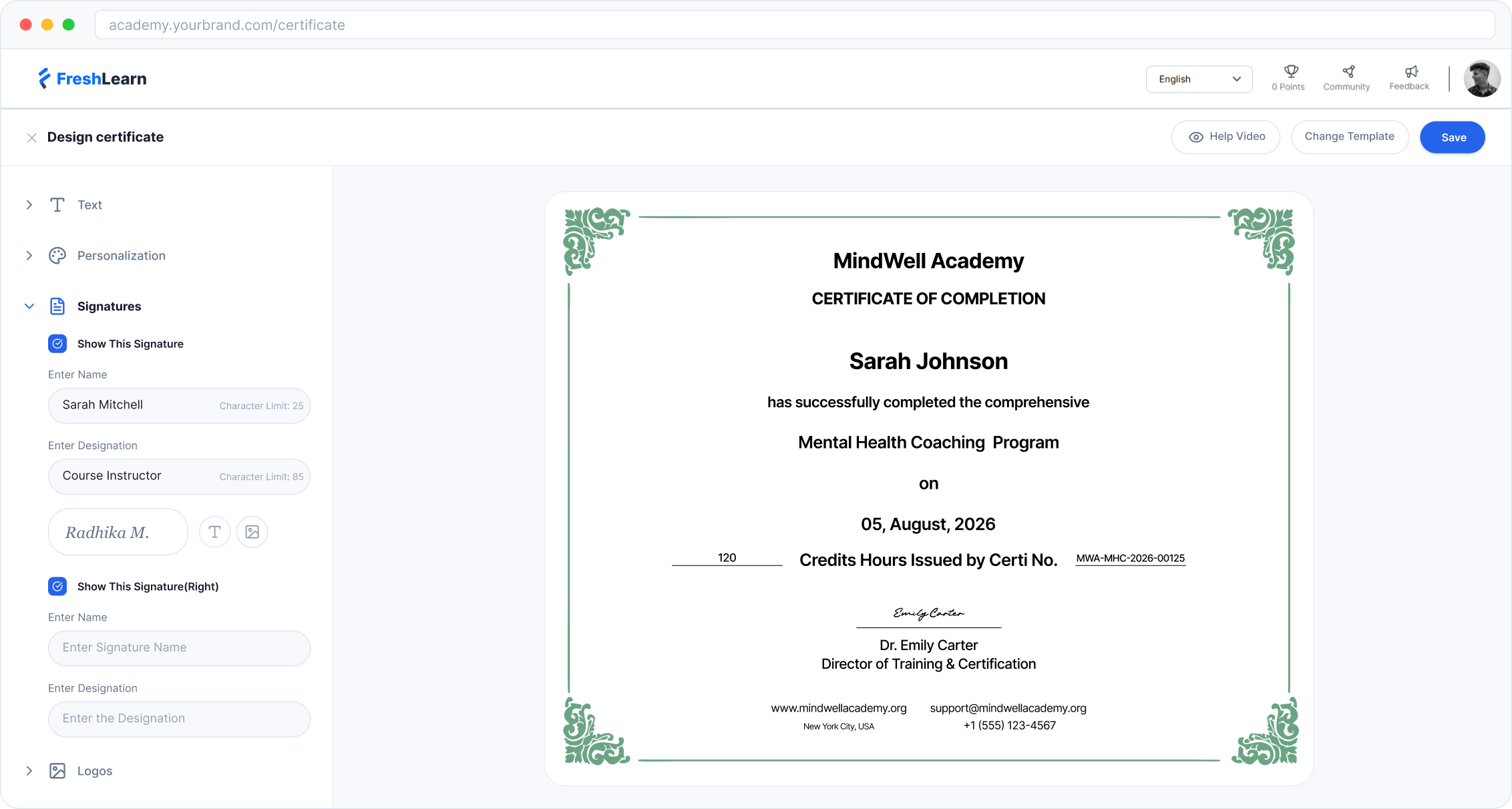
Certificates need the provider approval number and credit hours printed on them, because that's what boards actually check.
Issuance needs to be conditional on your rules, not on finishing the last video. Most boards expect some combination of completion, a passing score, and a completed evaluation.
Records need to be exportable in minutes, not reconstructed from three systems and a spreadsheet.
None of that requires application review or eligibility scoring. That's the gap between what CE providers need and what association-grade credentialing software is built for, and it's why the pricing difference between the two categories is so large.
FreshLearn is built for this middle case. Certificates auto-issue with a unique serial number, a public verification page, and a QR code, and issuance can be gated on full completion, a minimum exam score, verified attendance or seat-time, and a completed course evaluation, in whatever combination your board requires. The video player can disable skip-ahead and playback speed and require a full view before a lesson counts, so the contact hours are real rather than nominal. FreshLearn's mental health CE tools keep an exportable history of enrollments, attendance, scores, evaluations, and issued certificates for board audits. Zero transaction fees and white-label branded iOS and Android apps are included rather than priced as add-ons.
Two honest limits worth stating plainly. FreshLearn does not run application intake, eligibility review, or committee approval workflows, and it does not manage automated recertification cycles the way a dedicated credentialing system does. If your program needs those, you want Momentive, Cobalt, Certemy, or a comparable platform, and no amount of feature-stretching changes that.
FreshLearn also isn't an accrediting body. You bring your own board approval (NBCC ACEP, ASWB ACE, APA, or a state board); the platform gives you the tools to deliver and certify to that approval's requirements.
How to choose without overbuying
Start with the question nobody's software marketing asks: what happens when someone challenges a credential you issued?
If the answer involves pulling up a record of what that person did and when, you need tracking and exportable records. If it involves a third party confirming the credential is real, you need serialized certificates and public verification. If it involves defending that they met a standard, you need gating.
Then check what you don't need. If nobody applies to your program (they enroll), you don't need application workflows. If your credential doesn't expire, you don't need recertification cycles. If you're not integrating with a proctored exam vendor, you don't need exam-vendor connectors.
Each of those absences knocks out an entire product tier and a substantial chunk of cost.
Two checks that are easy to skip and expensive to skip. First, ask what happens at ten times your current volume, and specifically whether the price scales with learners, with credentials issued, or with admin seats; those three models produce wildly different bills at scale. Second, run a demo against your own data rather than the vendor's sample set, and try to export an audit file. If that's awkward in a demo, it will be worse at 2am before a board deadline.
One last check: whoever is going to run this day to day should be able to configure the issuance rules themselves. A system where changing a pass threshold means filing a support ticket will quietly stop reflecting your actual standard within a year.
If you're building the program itself rather than just shopping for the tool, the step-by-step guide to creating a certification program covers curriculum design and pass criteria before the software question comes up.
Working out which one you need
Most of the difficulty here is category confusion, not feature comparison. Once you know whether you're issuing credentials, tracking someone else's, or running a formal credentialing body, the shortlist shrinks fast.
If you're a CE provider or training academy issuing your own credentials and want to see how gating, seat-time tracking, and verification work in practice, book a demo and we'll walk through your program's specific requirements.
FAQs
1. What is certification management software?
Certification management software is a platform that handles the lifecycle of a professional credential: issuing it, enforcing the conditions required to earn it, letting third parties verify it, tracking who holds it, and maintaining records for audit. It is distinct from a standard course platform, which handles content delivery, and from certificate design tools, which produce the document without enforcing the standard behind it.
2. What's the difference between certificate management and certification management software?
Certificate management software focuses on the document: designing, generating, branding, and delivering certificates, often in bulk. Certification management software focuses on the credential: confirming eligibility, enforcing assessment or attendance conditions before issuance, managing recertification, and holding the evidence that the standard was met. The split is formalised in standards: ISO/IEC 17024 covers bodies certifying persons and requires competency-based examination, while certificate programs fall under the separate ANSI/ASTM E2659 standard practice. A tool can do the first without doing the second, which is where a lot of buyer confusion comes from.
3. Do I need dedicated software, or can a course platform handle it?
It depends on how your standard is verified. If earning the credential means completing content, passing an exam, meeting attendance requirements, and submitting an evaluation, a learning platform with real gating and verification handles that fully. If it means reviewing applications, checking transcripts and professional references, verifying supervised practice hours, or convening a review committee, you need dedicated credentialing software; a course platform cannot collect or adjudicate that.
4. How much does certification management software cost?
Pricing splits along the four categories. Certificate issuance tools and training platforms with built-in credentialing generally publish their pricing and run from free tiers with volume caps up to a few thousand dollars a year. Workforce license tracking is typically priced per tracked user per month, so cost scales with headcount rather than credentials issued. Association-grade credentialing systems are almost always quote-only and land considerably higher, because they include application workflows, exam vendor integrations, and committee review. Verify current figures directly with each vendor before budgeting; published pricing in this category changes often, and roundup articles go stale fast.
5. Is there free certification management software?
Yes, with meaningful limits. Several certificate issuance tools offer free tiers capped at a low annual credential volume (a few hundred), and some learning platforms include certificate issuance on free or entry plans. What free tiers rarely include is the part that makes a credential defensible: configurable pass thresholds, verified attendance tracking, white-labelled verification pages, and exportable audit records. Free is a reasonable way to test issuance mechanics; it's rarely where a compliance-bound program ends up.
6. What features actually matter for CE providers?
Four, in practice: verifiable seat-time or attendance tracking behind every credit hour; certificates displaying credit hours and your provider approval number; issuance gated on your board's specific conditions (completion, passing score, evaluation); and an exportable record of all of it. Application review and eligibility scoring, which dominate association-grade tools, are rarely relevant to a CE provider.
7. How long should certification records be kept?
Three to seven years is a common baseline, but the number that matters is whatever your specific board, accreditor, or regulator sets, and several require considerably longer. Storage is cheap, and deletion is irreversible, so the safer error is keeping records too long rather than too short. Confirm the retention period with your approving body and check that your platform can export the full record set, not just a certificate list, before you need it.
8. Does certification management software make my program accredited?
No. Software delivers and documents a program; it does not approve it. Accreditation or provider approval comes from the relevant body (NBCC, ASWB, APA, a state licensing board, or an accreditor like ANAB under ISO/IEC 17024), and you apply for it separately. What the software does is let you deliver and certify to that body's requirements once you hold the approval.
9. Can certification management software handle renewals and expiring credentials?
Some can, some can't, and this is worth checking specifically rather than assuming. Workforce license tracking tools and association-grade credentialing systems are built around renewal cycles and expiry reminders. Certificate issuance tools and most learning platforms, including FreshLearn, are built around earning the credential rather than managing its expiry, so if recertification cycles are central to your program, confirm that capability before committing.
10. What's the difference between an LMS and certification management software?
A learning management system delivers and tracks content: courses, lessons, progress, quiz scores. Certification management software manages the credential that results from the learning, including verification, renewal, and audit records. Some platforms do both; some specialize and integrate with each other. The practical question is whether one system can enforce your standard and produce your records, or whether you'll be reconciling two systems every time someone asks a question.
Hosted by