
Best Substack Alternatives for Course Creators and Educators

Last updated: August 14, 2026
Quick Answer
Ghost and Beehiiv are the strongest Substack alternatives if your newsletter is the product itself; Kit and MailerLite are the strongest if your newsletter supports a course or digital product business; FreshLearn is the strongest if you want newsletters, courses, community, and digital products on one platform. Substack charges a 10% cut of paid subscription revenue; every alternative here charges 0% platform fee, though pricing structures differ: Ghost starts at $15/month (billed annually) but requires its $29/month Publisher plan to accept paid subscriptions, Beehiiv starts at $43/month (billed annually), Kit starts at $33/month (billed annually), and FreshLearn starts at $41/month (billed annually). The right choice depends on whether you're building an audience of readers or a business of students.
Key Takeaways
- Ghost's Starter plan costs $15/month billed annually ($18/month monthly) but no longer supports paid subscriptions; monetizing with paid memberships requires the Publisher plan at $29/month billed annually ($35/month monthly).
- Beehiiv's Scale plan costs $43/month billed annually ($49/month monthly) and includes 0% platform fee on paid subscriptions, a built-in ad network, and referral tools Substack doesn't offer.
- Kit's Creator plan costs $33/month billed annually ($39/month monthly) for 1,000 subscribers, following a price increase in September 2025; its free Newsletter plan remains free up to 10,000 subscribers.
- MailerLite's Growing Business plan costs $9/month billed annually ($10/month monthly) and includes digital product sales, automation, and landing pages.
- Mailchimp's Essentials plan costs $13/month for 500 contacts, and its free plan is limited to 250 contacts and 500 monthly sends as of a January 2026 reduction.
- FreshLearn's Pro plan costs $41/month billed annually ($49/month monthly) and is the only platform here that bundles email marketing with course hosting, digital downloads, and community in one product with 0% transaction fees on all plans.
- Every alternative on this list charges 0% of subscription revenue, compared to Substack's 10% cut; on $5,000/month in subscription revenue, that's $6,000/year kept instead of paid to the platform.
Substack works well for one specific type of creator: a writer who wants to build a paid newsletter audience and doesn't need much else. If that's you, Substack is fine.
But if you're a course creator or educator who wants a newsletter as part of a broader business — alongside courses, digital downloads, a community, or live sessions — Substack starts to feel limiting pretty quickly.
The 10% revenue cut compounds as you grow. You can't sell anything other than newsletter subscriptions. Your audience data is theirs as much as it's yours. And there's no real path to building the kind of multi-product creator business that most educators are working toward.
This guide covers the best Substack alternatives, with honest assessments of what each one is actually good for — especially for educators who want more than just a writing platform. Pricing below is verified as of August 2026.
Quick comparison: Substack alternatives at a glance
The honest guide: what each platform is actually good for
1. Ghost
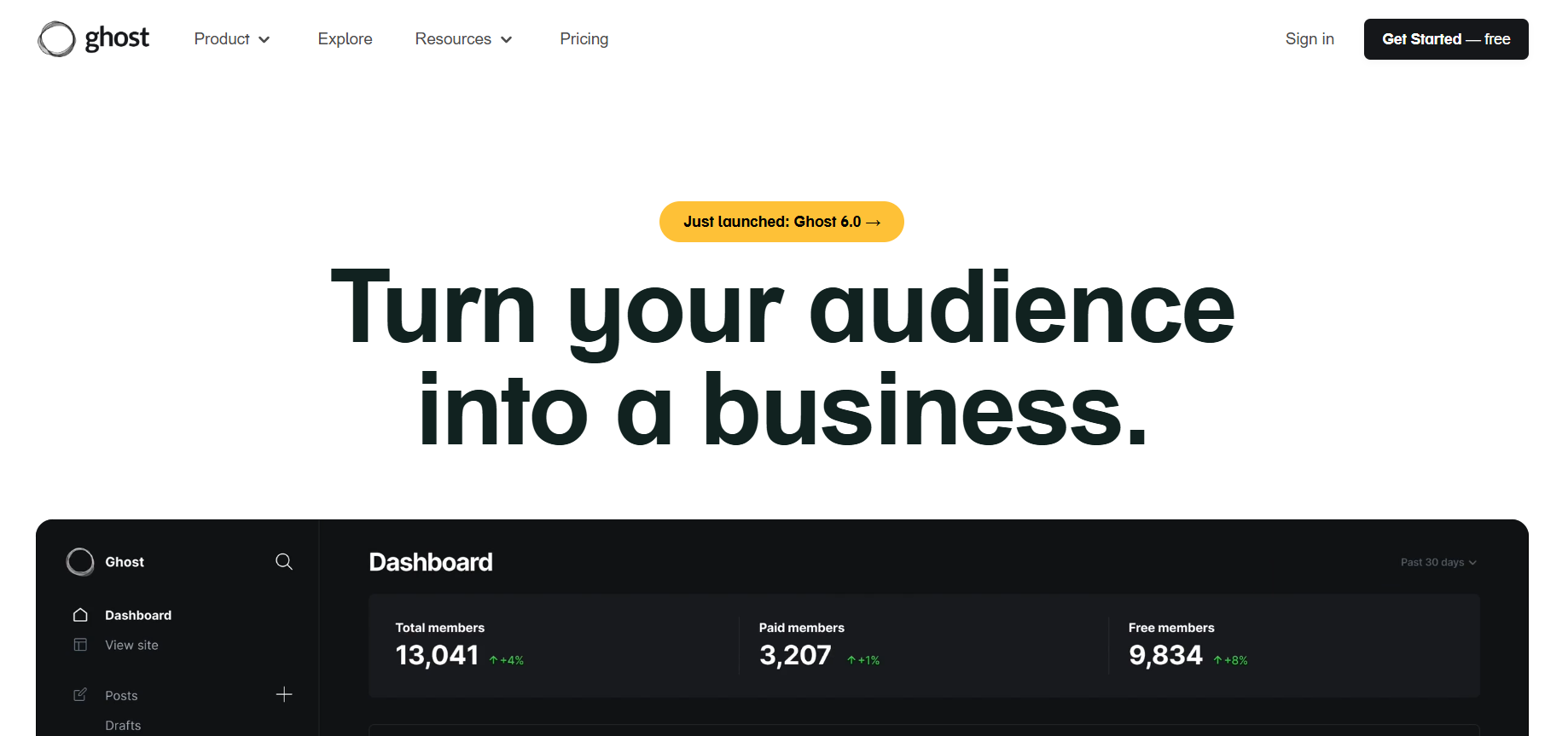
Best for: Writers and educators who want full ownership, clean design, and zero platform fees — and are comfortable with some technical setup.
Ghost is the most direct Substack alternative for anyone whose primary output is written content. It's open-source, nonprofit, and obsessively focused on one thing: helping writers publish and monetize without a platform taking a cut.
What makes Ghost genuinely different from Substack:
Full ownership. Self-hosted Ghost means you own everything — your content, your subscriber list, your infrastructure. No platform can change its terms and affect your business. For educators who have spent years building an audience, this matters.
0% revenue cut. Ghost charges nothing on paid subscriptions. On Substack, a creator earning $5,000/month in subscriptions is handing $500/month — $6,000/year — to the platform. At scale, that's a meaningful difference.
Real design control. Ghost lets you customize themes, layouts, and branding to your exact specifications. Substack publications mostly look like Substack publications.
Native memberships and paid tiers. You can offer free and paid tiers, gate specific content, and run a full membership model — all natively, without third-party integrations.
The honest limitation: Ghost is not an all-in-one creator platform. It doesn't host courses, manage digital downloads, or run communities. If you're an educator who needs email and courses on the same platform, Ghost is only half the solution. You'd need to pair it with a course platform, which adds cost and complexity.
A second honest limitation: Ghost's entry-level Starter plan does not support paid subscriptions at all. If monetizing your newsletter is the goal, budget for the Publisher plan from the start rather than starting on Starter and expecting to upgrade later without friction.
Ghost pricing: Self-hosted Ghost is free (you cover server costs). Ghost's managed hosting (Ghost Pro) has three tiers: Starter at $15/month billed annually ($18/month monthly) for up to 1,000 members, which does not include paid subscriptions; Publisher at $29/month billed annually ($35/month monthly) for up to 1,000 members, which unlocks paid subscriptions, custom themes, and full integrations; and Business at $199/month billed annually ($239/month monthly) for larger teams and higher member limits. All plans charge 0% platform fee on the subscription revenue they support; only standard payment processing fees apply.
2. Beehiiv
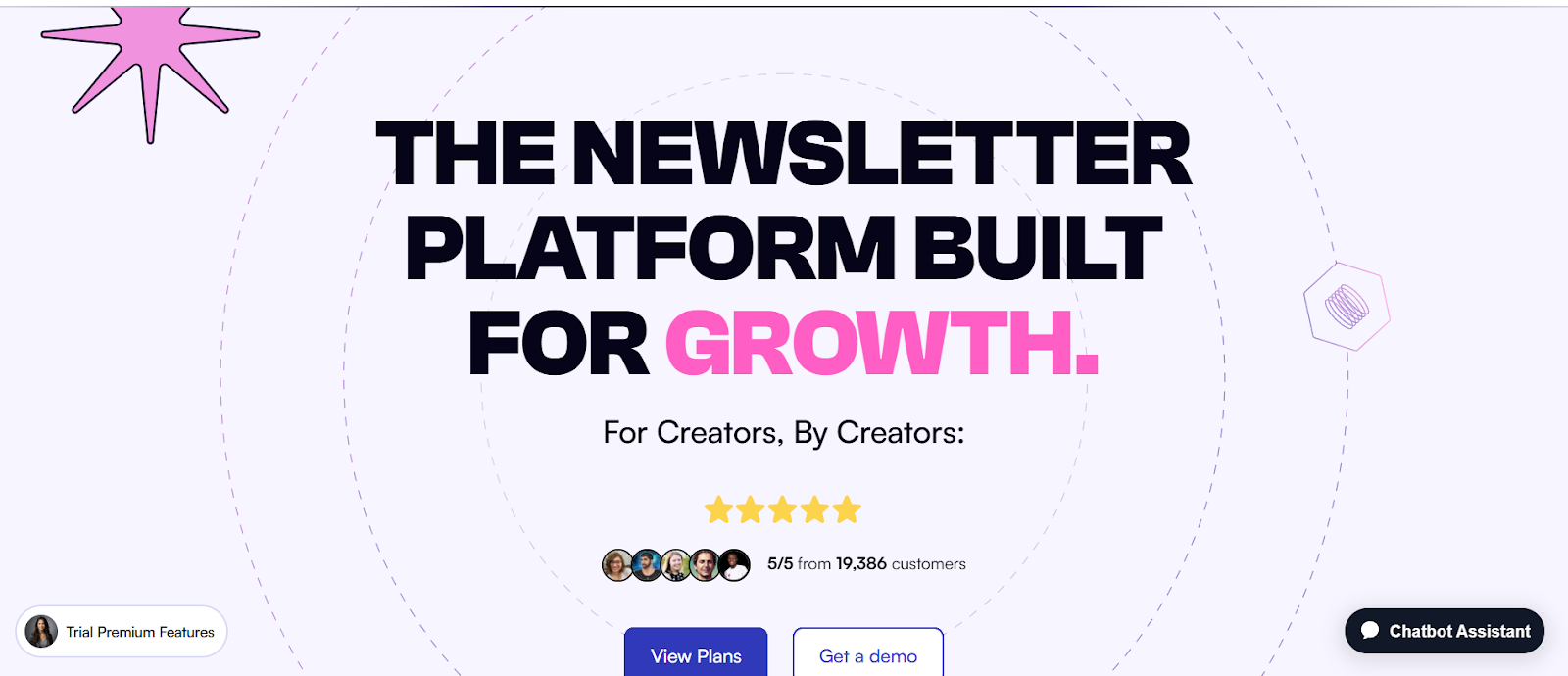
Best for: Newsletter-focused creators who want growth tools, a built-in ad network, and 0% revenue cut — without building a full course business.
Beehiiv was built by former Morning Brew team members and shows it. The platform is purpose-built for newsletter growth, and it's genuinely better than Substack at the newsletter game specifically.
What Beehiiv does better than Substack for educators:
Boosts and referral programs. Beehiiv's Boosts feature lets you pay to acquire subscribers from other newsletters, or earn by promoting others. The built-in referral program rewards subscribers for referring friends. These are growth mechanisms Substack simply doesn't have.
Ad network access. Beehiiv has a built-in ad marketplace where sponsors find you rather than you finding them. For educators with growing lists, this is a genuine passive revenue stream that Substack doesn't offer.
Better analytics. Beehiiv's analytics go meaningfully deeper than Substack's — post-level reporting, subscriber segmentation, A/B testing on subject lines, and engagement tracking over time.
0% revenue cut. No platform fee on paid subscriptions. You keep everything (minus standard payment processing).
The honest limitations for course creators: Beehiiv is a newsletter platform. It doesn't support course hosting, digital downloads, communities, or live sessions.
If you want to build a multi-product educator business, Beehiiv covers one piece of it. You'll need additional tools for the rest — and that stack quickly gets expensive.
The pricing jump from free to paid is also steep. The free Launch plan is genuinely useful (up to 2,500 subscribers, unlimited sends), but once you cross that threshold, the next step is $43/month annually ($49/month monthly) with no intermediate tier. There's no $10–$15 plan between free and Scale.
Beehiiv pricing:
- Launch: Free, up to 2,500 subscribers
- Scale: From $43/month (annual) — unlocks monetization, ad network, A/B testing, AI tools, automation
- Max: From $96/month (annual) — adds podcast hosting, removes Beehiiv branding, up to 10 publications
- Enterprise: Custom pricing
3. Kit (formerly ConvertKit)
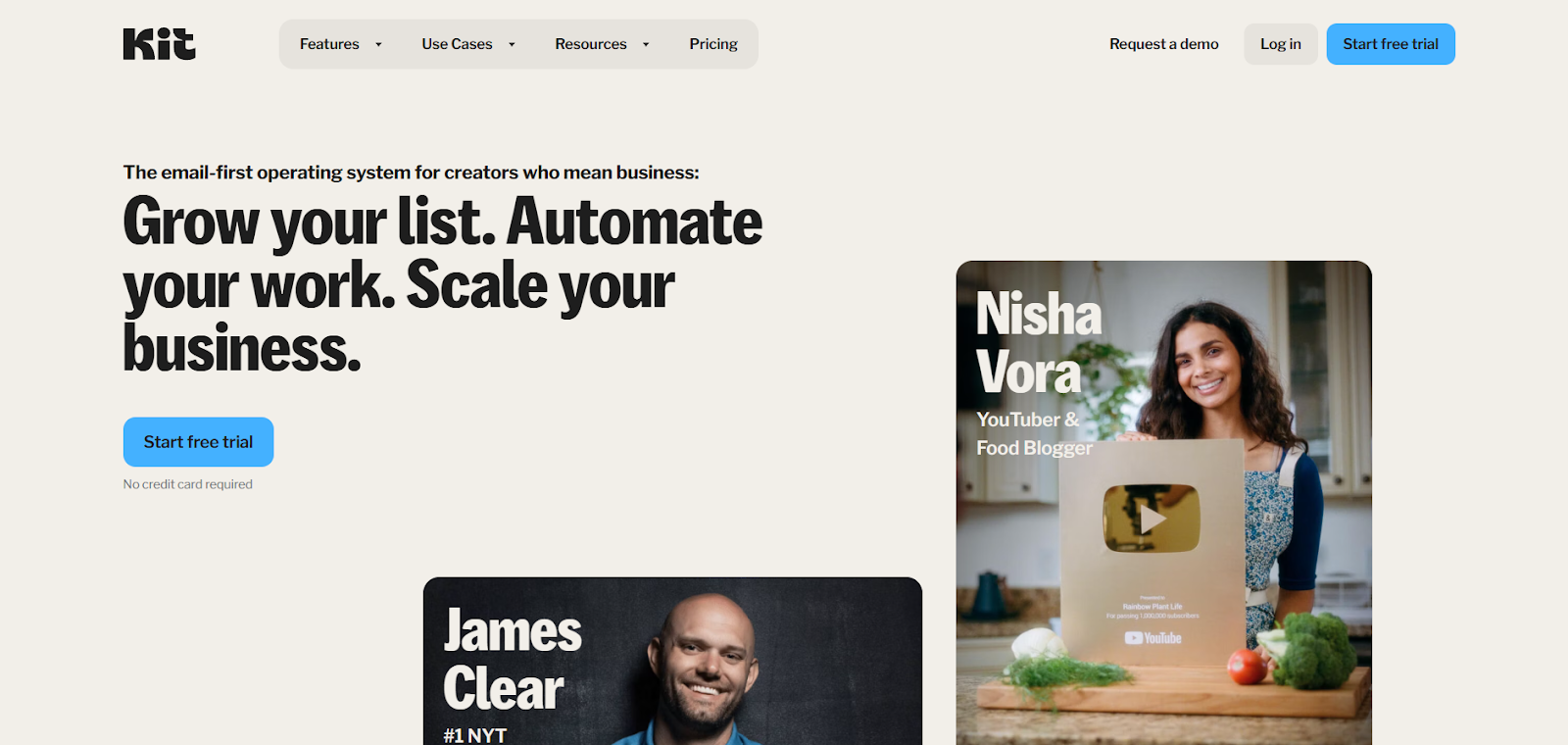
Best for: Course creators and digital product sellers who want email marketing with native commerce tools and a generous free tier.
Kit (rebranded from ConvertKit in 2024) is the email platform that has long been the default choice for creators who sell things — courses, ebooks, memberships, coaching. It's not a newsletter-first platform like Beehiiv, but its combination of email automation, subscriber tagging, and digital product sales makes it more useful for most educators than Substack.
What Kit does better than Substack for educators:
- Sell directly from email. Kit lets you sell digital products, courses (via integrations), and paid newsletters directly within the platform. You can build a product page, take payments, and automate delivery — all without leaving Kit.
- Sponsor Network. Kit has a built-in sponsorship marketplace where brands find newsletter creators to sponsor. Kit takes 20% of sponsorship revenue, but for educators with an engaged niche audience, this can be a meaningful additional income stream Substack doesn't offer.
- Subscriber tagging and segmentation. Kit's tagging system is more flexible than Substack's. You can segment by product purchased, content clicked, lead magnet downloaded, and dozens of other signals — and trigger different email sequences for different segments.
- Free plan up to 10,000 subscribers. This is one of the most generous free tiers in the space. Substack is technically free too, but takes 10% of your revenue. Kit charges nothing until you need paid features.
- The honest limitations: Kit's email design is intentionally minimal; plain text is the default and the philosophy. If you want visually rich, designed newsletters, Kit isn't the right tool. Its automation is also more technical to set up than Beehiiv's. Kit's paid plans are also meaningfully more expensive than they used to be, after a price increase of roughly 35 to 120% in September 2025, and at 25,000+ subscribers, Kit gets expensive quickly.
Kit pricing:
- Free: Up to 10,000 subscribers, 1 email sequence, basic features
- Creator: From $33/month (annual) / $39/month (monthly): up to 1,000 subscribers; scales with list size
- Creator Pro: From $66/month (annual) / $79/month (monthly): newsletter referrals, advanced reporting, subscriber scoring
4. MailerLite
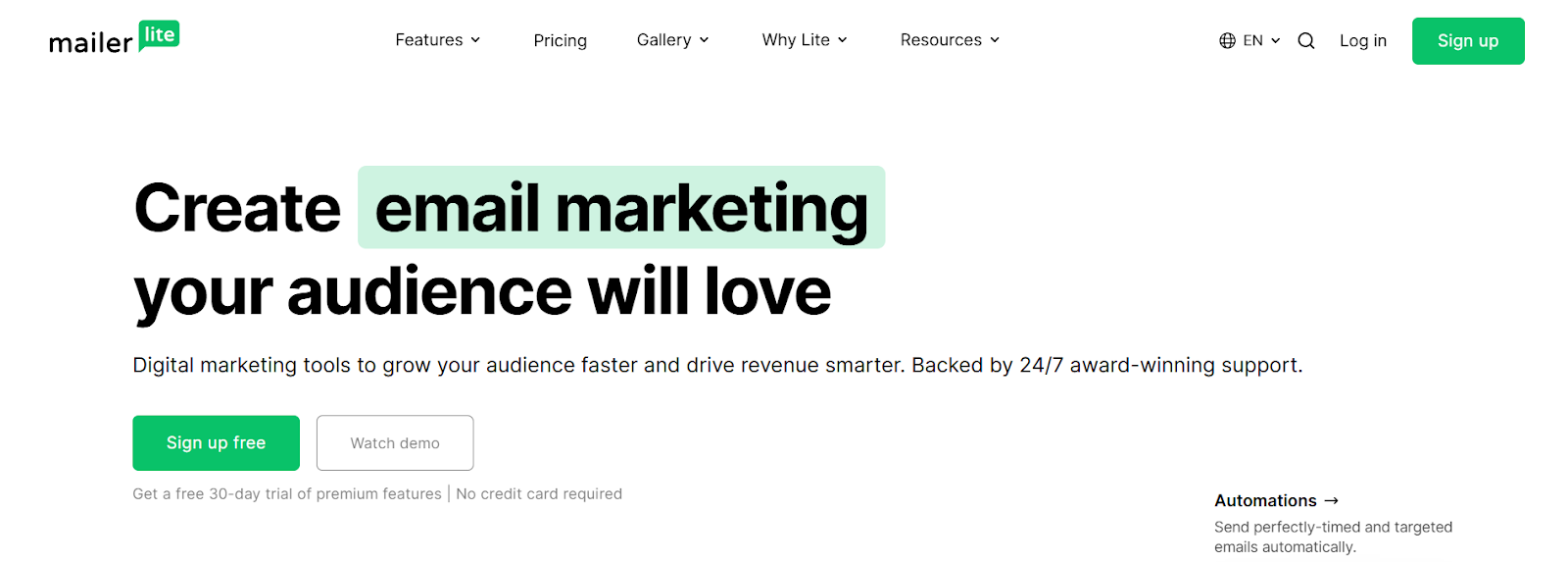
Best for: Educators and solopreneurs who want affordable, reliable email marketing with solid automation — without needing a course or community platform.
MailerLite is the underrated option in this category. It's less flashy than Beehiiv and less creator-focused than Kit, but it's one of the most reliable and affordable email platforms available, and its automation tools are genuinely strong for the price.
What MailerLite does better than Substack for educators:
Visual email builder. MailerLite's drag-and-drop editor produces consistently well-designed newsletters without requiring design skills. Substack's editor is functional but limited.
Automation sequences. MailerLite supports multi-step automation based on subscriber behavior — something Substack doesn't offer at all. This means you can set up a welcome sequence for new subscribers, a re-engagement campaign for inactive ones, and a post-purchase follow-up for buyers, all running automatically.
Landing pages and sign-up forms. MailerLite includes landing page and pop-up builders on all plans. For educators building a lead magnet funnel, this is a practical inclusion that saves buying a separate tool.
Sell digital products. MailerLite lets you sell ebooks and digital downloads directly, with payment processing included. It's not as full-featured as a dedicated course platform, but for educators selling simple PDFs or templates, it removes the need for a separate storefront.
The honest limitations: MailerLite is an email marketing tool, not a creator platform. It doesn't host courses, run communities, or support live sessions. For educators building a full product business, it's a solid email layer, but it needs to be paired with other tools.
MailerLite pricing:
- Free: Up to 1,000 subscribers, 12,000 emails/month
- Growing Business: From $9/month (annual) / $10/month (monthly) — unlimited emails, 3 users, sell digital products
- Advanced: From $18/month (annual) / $20/month (monthly) — unlimited users, AI features, advanced automation
- Pricing scales with subscriber count on all plans
5. Mailchimp
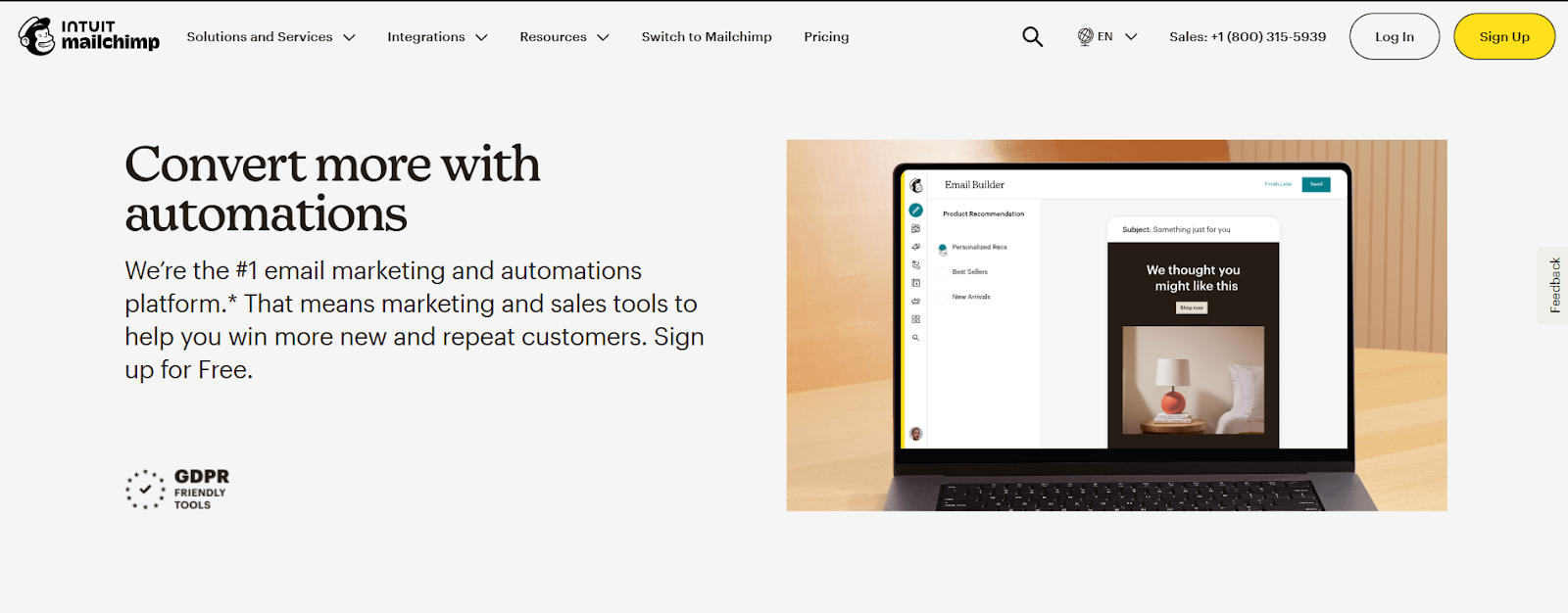
Best for: Educators who are already embedded in the broader Mailchimp/Intuit ecosystem, or who need email as one piece of a larger marketing operation.
Mailchimp is the most widely used email platform in the world, and it has moved well beyond simple newsletters — it now includes landing pages, basic e-commerce, website building, and customer journey automation.
The honest assessment for course creators: Mailchimp is a strong tool if email marketing is one piece of a larger business operation, and you want one platform to manage it. It's not purpose-built for creators or educators, and its pricing becomes expensive as your list grows compared to alternatives like MailerLite or Kit.
What it does better than Substack: Advanced segmentation, A/B testing, e-commerce integrations, customer journey automation, and a proper analytics suite. Substack offers almost none of these.
The honest limitations: Mailchimp's free plan was reduced in January 2026 and is now capped at 250 contacts and 500 emails per month (down from 500 contacts and 1,000 sends), with a 250-per-day send limit; this is considerably more restrictive than Kit's 10,000-subscriber free tier or Beehiiv's 2,500-subscriber free plan.
It's also not a creator platform — no course hosting, no communities, no digital download delivery. And its pricing model means costs rise quickly as your list grows, which surprises many users who start on the free plan.
Mailchimp pricing (email marketing, US pricing, 500 contacts):
- Free: 250 contacts, 500 sends/month, 250/day send cap
- Essentials: From $13/month: 5,000 monthly sends, email support
- Standard: From $20/month: 6,000 monthly sends, AI features, advanced segmentation, predictive and behavioral segmentation
- Premium: From $350/month: 10,000 contacts included, unlimited users, advanced features
- All plans scale in price as contact count grows; at 5,000 contacts, Essentials runs roughly $75/month and Standard roughly $100/month.
6. FreshLearn
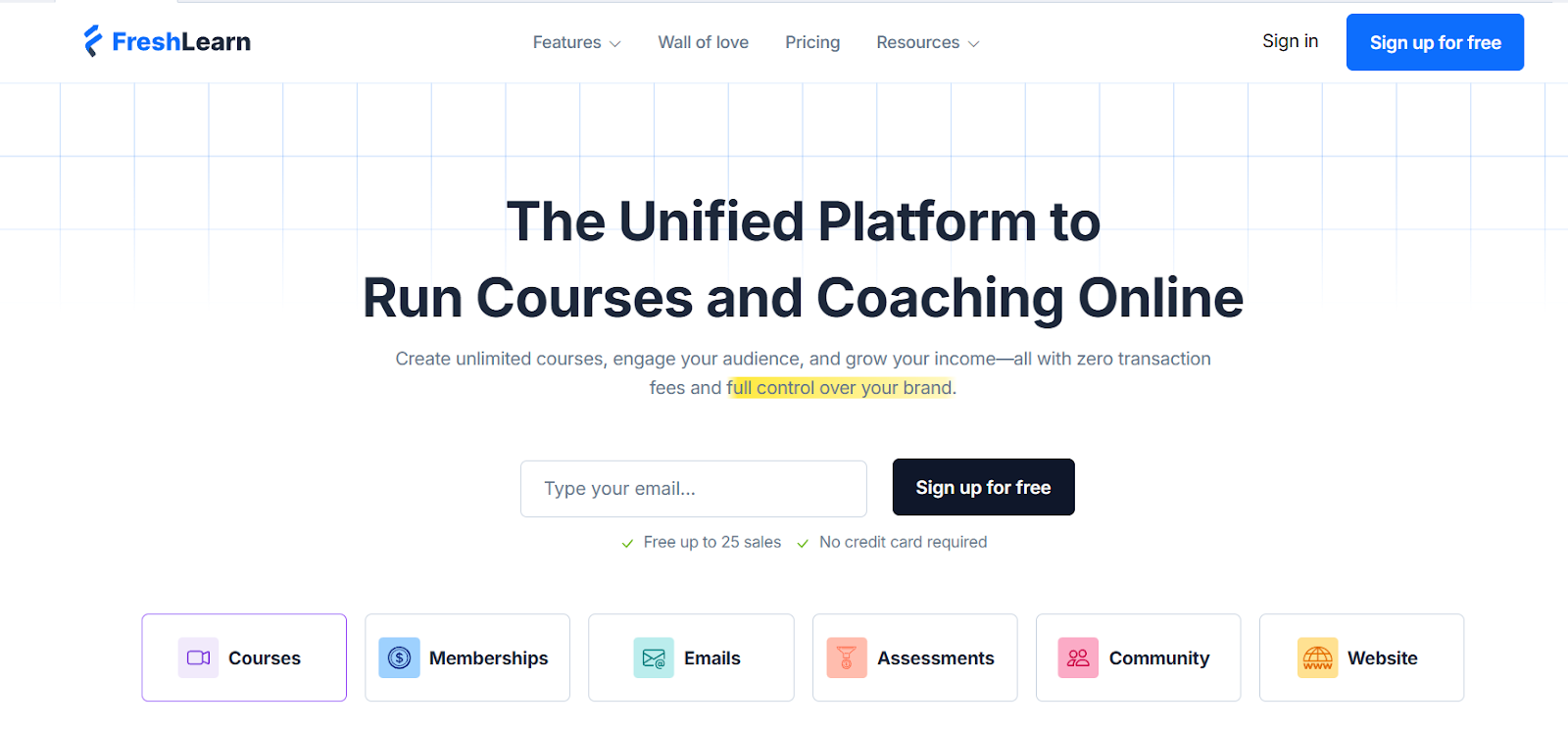
Best for: Course creators and educators who want newsletters, courses, digital downloads, community, and live sessions on a single platform — without stitching together multiple tools.
This is where FreshLearn becomes relevant — and it's worth being honest about why it's on this list and why it's different from every other option here.
FreshLearn isn't a Substack alternative in the traditional sense. It's not a newsletter-first platform. But it's the most logical choice for a specific type of creator: someone who already sells (or wants to sell) courses and digital products, and needs email marketing built in — rather than someone who primarily writes and wants a newsletter as the core product.
The practical difference: if you're using Teachable or Thinkific for your courses and Mailchimp or Beehiiv for your newsletter, you're paying for and managing two separate platforms with two separate subscriber lists, two sets of analytics, and manual work to keep them in sync. FreshLearn replaces that entire stack.
What's included that's directly relevant to newsletter sending:
The email campaigns feature handles broadcasts (one-time sends) and drip sequences with segmentation by course enrollment, purchase history, and engagement level.
You can send a post-completion sequence to students who finish a course, a re-engagement campaign to subscribers who haven't opened in 90 days, or an early-access announcement only to past buyers — all from the same dashboard where you manage your courses.
What FreshLearn adds that no newsletter platform offers:
- Course hosting — unlimited courses, quizzes, drip schedules, completion certificates
- Digital downloads — sell PDFs, ebooks, and templates with DRM, watermarking, and delivery automation
- Community — private discussion forums, membership groups, not just a comment section
- Live sessions and cohorts — run live workshops or cohort-based programs
- AI Studio — AI tools for generating course outlines, quiz questions, and lesson summaries from your own material
- Affiliate and referral management — built-in, no third-party tool required
- 0% transaction fees on all plans
The honest limitation: FreshLearn is a course creator platform that includes email marketing, not the other way around. If you only want to send a newsletter and have no interest in selling courses or digital products, Beehiiv, Ghost, or Kit will serve you better at a lower price point.
FreshLearn pricing (annual billing):
- Free: 1 product, 25 manual enrollments, 3 sales pages
- Pro: $41/month — courses, digital downloads, email campaigns (3K/month), custom domain
- No Brainer: $59/month — adds community, live classes, certificates, gamification, mobile app
- No Brainer+: $119/month — advanced automation, API access, custom certificates, 12K emails/month
7. Medium
Best for: Writers who want built-in distribution and don't want to manage their own subscriber list.
Medium is the most different option on this list. You don't build your own audience on Medium — you publish into Medium's existing reader base and earn based on how much time paying Medium members spend reading your work.
For most course creators and educators, Medium is less relevant than the other alternatives here. You don't own your subscriber list, you can't contact your readers directly, and your revenue depends entirely on Medium's Partner Program algorithm.
Where it makes sense: as a top-of-funnel distribution channel. Many educators publish long-form articles on Medium to attract new readers, then direct them to their own newsletter or course platform. Used as a discovery mechanism rather than a primary publishing home, it can be valuable.
Medium pricing:
- Free to publish
- Medium Member (reader): $5/month or $60/year — required for earnings through the Partner Program
- Earnings are variable and determined by Medium; there's no fixed revenue share you can plan around
How to choose the right Substack alternative
The decision comes down to one question: is your newsletter the product, or part of a product business?
If your newsletter is the product — your primary revenue comes from paid subscriptions, sponsorships, or advertising, and you're building an audience of readers first — Ghost or Beehiiv are the strongest alternatives. Ghost gives you maximum ownership and 0% fees. Beehiiv gives you the best newsletter-specific growth tools.
If your newsletter supports a course or digital product business — you send emails to nurture students, announce launches, and keep your audience warm between courses — Kit, MailerLite, or FreshLearn make more sense. Kit is the most creator-native email-first option. FreshLearn is the most integrated option if you're also selling courses and want to avoid managing multiple platforms.
If you're just starting and want to validate your idea before paying for anything, Kit's free plan (up to 10,000 subscribers) or Beehiiv's Launch plan (up to 2,500 subscribers) are the most generous free tiers in the market.
What Substack actually charges (the math worth doing)
Before switching, it's worth running the numbers. Substack takes 10% of paid subscription revenue plus Stripe's standard processing fees.
Every alternative on this list takes 0% of subscription revenue (Ghost, Beehiiv, Kit, MailerLite, Mailchimp, FreshLearn). The question isn't whether switching saves money at scale — it does — it's whether the platform you move to serves your specific use case well enough to be worth the migration effort.
For most course creators earning meaningfully from a newsletter, the math on switching makes the effort worthwhile by month three at the latest.
FAQs
1. Is there a free Substack alternative?
Several. Kit is the most generous, free up to 10,000 subscribers. Beehiiv's Launch plan is free up to 2,500 subscribers with unlimited sends. MailerLite is free up to 1,000 subscribers. Mailchimp is free up to 250 contacts and 500 monthly sends.
2. What's the best Substack alternative for course creators specifically?
It depends on what you need. If you want email only, Kit is purpose-built for creators who sell digital products. If you want email, courses, community, and digital downloads on one platform, FreshLearn removes the need for multiple tools.
3. Does Ghost take a percentage of subscription revenue?
No. Ghost charges a flat monthly fee for hosting, starting at $15/month billed annually on the Starter plan, though paid subscriptions require the $29/month Publisher plan. If you self-host, you pay only server costs. Either way, you keep 100% of subscription revenue on plans that support it.
4. Can I migrate my Substack subscriber list?
Yes, on all platforms listed here. Substack lets you export your subscriber list as a CSV. The migration itself is straightforward; most platforms have import tools that handle it in minutes. FreshLearn offers free migration support for annual plan subscribers, including courses, pages, and member data.
5. What's the best alternative if I want newsletter sponsorships?
Beehiiv's Ad Network is the most seamless built-in sponsorship option; brands come to you rather than you pitching them. Kit also has a Sponsor Network, though Kit takes 20% of sponsorship revenue. Ghost supports ad integrations but doesn't have a native ad marketplace.
6. Is Mailchimp good for newsletters?
Mailchimp is primarily an email marketing platform rather than a newsletter-first tool. It works well for scheduled email sends and has strong automation features, but it's more suited to businesses managing marketing lists than to creators building a subscriber relationship. Its free plan is also considerably more limited than Kit's or Beehiiv's, at 250 contacts. For a creator-focused newsletter, Beehiiv or Kit are more appropriate choices.
7. Does Ghost's cheapest plan let me charge readers for a subscription?
No. Ghost's Starter plan, at $15/month billed annually, does not support paid subscriptions. To charge readers, you need the Publisher plan at $29/month billed annually. This is a change from Ghost's earlier pricing structure, so it's worth checking directly before budgeting around the Starter price.
8. Has Kit gotten more expensive recently?
Yes. Kit raised prices on its Creator and Creator Pro plans by roughly 35 to 120% in September 2025. The free Newsletter plan, which covers up to 10,000 subscribers, was not affected by the increase.
You might also like:
Hosted by
