We Analyzed 56,774 Online Course Creators. Nobody Is Selling What You Think.

There is a story the internet tells about online education.
It goes like this: the online course world is dominated by fitness influencers, business gurus, and life coaches. If you want to build a course business, you are competing in those three crowded lanes. Everyone else is a niche player fighting for scraps.
We decided to test that story with actual data.
Over the past several weeks, the team at FreshLearn, working alongside Claude, Anthropic's AI, ran a large-scale audit of 56,774 online course creators. We analyzed their websites, domain names, academy names, and business descriptions, then built a classification system to sort them into as many granular categories as the data warranted.
Not eight buckets. Not twenty. As many as the evidence actually supported, which turned out to be 97 distinct leaf-level categories, organized across eight major domains.
What we found dismantled the story almost completely.
The Biggest Category Is Less Than 1% of the Total
Here is the single most striking finding from the entire analysis.
The largest category we identified, yoga instruction, contains 500 course creators. Out of 56,774 total. That is 0.88% of the dataset. Less than one in a hundred.
The second largest category is mental health and counseling (430 creators, 0.76%). Third is general fitness and workouts (392, 0.69%). Fourth is nutrition and food coaching (363, 0.64%).
If you ranked every category from largest to smallest and drew a graph, you would see a textbook long tail: a handful of modestly-sized categories at the top, then a rapid drop-off into dozens of categories with fewer than 50 creators each, and finally a long, long tail of micro-niches with single-digit counts.
There is no dominant category. There is no "typical" course creator. The online education economy is not a few wide highways; it is tens of thousands of narrow paths, each one someone's livelihood.
What 97 Categories Actually Looks Like
When we started the analysis, we expected to find the usual suspects and little else. What emerged from the data was considerably more interesting.
Yes, we found yoga teachers and fitness coaches and business consultants. But we also found:
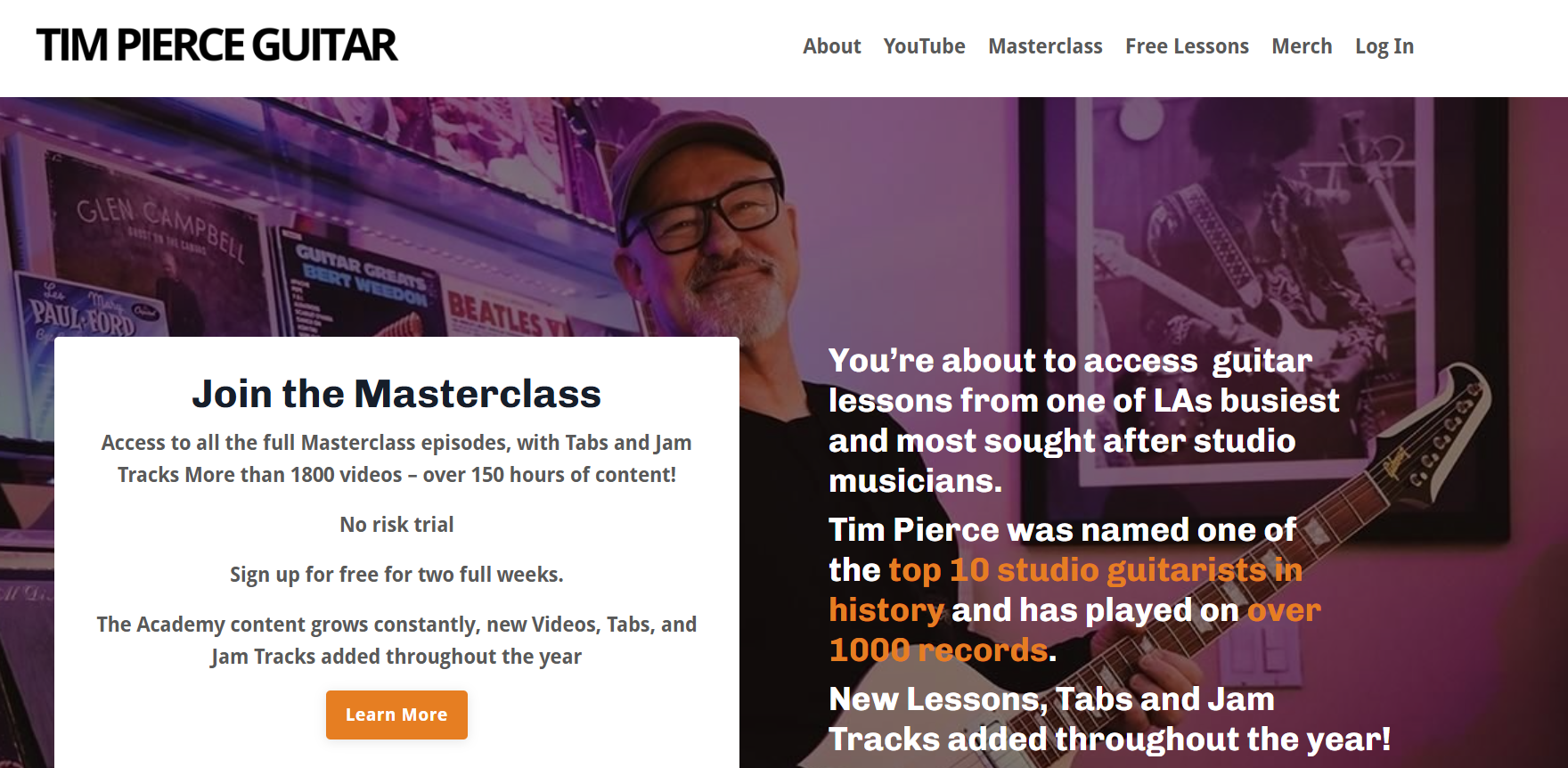
A sailing club in Italy running seamanship courses online. An orthodontist in Portugal teaching dentists how to perform clear aligner treatments via a Kajabi-hosted program. A Finnish physiotherapist offering body recomposition programs in his native language. A Christian ministry running women's Bible studies. A pelvic-floor physiotherapist in the UK. A beekeeping instructor. A facilitator certification company in Helsinki that trains organizations in workshop design. A guitar teacher whose email domain (timpierce.com) made his niche instantly obvious. A Japanese bilingual MC running communication courses.
None of these fit neatly into "fitness" or "business" or "personal development." Each one is its own thing.
The 97 categories we identified span eight top-level domains:
- Health & Wellness — 2,767 creators, itself fragmenting into 26 sub-categories including bodywork and manual therapy, women's health, sleep coaching, pet and animal care, and homestead and self-sufficiency
- Business & Professional — 772 creators, spanning everything from real estate licensing to substance-misuse prevention training
- Personal Development — 532 creators, covering life coaching, grief recovery, men's development, addiction coaching, and multiple distinct spiritual traditions
- Creative Arts — 443 creators, including six separate music sub-categories (guitar, piano, voice, other instruments, music production, and music business) plus dance, film, crafts, and fashion
- Faith & Community — 160 creators
- Education & Academic — 130 creators, including homeschooling, test prep, and professional certifications in healthcare, tech, and HR
- Technology & Digital — 19 creators
- Travel & Lifestyle — 9 creators
The Finding We Weren't Expecting
Here is the number that surprised us most, and the one we think matters most for anyone thinking about online education as a market.
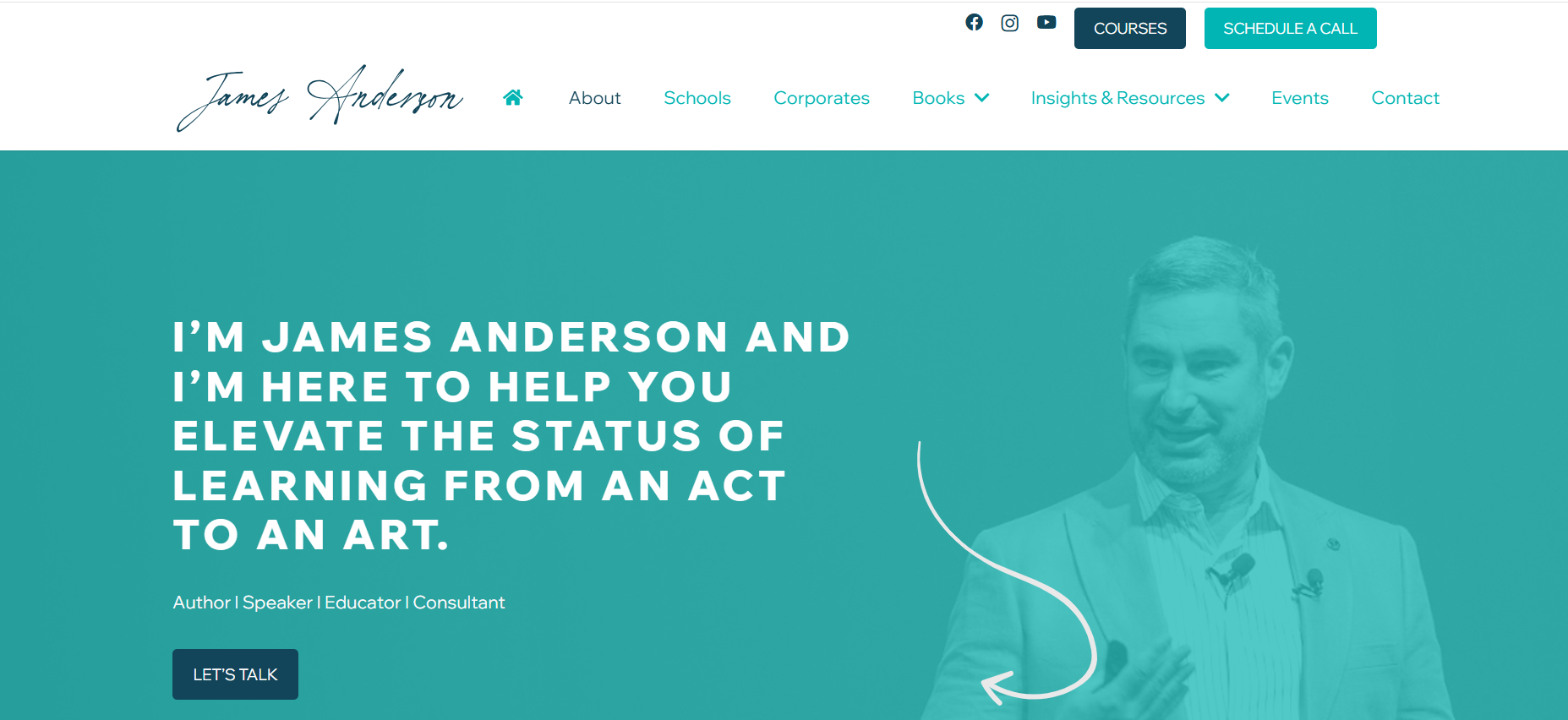
Of our 56,774 course creators, only 4,832, which is 8.5%, had enough descriptive text in their publicly available data (website domain, academy name, business title) to be automatically classified at all. The remaining 91.5%, or 51,942 creators, were operating under domains so personal or opaque — jamesanderson.com.au, charlescleyn.com — that no amount of clever keyword matching could identify what they teach without reading their actual website.
We verified this by manually visiting a sample of those sites. A domain called superchargeyourself.com turned out not to be a general life coaching business, as the name might suggest, but the professional practice of Sonal Bahl, an executive career strategist specializing in resumes, promotions, and job search strategy: a very specific niche, indeed. A site called heymonicab.com was an Ayurveda and holistic wellness practice.
Every manual verification confirmed the same thing: the real category was more specific than the public-facing brand name implied. Course creators are not building generic businesses. They are building precise, narrowly focused practices that defy easy labeling.
This has a name in economics: micro-specialization. And in the online course world, it appears to be the rule, not the exception.

What This Means if You Are Building a Course Business
The practical implication of all of this is both encouraging and underappreciated.
The conventional wisdom says you should pick a proven, popular niche because that is where the demand is. Fitness. Business. Personal development. The data suggests a different reading. Those categories are large relative to other course niches, but they are still tiny in absolute terms: the largest contains 500 of 56,774 creators. More importantly, they are not where most course creators actually operate. Most operate in niches so specific that there was no pre-existing category waiting for them. They built the category themselves.
The implication for course creators: specificity is not a liability. The Italian sailing club, the Finnish physiotherapist, the pelvic-floor physio in the UK; these are not fringe players hoping for scraps. They are operating in niches where they have no direct competition from generalists, where their audience is highly motivated and clearly defined, and where the right platform and the right message can build a sustainable business without ever competing in the crowded middle.
The Implication for Platforms
This finding does not apply only to one platform. It is a structural challenge for the entire online course industry, and it applies equally to every major player in the space.
Thinkific, Teachable, Podia, Mighty Networks, Kajabi, LearnWorlds, Systeme.io, Circle, Skool ... every platform that serves course creators is, by definition, serving a market that is 97 categories wide and dominated by micro-niches that resist easy description. Yet almost all of them market themselves using the same handful of canonical examples: the fitness coach, the business mentor, the life coach, the designer who went freelance. These are real use cases, but our data shows they represent a small fraction of who is actually out there.
The platform that figures out how to speak meaningfully to the beekeeping instructor, the orthodontics trainer, the grief counselor, and the seamanship school, all at once, without reducing any of them to a generic "creator", will have a genuine advantage. The rest are leaving the long tail underserved.
The same challenge applies to the influential voices in this space. Creators and educators like Pat Flynn, Amy Porterfield, Brendon Burchard, Ali Abdaal, and others have done tremendous work in making online course creation accessible and less intimidating. But the overwhelming majority of their case studies, frameworks, and advice are built around a narrow band of niches: business, productivity, marketing, personal development. Their audiences, which include millions of would-be course creators, receive an implicit signal that those are the niches that work online.
Our data says otherwise. The niches that work online are the niches where someone actually knows something deeply and has an audience that wants to learn it; regardless of whether that something is business strategy or beekeeping. The advice "niche down" is genuinely useful, but it is usually followed by examples from the same five industries. That gap between advice and example quietly discourages a huge number of potential course creators who look at the popular case studies and think: "My thing isn't like that. Maybe it won't work for me."
It almost certainly will. The data says so.
See how to sell courses that fall into no established niche
What FreshLearn Does Differently for Niche Creators
If you are the kind of course creator this article is about, the one whose niche does not appear in any platform's homepage marketing, here is what FreshLearn offers that is worth knowing about.
FreshLearn was built on the premise that the most interesting course businesses are not the obvious ones. The platform is designed to be genuinely flexible across niches rather than optimized for any single content type or audience. A few things that matter concretely:
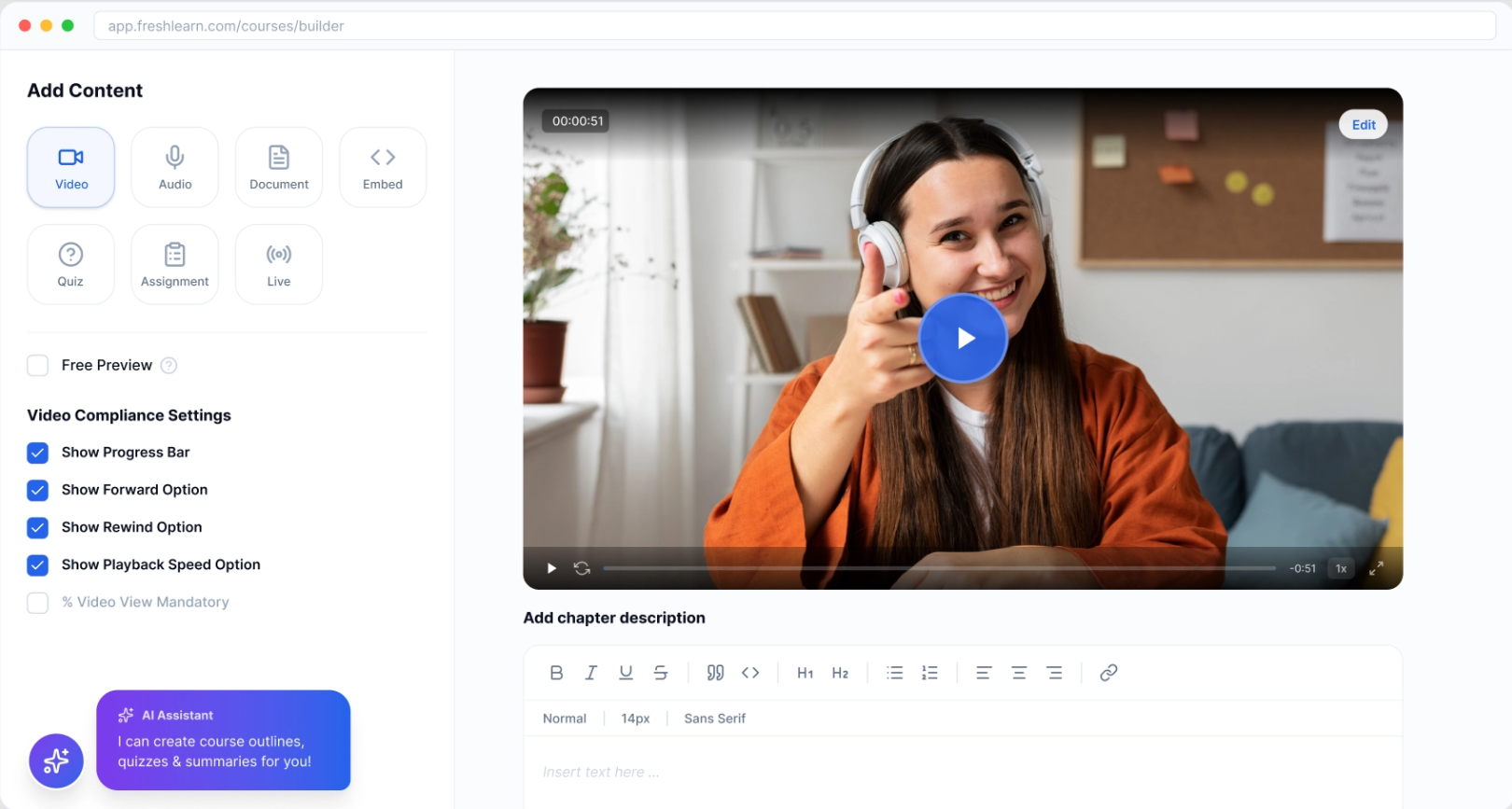
Your course, your structure. FreshLearn does not push you toward a standard course format. Whether your content is video-heavy (like a music production course), document-heavy (like a professional certification program), community-heavy (like a sailing club), or a blend of all three, the platform accommodates the structure your content actually needs- not the structure that works for the average use case.
Your brand, not ours. Niche creators live and die by credibility in their specific community. FreshLearn's white-labeling means your students see your brand, your domain, and your identity. The Finnish physiotherapist's students are not buying a course on a generic platform; they are buying from him specifically, which is exactly where his authority lives.
Pricing flexibility for non-standard models. A professional certification program for dentists is not priced like a $29 fitness course. A sailing club membership is not sold the same way as a personal development download. FreshLearn supports one-time payments, subscriptions, payment plans, and bundled products, so the business model matches what your niche actually requires.
Community built in. Many of the most successful niche course businesses derive as much value from the community they create around the content as from the content itself. A beekeeping community, a pelvic-floor recovery group, a group of professionals studying for the same certification: these are communities with high engagement and strong retention precisely because of the specificity of the shared interest. FreshLearn's community features are built into the same platform as the course content, so that connection happens natively rather than being patched together across tools.
No transaction fees eating your margins. Niche creators often have smaller total audiences and higher per-student pricing. A platform that takes a percentage of every sale is a different kind of cost than a flat subscription when your course sells for $500 to 200 students rather than $49 to 20,000. FreshLearn charges a flat platform fee with no revenue share, which makes the unit economics work differently, and usually better, for niche creators with premium offerings.
None of this requires you to be in a popular niche. The Finnish physiotherapist, the orthodontist training other dentists, the beekeeping school, the sailing club: all of these businesses can run on FreshLearn without modification, without workarounds, and without being treated as edge cases.
That is the point. In a market where 91% of course creators operate in niches too specific to be automatically classified, the platform that treats the niche as the norm rather than the exception is the one that actually fits.
A Note on Methodology
The 56,774 course creators in this dataset were identified through publicly available web data as operators of online learning businesses. No confidential or proprietary data was used. Brand names of third-party platforms were deliberately omitted from this analysis.
Classification was performed using a custom-built hierarchical taxonomy of 97 leaf-level categories, applied via vectorized keyword matching across domain names, academy names, email domains, and business titles. Ambiguous or low-signal records were marked as unclassified rather than force-fitted into a bucket, which is why the classified proportion is intentionally conservative. We preferred precision over recall.
Manual verification of a sample of unclassified sites was conducted by reading live website content. In those spot-checks, the first-pass category assignment was corrected approximately 55% of the time, confirming that public-facing brand names are unreliable proxies for what a course creator actually teaches.
The analysis was conducted by the FreshLearn team using Claude, Anthropic's AI assistant, for data processing, taxonomy design, and classification.
What Comes Next
This was a first-pass analysis. We are continuing to expand coverage of the unclassified segment through a site-reading pipeline that visits each homepage and classifies it against the full 97-category taxonomy. As that work progresses, we expect the true category distribution to shift: some of the currently opaque personal-name domains will resolve into familiar niches, but we expect many more to add new leaf categories to the taxonomy; niches we have not yet named because they have not yet appeared in the data.
If you are a course creator wondering whether there is a place for what you teach in the online education economy, the answer from our data is almost certainly yes. The question is not whether your niche is real. It is real. It is probably more populated than you think, and it is almost certainly underserved.
The question is whether you have found the right platform and the right message to reach the people who are already looking for exactly what you do.
If you want to explore whether FreshLearn is that platform for your niche, you can start a free trial today.
FreshLearn is an online course and cohort platform built for creators who want to teach what they know, exactly as they know it. It is used by 15,000+ course creators and is rated 4.7/5.
Hosted by